


Stories
News, stories and finds from the Great Synagogue and Shulhoyf of Vilna project, as shared over the years on our Facebook page, newest first.
202620252024202320222021202020192018201720162015
2026 (21 stories)
Tiberias and Vilna
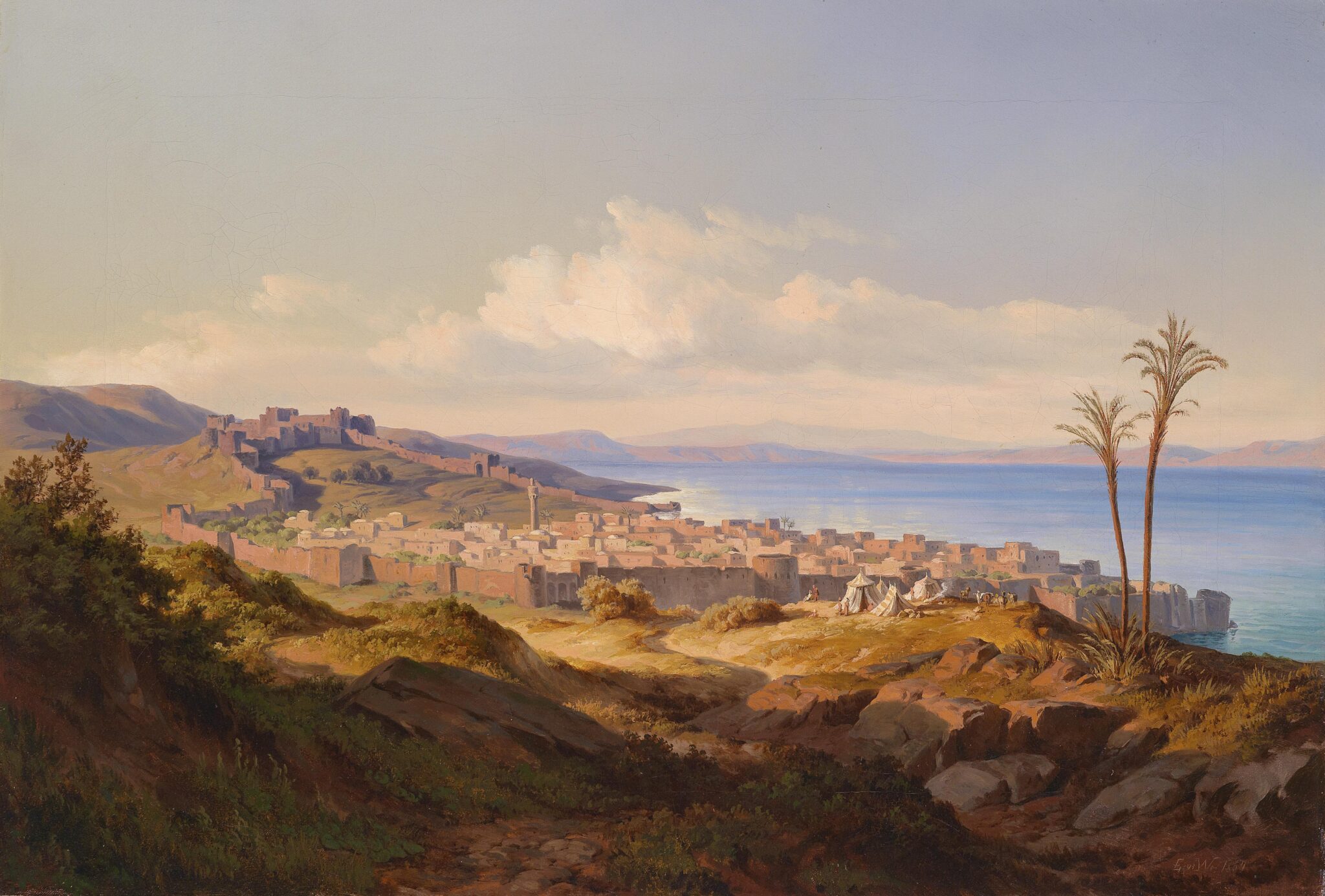
In a new article in 'Segula', detailing the interrelations of the Sephardic and Hasidic communities of Tiberias on the Sea of Galilee, Yosef Stephansky highlights the presence of the small, and almost forgotten group of Vilna Jews resident in the city in the 18th century. Special attention is given to the inscription we recovered from the Bimah of the Great Synagogue in 2019, which specifically notes that the emissary from Vilna, Reb Haim ben Haim, arrived in Tiberias around 1778.
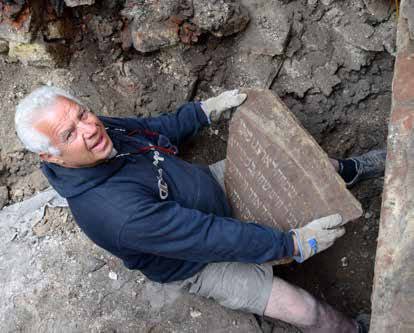
To the side of a picture of our long-term volunteer, Yankele Levinboim, holding a fragment of the inscription as it was discovered, Yosef Stephansky writes:
A Forgotten Community
After the Sephardic community became established in Tiberias, Ashkenazi Jews also began to arrive in the city. This contrasts with the immigration of Ashkenazim from Poland and Lithuania to Jerusalem in the early 18th century—many of whom arrived with Rabbi Judah he-Hasid (so named for his lifestyle, and unrelated to the Hasidic movement, which had not yet emerged)—as the existence of an Ashkenazi community in Tiberias was barely mentioned, until a surprising archaeological discovery was made in Vilnius, Lithuania. In 2019, Israeli archaeologist Yohanan (Jon) Seligman discovered an inscription dating to 1796 during excavations at the Great Synagogue in the city. The inscription mentions a donation made by brothers—residents of Vilna—in memory of their parents, Reb Haim ben Haim and his wife Sarah.
Historian Dr. Aryeh Morgenstern has noted that the Haim ben Haim mentioned in the inscription is Rabbi Haim Shatalas—one of the wealthy members of the Jewish community in Vilna—who immigrated to the Land of Israel and settled in Tiberias.
Further evidence for the existence of a non-Hasidic Ashkenazi community in Tiberias emerges indirectly from a letter written from the Land of Israel in 1781 (5541) by Rabbi Menachem Mendel of Vitebsk and Rabbi Avraham of Kalisk, in which Rabbi Shlomo Ashkenazi is mentioned. Rapaport of Chełm—also known as Rabbi Shlomo of Lviv—who resided in Tiberias for several years:
Rabbi Michel the shochet (ritual slaughterer)... became the shochet of the town in the Holy City of Tiberias—may it be built and established. It was a wondrous miracle that the Rabbi of the holy community of Lvov settled in the aforementioned Holy City (Yaakov Barnai, Letters of Hasidim from the Land of Israel, p. 87).


It's All About the People
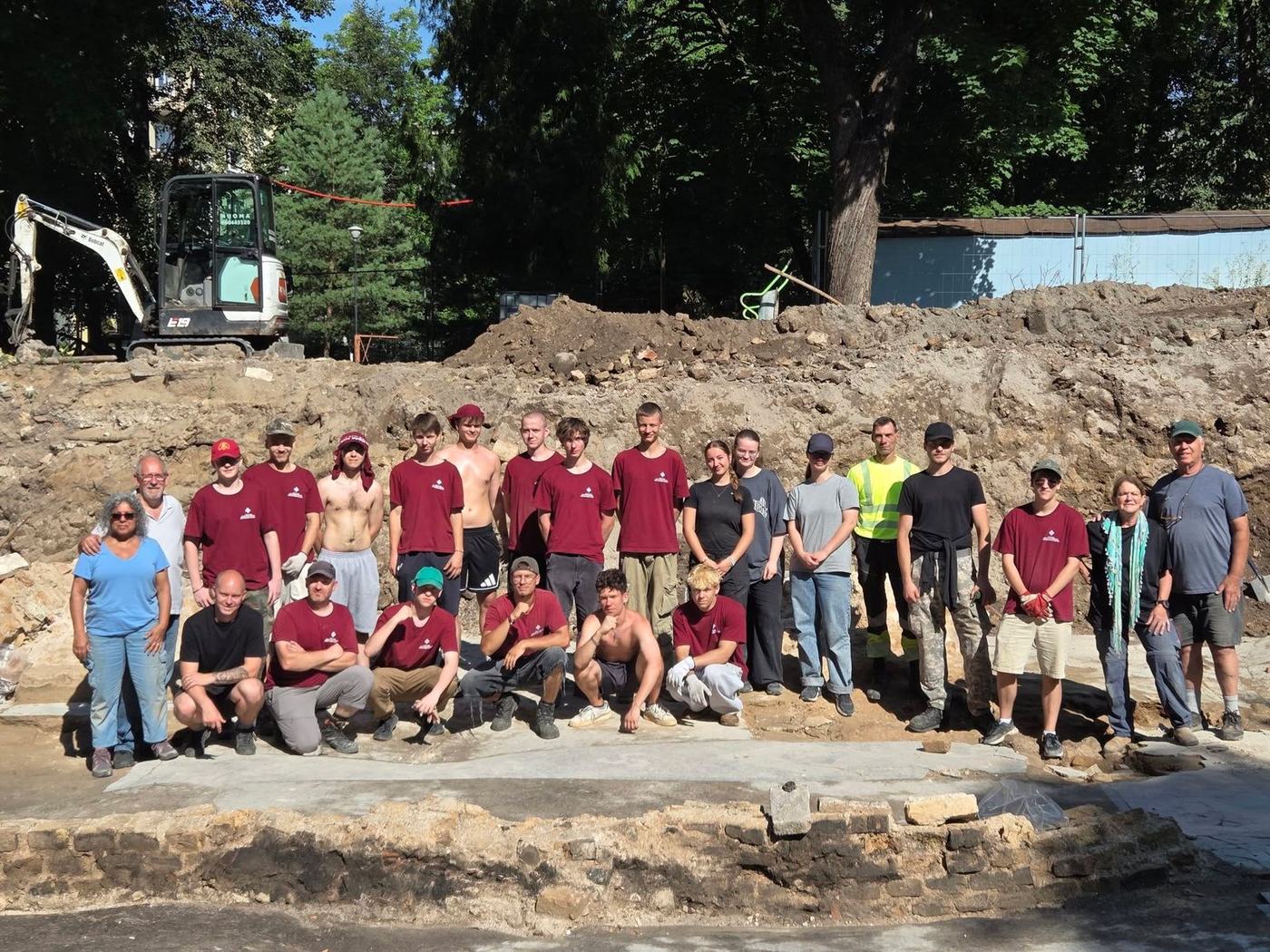
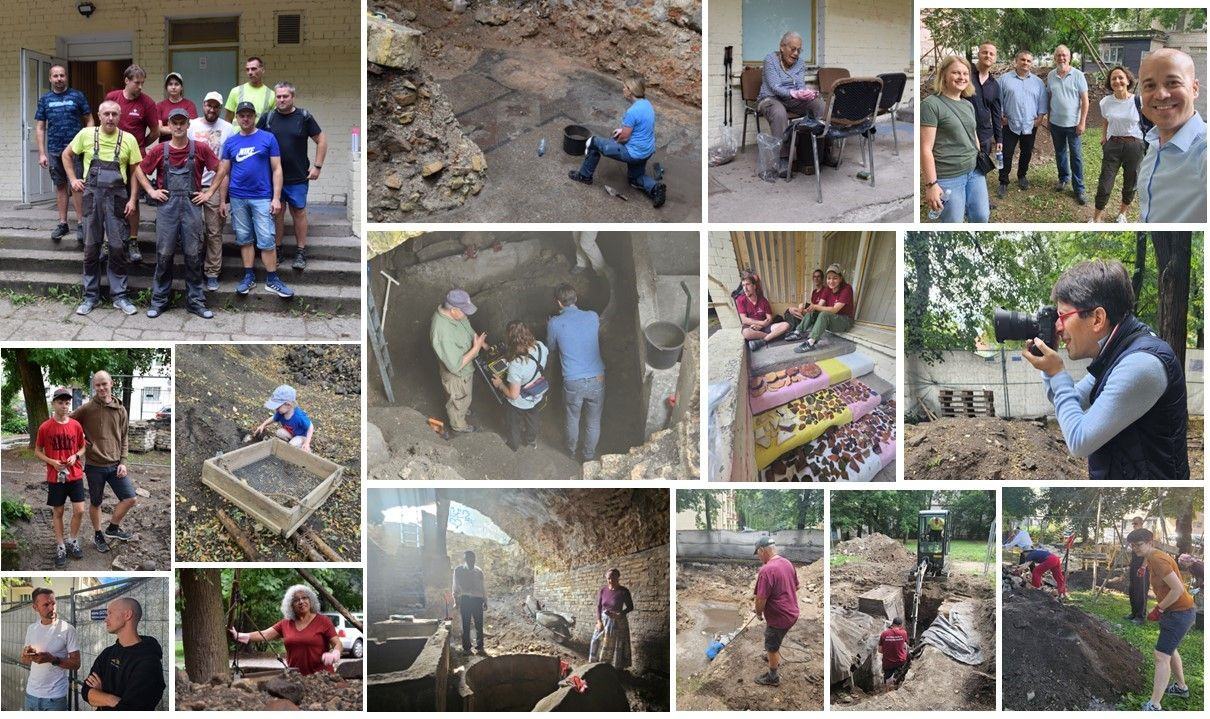
Any project rests on the quality of the people that participate. This season of excavation, as it draws to a successful closure, has relied on a dedicated group of staff, workers and volunteers. I would like to thank them all for their hard work, without which nothing could have been achieved.
The workers and students from the Archaeology department of Vilnius University:
Ignas Micevičius, Karolis Dzimavičius, Markas Trimailovas, Arūnas Rakštelis, Pijus Natkevičius, Vytis Sviklas, Ugnius Matukas, Viačeslav Jaroščenka, Danielius Vitenkov, Martynas Jankus, David Farberov, Justas Jonas Kabišaitis, Simonas Ragelis, Andrius Juknevičius, Nikita Agafonov, Vincentas Kizas, Titas Furmanskis, Vilius Valunta, Aleksas Liutkus, Simonas Puodžiūnas, Vincentas Petrauskas, Mantas Brazdżiūnas, Ugnė Gabrieliūnaitė, Narimantas Subačius, Kamilė Didikaitė, Paulius Sviderskis, Ignas Pelenis, Benas Mieliauskas, Jonas Užpalis, Matas Petruška, Joris Šeibokas, Dominykas Vaičiulis and Edvardas Veršelis.
Our volunteers:
Shuli and Yankele Levinboim, Varda Cooper, Pnina Ziv, Vered Seligman, Sondra Litvaityte, Nitzan Pesach, Fredrike Ruth Winkler and Rabbi Nathanael Wurmser.
Our wonderful staff:
Jon Seligman, Justinas Račas, Zenonas Baubonis and Rytis Tamulynas.
Thank you too to Indrė Rutkauskaitė and the staff of the Good Will Foundation and Faina Kuklianski of the Lithuanian Jewish Community for their continual support, assistance and funding throughout the excavation.
No less important was the warm support of many individuals, organisations and even passers-by, who expressed their interest and encouragment, and gave voice to their desire to restore the site of the Great Synagogue of Vilna as a place of significance in the great city of Vilnius.
A Pesach Plate, Vilna and the Sussmann Ceramic Works
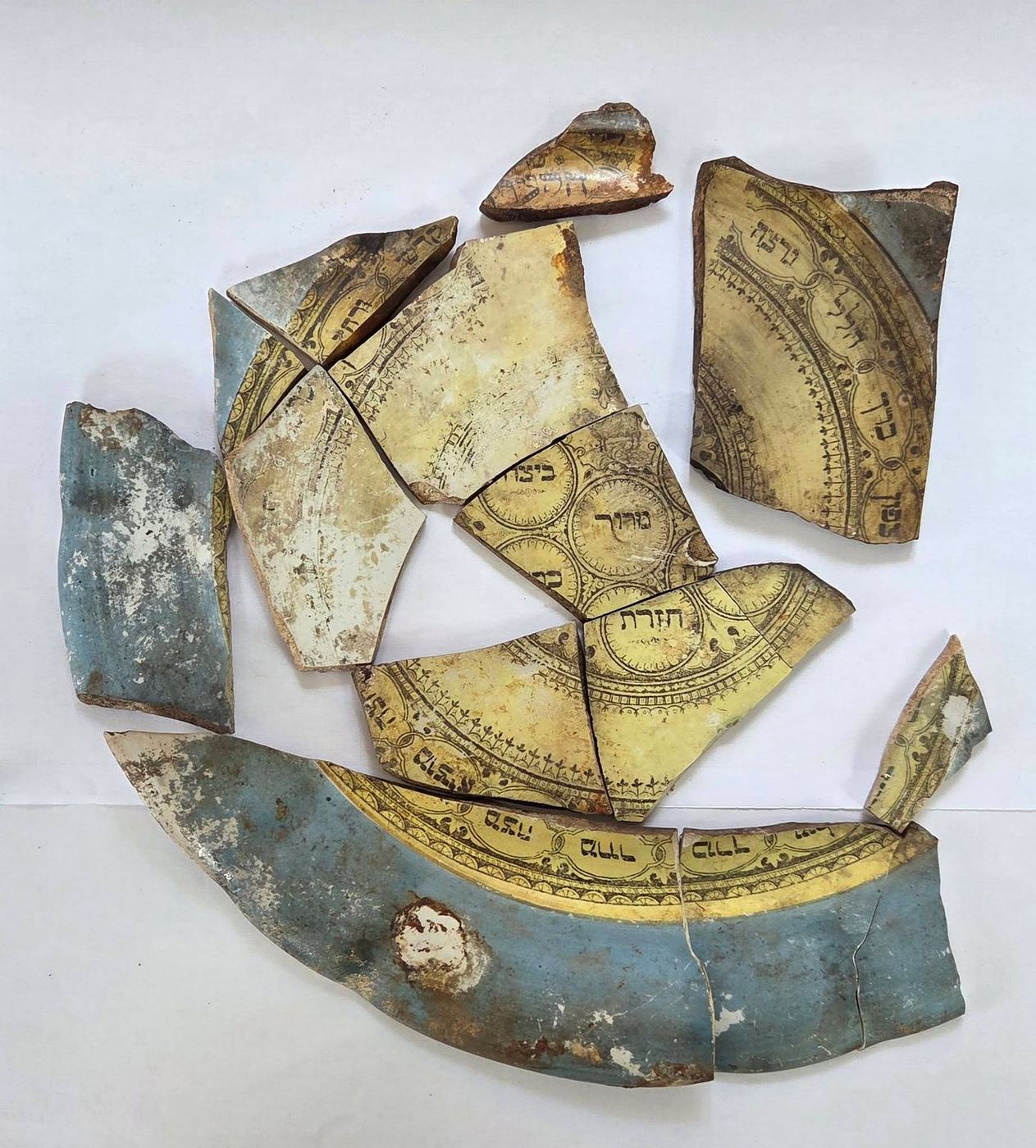
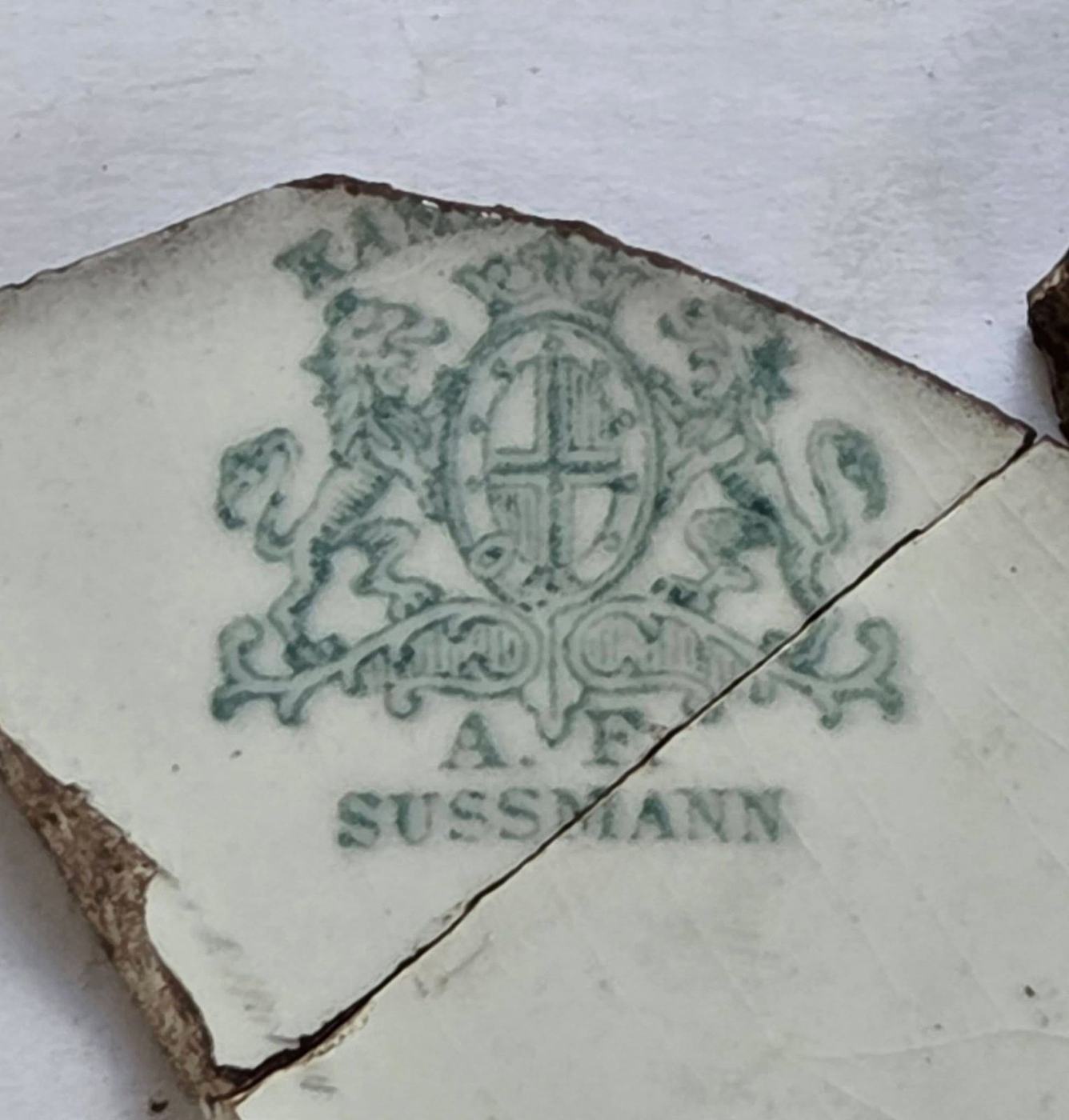
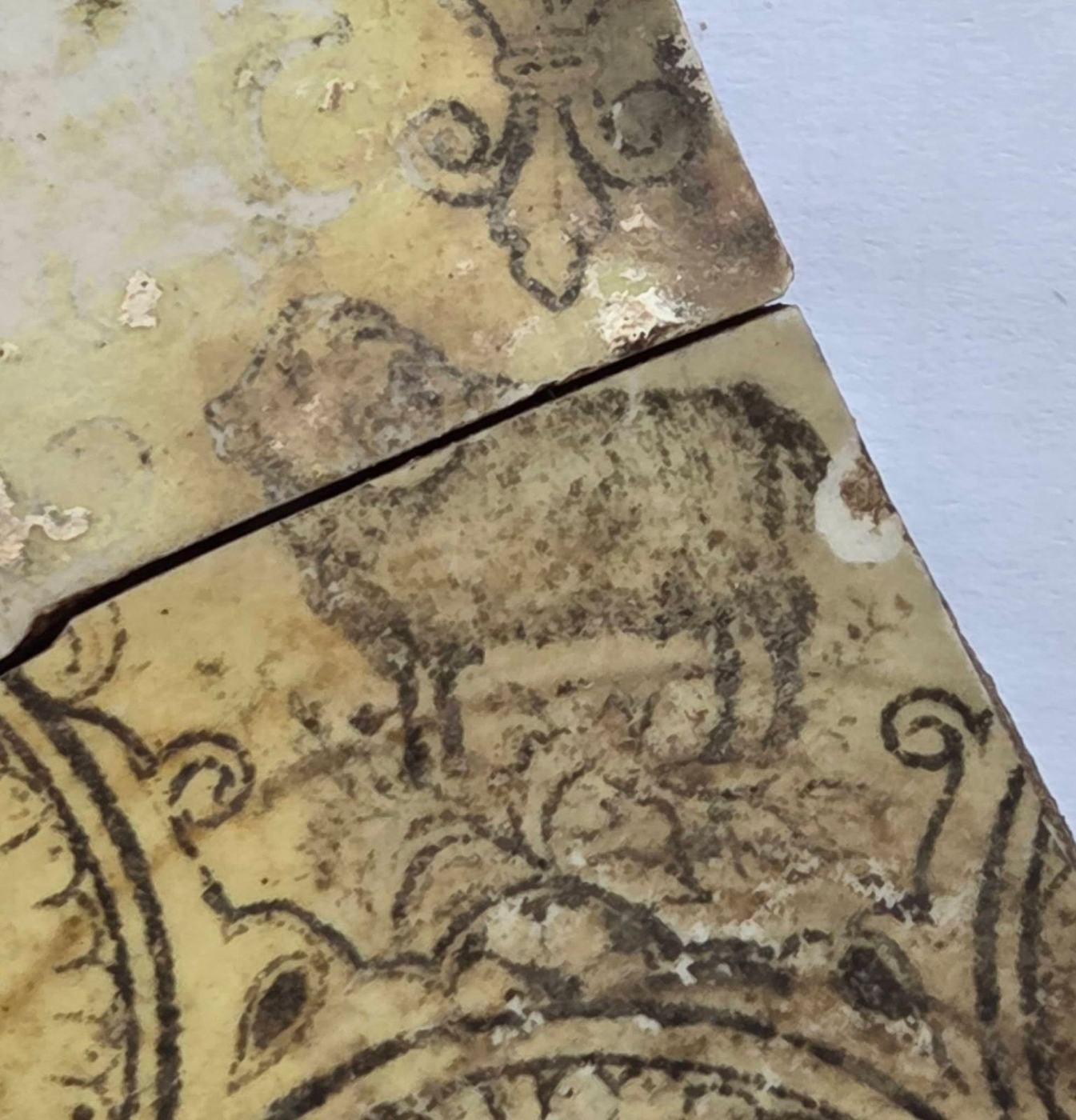
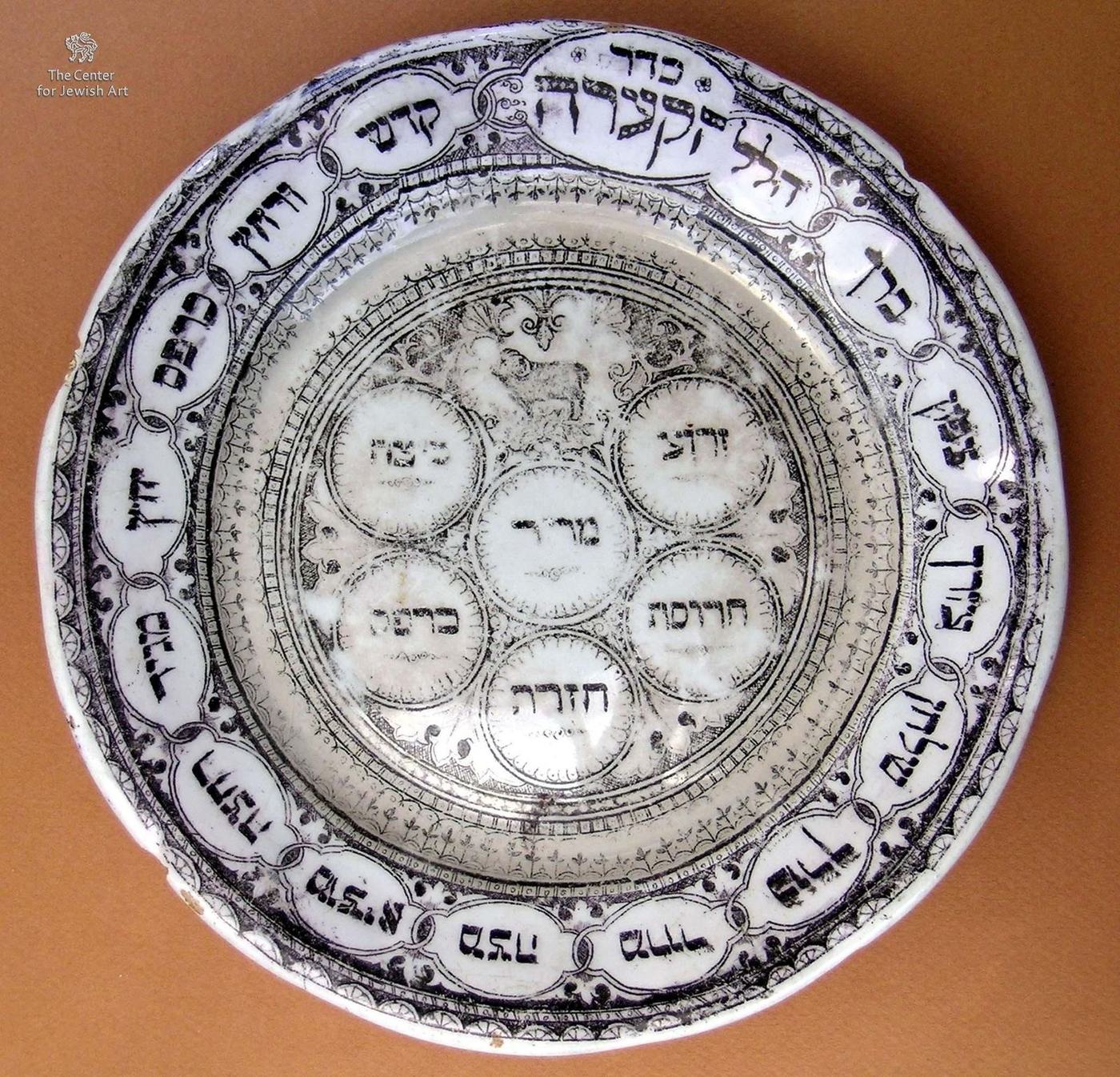
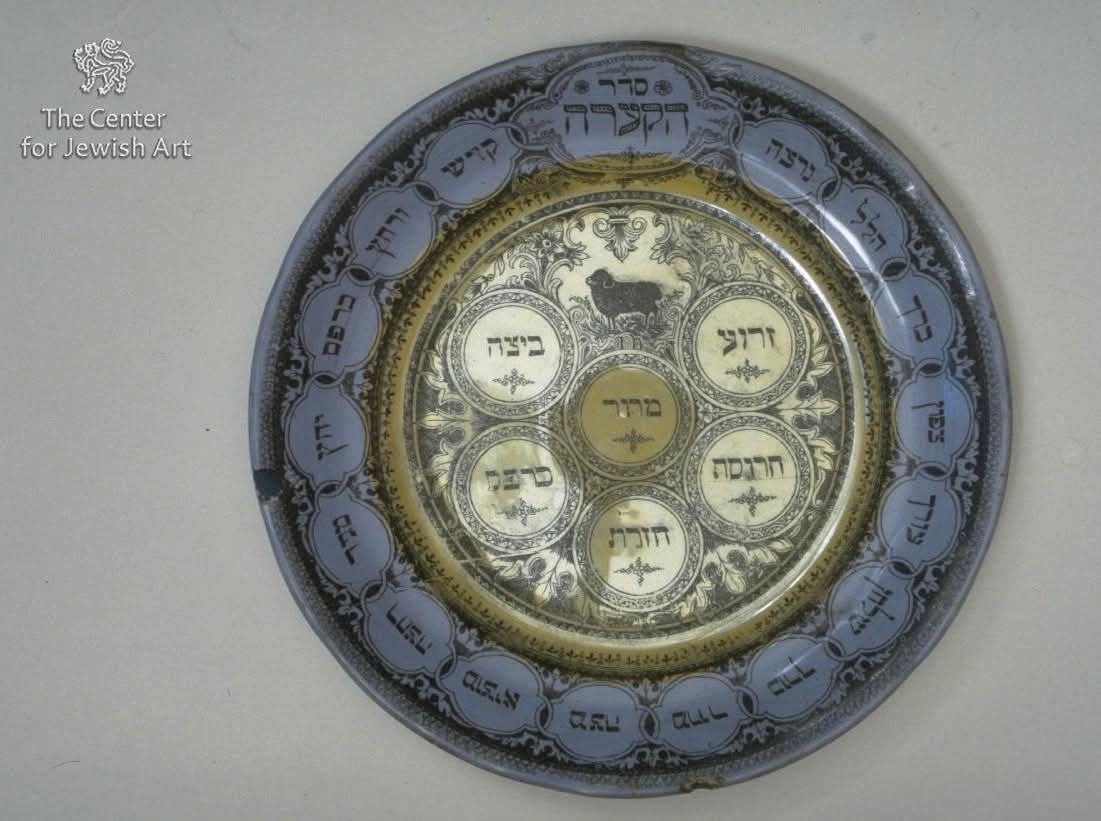
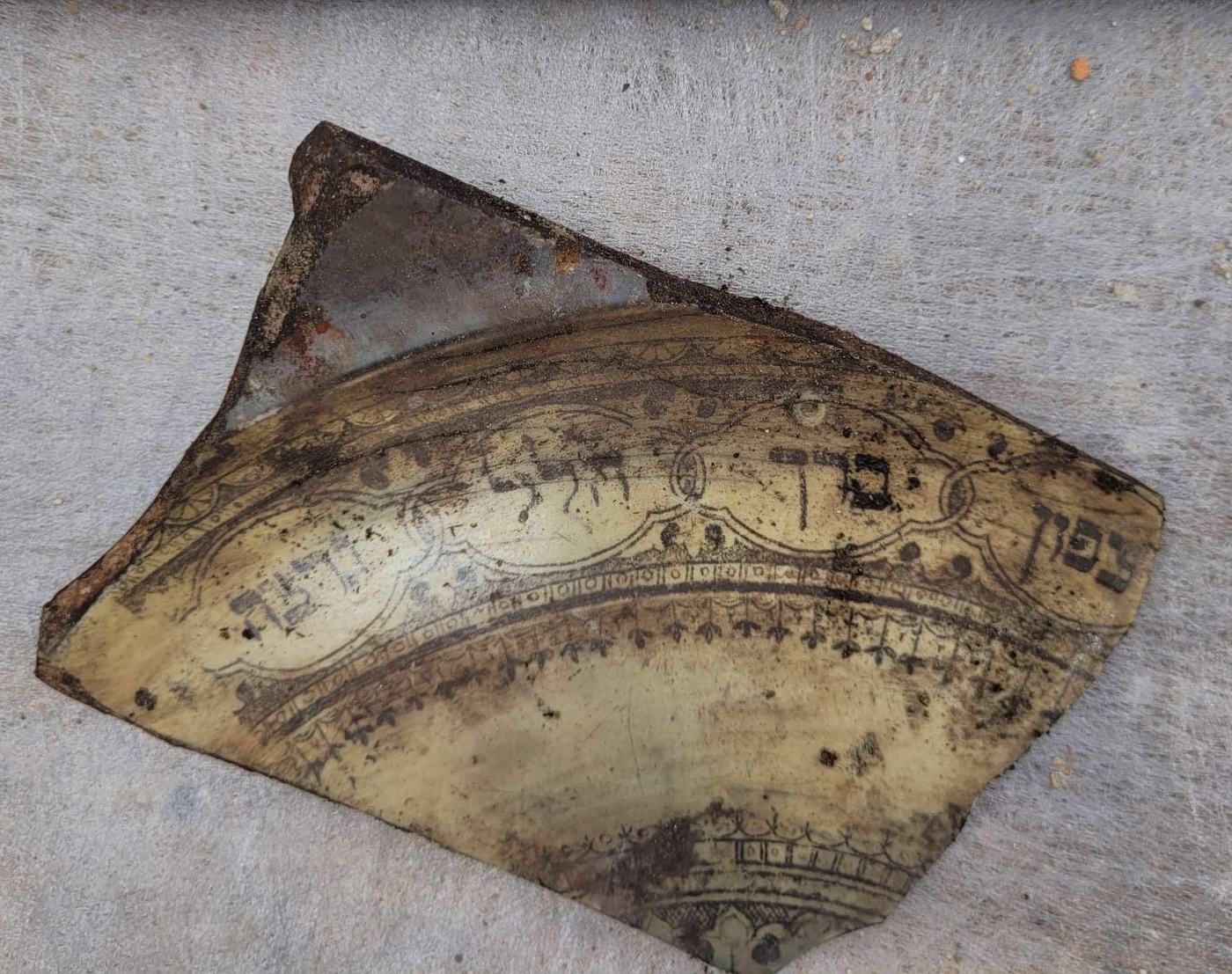
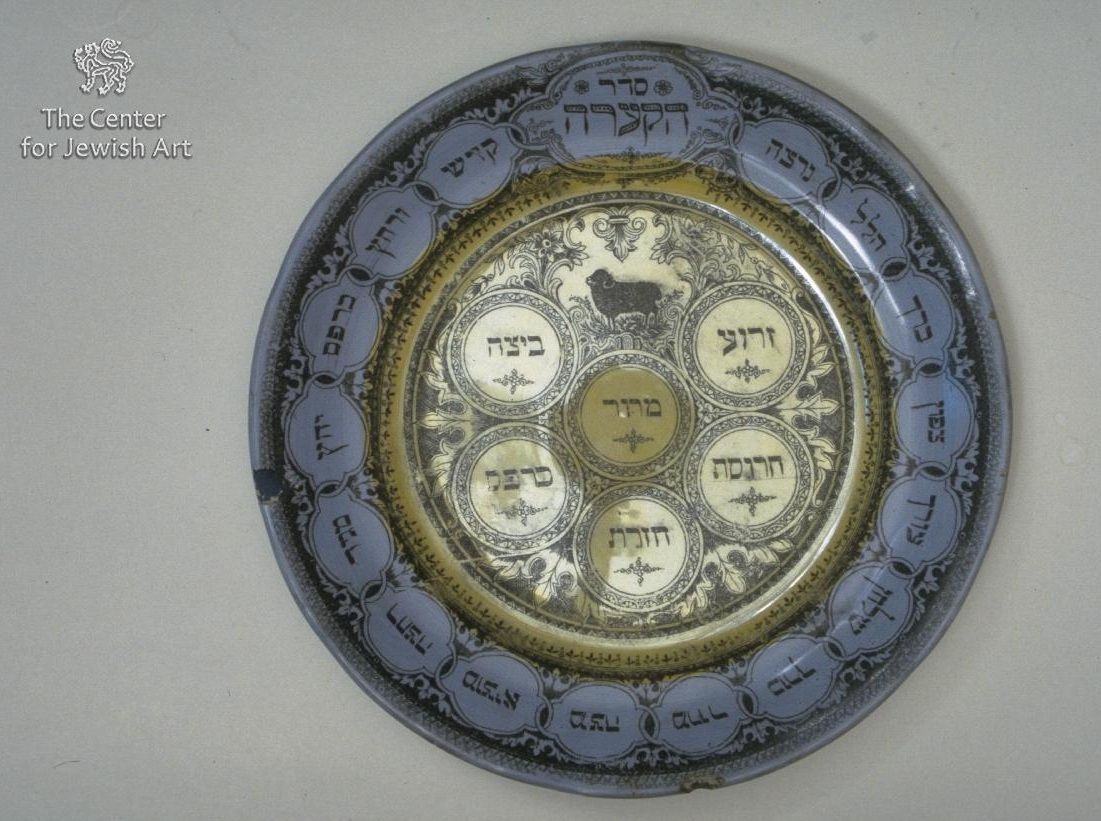
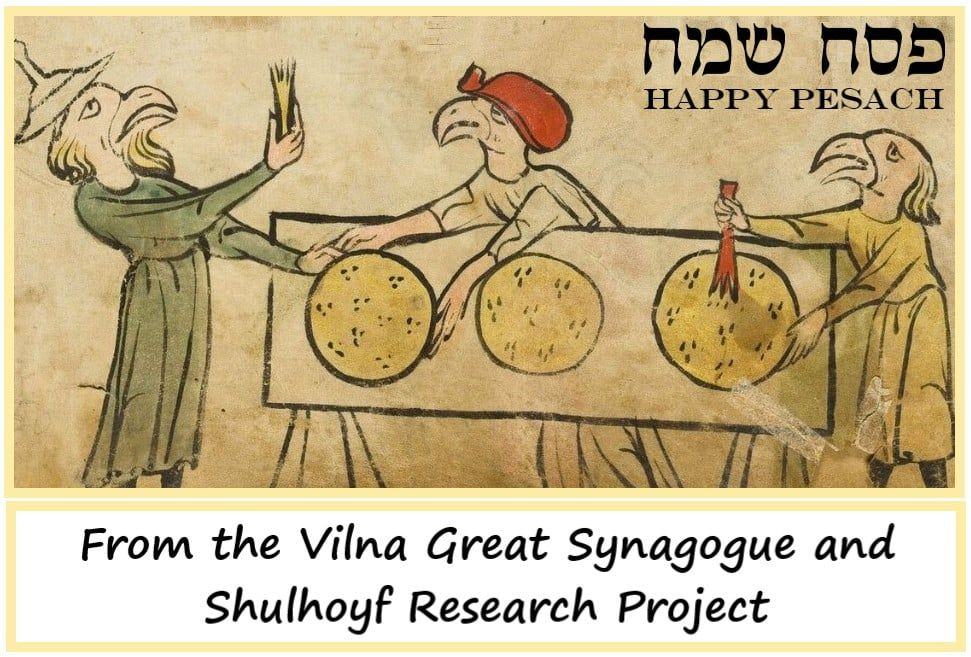
Earlier this month we found two pieces of a Pesach (Passover) plate. Since then, more and more pieces have turned up, as you can see in the photos. Traditional plates for the Pesach meal, known as the Seder, are marked out with place for the symbolic ritual foods - the pascal lamb for sacrifice, an egg for life, charoset for the mortar for the work of the Israelites in Egypt, karpas to dip in salt water for the tears of affliction and bitter herbs for the bitterness of slavery. Around the edge of the plate is a long list of instructions detailing the order of the Seder and the reciting of the story of Exodus from the Hagadah.
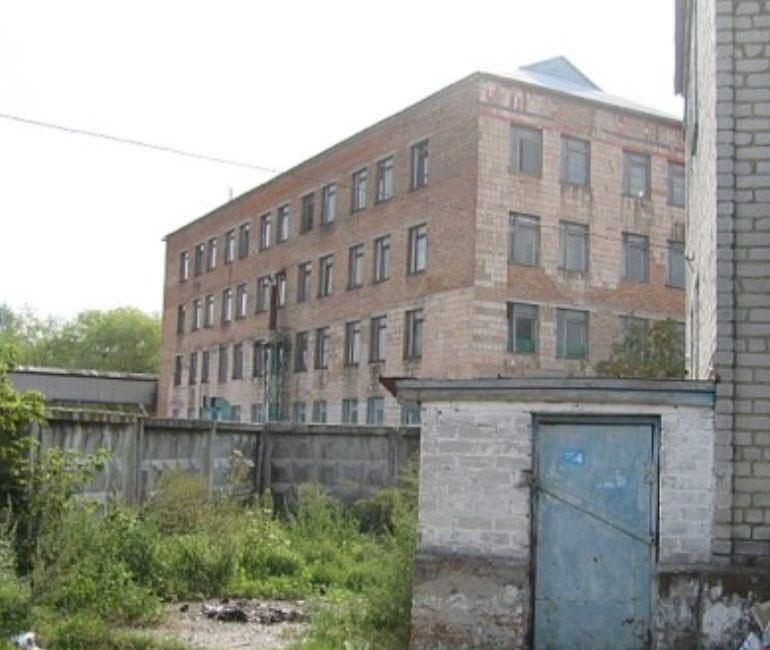
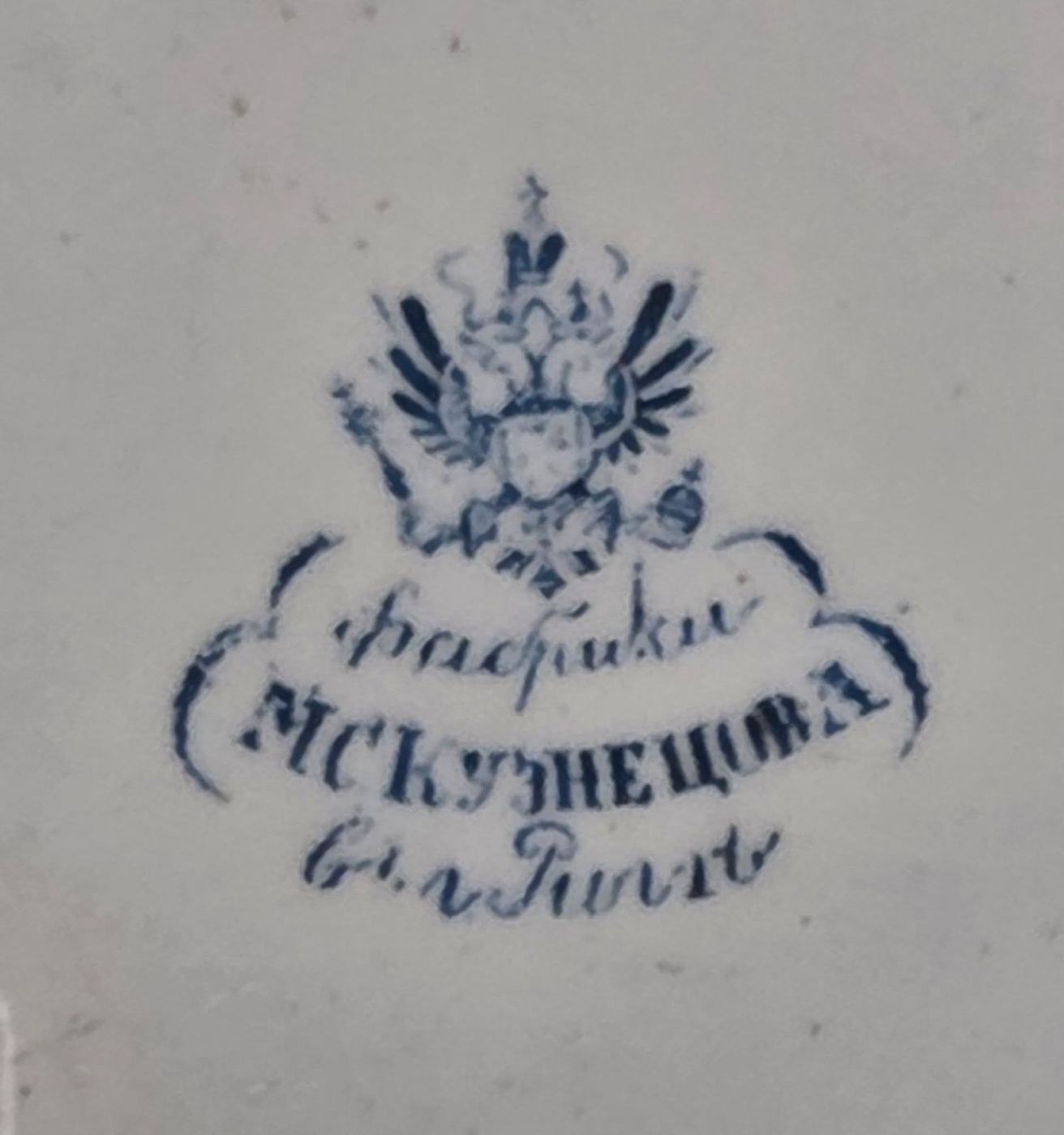
On the bottom of one of the new pieces we found is the maker's stamp, with the name A.F. Sussmann. The Sussmann fiance and porcelain factory was established in the village of Kamienny Brod, now in Ukraine, by Fishel Sussman in 1870, using technology imported from Germany. The factory operated until 1916, when it burned down, and was later reopened by the new Soviet government in state ownership.
The Sussmann factory produced general ceramic items, together with plates for the Jewish market, including our Pesach plate. Similar plates are detailed by the Center of Jewish Art of the Hebrew University and have been sourced to various places in the Pale of Settlement, showing the marketing outreach of factories like Sussmann to the general and Jewish market in the last decades of the 19th century.
From the Sacred to the Profane
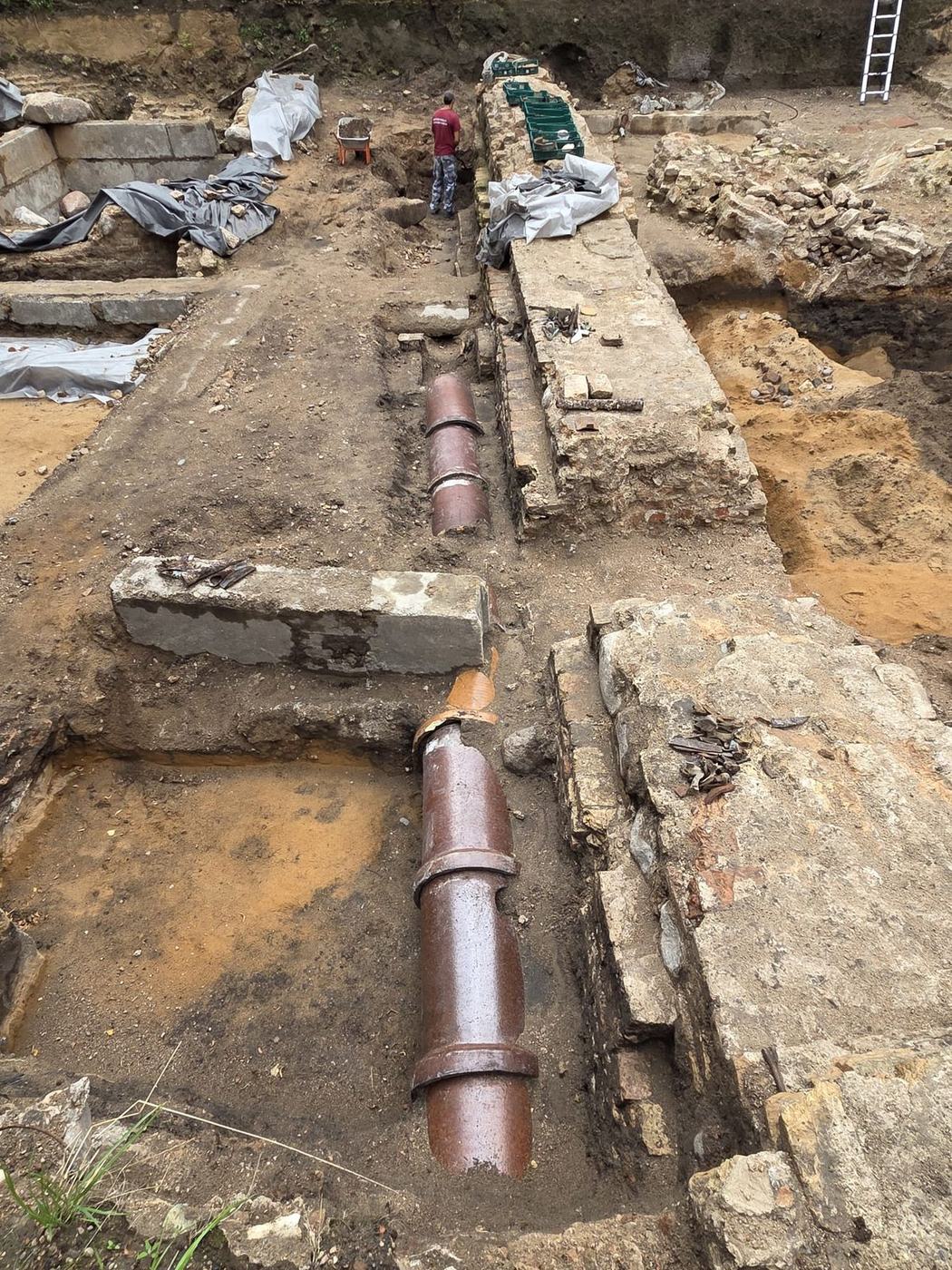
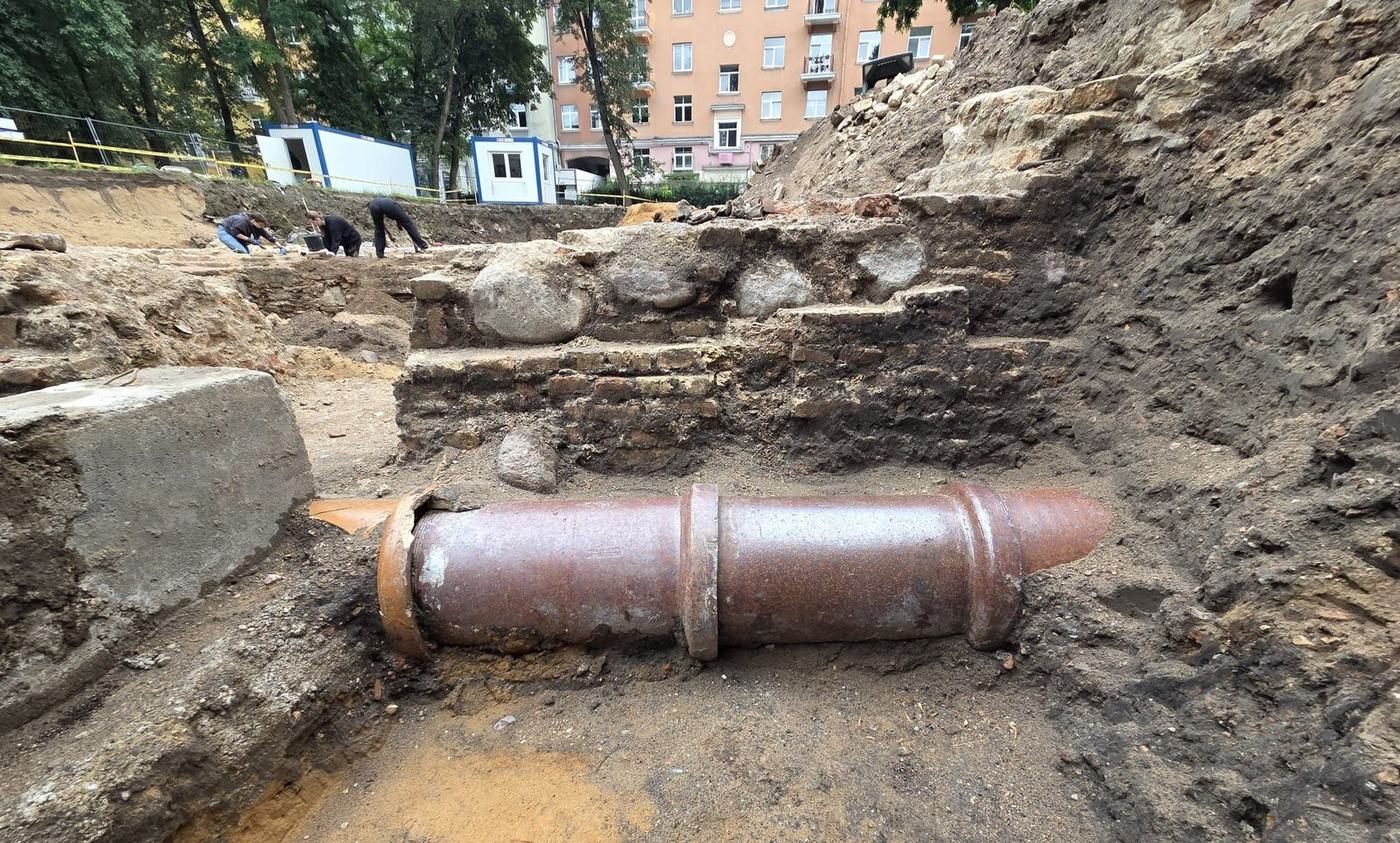
Yesterday we presented a plaque inscribed with the Ten Commandments. Today we move to another aspect of our work, understanding the day to day operation of the large communal complex of the Shulhoyf. No urban area can exist without maintenance, utilities, water and in this case, sewage. For the Great Synagogue, all these activities were managed by the Tzdekah Gedola society, who, at the beginning of the twentieth century employed the engineer Vilner, to conduct massive repairs of the Great Synagogue of Vilna and the surrounding buildings.
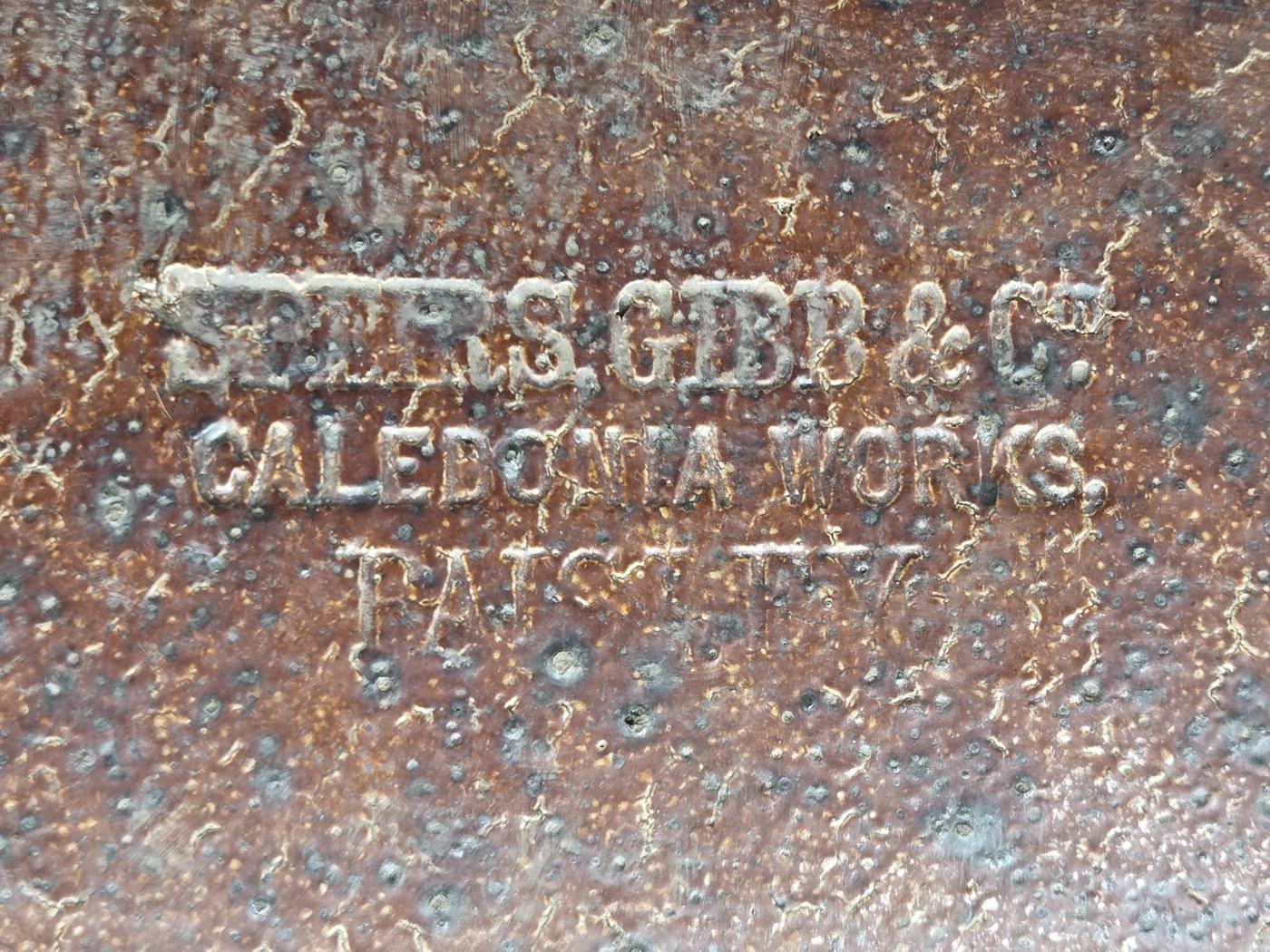
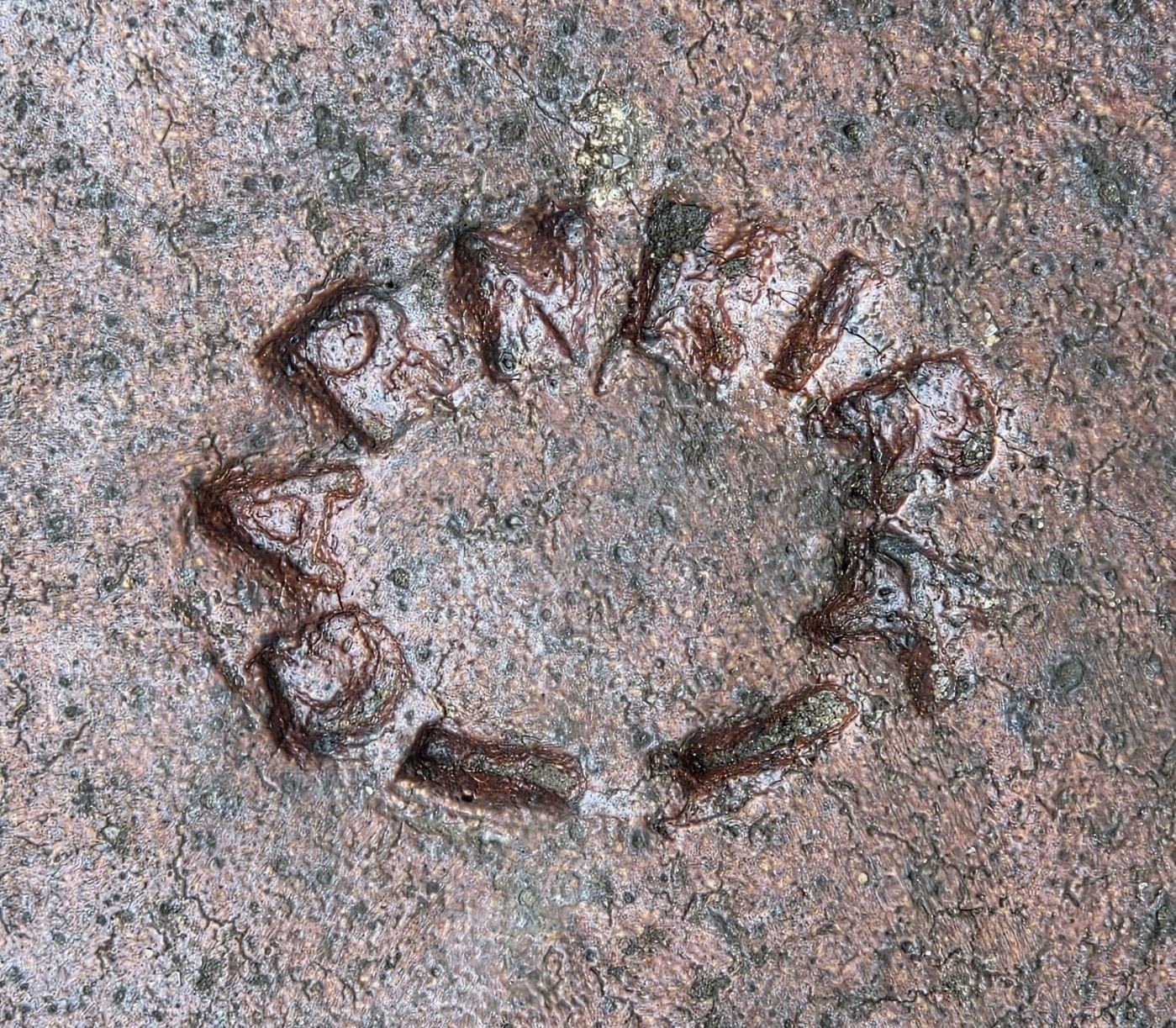
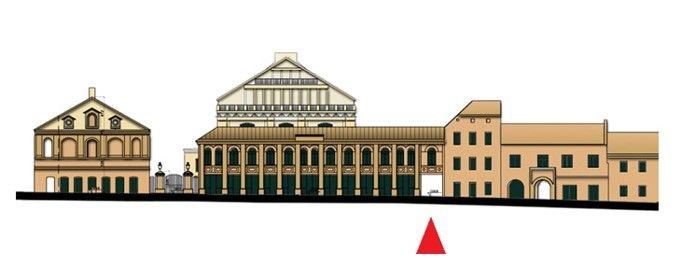
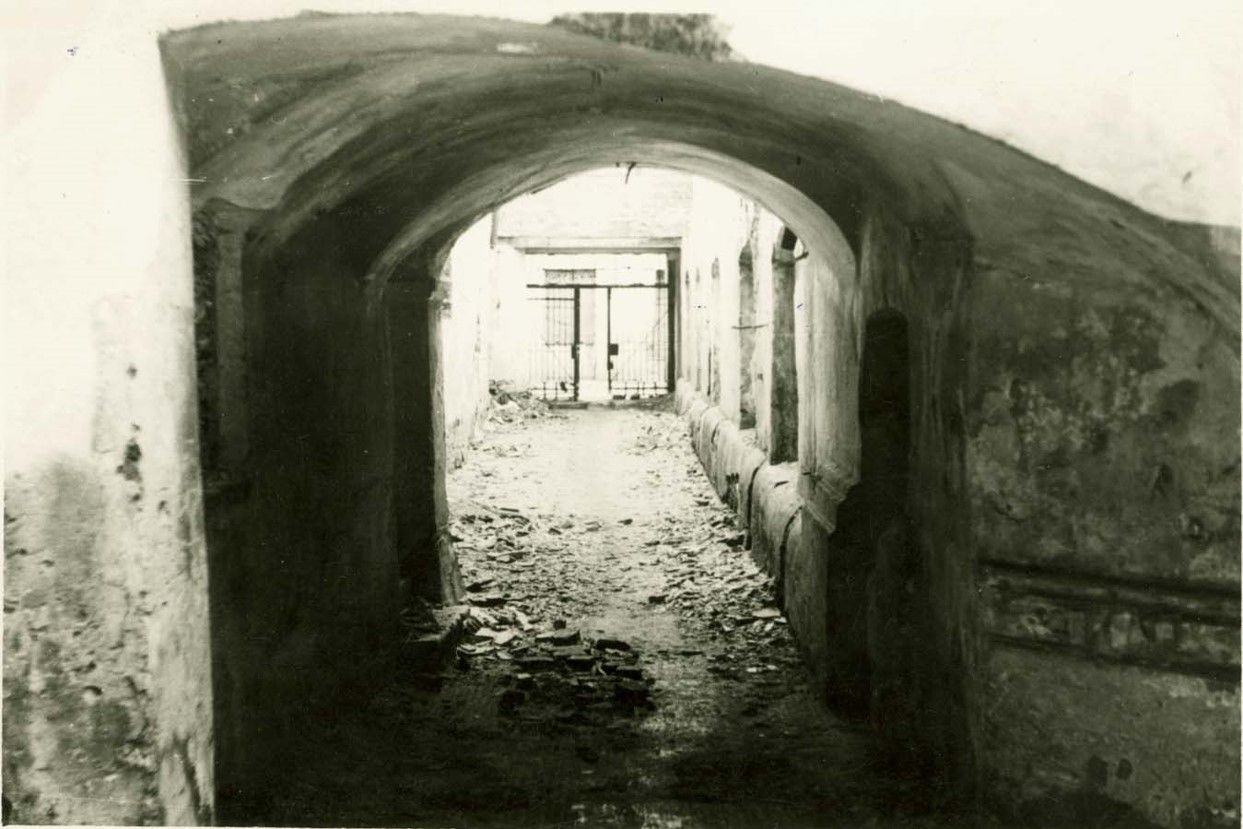
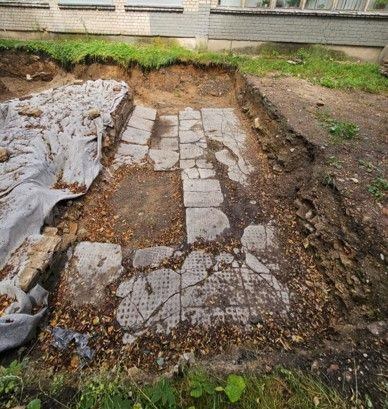
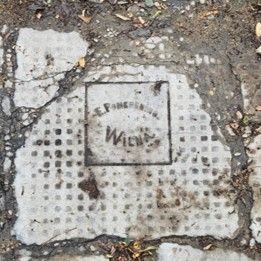
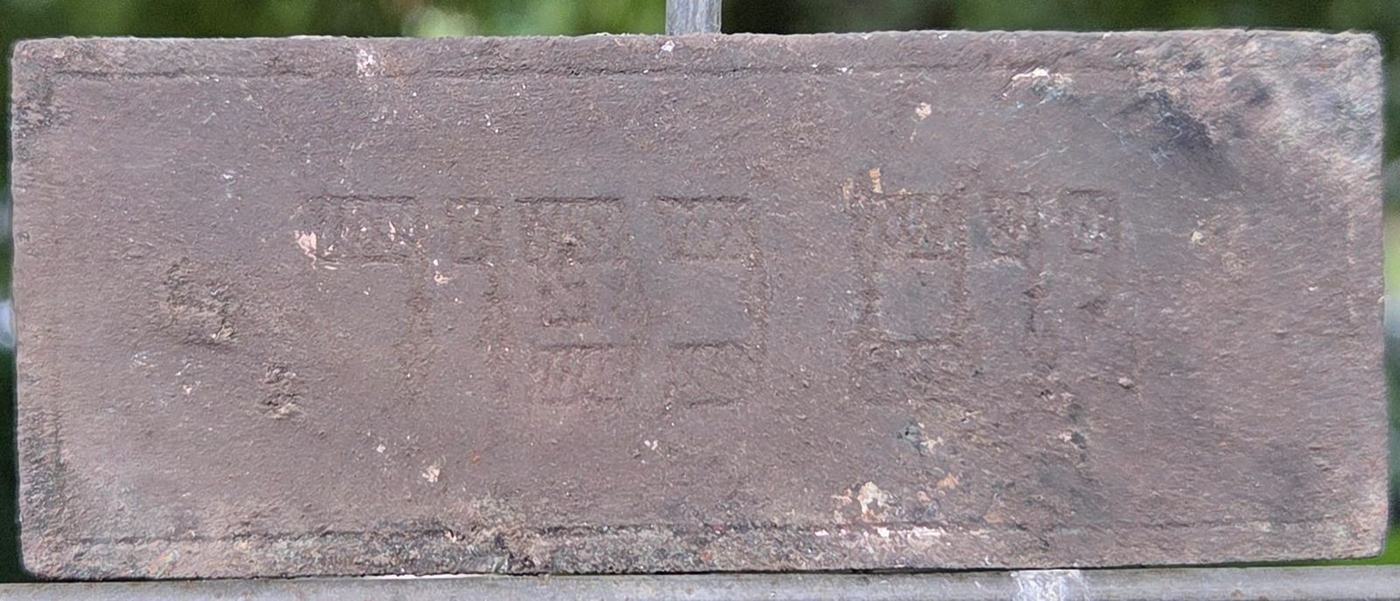
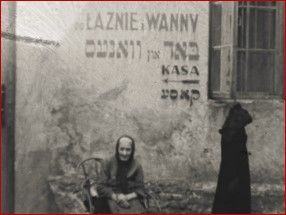
In previous years we have detailed our work on the bathhouse and mikve building at the back of the Great Synagogue. Now, beneath the pathway passing under the Strashun Library, leading to the bathhouse, we discovered a line of heavy duty fired clay pipes that drained sewage from the Shulhoyf, presumably to the main sewage pipe under Zydu g. (Jewish Street). Something so mundane provides us with important information, for the pipes are stamped with the names of the companies who made them. The pipes were manufactured by 'Spiers and Gibbs & Co.' in Paisley and 'Garnkirk Firebrick' of Lanarkshire, both in Scotland. Both these companies operated at a time fitting well with the date of the repairs conducted by Vilner. Another contractor involved with this work was named Eduard Pomerening, who established the oldest concrete tiling factory in Vilnius in 1888, his name embossed on the paving covering the Scottish sewage pipes and the pathway from the street into the Shulhoyf.
The Ten Commandments
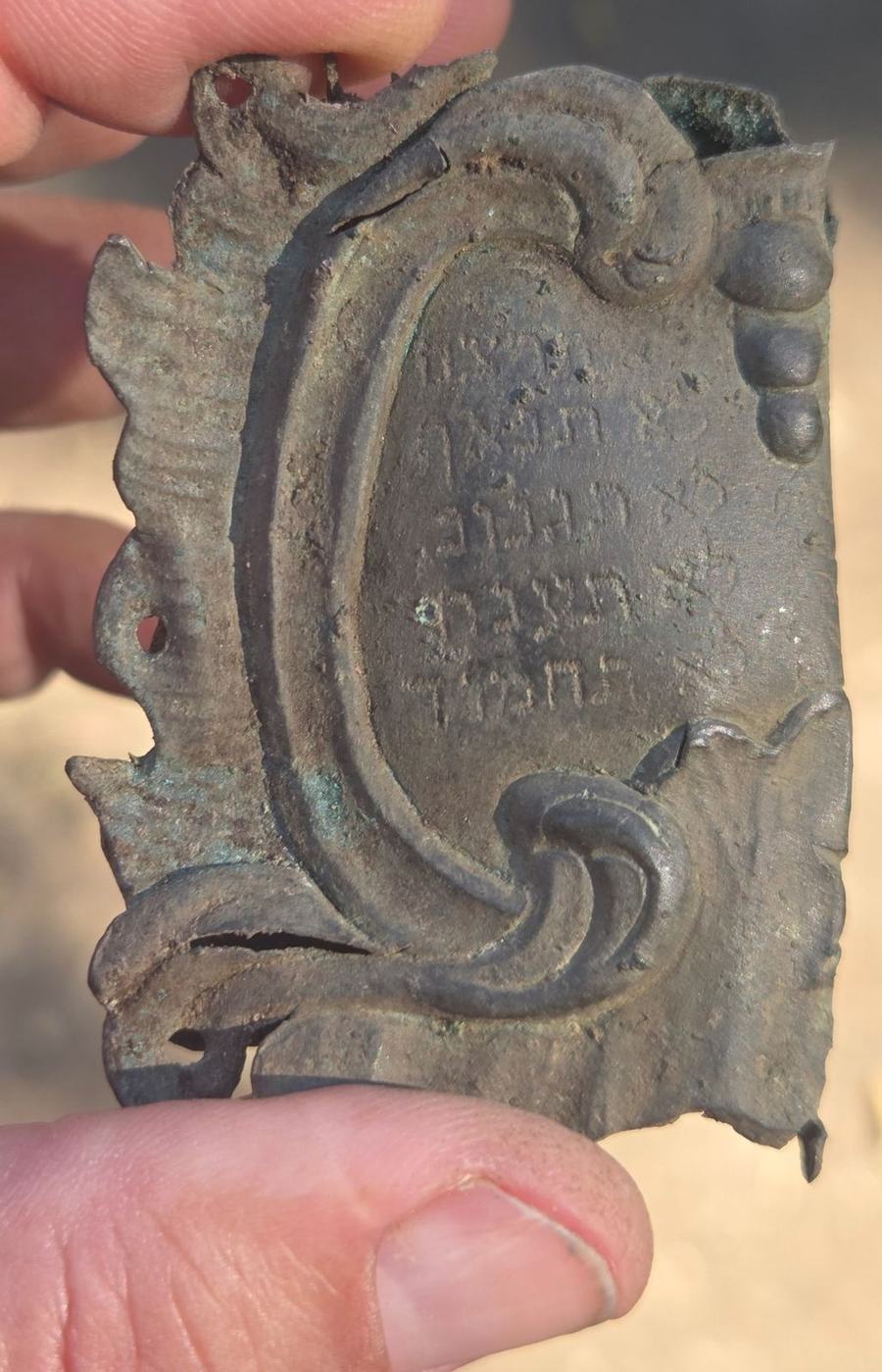
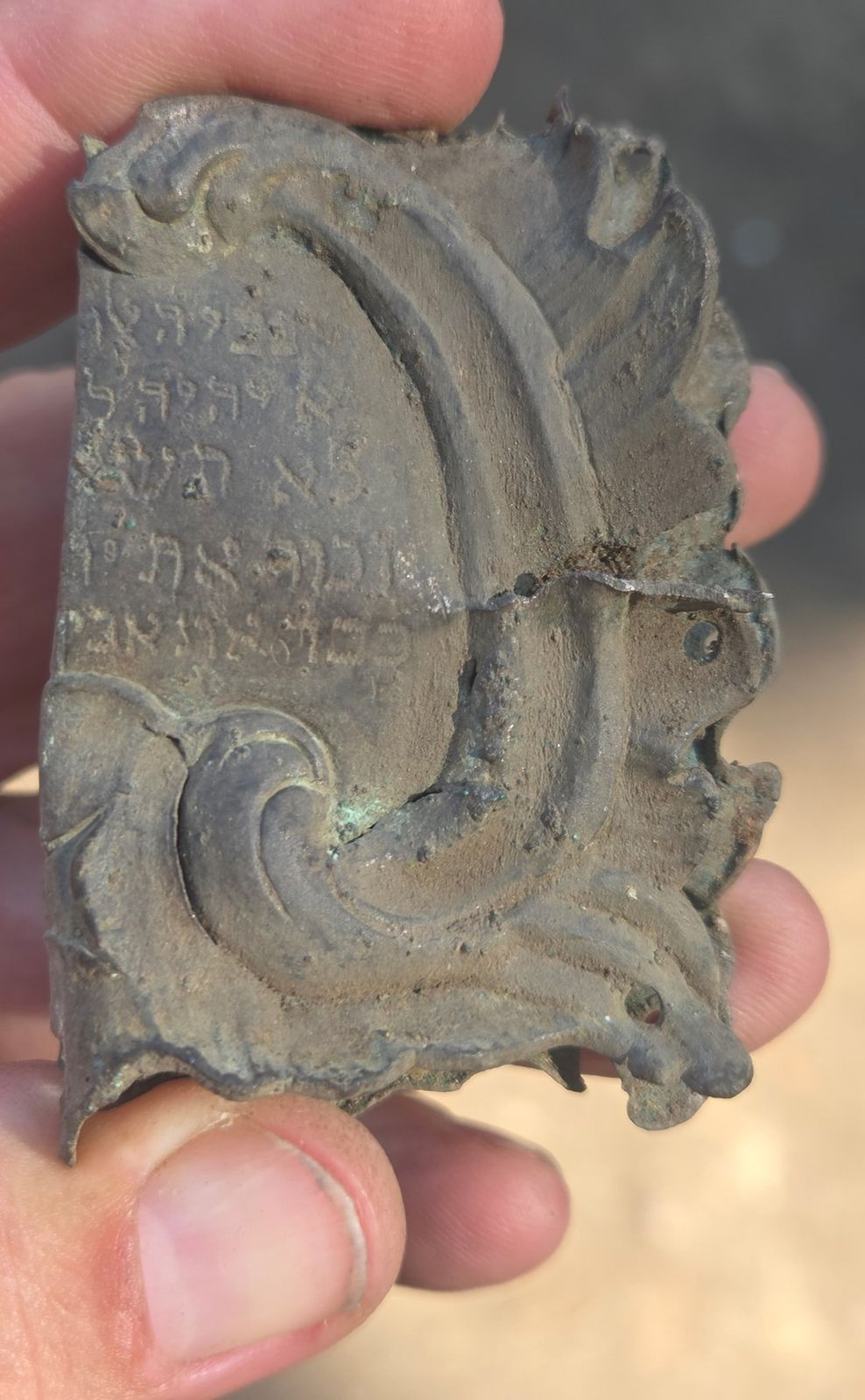
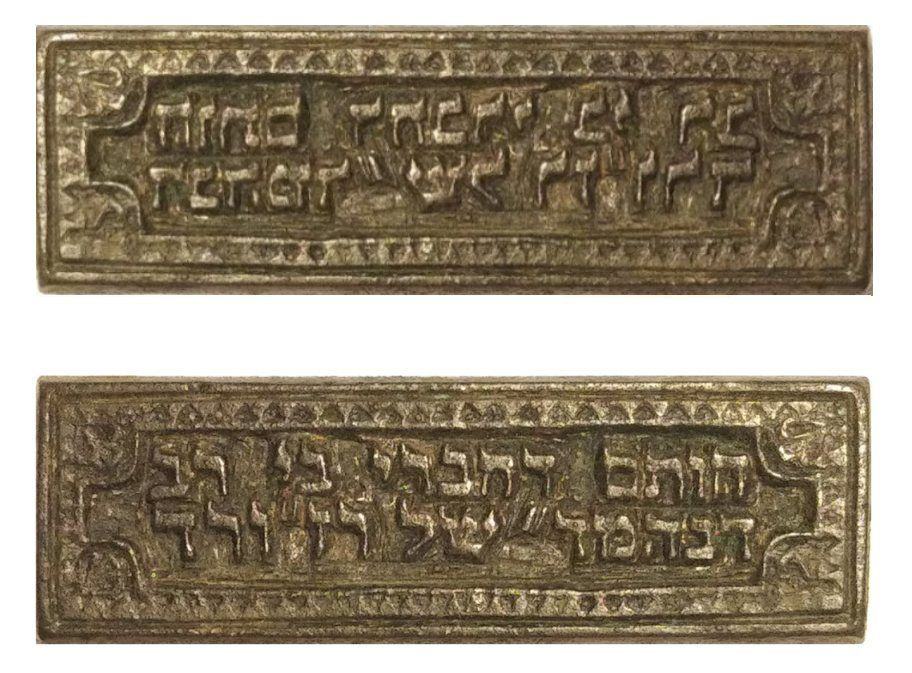
A small bronze plaque, bent in two, was found in the debris of the Great Synagogue of Vilna, probably originally attached to a bookcase.
After brushing it from the accumulated mud, Hebrew letters began to appear with the first words of each of the Ten Commandments. This exciting find will eventually find its way into the future exhibition that must accompany the preserved remains of the Great Synagogue.
Terrazzo and the Great Synagogue of Vilna
Terrazzo alla veneziana is a flooring technique with Roman origins, regenerated in Venice from the 16th century, before achieving its greatest popularity in buildings of the late 19th and early 20th centuries, and even used widely today. Many buildings of turn-of-the-century Vilnius use terrazzo in their public spaces, with wonderful examples still visible when walking the streets of the city, their colourful expressions utilizing a mixture of cement, aggregates and pigments to form the designs.
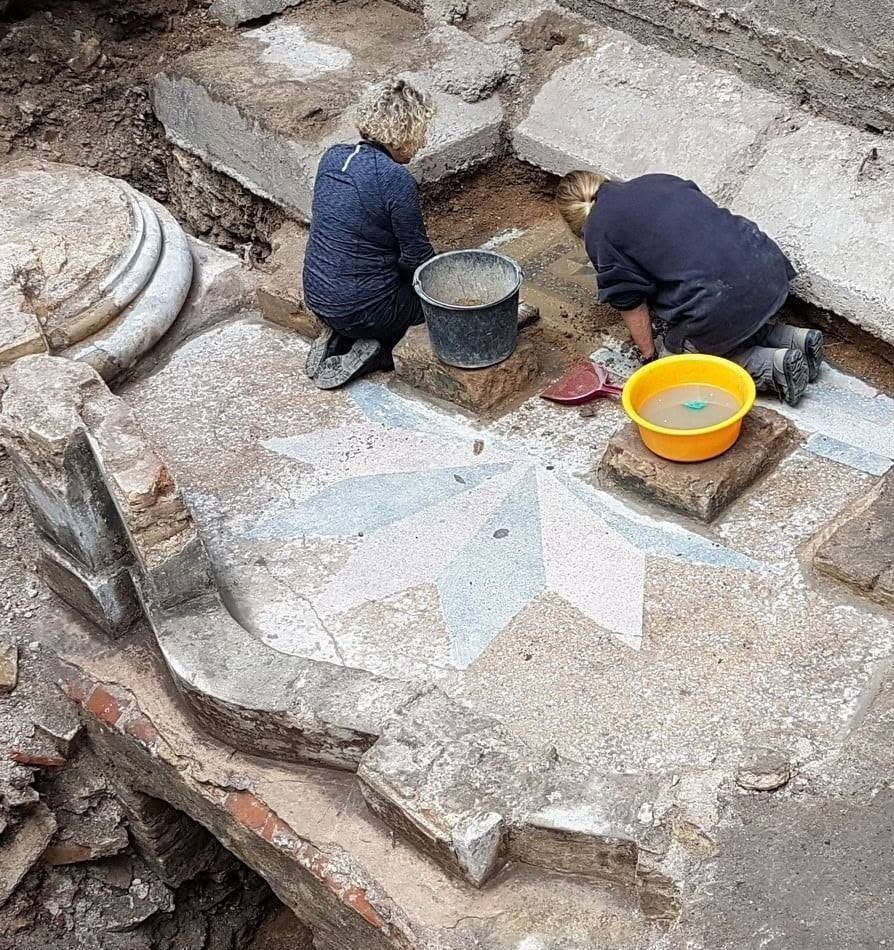
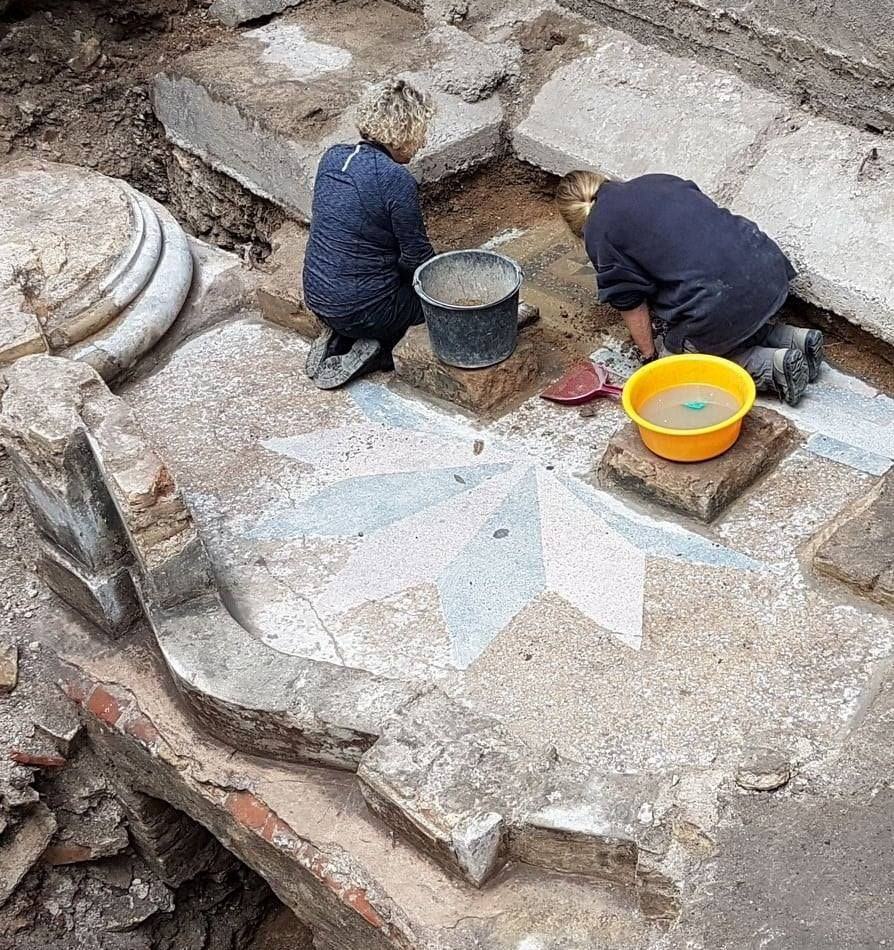
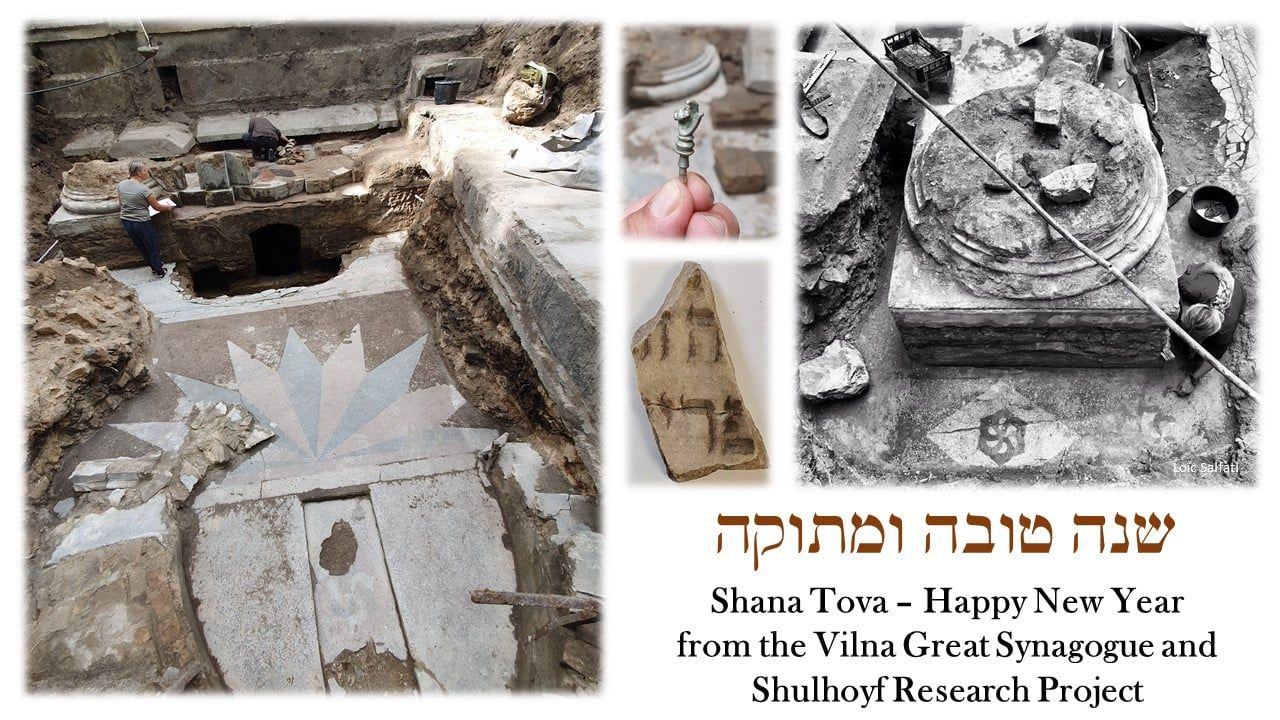
At the beginning of the 20th century Engineer Leonid Viner was engaged by the Jewish community to conduct repairs of the Great Synagogue of Vilna. He was probably also responsible for covering the original red terracotta tiles with a new decorative terrazzo floor, resplendent with panels of geometric and floral designs in red, black, white and green. The patterns were chosen probably from a general catalogue, though arranged specially to fill the specific space of the synagogue. At the centre of the Great Synagogue was the magnificent Bimah, the decoration of which was only partially known to us, as the foundation of the school passed directly over it. Now we have revealed that floor, with a multi-coloured terrazzo floor of a large star, its rays filled with leaves in green, radiating out from a central red and black flower.
Visitors on our tours next week will be able to view the Bimah decoration and other parts of the excavation.
Here's Vered washing the floor of the Bimah of the Great Synagogue of Vilna for the first time since 1940, when the synagogue was shut by the Soviet authorities during their first occupation of the city.
What was There Before the Great Synagogue?
Well into the 16th century, Vilnius was a city with a brick fortress on Gediminas's hill, a fortified wall and towers, and hundreds of wooden houses, that tended to burn down at frequent intervals. The rise of the Grand Duchy of Lithuania, and increased prosperity under the influence of the noble families of the Polish-Lithuanian Commonwealth, changed the face of the city. German and Italian architects were invited to introduce Renaissance and Baroque style, filling the streets with magnificent churches, monasteries, an important university, palaces and the new Great Synagogue.
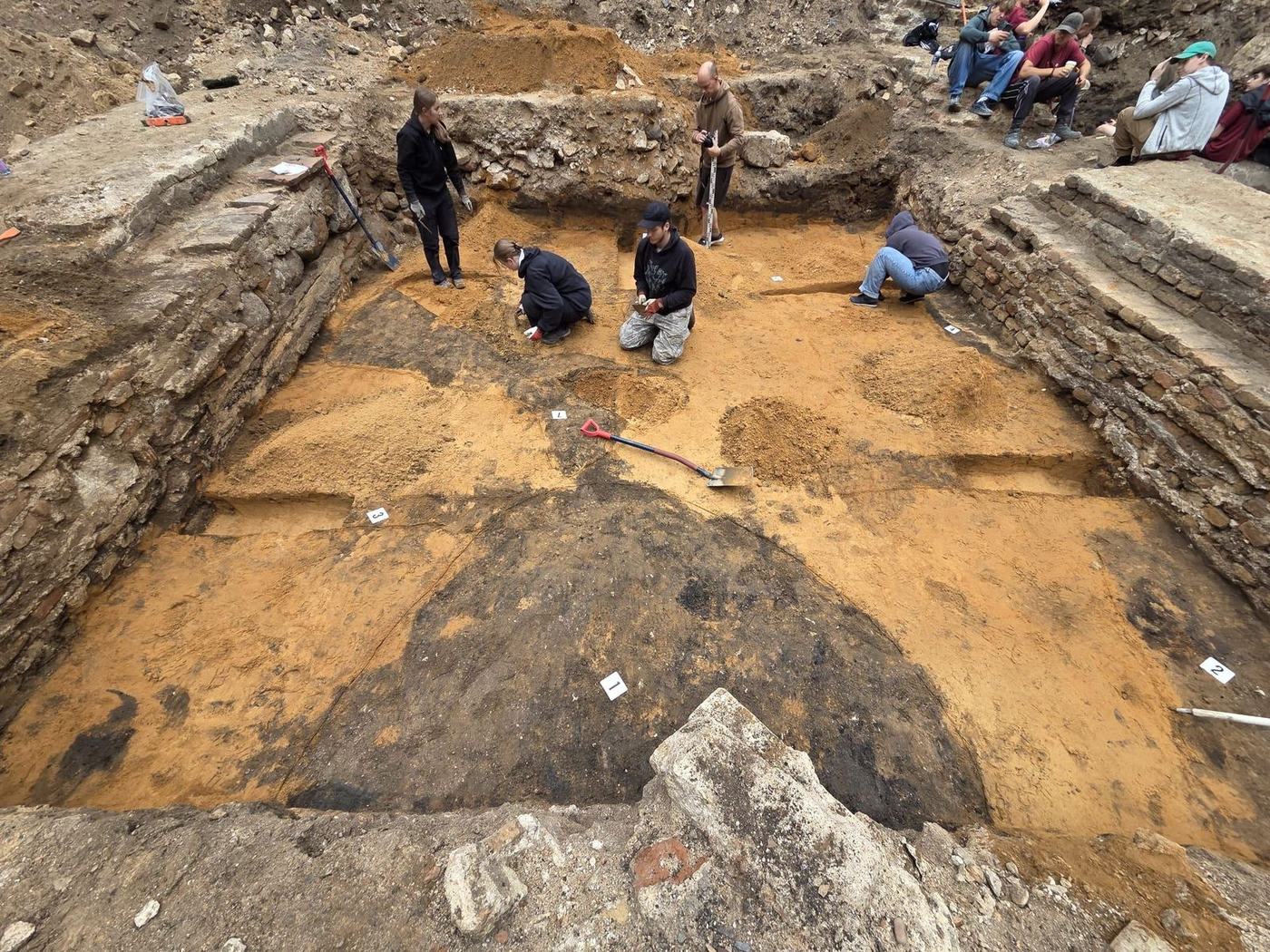
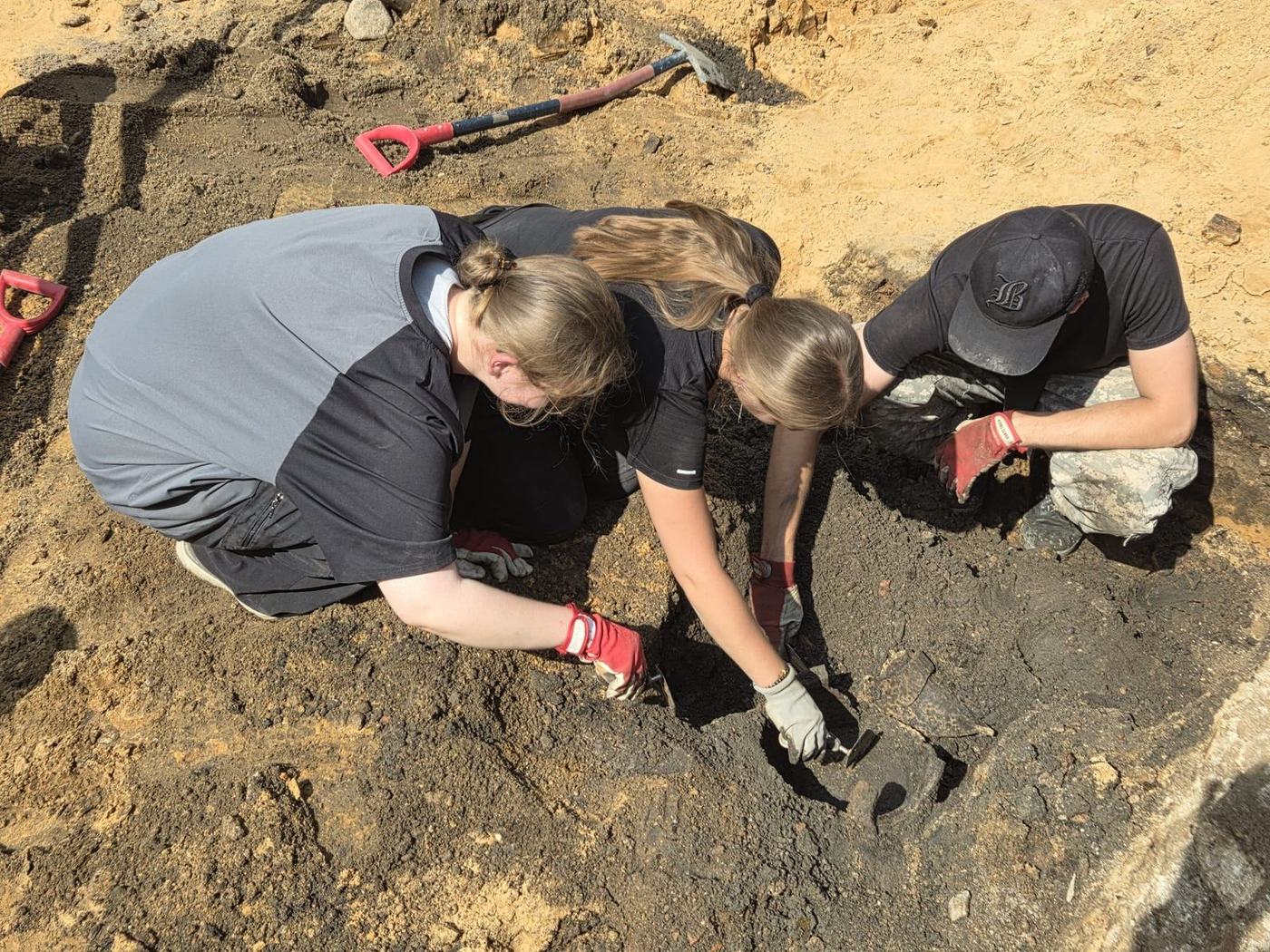
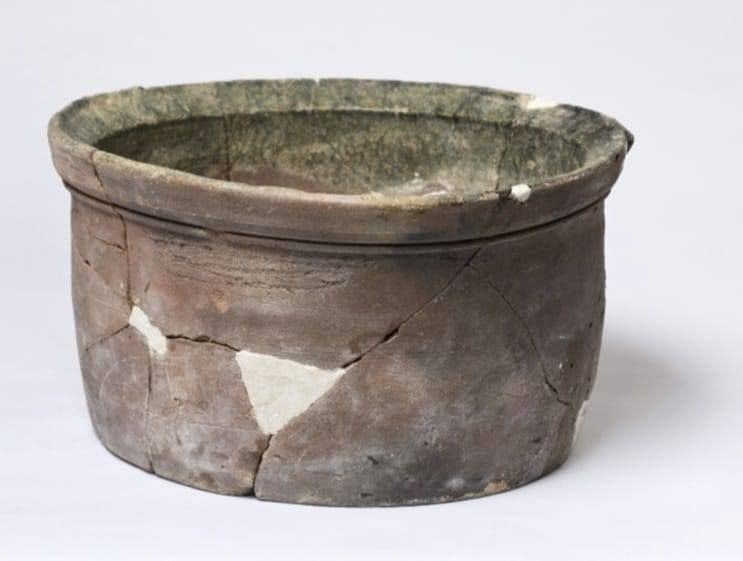
While we have been concentrating our efforts on exposing the remains of the Great Synagogue of Vilna, every now and then we have an opportunity to peep at what was at the site before the construction of the synagogue in the mid-17th century. Today, while cutting down into the foundation below the women's section to the west of the main synagogue hall, we found a layer of natural sand, that marks the base level of human settlement in Vilnius. Criss-crossing the sand were black lines and patches. These were all that remained of wooden structures that were once found at the site, the black lines being all that was left of carbonized wooden beams, and the patches were refuse pits. Today while digging the pit we revealed a casserole pot, dated to the 16th century, possibly the last meal of the family living in the wooden house that once stood there.
Tisha B'Av in Jerusalem d'Lita
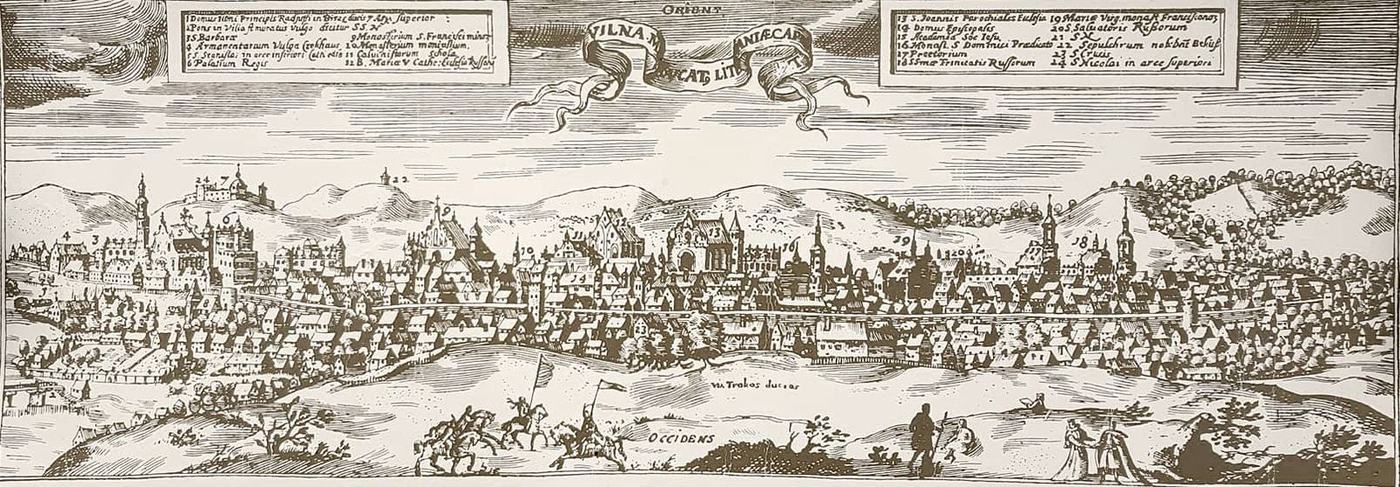
'O how has the city that was once so populous remained lonely! She has become like a widow!' say Lamentations.
This evening is Tisha B'Av, followed by a day of fasting, mourning and sorrow, commemorating the destruction of Jerusalem and the First Temple by the Babylonians in 586 BCE, during which poetic laments, attributed to Jeremiah, are recited.
Today in Vilna, we can widen that lament to include the lost community and the lost 'temple' of Jerusalem d'Lita, the Great Synagogue of Vilna.
On this Tisha B'Av we mourn the loss of a great community, of its people, its creativity, its potential and of its monuments. Vilnius is worthy of its two cathedrals, one of which was the Great Synagogue, and hopefully our project will go someway to rectifying that loss and the historical void in the urban fabric of this city.
אֵיכָה יָשְׁבָה בָדָד הָעִיר רַבָּתִי עָם הָיְתָה כְּאַלְמָנָה רַבָּתִי בַגּוֹיִם שָׂרָתִי בַּמְּדִינוֹת הָיְתָה לָמַס. בָּכוֹ תִבְכֶּה בַּלַּיְלָה וְדִמְעָתָהּ עַל לֶחֱיָהּ אֵין-לָהּ מְנַחֵם מִכָּל-אֹהֲבֶיהָ כָּל-רֵעֶיהָ בָּגְדוּ בָהּ הָיוּ לָהּ לְאֹיְבִים.
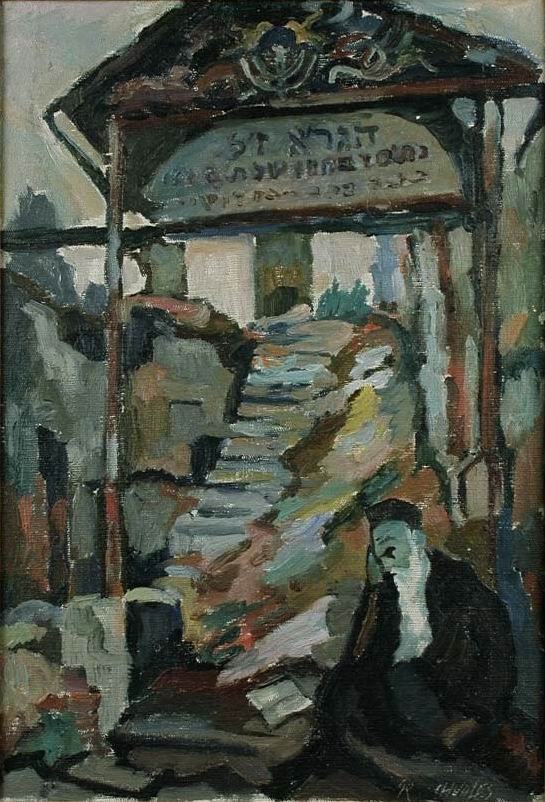
The Tzdekah Gedola ‘Big Charity’ Society and the Great Synagogue
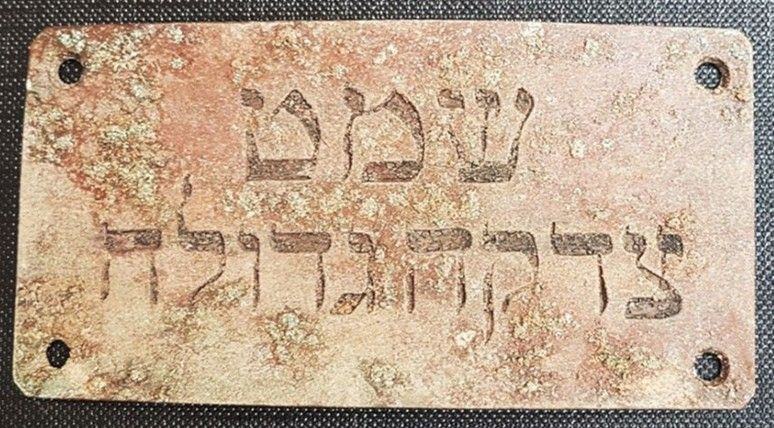
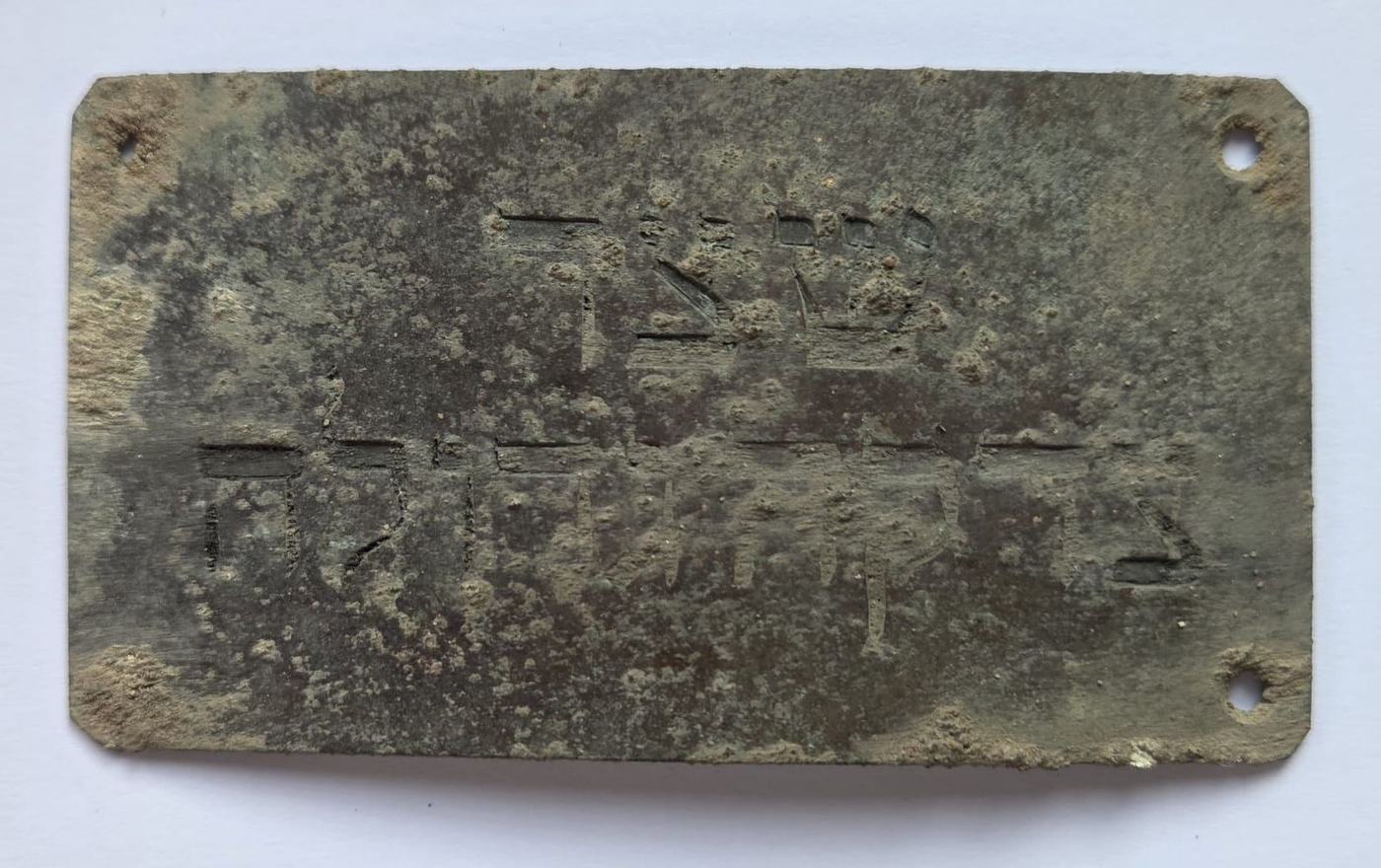
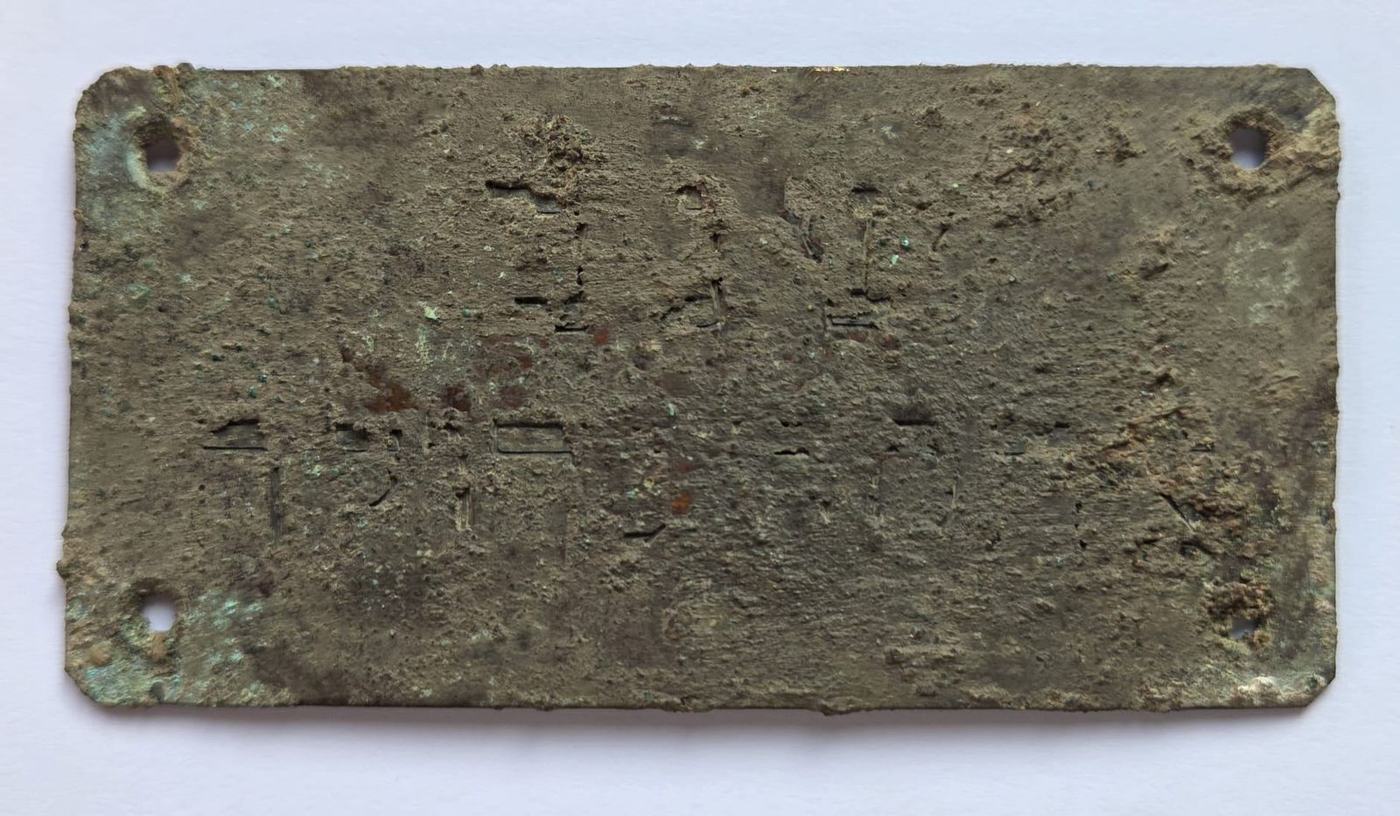
In 2019 we recovered a small metal plaque from the debris around the area of the Bimah which informed us something about the day-to-day management of the Great Synagogue and of Vilna's vibrant Jewish life.
The plaque belongs to the Tzdekah Gedola (צדקה גדולה), the ‘Big Charity’ Society, the most important charitable foundation in the city from the 16th century until it was disbanded in 1931. With the breaking up of the Kahal, the autonomous Jewish community council, in 1844, the Tzdekah Gedola Society took over many of the functions of community and synagogue management. The society was managed by the Gabai, the sexton, of the Great Synagogue and was responsible for the provision of alms for the poor, for wet nurses, supporting orphans and at Pesach (Passover) food packages for the needy, known as ‘Kimkha d’Paskha’. The society also had a bureaucratic function, including the issuance of permits for new ‘Minyanim’ (prayer groups) and donating funds for burial and ritual slaughtering (shechita).
Now we have found two more seating plaques assigned to the Tzdekah Gedola Society in the main hall of the Great Synagogue, evidence of the power of the society within the community and the number of official seats given to its management board. The seat numbers on the three society plaques are 349, 352 and 394. As the seat numbers are not close to each other, it would be interesting to know if the officials of the society were seated together or sat in different places in the hall, and also the total number of seats assigned to the Tzdekah Gedola Society within the most important synagogue of the Jewish community of Vilna.
Cholent
Earlier in the week we presented a platter decorated with two fish designed for serving Gefilte Fish, and now we move on to another popular Jewish dish - Cholent - טשאָלנט.
Cholent, a traditional slow cooked stew, was typically eaten on Shabbat. On Fridays, pots of beef trimmings, root vegetables, beans and barley, would be filled and taken by each family to the hot baker's ovens, where the contents would slowly cook overnight. As lighting a fire and cooking food were activities prohibited on Shabbat for religious Jews, the Cholent was eaten as the main midday Shabbat meal served after the morning synagogue services.
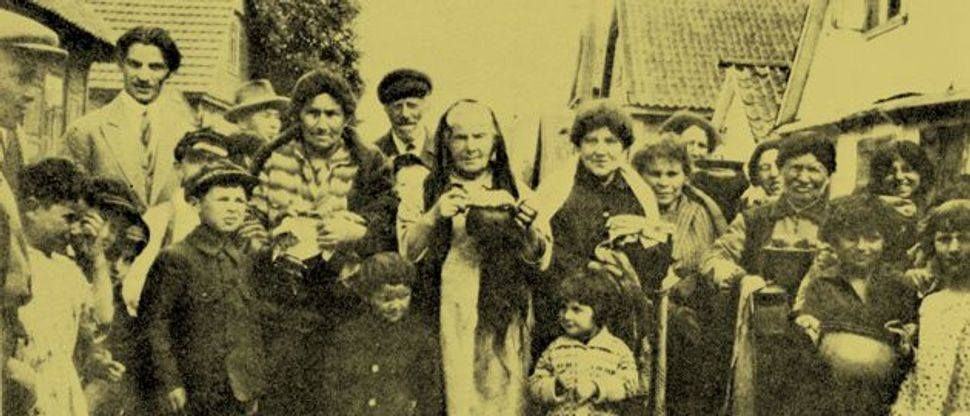
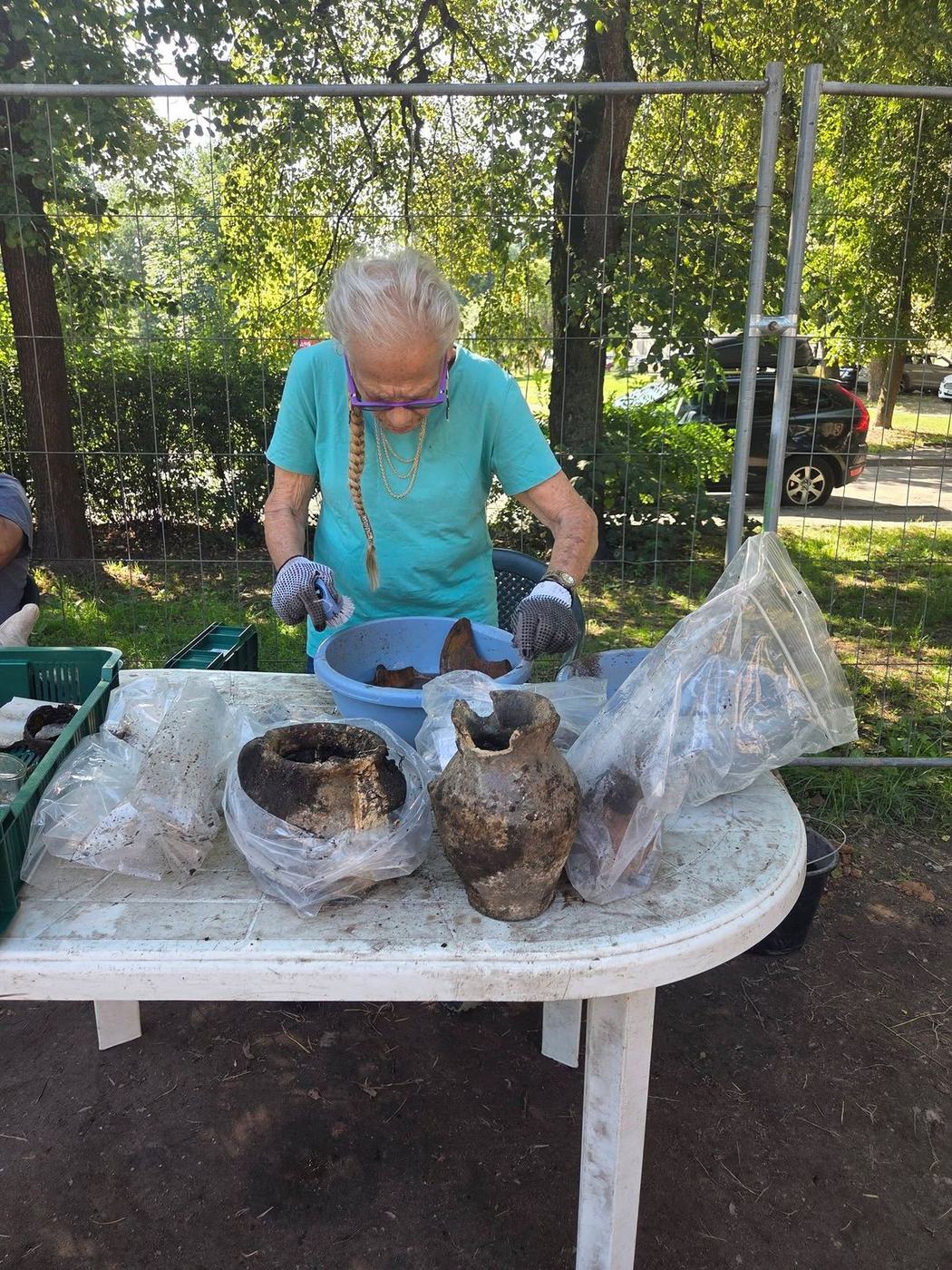
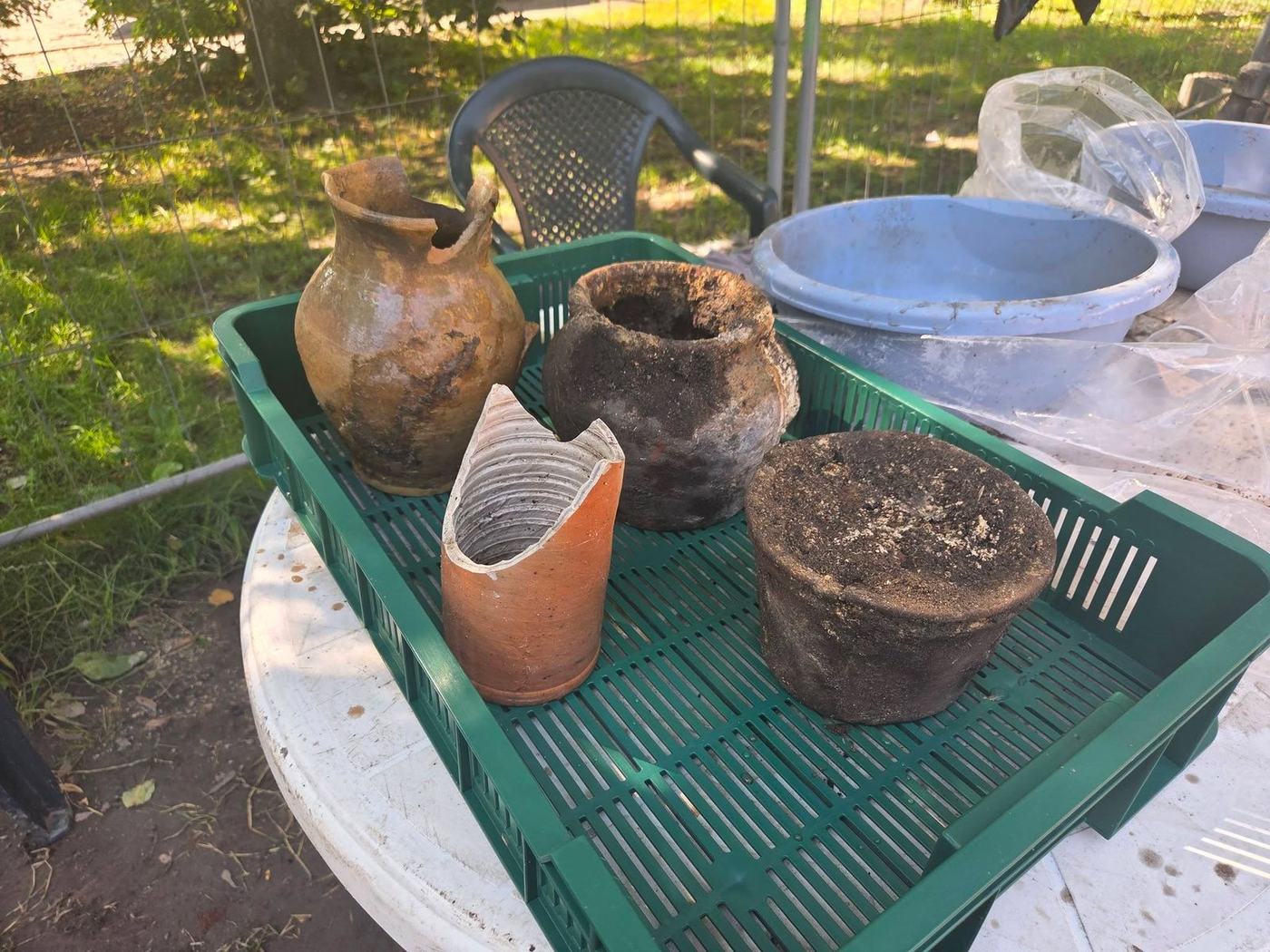
In the remains of the Great Synagogue of Vilna we discovered complete Cholent pots, evidence of the lost family life of the Jewish Quarter of the city.

Back to the Bimah
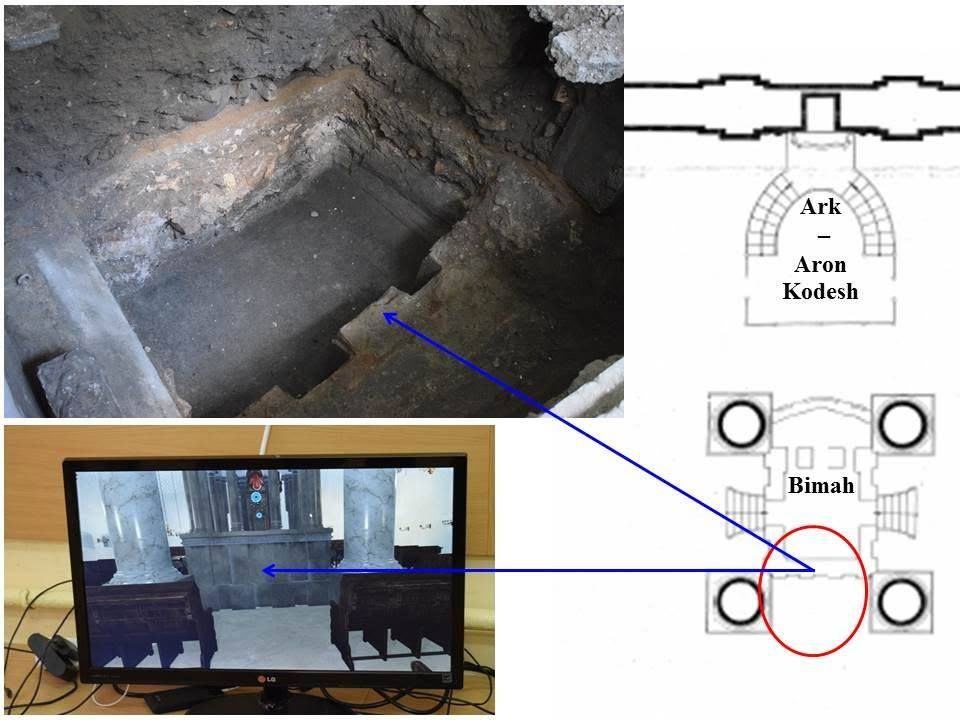
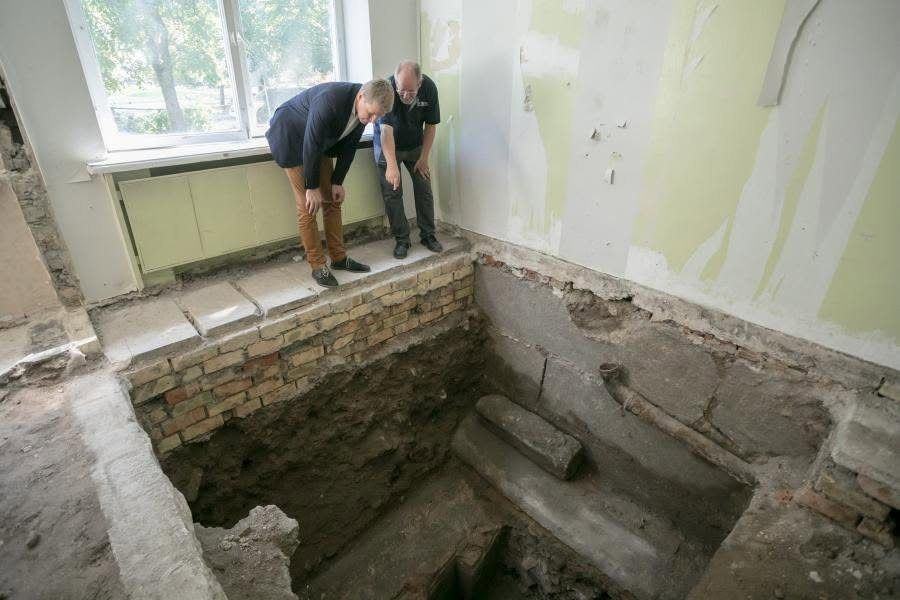
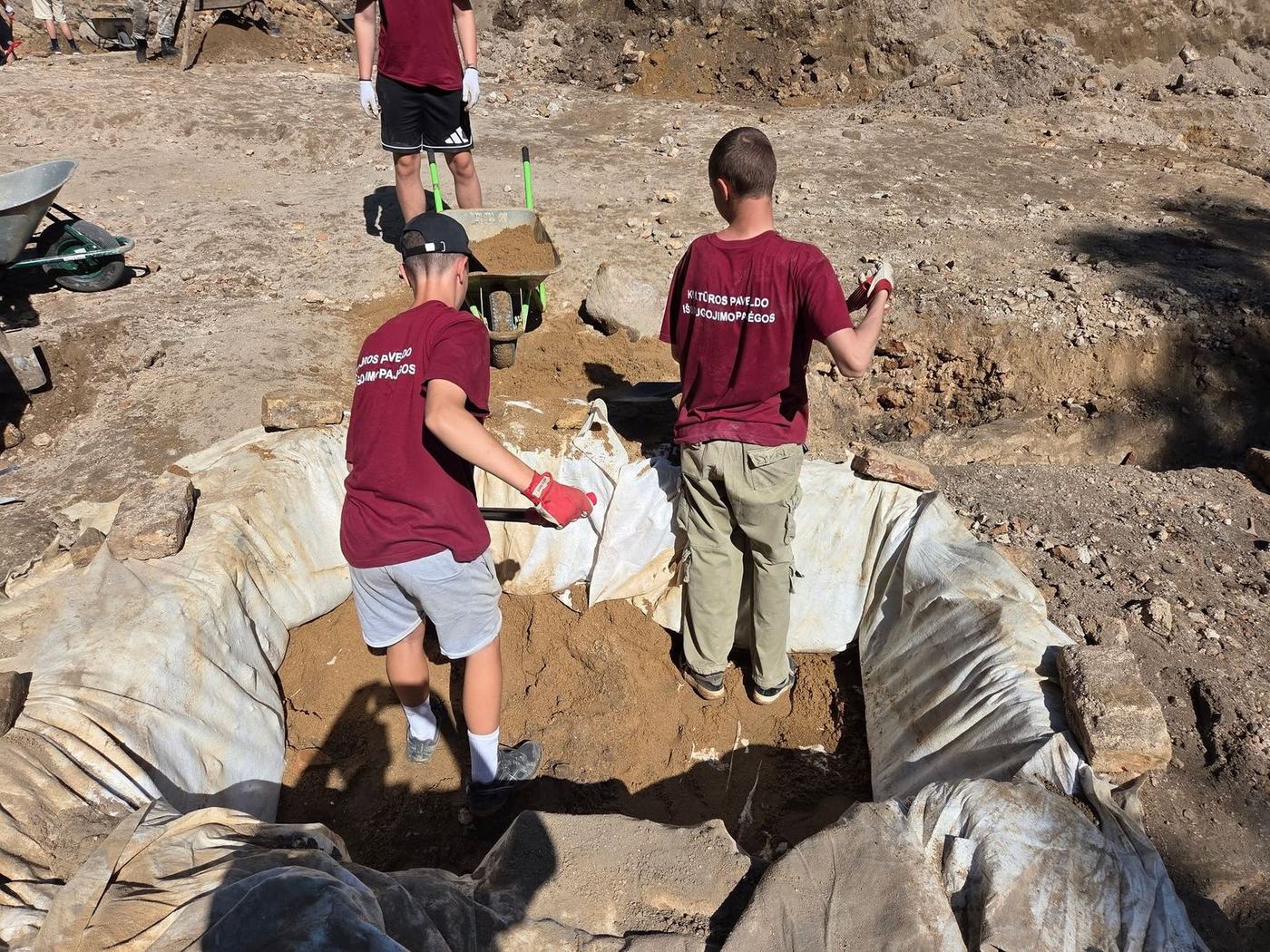
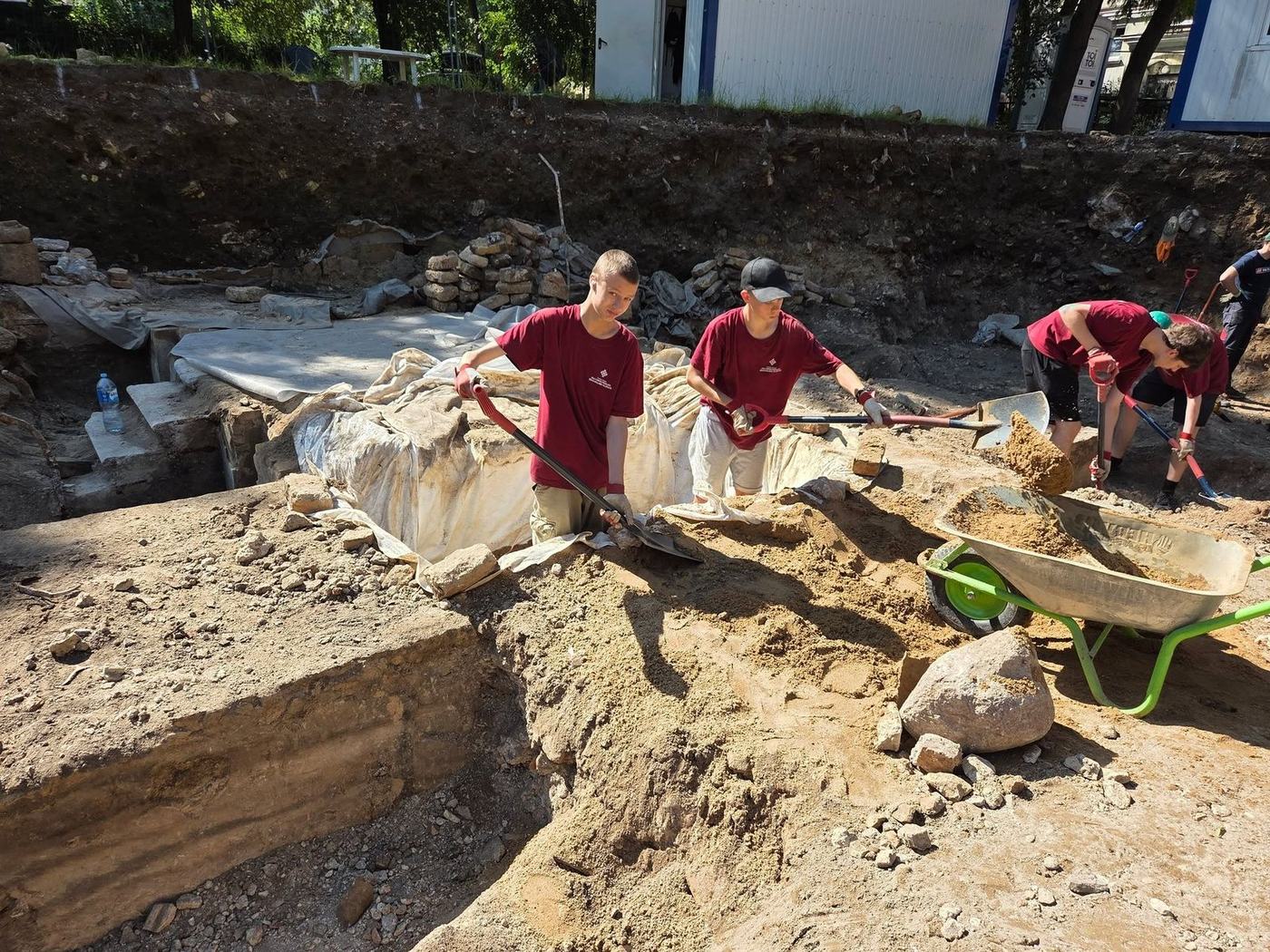
In 2018 we received permission from the then mayor of Vilnius, Remigijus Simasius, to remove the floor of the principal's office of the school standing over the Great Synagogue of Vilna, to excavate down to the Bimah of the synagogue. The excavation spectacularly revealed the back part of the Bimah. Later the mayor also promised to demolish the school itself. While the demolition took longer than anticipated, the school was finally removed in 2025 and now we have commenced the excavation to uncover the entire Bimah once hidden in the foundations of the school. In recent days we have slowly uncovered parts of the Bimah and now have removed the sand used to cover and protect the section below the principal's office. More to follow on this in the coming days.
And what of the importance of the Bimah itself. During the 18th century the most influential benefactor of the Jews of Vilna was Yehudah ben Eliezer, known by the acronym YeSOD (יסו"ד) (Yehudah Safra ve-Dayana, i.e. Yehudah, writer and judge, the Hebrew word meaning ‘foundation’). The YeSOD provided for the poor, for religious students and also built a Kloyz (study synagogue) inside the complex of the Shulhoyf. After the fire of 1748, the YeSOD provided funds for the construction of a new Bimah and parts of the Aron Kodesh. The Bimah was a two tier baroque structure built of four Corinthian and eight Tuscan columns, decorated with lions facing the Aron Kodesh.
Gefilte Fish
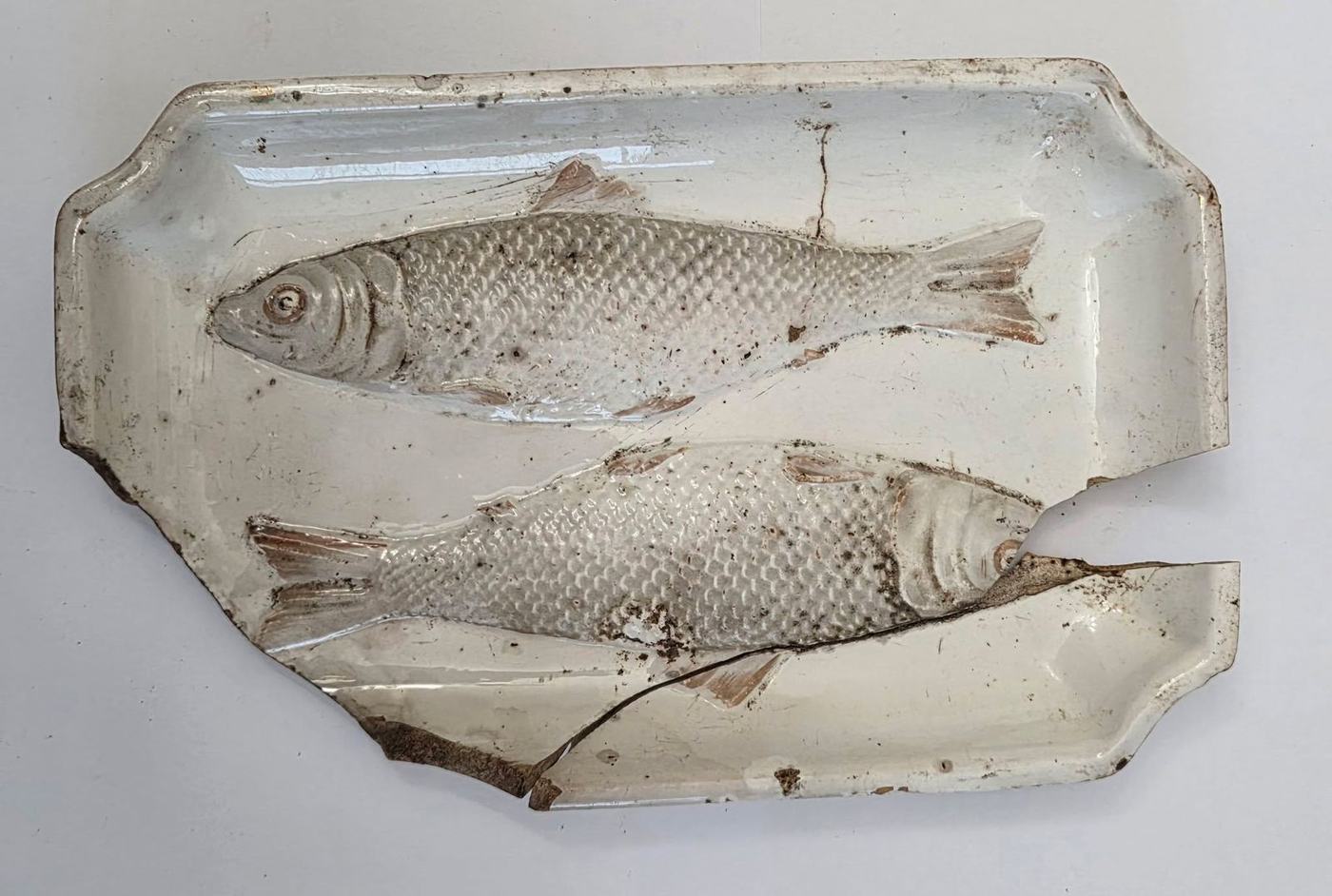
How you like your fish? The Jews of Vilna liked it stuffed with a carrot 'hat' and a side of grated horseradish, in other words, as Gefilte Fish (געפילטע פיש). At Pesach (Passover) fish was always served to the diners as a symbol of life, fertility and abundance. Amongst the special finds gathered this year at the excavation was a special platter, with the design of two fish, specifically for the serving of Gefilte Fish.
Litvak Gefilte Fish was prepared with salt and pepper, contrasting the sugar added by the Jews of Poland. In fact how you served your traditional family Gefilte Fish, either salty or sweet, is considered a cultural divide known as the 'Gefilte Fish line' distinguishing between the Litvak and the Galizianer.

Help from the Israeli Embassy in Lithuania
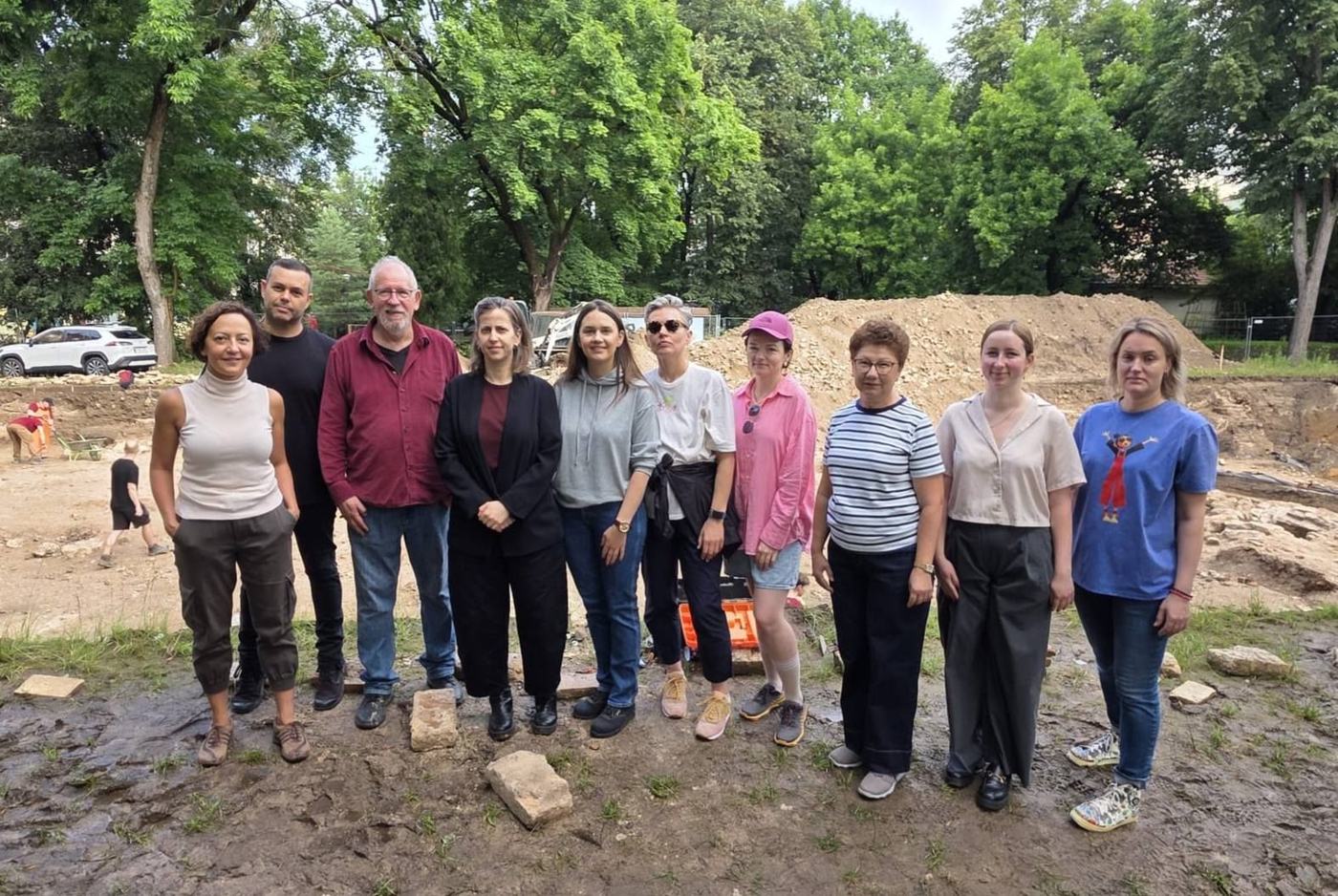
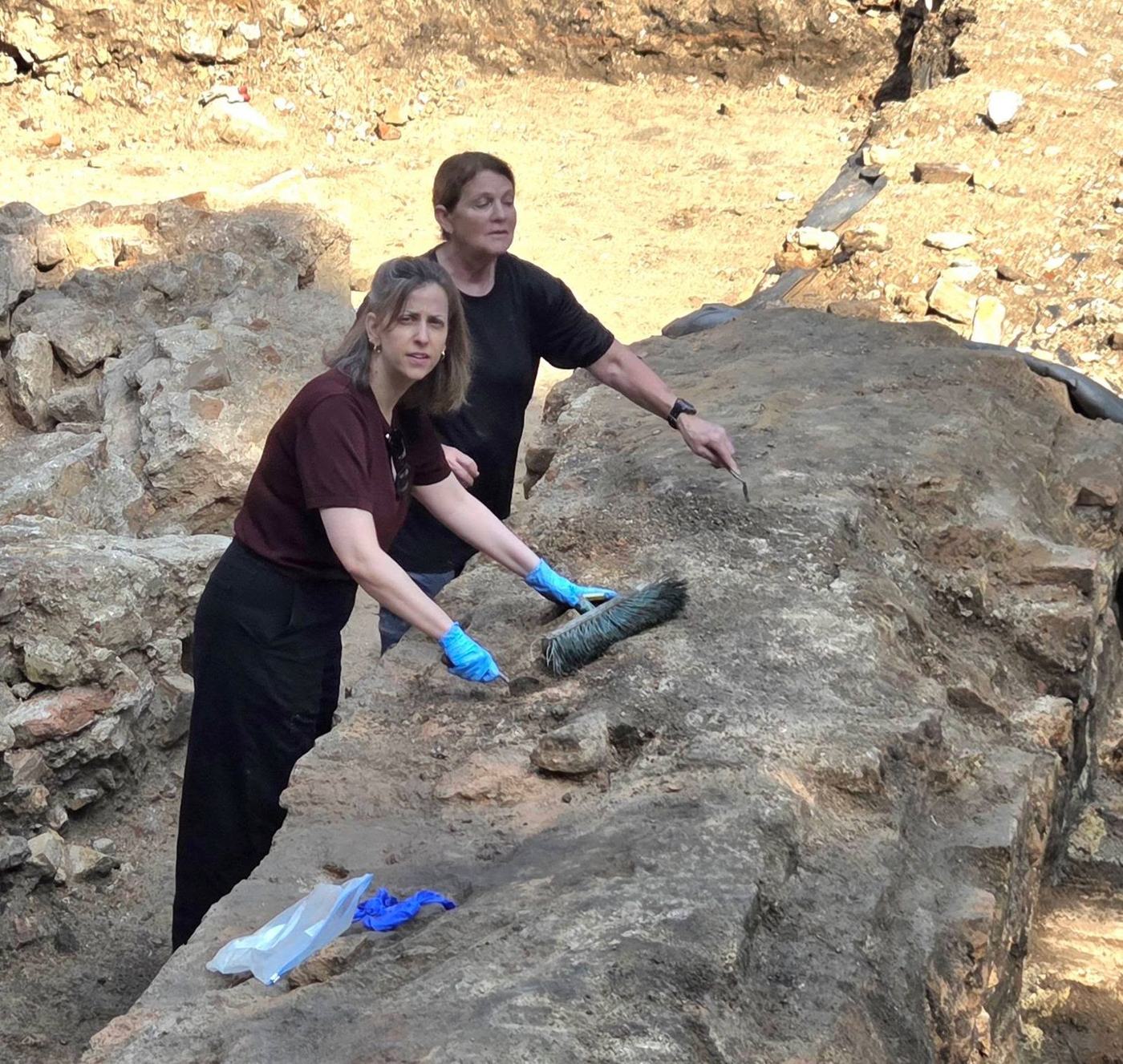
Every season of excavation since 2016 has been an opportunity to welcome the team of the Israel Embassy to Lithuania to come get their hands dirty and participate in the digging. Today we welcomed Ambassador Shelly Hugler-Livne to the site, together with Deputy Ambassador Shimon Pesach, to help expose the remains of the Great Synagogue.
Eglė Ridikaitė
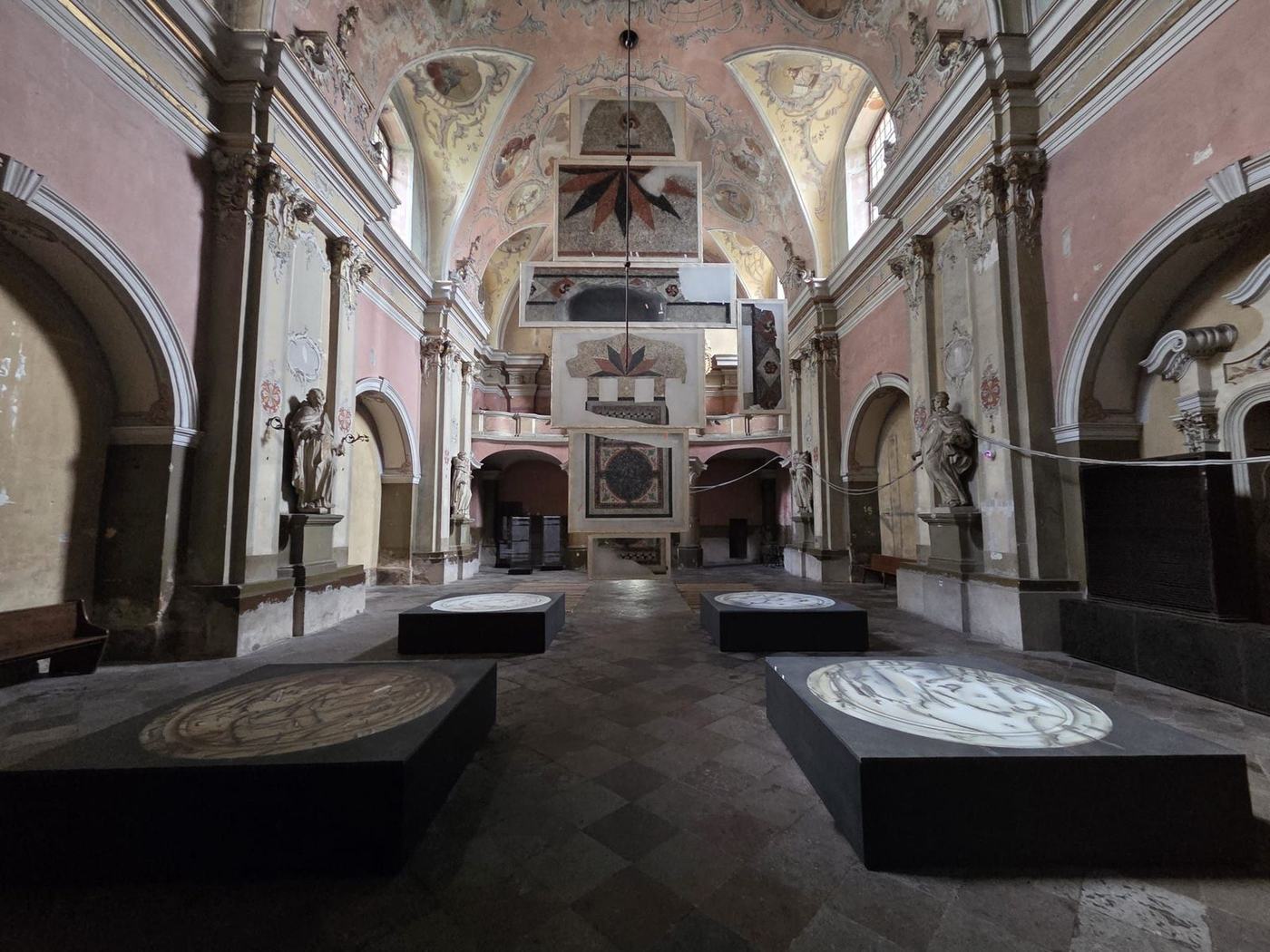
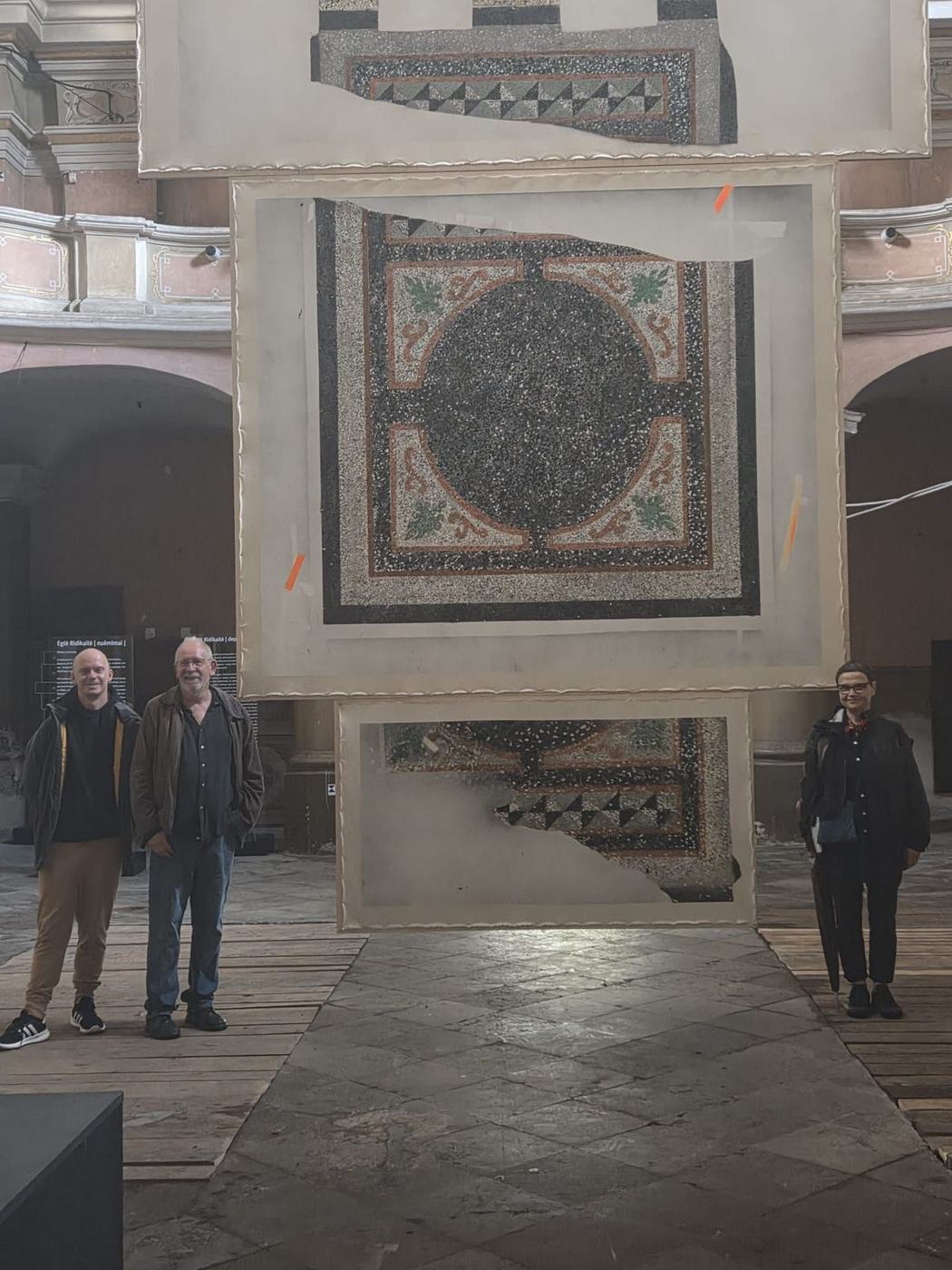
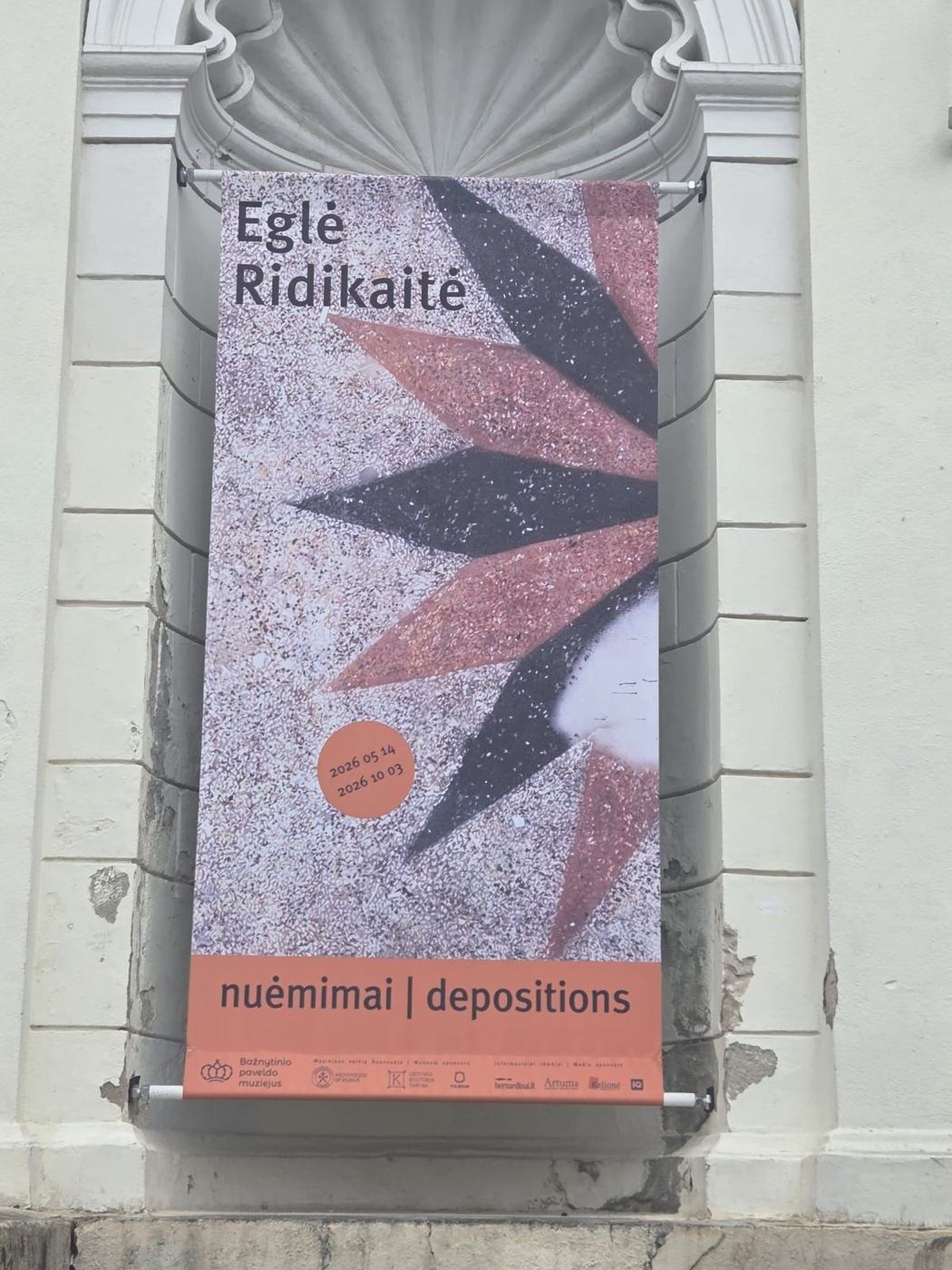
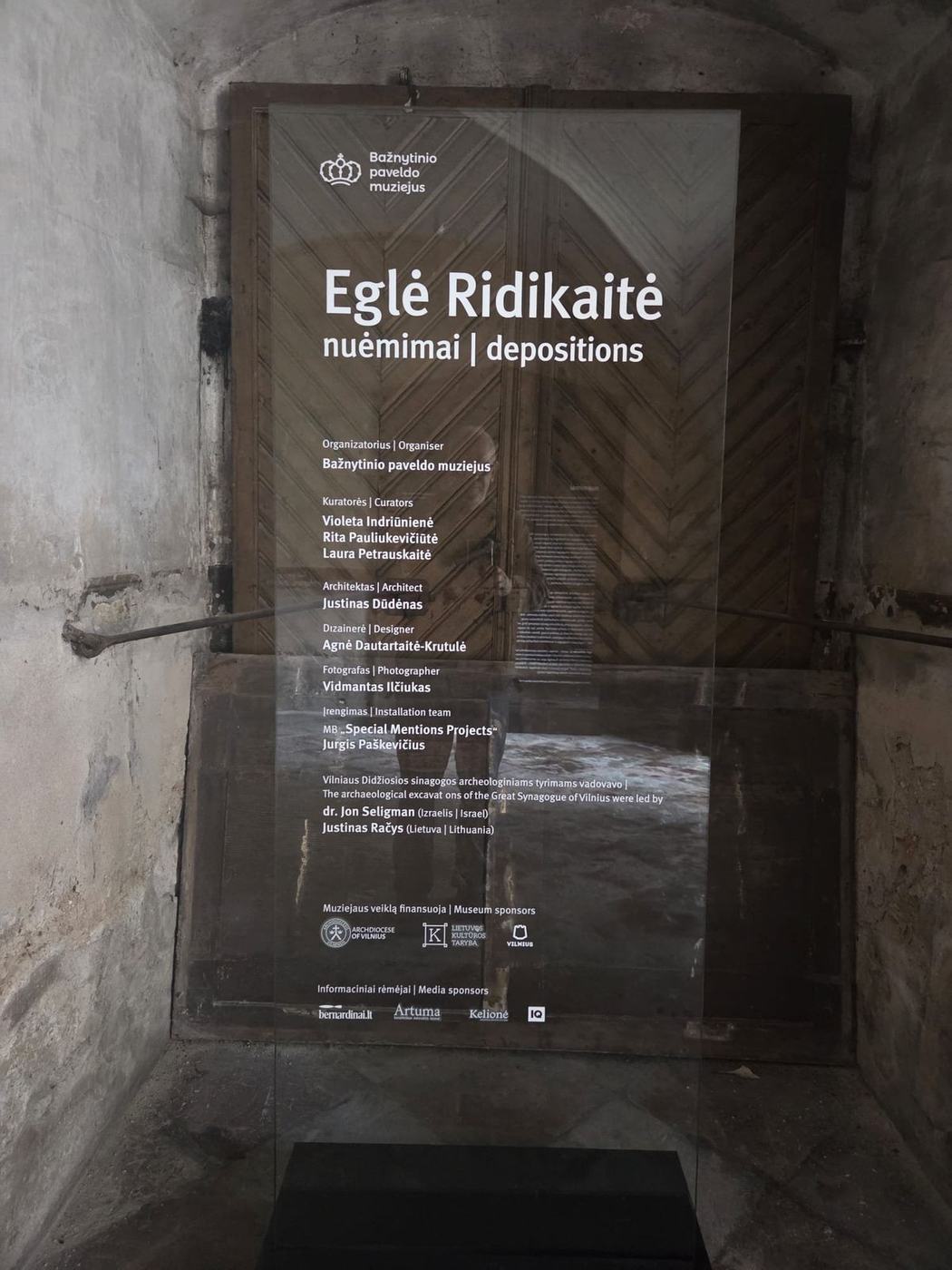
Eglė Ridikaitė is one of Lithuania's leading artists. In recent years her studio was located in the school that was built directly over the remains of the Great Synagogue of Vilna, from where she observed our excavation and documented our finds. The colourful terrazzo floors covering the Bimah and the area in front of the Aron Kodesh especially inspired her and using appliqué and spray paint Eglė recreated a life-size image of the floor. In her new exhibition, DEPOSITIONS, presented in the extraordinary space pf the Church of St. George the Martyr in Vilnius, Eglė displays the huge magnificent images of the floor patterns of the Great Synagogue in full sequence. This exhibition of paintings representing the lost Jewish life of Vilnius in this specific church is especially poignant, for many of the books from the Strashun library, originally located directed adjacent to the Great Synagogue, were hidden in the St. George church over many years and saved for humanity.
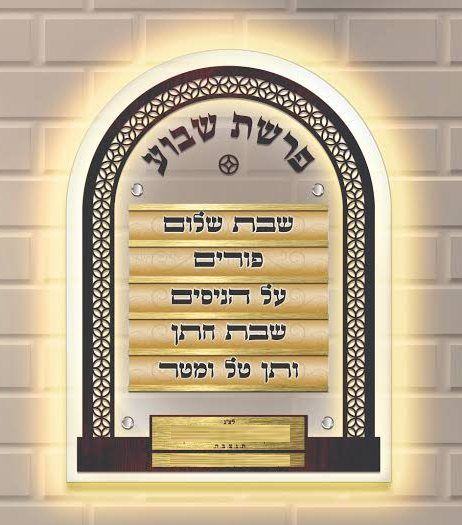
Parshat HaShavua
At the entrance to all synagogues is a 'Parshat HaShavua' board. The board notes festival and Shabbat days, the portion of the Torah to be read that day and other central prayers to be recited. To change the information, plaques with the festival name and the Torah portion are slid into slats on the board. A modern 'Parshat HaShavua' board can be seen on the right.
Luckily we just found one of the plaques from the Great Synagogue of Vilna and not any plaque, but a special one. This is the plaque designating Yom Kippur, the Day of Atonement, the most solemn day on the Jewish religious calendar. With this being the festival day on the board, the Torah portion would be 'Acharei Mot' (אחרי מות) which is Leviticus 16:1–18:30, the portion describing the ritual of the Temple sacrifice on Yom Kippur.
Follow us here for more finds as the work progresses.
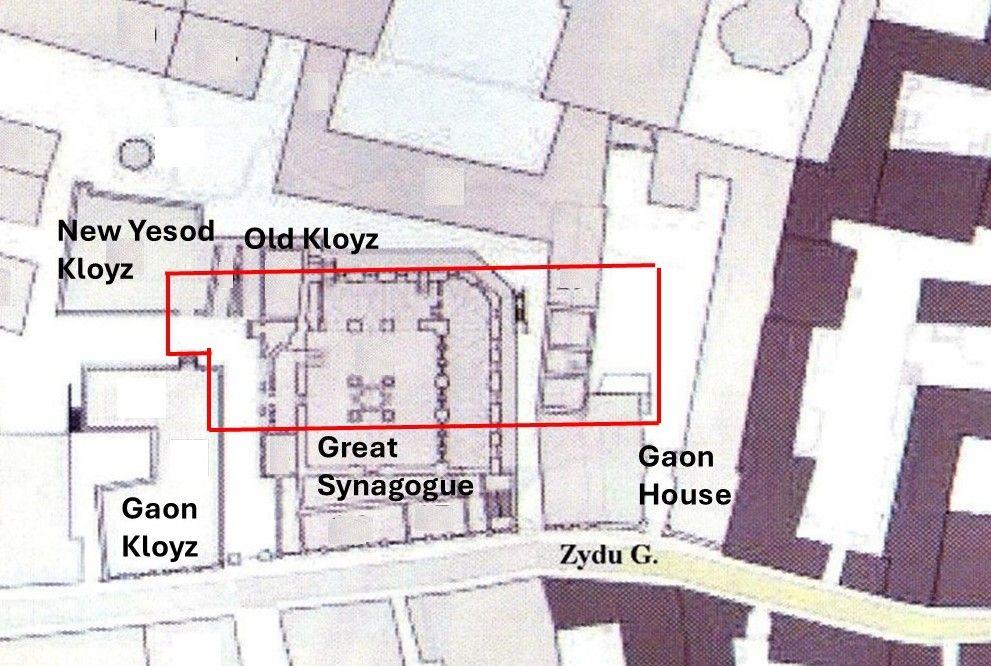
The Excavation Area for 2026
Day one of the renewed excavation at the site of the Great Synagogue. The huge area of the demolished school building (marked with a red box on the plan) is now open for excavation. We aim to expose the central section of the synagogue, including the Bimah with its four huge columns, together with sections of the Gaon Kloyz, the Old Kloyz and the New Yesod Kloyz.
We will be working until the end of July and you can follow us here for regular updates as the excavation progresses.
The Pesach Plate
Just one week till we resume the excavation at the Great Synagogue of Vilna (starting on Tuesday, the 7th July).
To wet your appetite to join us, here is a small artifact found while preparing the site for the excavation. This is a fragment of a Pesach (Passover) plate used at the Great Synagogue, with the Hebrew words - Tzafun, Barech, Hallel, Nirtza (צפון, ברך, הלל, נרצה), taken from the Hagadda (Hide-Tzafun the afikoman, Bless-Barech the meal, give Praise-Hallel, Please-Nirtza God). A very similar Pesach plate, dated to the late 19th to early 20th centuries, is held by the Emanuel Ringelblum Jewish Historical Institute in Warsaw.
More finds await us!
Grand Duke Vytautas Says Hello
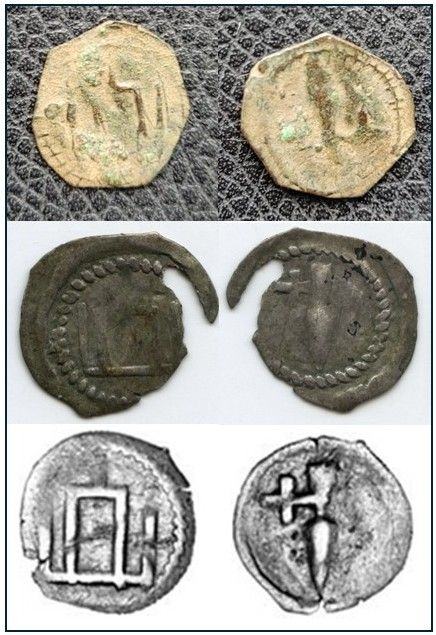
It may look like an ugly chip of metal, but this extremely rare coin, recovered while preparing the site of the Great Synagogue of Vilna for excavation later in the summer, is one of the most significant finds from the site.
The coin is a silver denar, minted in Vilnius between 1413–1430 by Grand Duke Vytautas the Great, one of the most important figures in the rise to prominence of the Grand Duchy of Lithuania during the Middle Ages. The coin shows the ‘Columns of Gediminas’, the royal insignia of the Grand Duchy on one side, and a spear and cross on the other, representing allegiance to Christianity, a religion adopted by the Lithuania monarchty only a generation before Vytautas.
Significantly, Vytautas is attributed by many historians to be the first to invite Jews to settle in Lithuania through a privilege granted in 1388, inviting Jewish merchants to take up residence in various towns of his realm. So the discovery of a coin from the reign of Vytautas, who had been so favourable to the Jews, not only in the Jewish Quarter of Vilnius, but on the site of the Great Synagogue, has special poignancy.
With this discovery we are happy to announce that the excavation of the Great Synagogue will resume this summer, from the 6th till the 31st of July. Volunteers and visitors to the site are welcome and it promises to be be a season of new discoveries.
Preparing the Site
Today the removal of the foundation of the school built over the Great Synagogue was commenced under the watchful supervision of Justinas Račas. In July we will return to the site to continue the excavation with the aim of exposing more remains of this important site.
Details to follow.
International Shoah (Holocaust) Memorial Day
Today we remember the victims of the Shoah in general and the lost Jewish community of Lithuania in particular.
The extermination of the Jews of Vilna-Vilnius and the surrounding region took place mostly at Ponar-Paneriai, where 100,000 people, the majority Jews, both also Poles, Roma, Sinti, Russian POWs and political prisoners, where murdered by the German's and their local accomplices.
Ponar-Paneriai, began its existence as a Red Army fuel depot in 1940. Aſter Nazi occupation of the city in 1941 the Einsatzgruppen and mostly Lithuanian members of the Ypatingasis burys used the pits dug for the fuel tanks for the murder of the Jews of Vilna and large numbers of Polish residents. During its operation, Ponar was cordoned off, but changes to the topography of the site since the Second World War have made a full understanding of the site difficult.
Almost a decade ago, our project conducted research at Ponar-Paneriai to identify the escape tunnel of the burning brigade and to try to map the the extermination site, which over the years had undergone major changes and destruction after WWII. This attached article uses contemporary plans and aerial photographs to reconstruct the layout of the extermination site, in order to better understand the process of extermination, the size of the Ponar base and how the site was gradually reduced in size aſter 1944.
May the memory of the victims murdered at Ponar-Paneriai be blessed.
2025 (7 stories)
'Hidden Holocaust'
Watch 'Hidden Holocaust', the new film on our sister project to search for Holocaust graves using non-invasive geo-physical techniques under the leadership of Prof. Harry Jol from the University of Wisconsin-Eau Claire.
The National Geographic documentary "Hidden Holocaust," showcases the work of student researchers mapping mass burial sites in Lithuania and Latvia. UW-Eau Claire students using techniques like ground-penetrating radar, laser leveling and aerial drones to examine potential mass graves.
https://www.wqow.com/eye-on-eau-claire/uw-eau-claire-holo…
Dilemmas of Heritage
See our new paper.
Dilemmas of Heritage, Destruction and Memorial: Two Lost ‘Cathedrals’— The Intertwined Fate of the Great Synagogue of Vilna and the Ḥurva Synagogue of Jerusalem
Jon Seligman
Abstract
The issue of authenticity, continuity and the reconstruction of lost monuments has been the subject of vigorous debate in the philosophy and methodology of heritage conservation since its inception and especially after the Second World War and the collapse of the Soviet bloc. This article discusses the intertwined history of the Great Synagogue of Vilna (Vilnius) in Lithuania and the Ḥurva Synagogue of Jerusalem. Both synagogues, which had been the main ‘cathedral’ shrines for the Jewish communities of Vilna and Jerusalem, were destroyed during the conflict, leaving ruins in their place. After many years of loss and given their importance, an opportunity arose to memorialize or reconstruct these monuments. Special attention is given to the significance of these two synagogues as places of identity and to the way in which changing dynamics in the ethics of heritage management concerning the reconstruction of lost built cultural heritage have affected outcomes at these two sites.

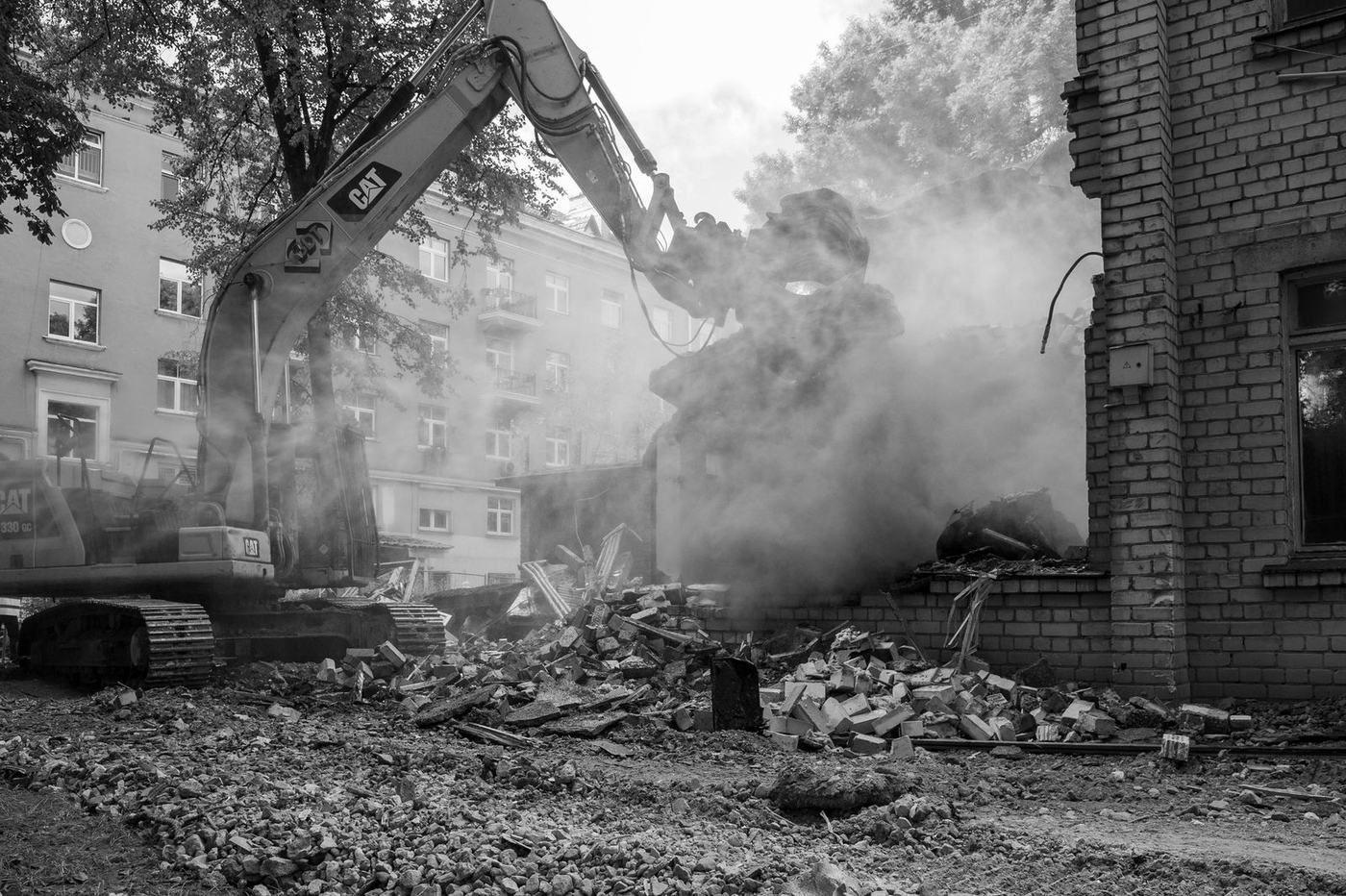
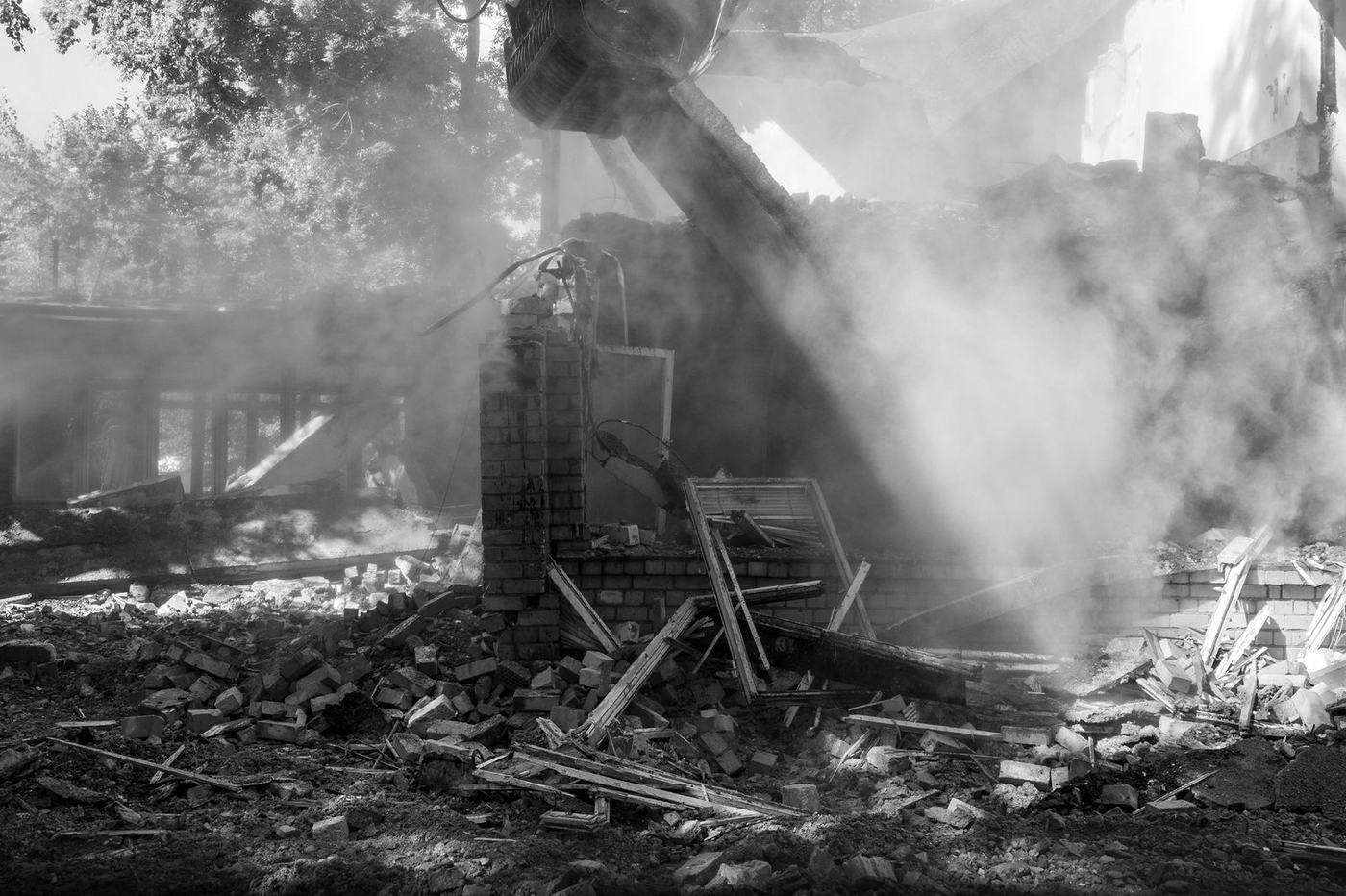
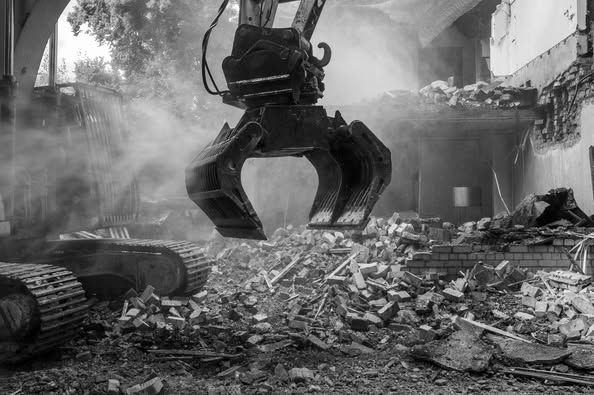
Goodbye (and Good Riddance) to the School Built Over the Great Synagogue
Today we can bid a very timely farewell to the horrendous school building constructed on the site of the Great Synagogue of Vilna after its demolition by the Vilnius Municipality in the 1950s. We can only thank the leadership of the present Vilnius Municipality for the removal of the deplorable eyesore that desecrated the memory of the Jews of Vilna and Lithuania for six decades.
The Great Synagogue of Vilna was one of the cathedrals of Vilnius and we can only hope that whatever is constructed there gives proper homage and respect to what was lost.
Thank you to Justinas Račas and Loïc Salfati for the images.
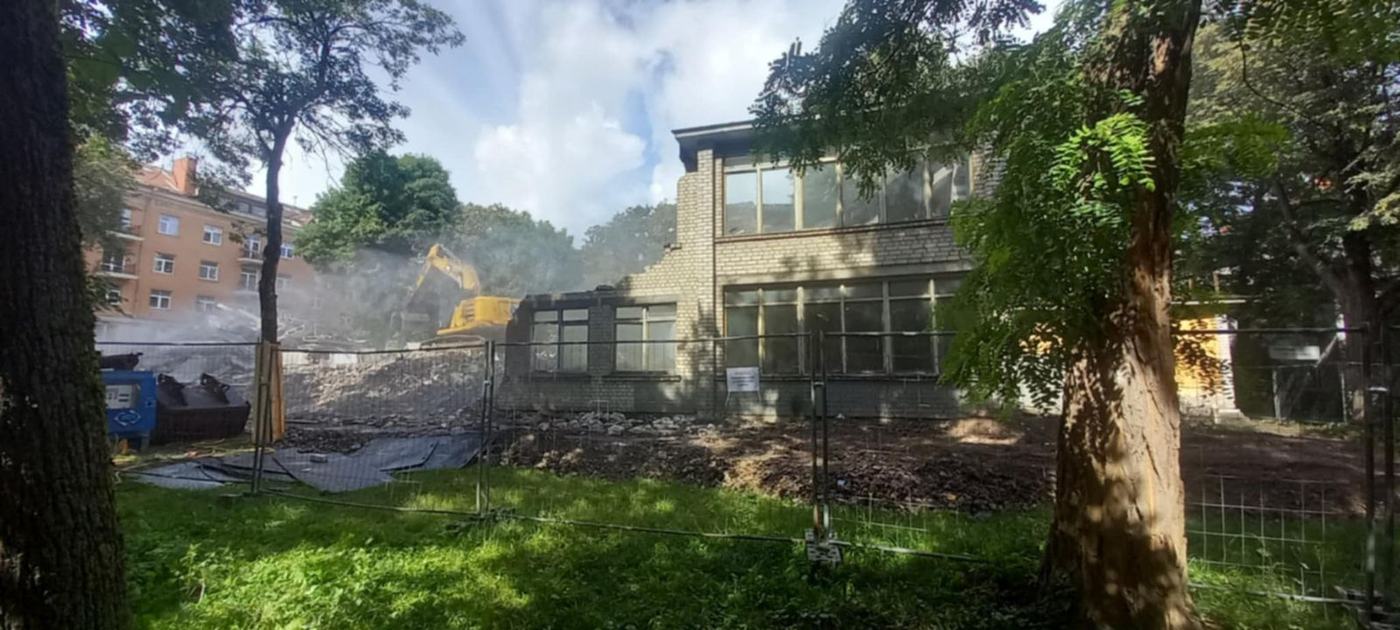
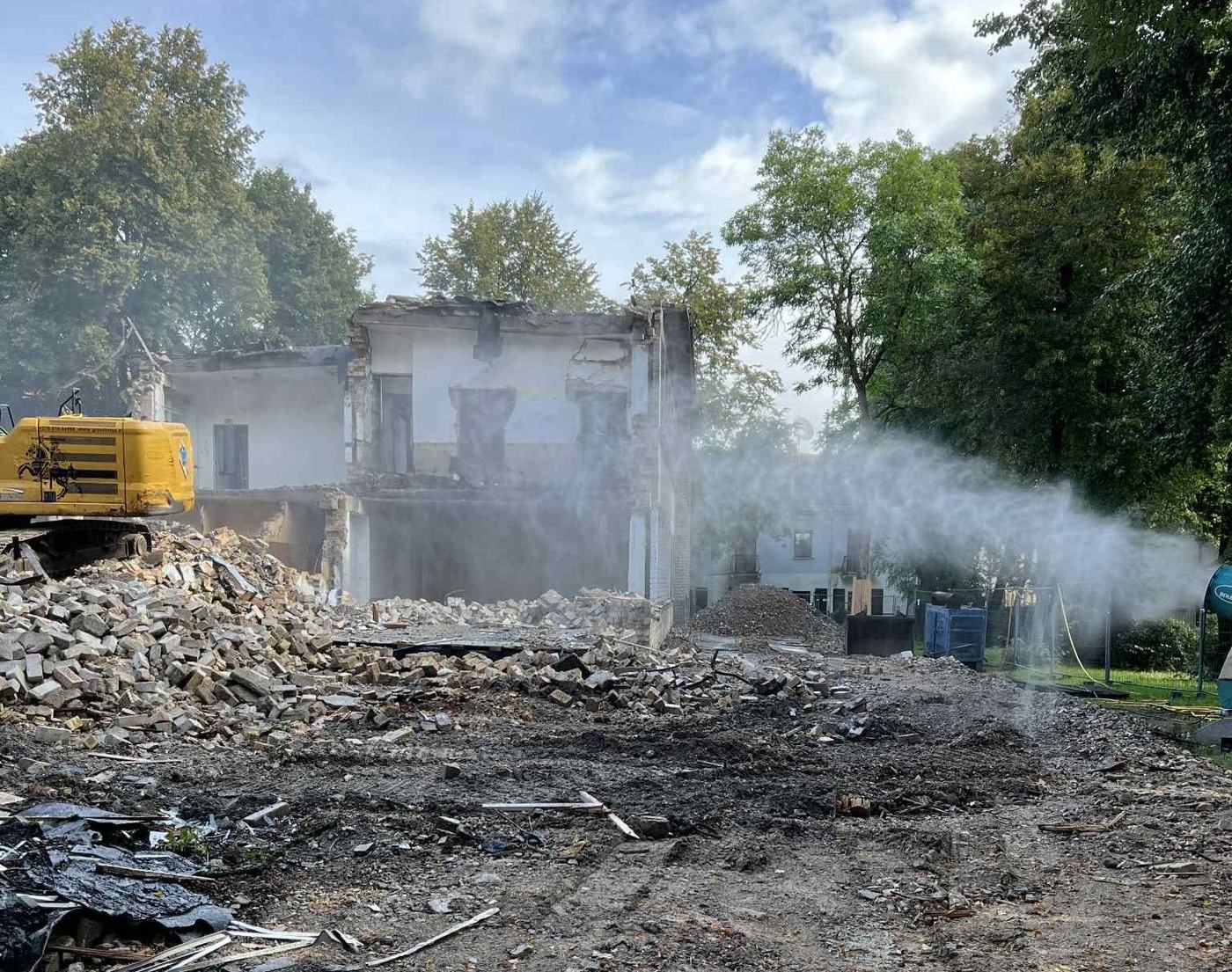
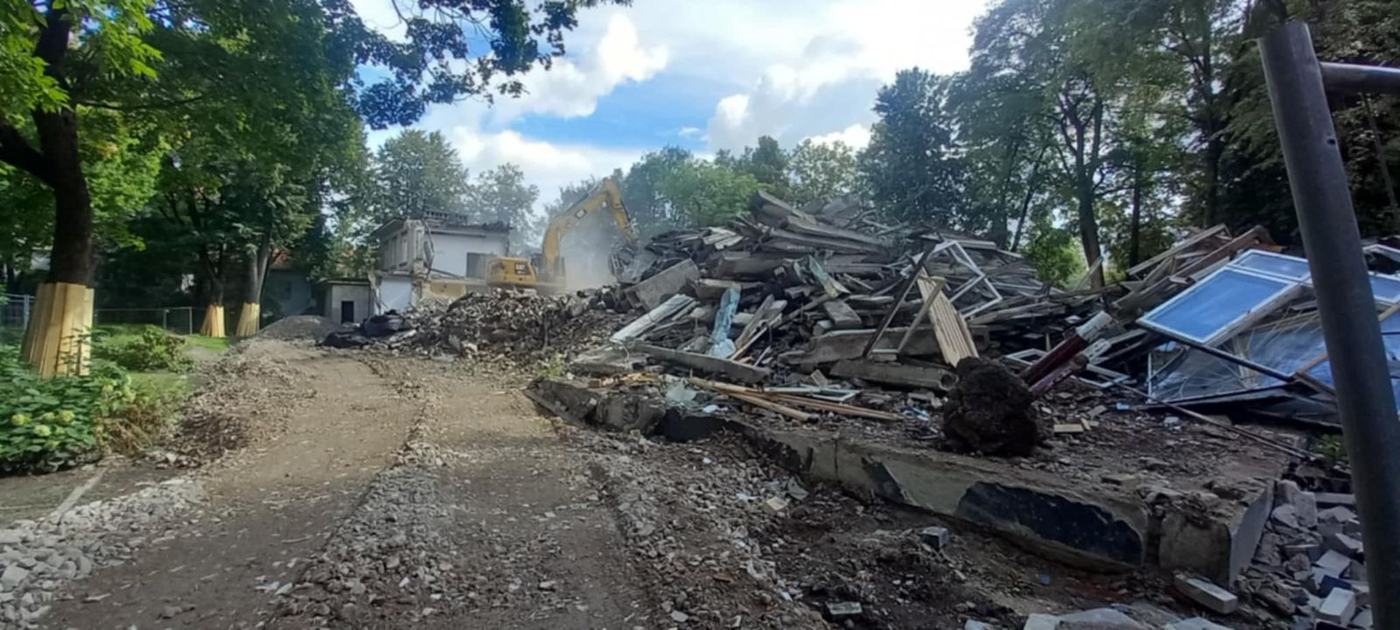
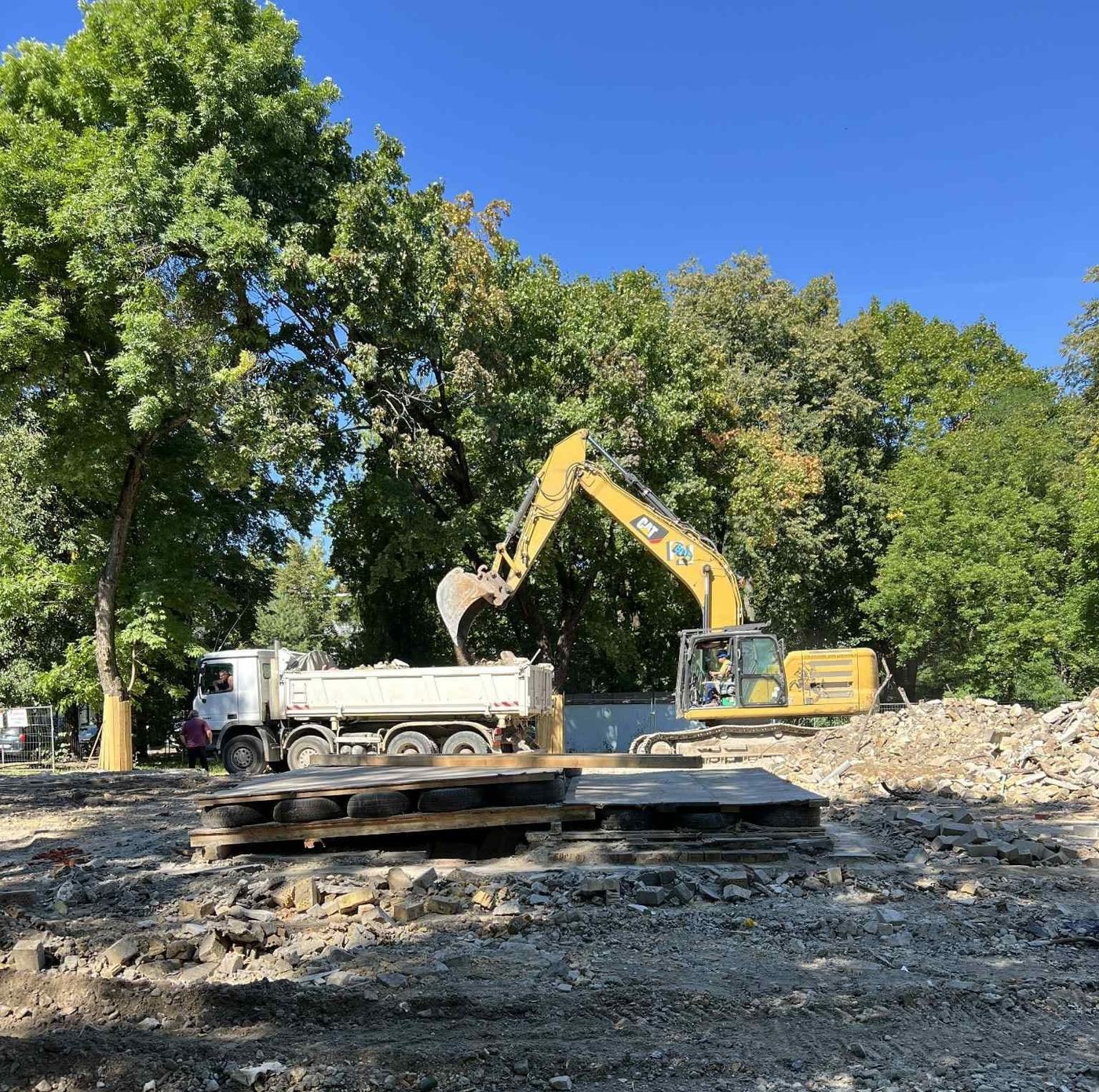
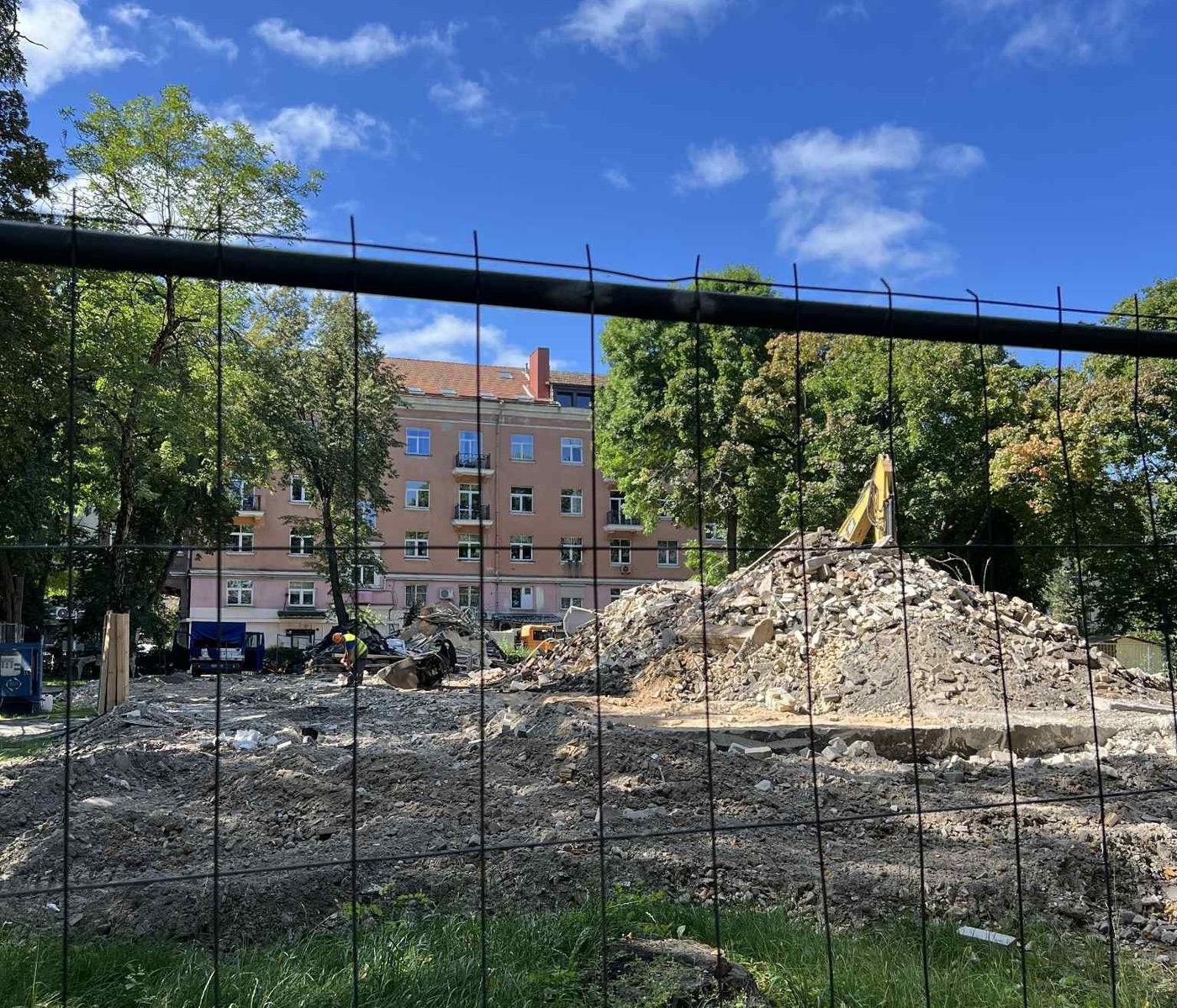
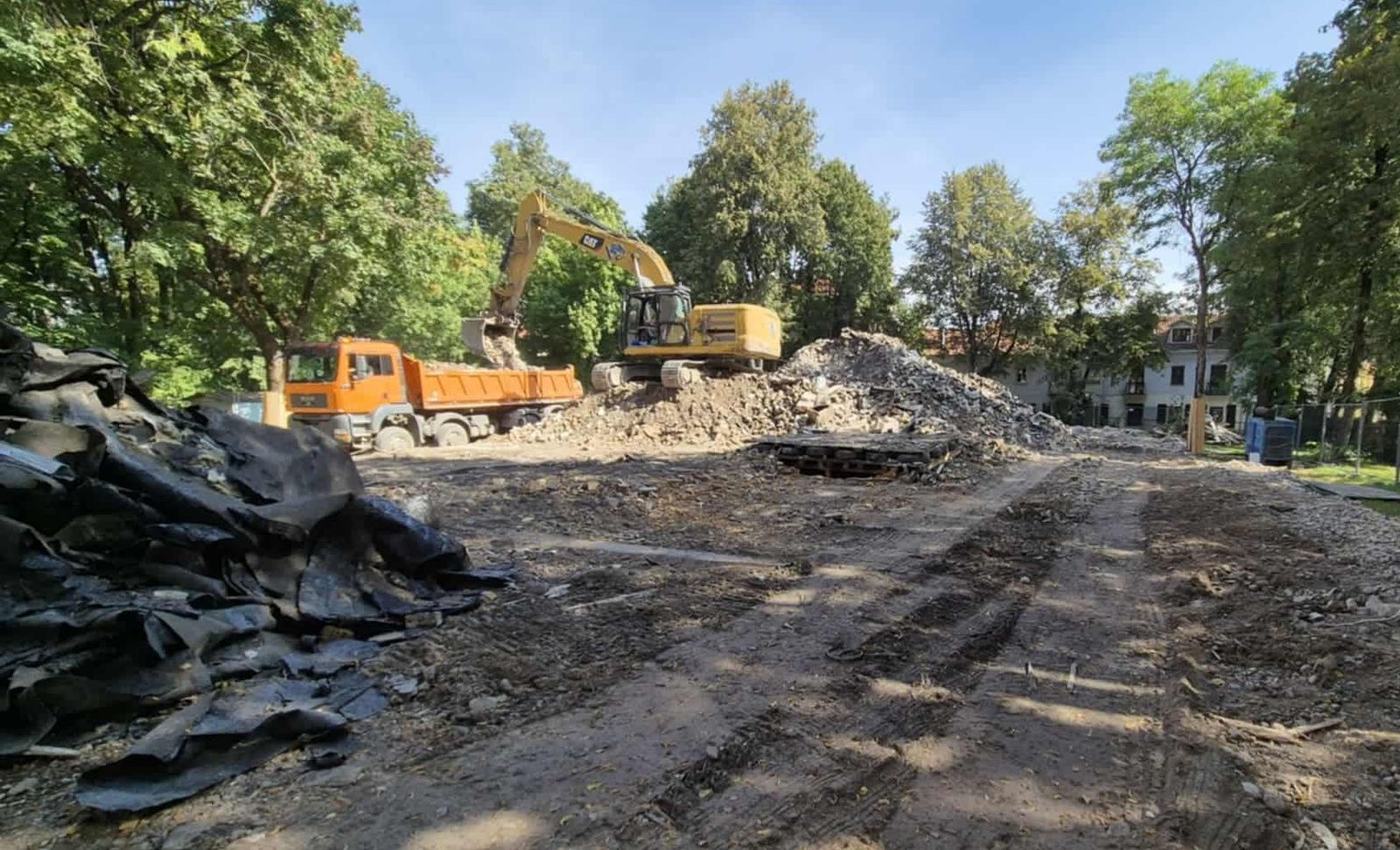
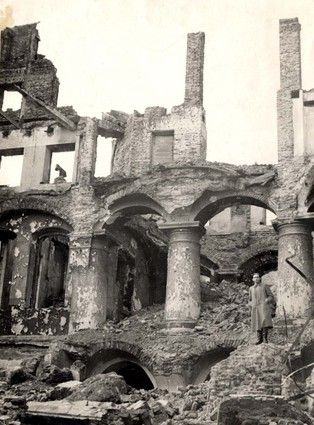
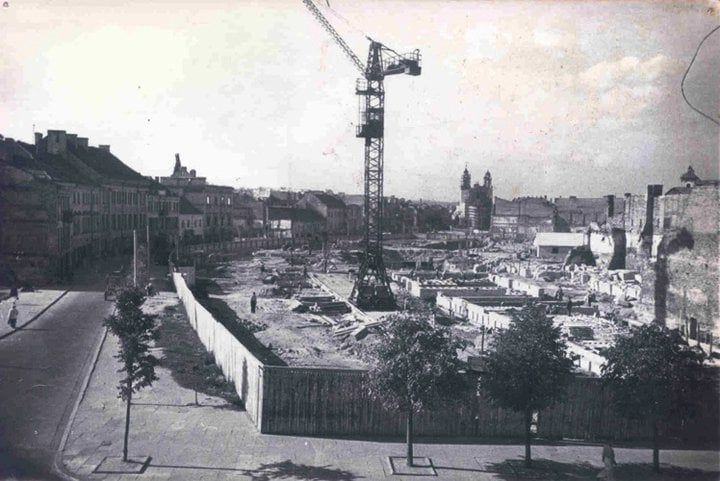
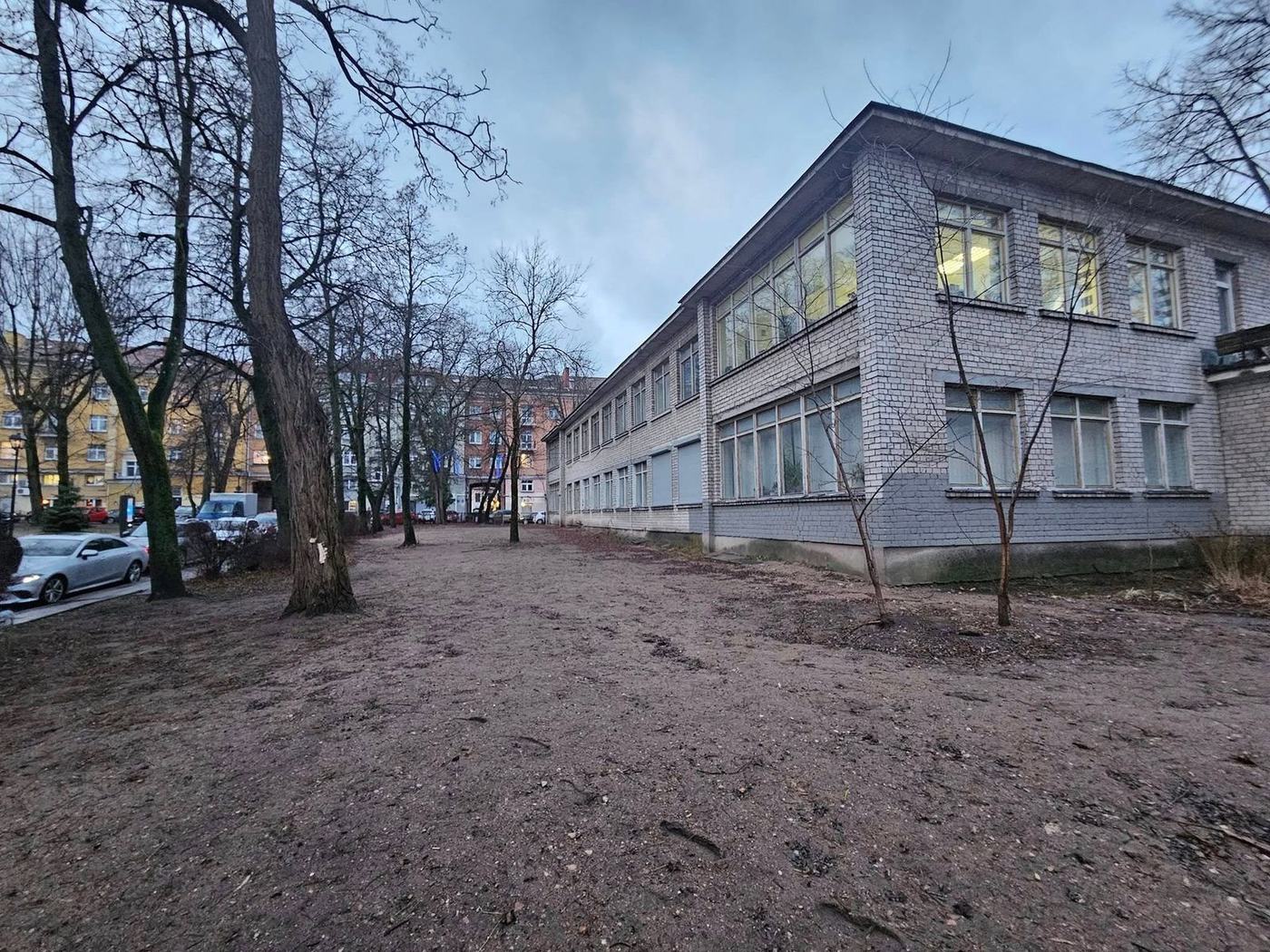
Demolition – 1941-1956, Building – 1957-1960 , Demolition - 2025
In the mid-1950s the city architect of Vilnius, Vladislovas Mikučianis, at the behest of the Lithuanian Soviet Socialist Republic, decided to introduce a bold new plan to build a wide processional avenue from the Town Hall on Didžioji street, down through Vokiečių (German) street, Vilniaus street and on to the main street of the city, then Lenin avenue and now Gediminas Avenue. The plan included the destruction of sections of the old city of Vilnius, included apartments along Vokiečių street and much more importantly, the criminal destruction of the remains of the buildings of the Shulhoyf, including the magnificent Great Synagogue, prior to the construction of a new kindergarten which was opened at the beginning of the 1960s.
The ugly kindergarten, built in a poor brutalist style, stood over the remains of the Great Synagogue, disrespecting and desecrating its memory and significance for six decades. Over the past decade the Vilnius municipality and mayor have promised on multiple occasions that it was their intention to demolish the abomination, and finally in the past day, demolition of the eyesore has commenced.
Hopefully a better future will envelope the site of the Great Synagogue of Vilna in the coming years that will return some of its former grandeur, or to quote the Talmud (BT Yuma 69) to ‘restore a crown to its former glory’ (להחזיר עטרה ליושנה).
Our Tenth Anniversary
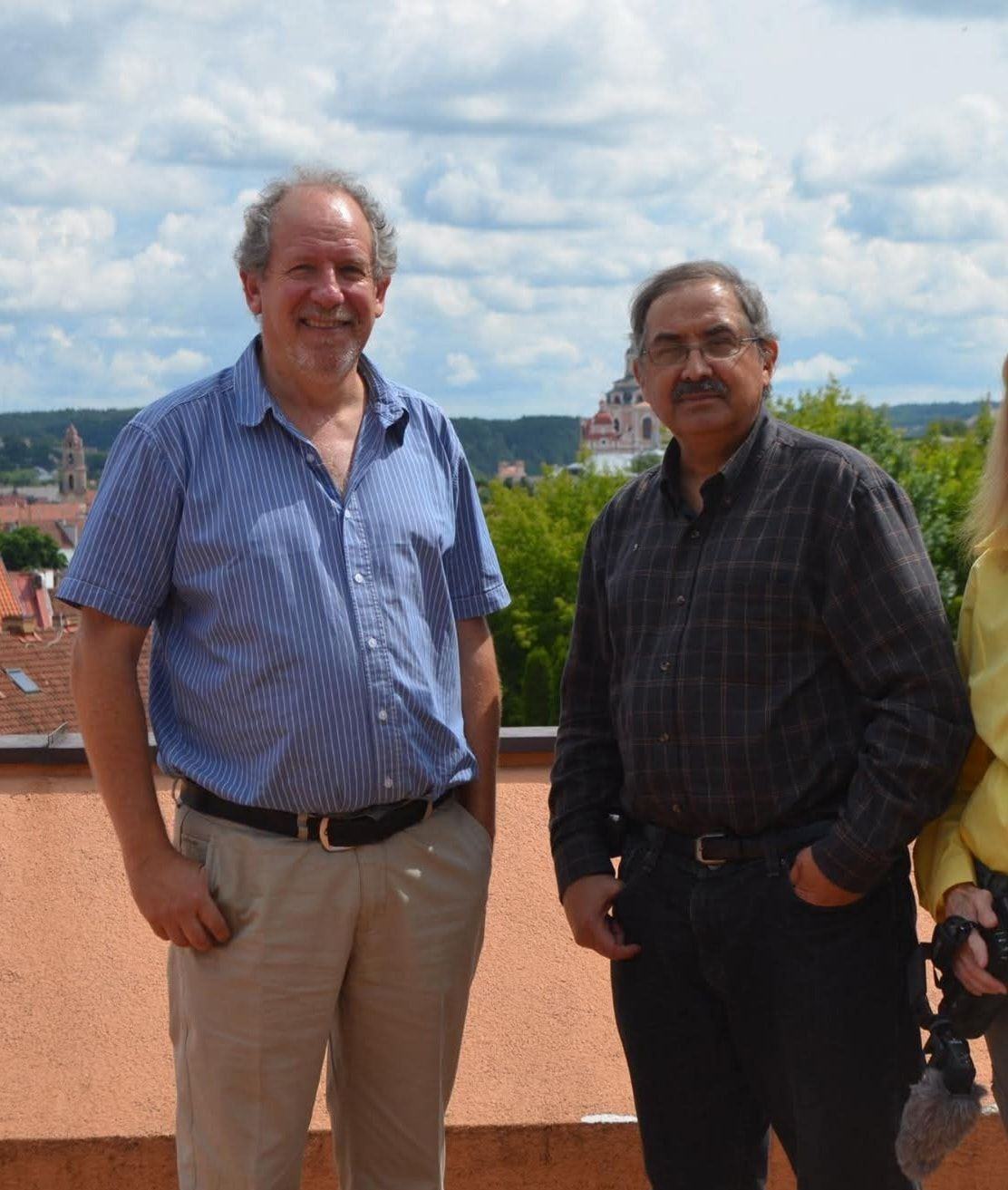
Ten years ago today, we established the Vilna Great Synagogue Research Project. Though Richard Freund sadly passed away, the project continues and goes from strength to strength.
On the roof of the Vilna Gaon Museum of Jewish History in Vilnius in 2015.
The Road to Auschwitz with Simon Schama
I had the honour to appear in Simon Schama's BBC documentary detailing the development of the Shoah, from the massacres in Lithuania, culminating at Auschwitz. The film commences with the actions of the Germans and local perpetrators in Kaunas (Kovno) - the Ninth Fort and Vilnius (Vilna) - Ponar, before moving thorough the destruction of Jewry in Poland and Holland.
2024 (17 stories)
A Winter Tale
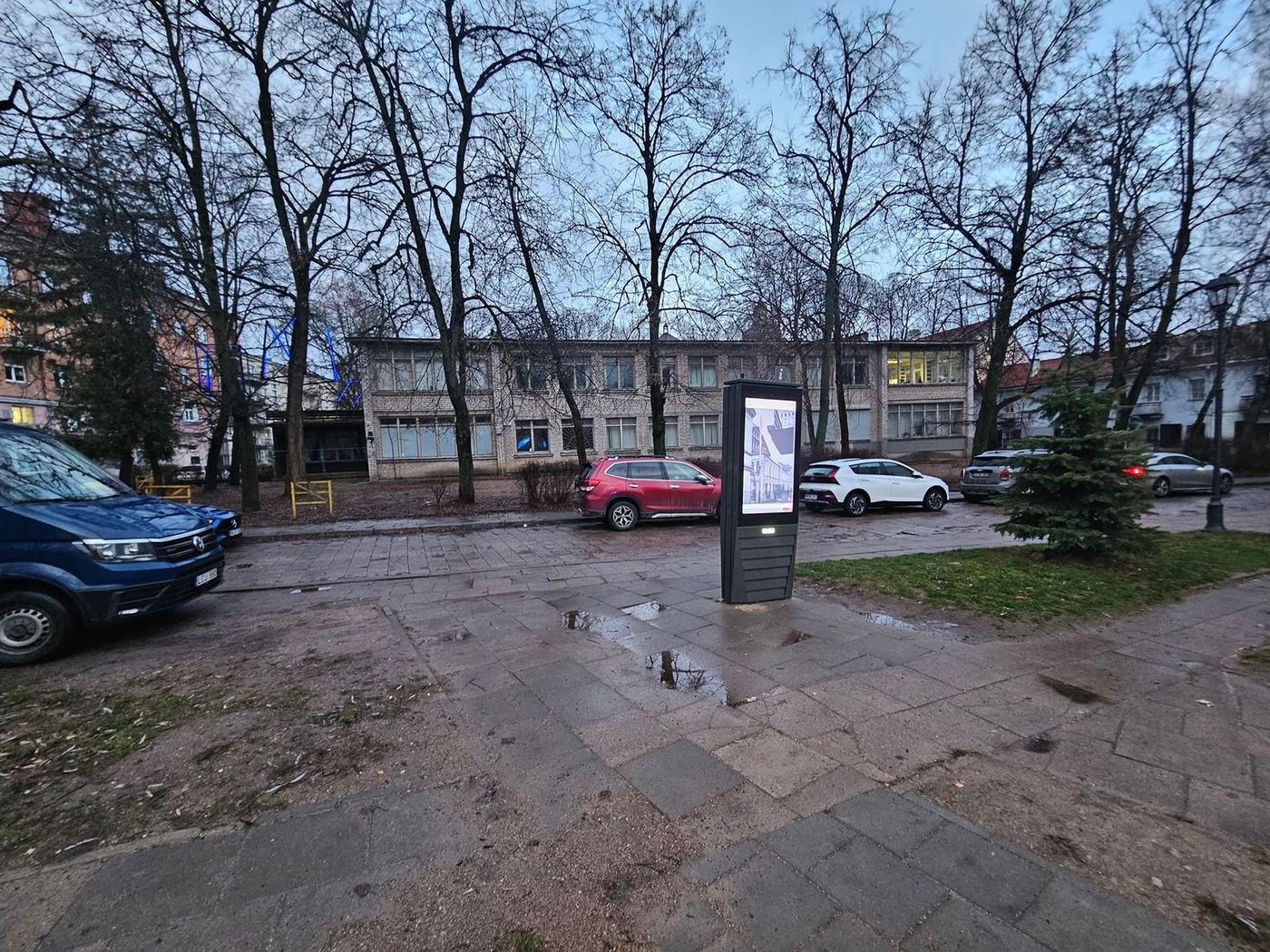
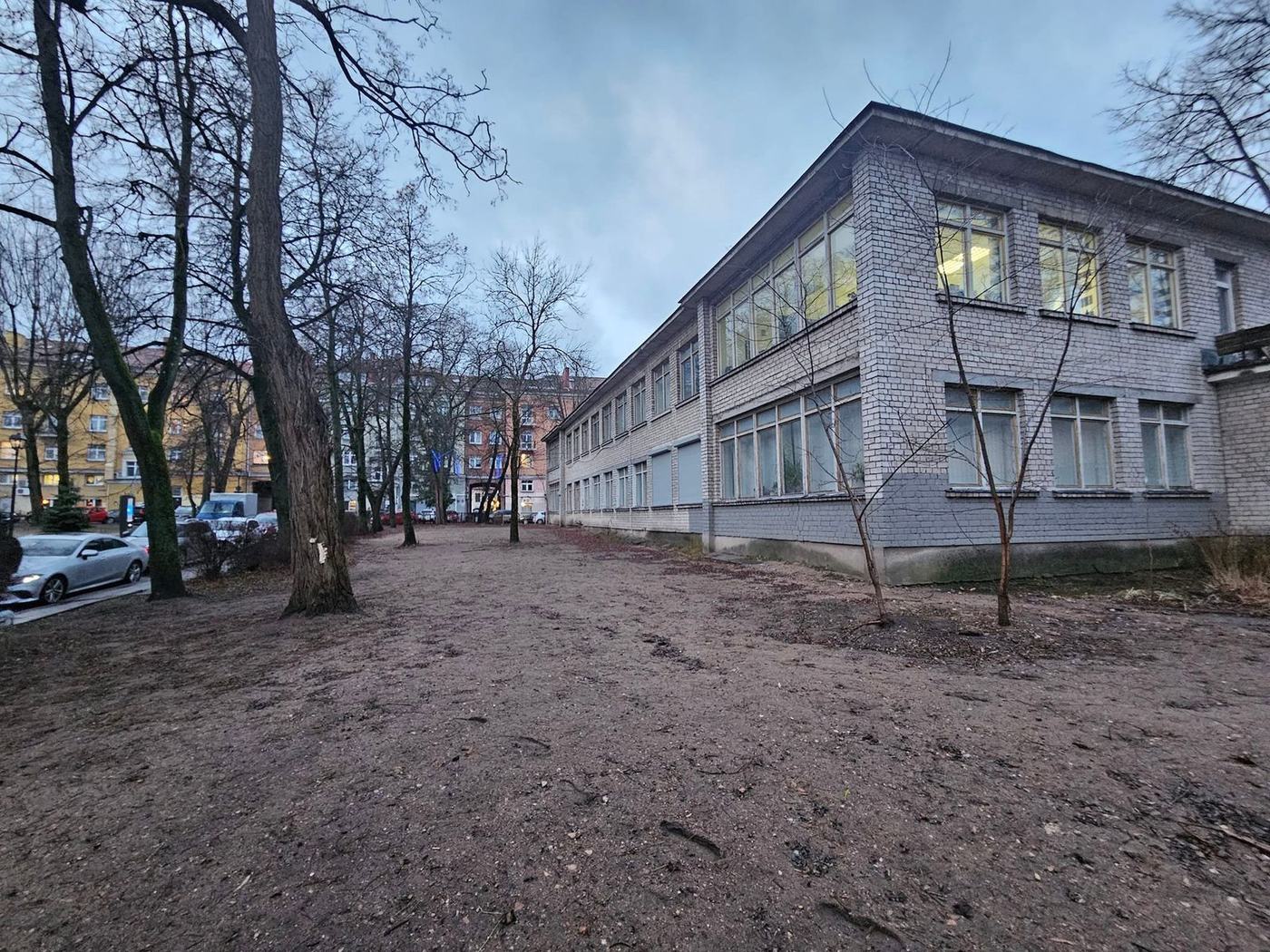
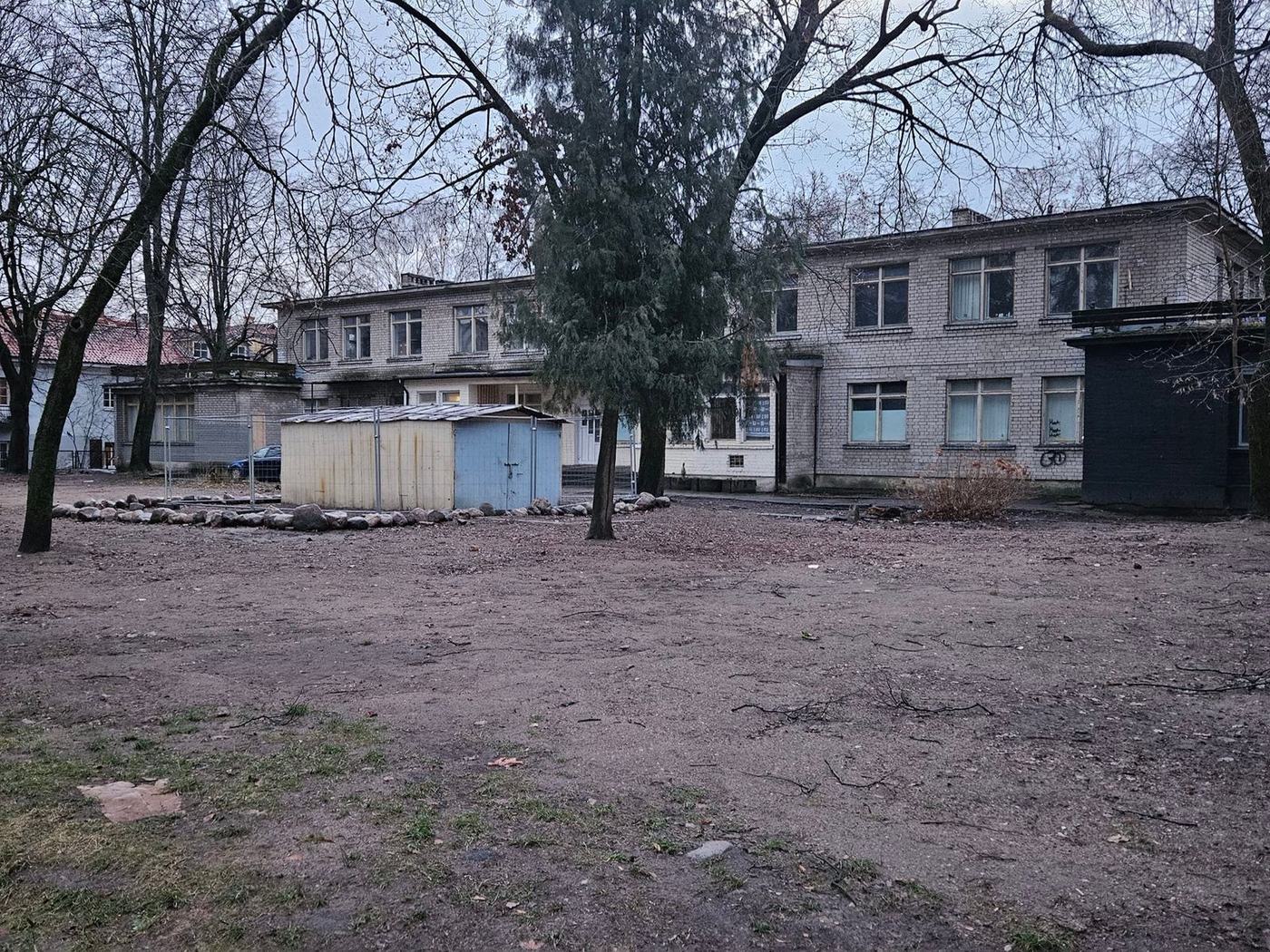
A quick, out of season and cold visit to Vilnius is an opportunity to see the site of the Great Synagogue after we returned home. The excavation is covered over, as if nothing happened, and the entrance to the miqve we excavated in the summer is roofed with a hut for protection. Hopefully we can return soon to continue our work.

Shalom to a Hero of Vilna
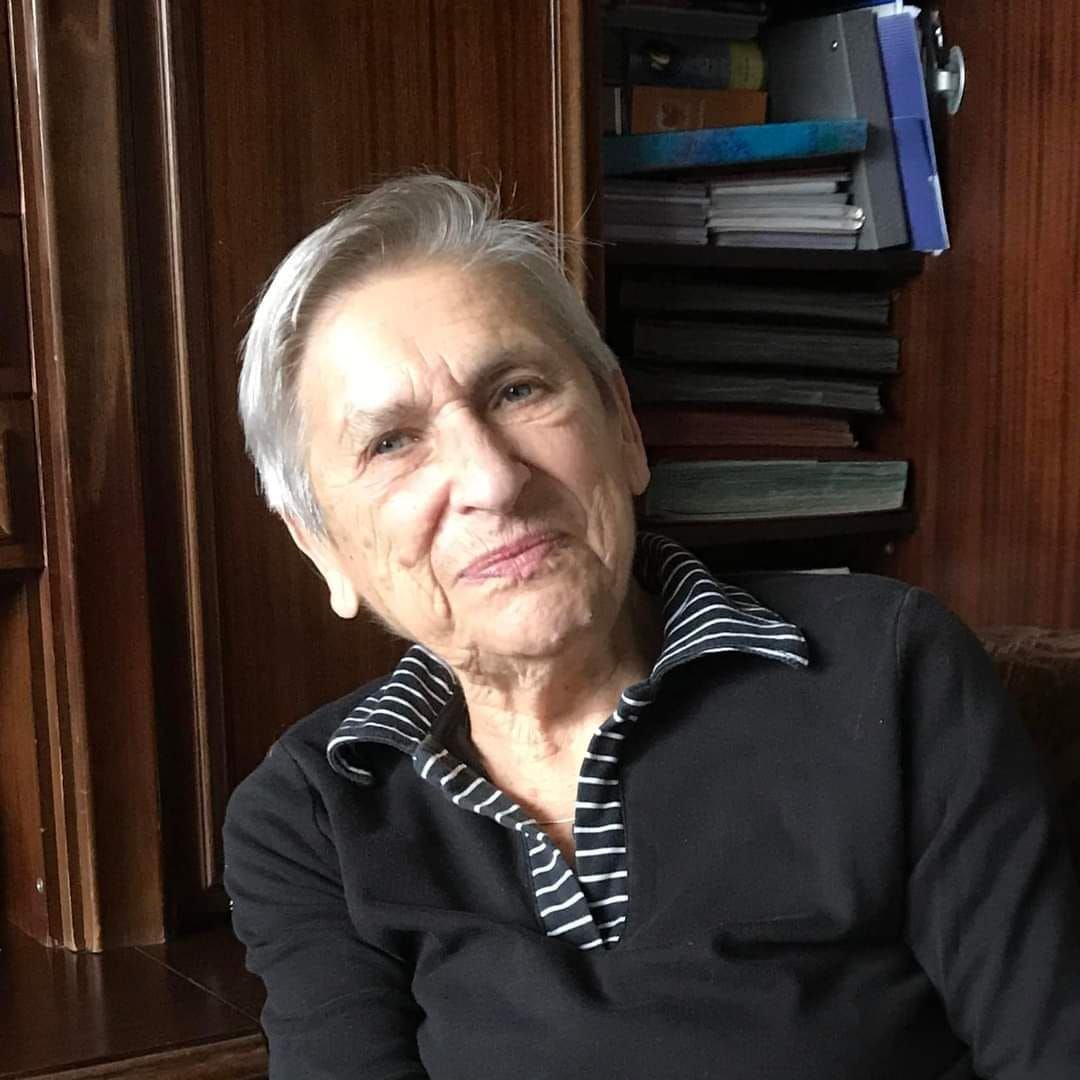
Fanya Brantsovsky, survivor of the Vilna ghetto and great Jewish partizan, passed away yesterday at the age of 102. Born in 1922, her vitality till the end was extraordinary. Fanya was probably the last human connection to the lost world of Vilna before the Shoah. Speaking in Yiddish, Fanya guided us through the Jewish streets of her youth, bringing back the life of the pre WWll city.
Eighty years ago she escaped the ghetto to join the freedom fighters in the Rudnicki forest to fight the Germans and local collaborators who were murdering our families in Ponar and at over 200 sites across Lithuania, actively participating in the liberation of Vilnius in July 1944.
Fanya passed on the eve of the memorial day in Lithuania dedicated to the Khurbn-Shoah which is today, the date of liquidation of the Vilnius ghetto. What a sad coincidence.
We salute Fanya, for her courage and dedication and for her legacy which will continue to inspire the generations that follow.
תהי זכרה ברוך - May her memory be blessed
Les fouilles sur le site de la grande synagogue de Vilna
avec Jon Seligman, Autorité des Antiquités d’Israël
Colloque - Archéologie du judaïsme en Europe
Ce colloque organisé avec le musée d'art et d'histoire du judaïsme et l'institut historique allemand à Paris s'est tenu au mahj du 23 au 25 mars 2022.
Au cours des six dernières années, des fouilles ont été menées sur le site de la grande synagogue de Vilna à Vilnius, monument le plus ancien de la communauté juive lituanienne. Cette synagogue baroque, bâtie sur les vestiges d’une synagogue en bois, a été construite au XVIIe siècle et est devenue le cœur de l’une des plus importantes communautés juives d’Europe. Située au centre d’une cour (shulhoyf), avec onze synagogues plus petites, un bain rituel, des boucheries, une bibliothèque et des bureaux communautaires, la grande synagogue a connu une série de changements jusqu’à son pillage et sa démolition tragiques sous les régimes nazi et soviétique. La conférence se concentrera sur les découvertes faites lors des fouilles, en particulier concernant les bains, les bains rituels (miqvaot), le bâtiment de la synagogue et l’inscription dédicatoire découverte sur le pupitre d’officiant (bimah).
דיל פֿון צעשטערטער גרויסער ווילנער שול, אַנטדעקט
זינט 2015 האָט מען שוין אַנטדעקט די בימה, אַ ספֿר־תּורה און אַ טייל פֿון דער ווײַבערשיל.
אַרכעאָלאָגן האָבן לעצטנס אויפֿגעדעקט דעם דיל און אַ וואַנט פֿון דער גרויסער ווילנער שול, וואָס די דײַטשן האָבן צעשטערט און די סאָוועטן האָבן שפּעטער ראַזירט.
דער דיל איז באַפּוצט מיט בילדער פֿון רויטע, שוואַרצע און ווײַסע בלומען און די וואַנט איז העל באַפֿאַרבט אין רויט און בלוי. די אַרכעאָלאָגן האָבן אויך אַנטפּלעקט אַ טייל פֿון דער ווײַבערשיל, אַ וואַסער־רעזערוווּאַר פֿאַר אַ מיקווה און אַ זײַל אויפֿן אָרט וווּ ס׳איז אַ מאָל געשטאַנען די בימה.
די אויסגראָבונגען פֿון דער סינאַגאָגע און דעם הויף אַרום איר האָבן זיך אָנגעהויבן אין 2015, נאָך דעם ווי מע האָט דורכגעפֿירט אַ ראַדאַר־אַנאַליז פֿונעם שטח. זינט דעמאָלט האָט מען געפֿונען די בימה, דעם אָרון־קודש, אַ ספֿר־תּורה און אַן אויפֿשריפֿט אויף לשון־קודש.
די גרויסע ווילנער שול איז געבויט געוואָרן אינעם 17טן יאָרהונדערט. פֿאַרן חורבן איז זי געווען אַרומגערינגלט פֿון 12 שילן, כּשרע יאַטקעס, אַ באָד און דער באַרימטער סטראַשון־ביבליאָטעק — איינע פֿון די וויכטיקסטע ייִדישע קולטור־אינסטיטוציעס אין מיזרח־אייראָפּע איידער זי איז צעשטערט געוואָרן בעת דער צווייטער וועלט־מלחמה.
Thank You and Ačiū
At the end of an amazing season of excavation, we need to thank all those who made it possible.
First and foremost, thanks is due to the workers and staff of ‘Kultūros paveldo išsaugojimo pajėgos’ who undertook the lion's share of the physical work to expose the remains of the Great Synagogue. Thanks also go to our volunteers, aged from 8 to 88, from Israel, Lithuania, Austria, Britain, the United States and Canada who participated in the excavation and, we hope, found it an enriching experience.
We also welcomed multiple visits to the site, often passing tourists and residents of Vilnius, but also by the ambassadors and embassy staff of Israel, France, Britain, the Netherlands, USA, Canada, New Zealand (with the hope we have not omitted somebody!); participants in the ‘Bridging Divides: Jews in Historical Lithuania’ conference and the Levinas Seminar of the University of Vilnius; Profs. Albinas Kuncevičius and Gintautas Zabiela of the Lithuanian Archaeological Council; Simonas Strelcovas and the staff of the Vilna Gaon Museum of Jewish History and numerous other guests from Lithuania and around the globe.
Thanks are also due to Marija Navickaitė of the Good Will Foundation and Yuli Swartz of the Israel Antiquities Authority who made sure that press coverage of the important results of the excavation would reach audiences around the world.
Special thanks go to our good friend Loïc Salfati, the director of the French Institute, who as usual accompanied our work, helped document it and twice screened his amazing film, 'The Secrets of the Great Synagogue of Vilna'. We also give thanks to Liana Jagniatinsky of the Vilnius Jewish Public Library, who arranged a public lecture on the excavation, which was held just one day before the sad and untimely passing of its director, Žilvinas Beliauskas, who generously hosted us in the past.
Finally, we thank Faina Kukliansky, the President of the Lithuanian Jewish Community (LZB); Rabbi Andrew Baker and Indrė Rutkauskaitė, the co-chair of the board and director of the Good Will Foundation, for their continued support of the excavation of the Great Synagogue, with the hope that proper commemoration of this important monument will reach fruition for the memory of the Jewish community of Vilna, for the benefit of the present residents of Vilnius and for all humanity.
Thank you, todah raba, a-grois'n dank and ačiū,
Jon Seligman and Justinas Račas
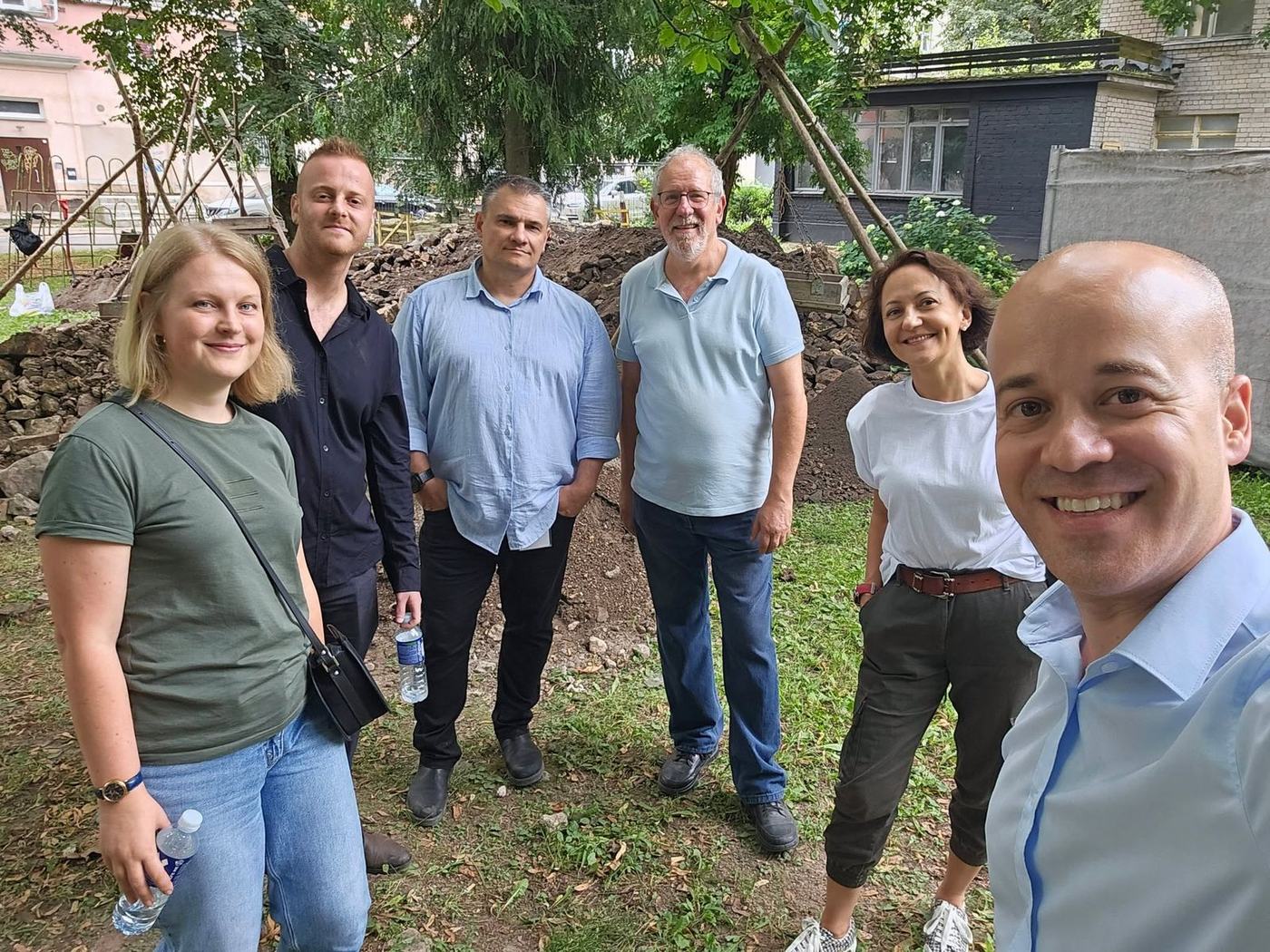
The Israel Embassy Digs Us
Thank you to Deputy Ambassador Erez Golan and the team from the Israel Embassy to Lithuania. Ties and jackets were removed and the diplomats helped in the excavation.
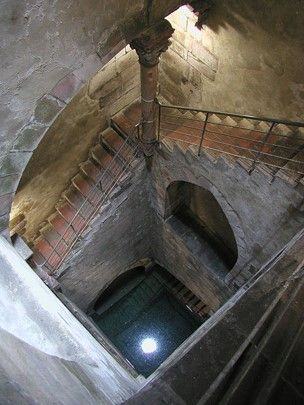
Looking for Vilna’s Earliest Miqve (Ritual Bath)
On the 12th July 1848, Rabbi Ya’acov Meir Padua of Brisk (now Brest in Belarus) wrote to Maggid Zalman Ze’ev of the Holy Community of Vilna the following, “I received his letter full of love for the Torah and reverence, to find a solution for frivolous (דעתן קלות) women (his words!!), who disparage the mitzvah of ritual ablution of the very difficult place of ablution. The ablution place is deep with forty steps down to the place where the water is found. And even during the hot days it is a lot of trouble and especially during the rainy days”.
In the nineteenth century, the issue of cold, dirty, unhygienic and frankly dangerous miqve (ritual baths) cut deep into the ground had become a problem. The most famous examples of these miqva’ot are found in German towns, such as Speyer, Worms, Cologne and Friedberg, where deep shafts cut in the ground reached the ground water after climbing down multiple steps. The emerging conflict with secular health officials, who closed down these facilities for being unhygienic and the demands of the more prosperous middle classes for a more pleasant experience in the miqve, led to changes in interpretation of ritual Jewish law (halacha). With a lot of rabbinical back-bending and brow-beating, all of a sudden it was possible to use water from the municipal supply, rather than sending women after nida (menstruation) down forty steps in the middle of the winter to dirty water in a cellar.
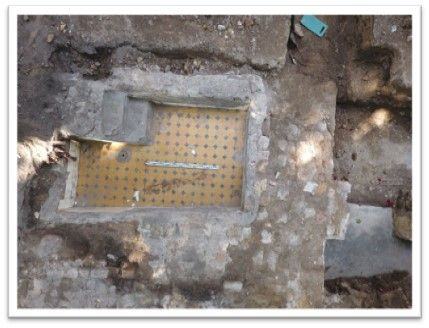
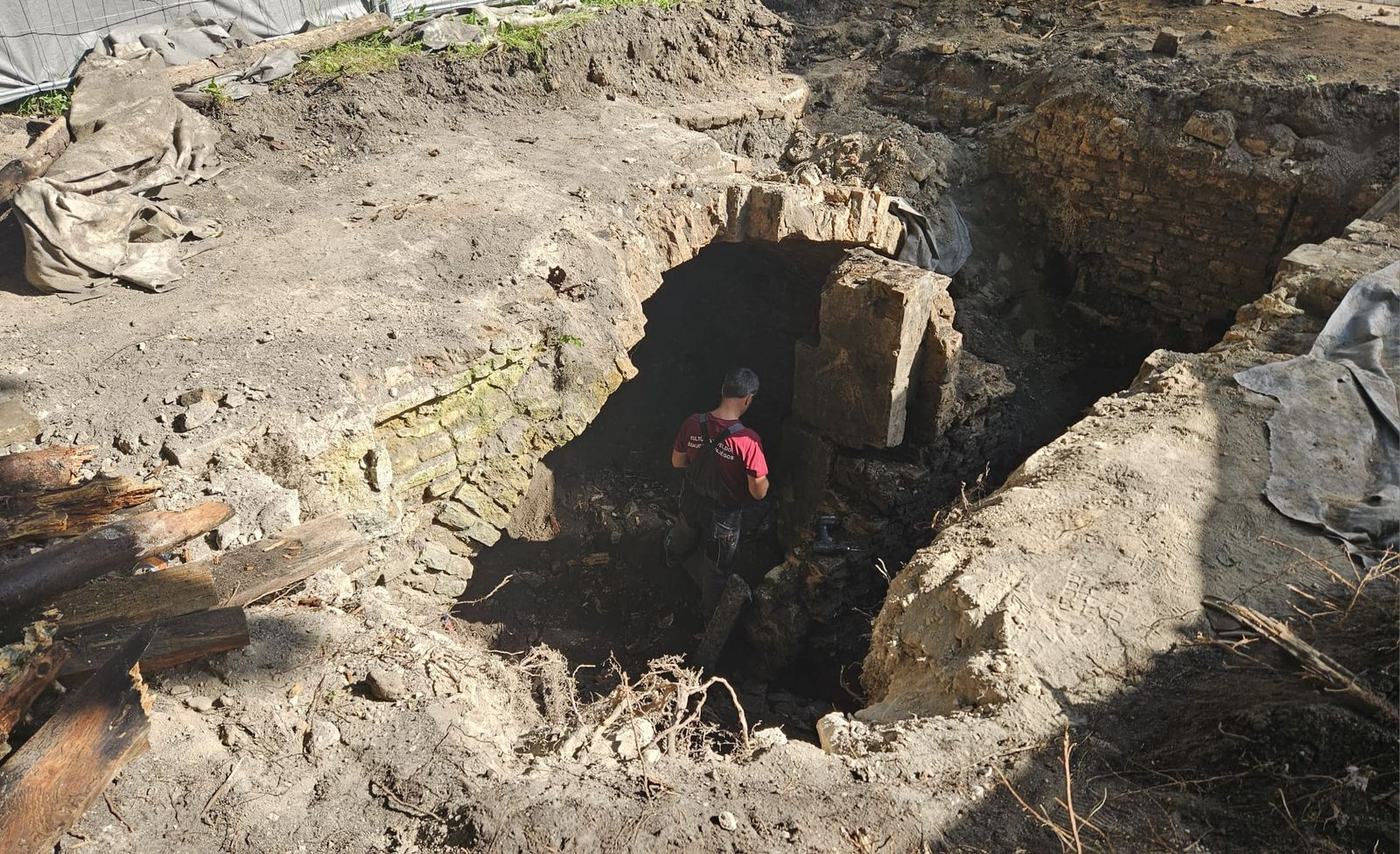
So, in 1848, a solution for this problem was needed also in Vilna, the changes leading to the establishment of a new bathhouse with miqve’ot around this time. It would be these new miqva’ot which we excavated in previous years. So what of the old miqve which had been in use at least since the 17th century, and probably earlier? Clearly from Rabbi Padua’s letter, we learn that there was also a shaft miqve in Vilna, like in Germany. To date, no such miqva’ot has been discovered in Lithuania. We know the facility was in the Shulhoyf, but where? Some years back we excavated a large vault below the bathhouse, with no floor. This may be the place and we are now re-excavating the vault with the aim of finding the first miqve of Vilna.
Wish us luck and we will update you on our progress.
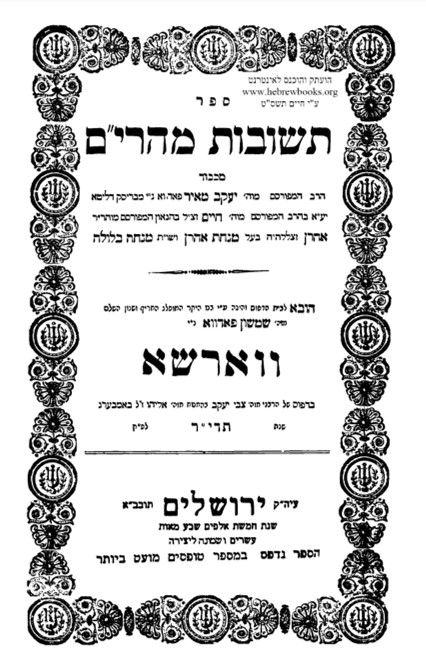
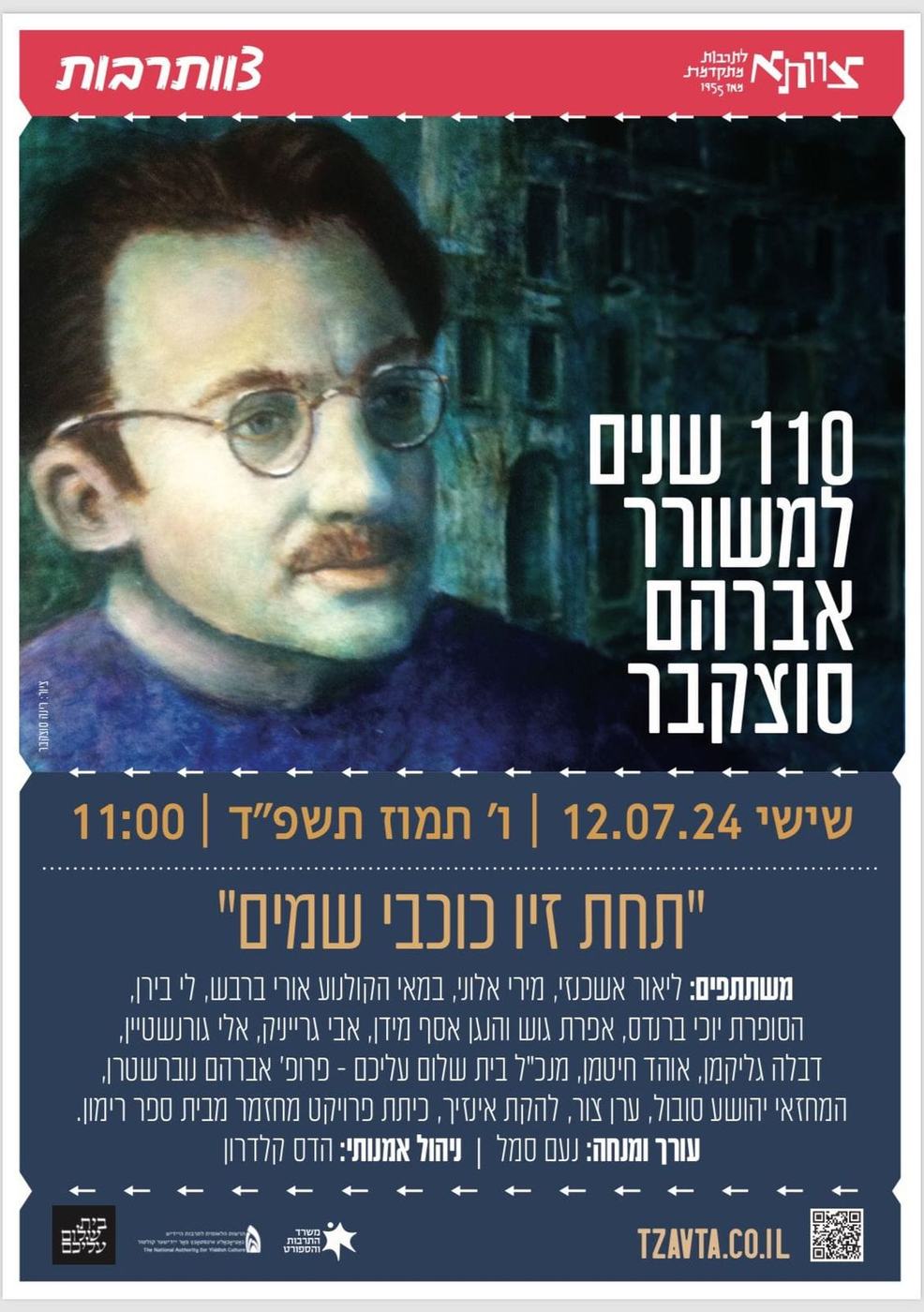
אונטער דיַיַנע ווייַסע שטערן - תחת זיו כוכבי השמיים
אם אתם בתל אביב מחר, מומלץ לרכוש כרטיס לערב שירה של גדול משוררי וילנה, אברהם סוצקבר (סוצקעווער) לכבור 110 שנים ללידתו.
אונטער דײַנע ווײַסע שטערן
שטרעק צו מיר דײַן ווײַסע האַנט,
מײַנע ווערטער זײַנען טרערן,
ווילן רוען אין דײַן האַנט.
זע, עס טונקלט זײער פֿינקל
אין מײַן קעלערדיקן בליק,
און איך האָב גאָר ניט קײן ווינקל
זײ צו שענקען דיר צוריק.
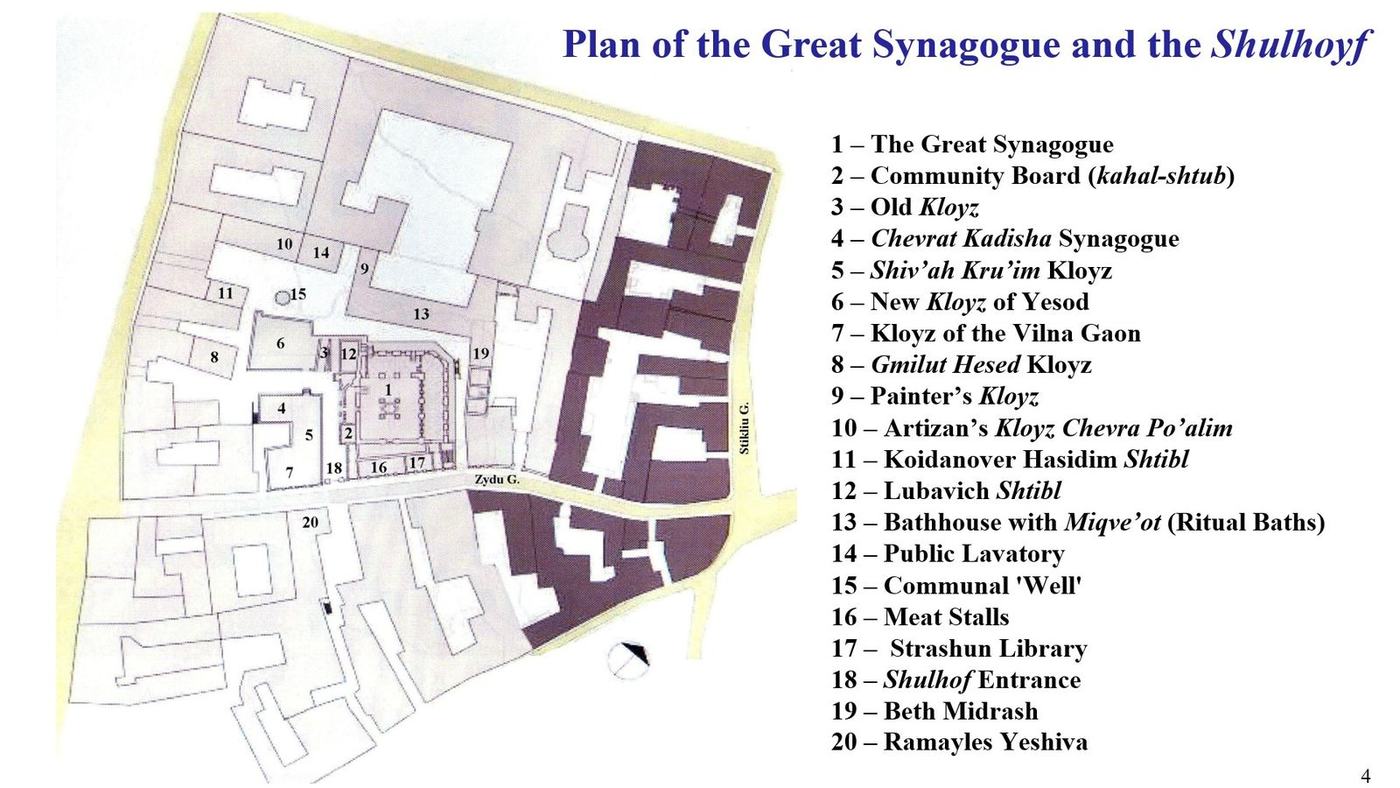
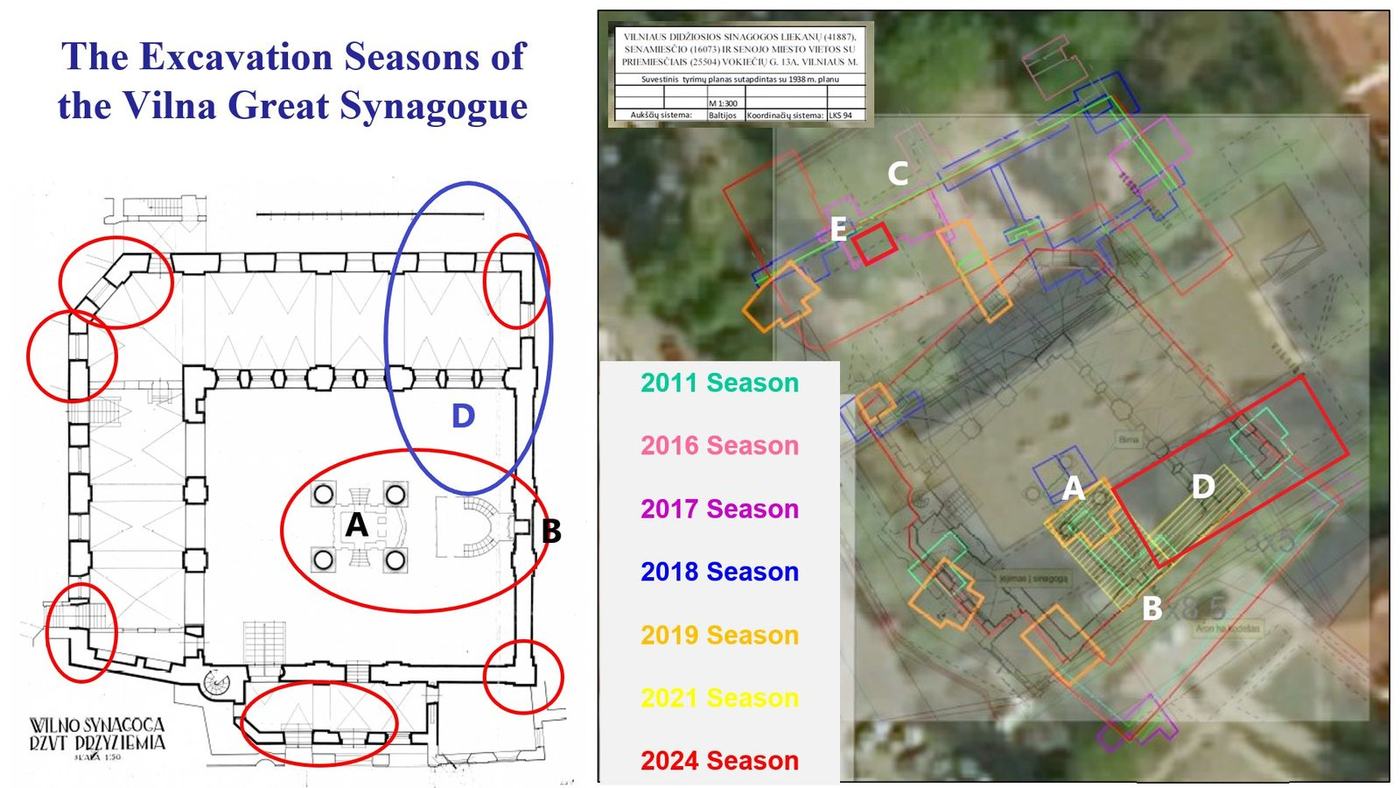
The Excavation Plan for 2024
We hope the attached plans help you understand the geography of this year’s excavation.
The school building, built after the criminal demolition of the Great Synagogue of Vilna in 1955-6, covers most of the remains of the synagogue (‘1’ on the map). Previously we have excavated sections of the Bimah (‘A’ on the plan), the Torah Ark-Aron Kodesh (‘B’ on the plan) and the outer walls of the structure, all marked with red circles.
This year our work is concentrating on the main synagogue hall and the women’s section (Ezrat Nashim) (‘D’ on the plan). Earlier work has also investigated the Miqve (ritual bath) and bathhouse (‘13’ on the map) in the courtyard of the Shulhoyf (community courtyard) behind the synagogue building (‘C’ on the plan). Hopefully this year we will also be investigated the Miqve (marked ‘E’ on the plan).
Oh, What a Feeling, When We’re Dancing on the Ceiling
Maybe Lionel Ritchie isn’t here in Vilnius to help us out, but finds from the excavation show us how styles ‘danced’ from one community to the others.
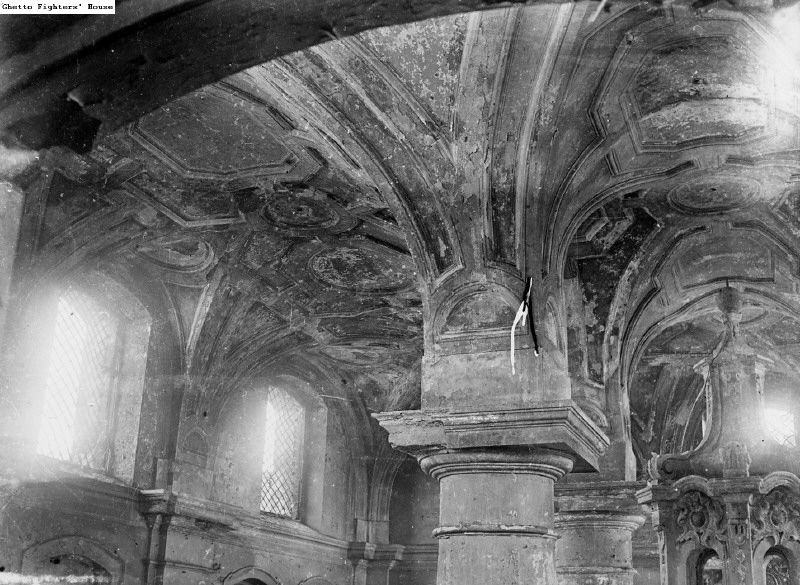
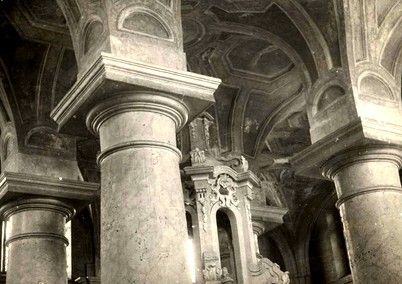
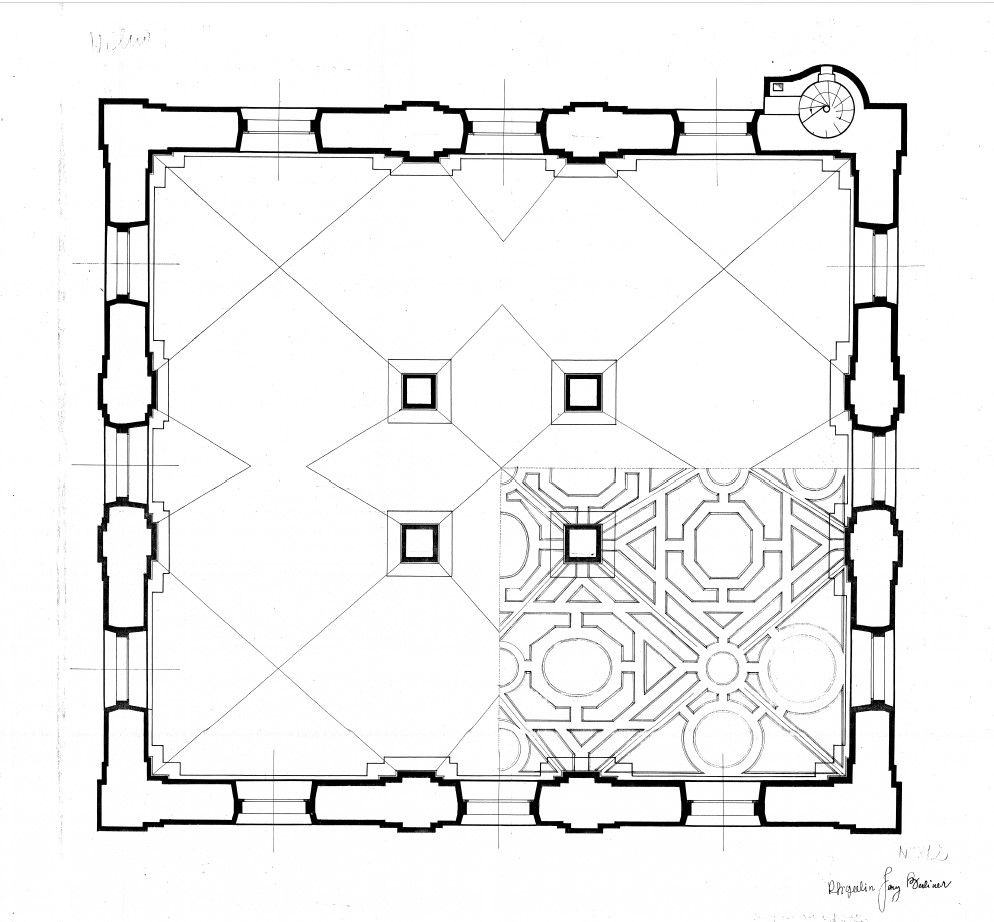
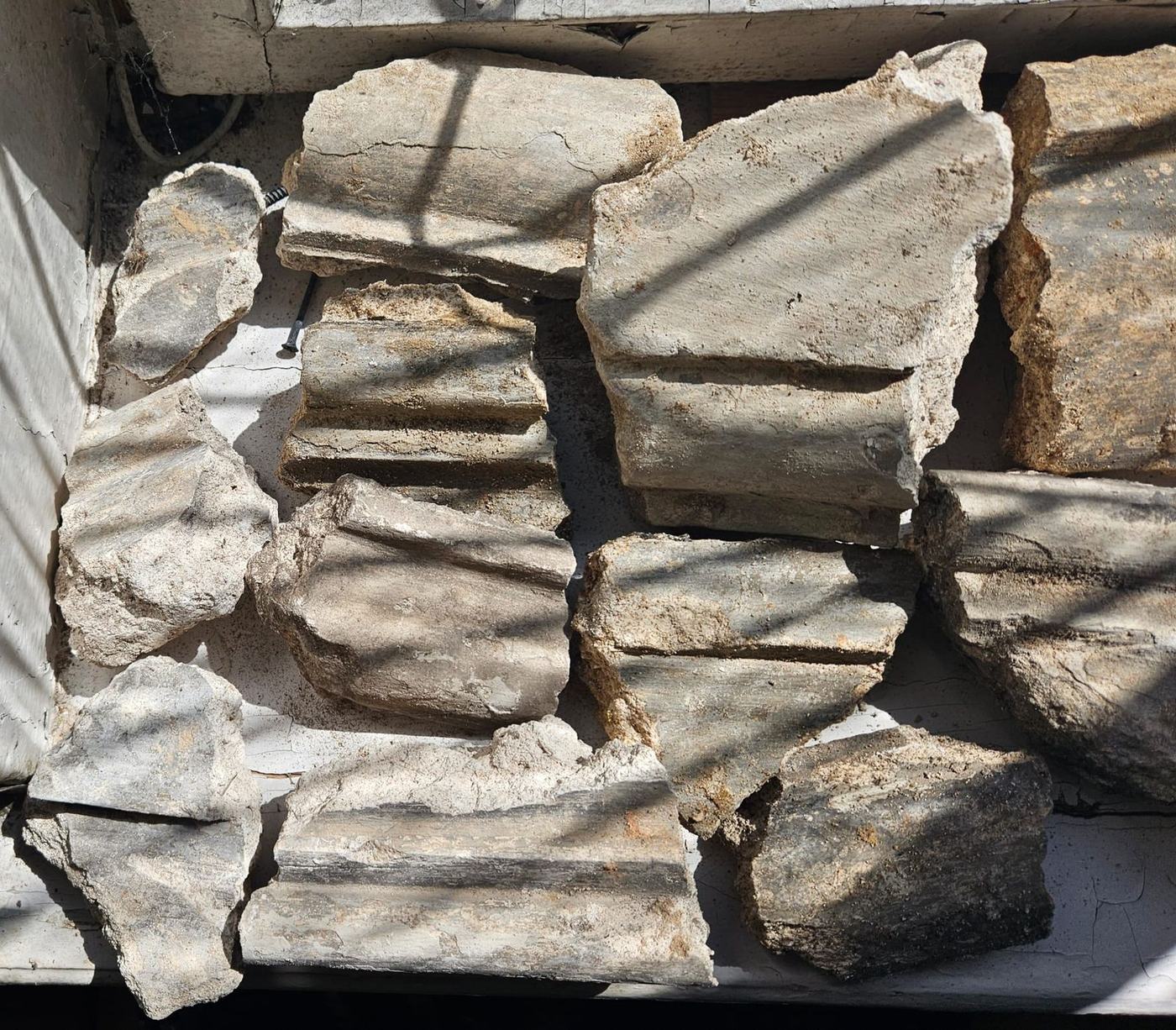
In the debris of the Great Synagogue are moulded pieces of plaster that fell from the ceiling of the structure during its destruction in 1956-7. When the synagogue was built the ceilings of the nine covering vaults were decorated with plastered geometric mouldings, probably painted blue to represent the heavens.
Luckily a number of photographs show the ceiling and we are especially aided by a drawing of the ceiling from 1934 by Roman Sigalin and Jerzy Berliner, who documented the Great Synagogue for the Polish Architectural Polytechnic of Warsaw. Pieces of the moulded shapes of this pattern have now been found in the excavation and are shown in the attached photograph.
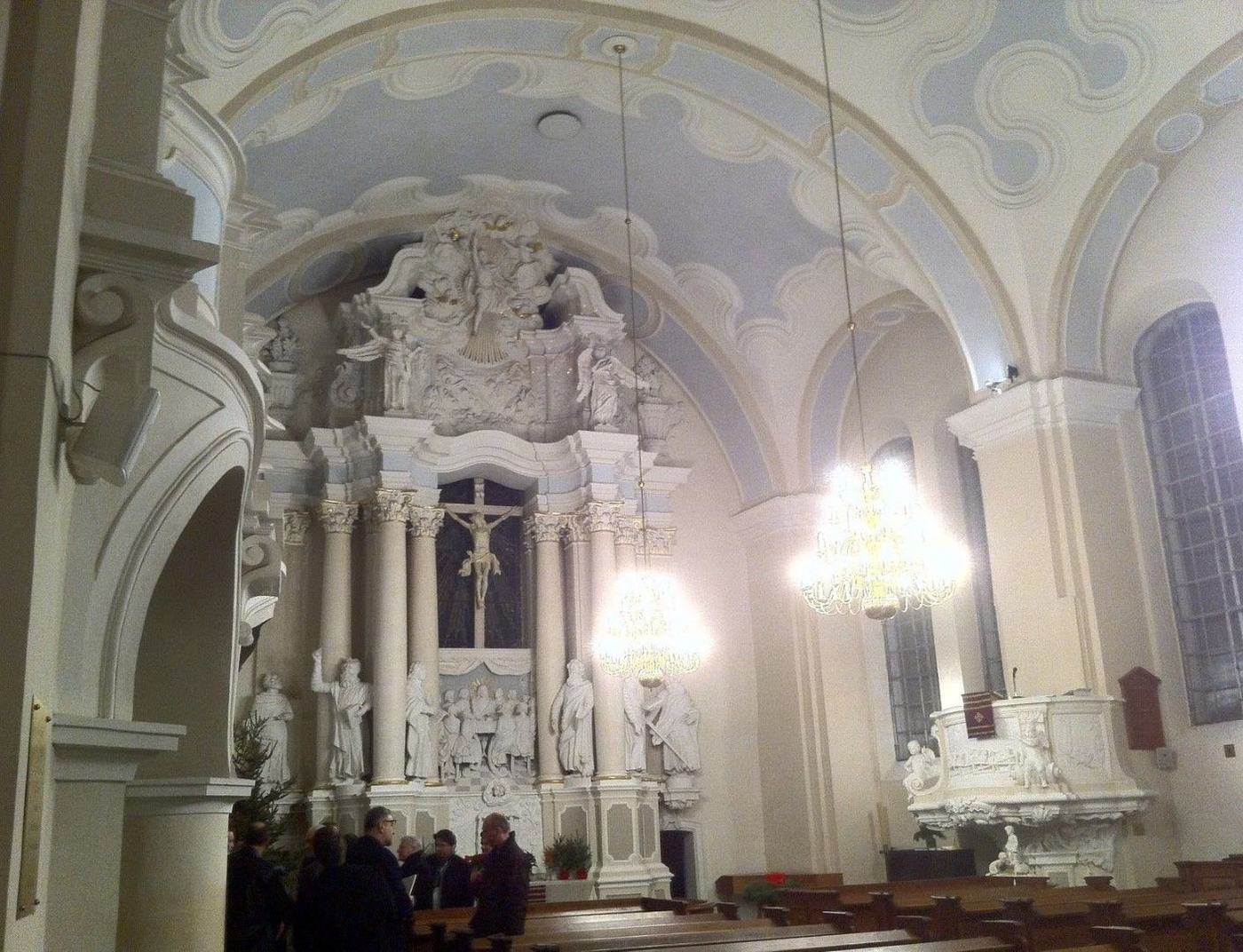
Fortuitously, the Great Synagogue was not the only building with this type of ceiling decoration. Across German street (Vokieciu gatve), only 80 metres from the synagogue, is the German Lutheran Church, built around the same time and quite possibly designed by the same architect. The ceiling of the church is similarly decorated with geometric plaster moulding and heavenly inspired blue paint, the decorative idea dancing from the ceiling of one edifice to the other.
A Little Story of a Tile for the First Day
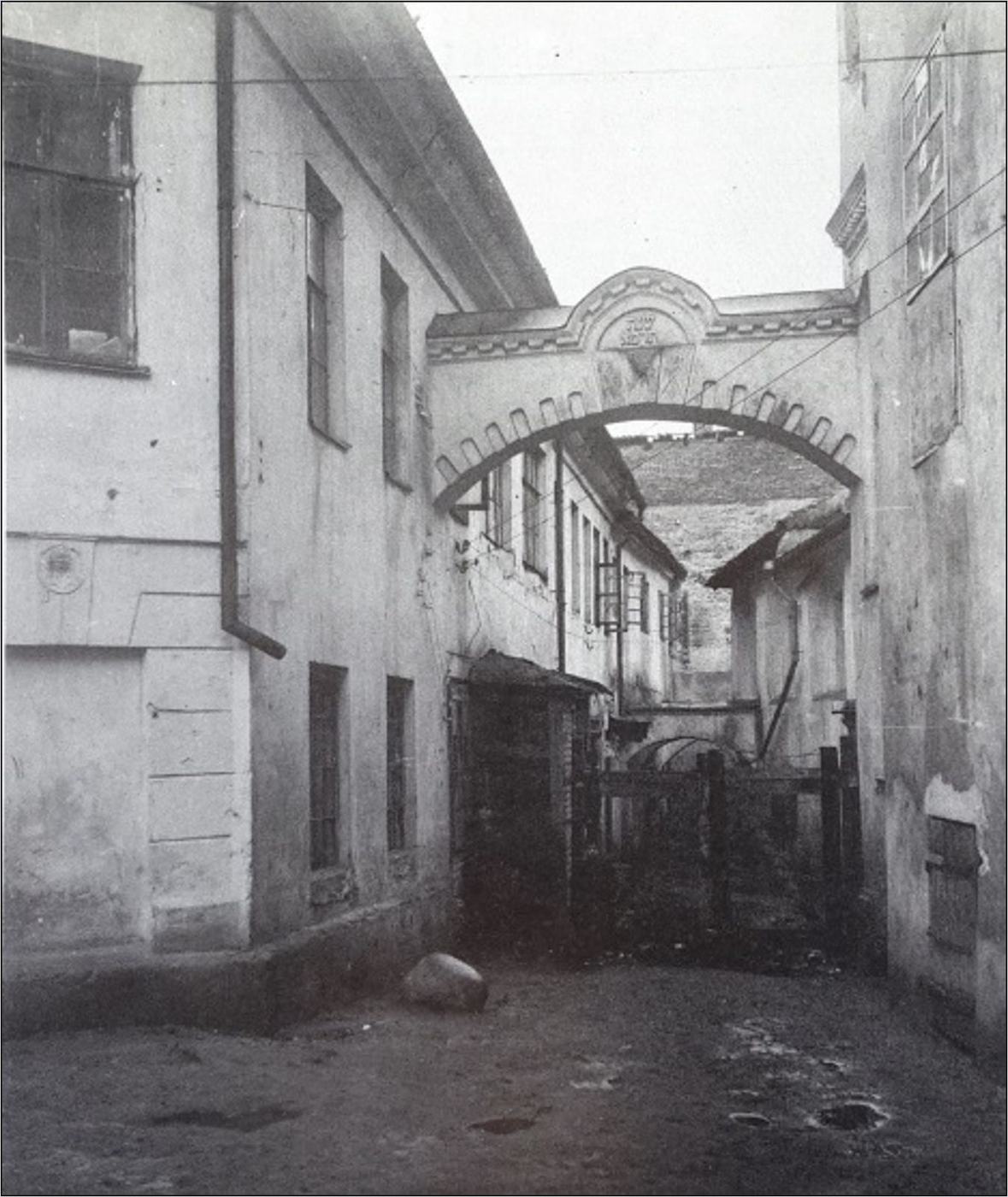
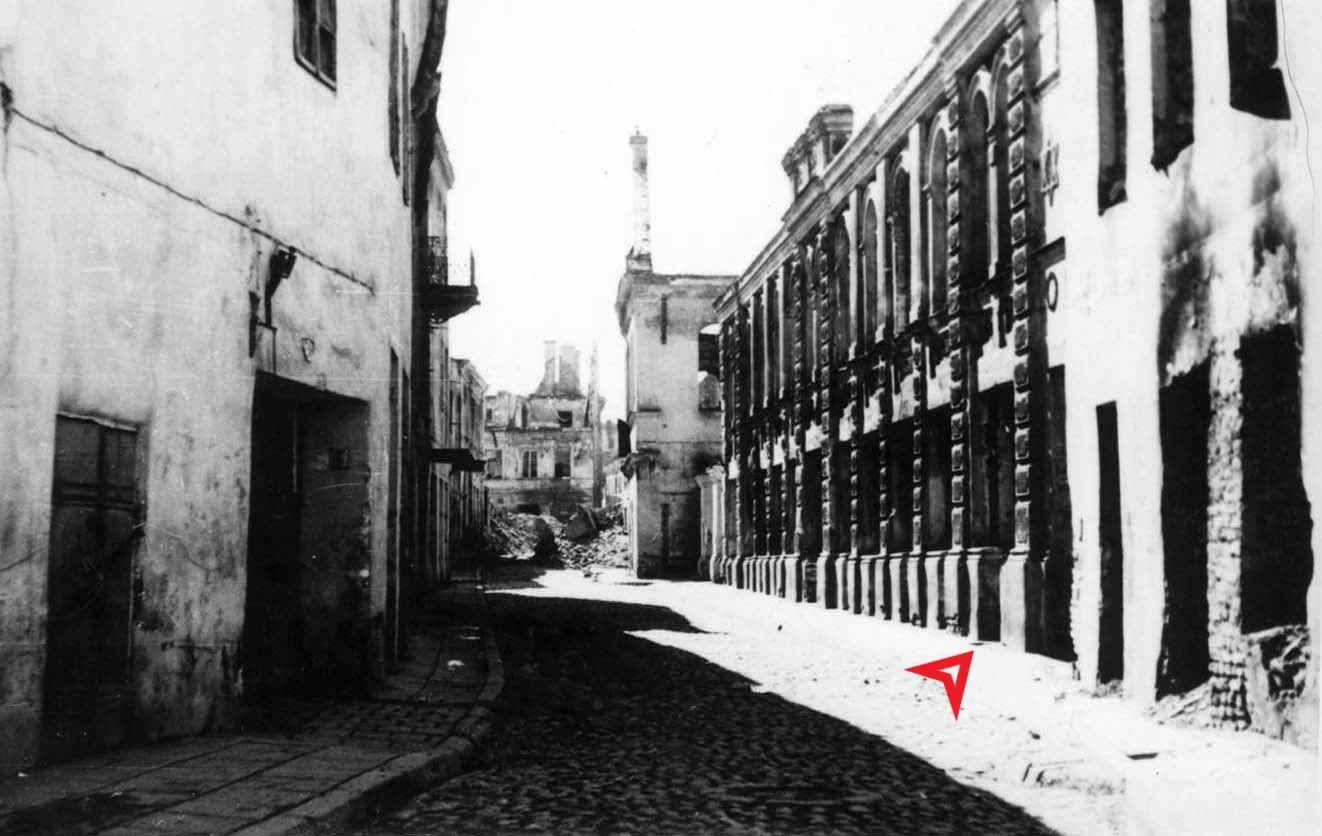
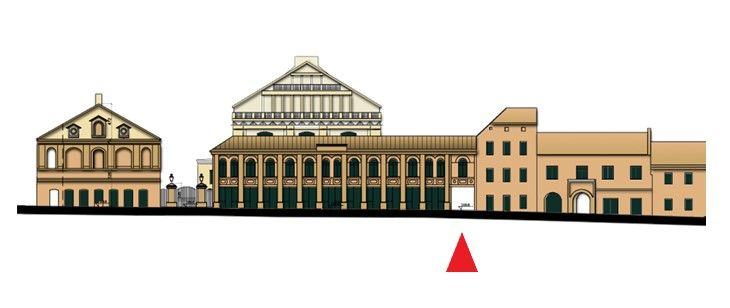
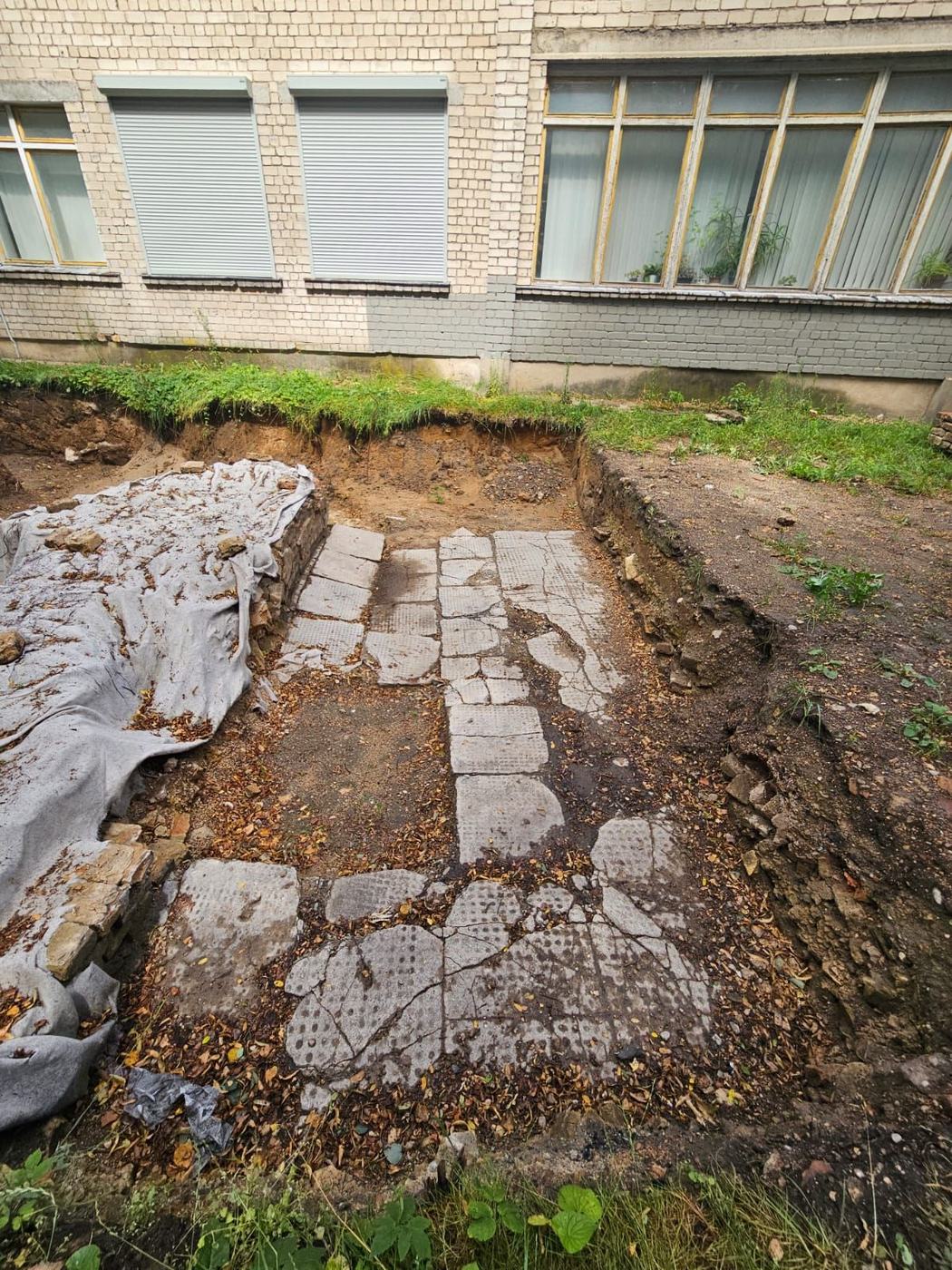
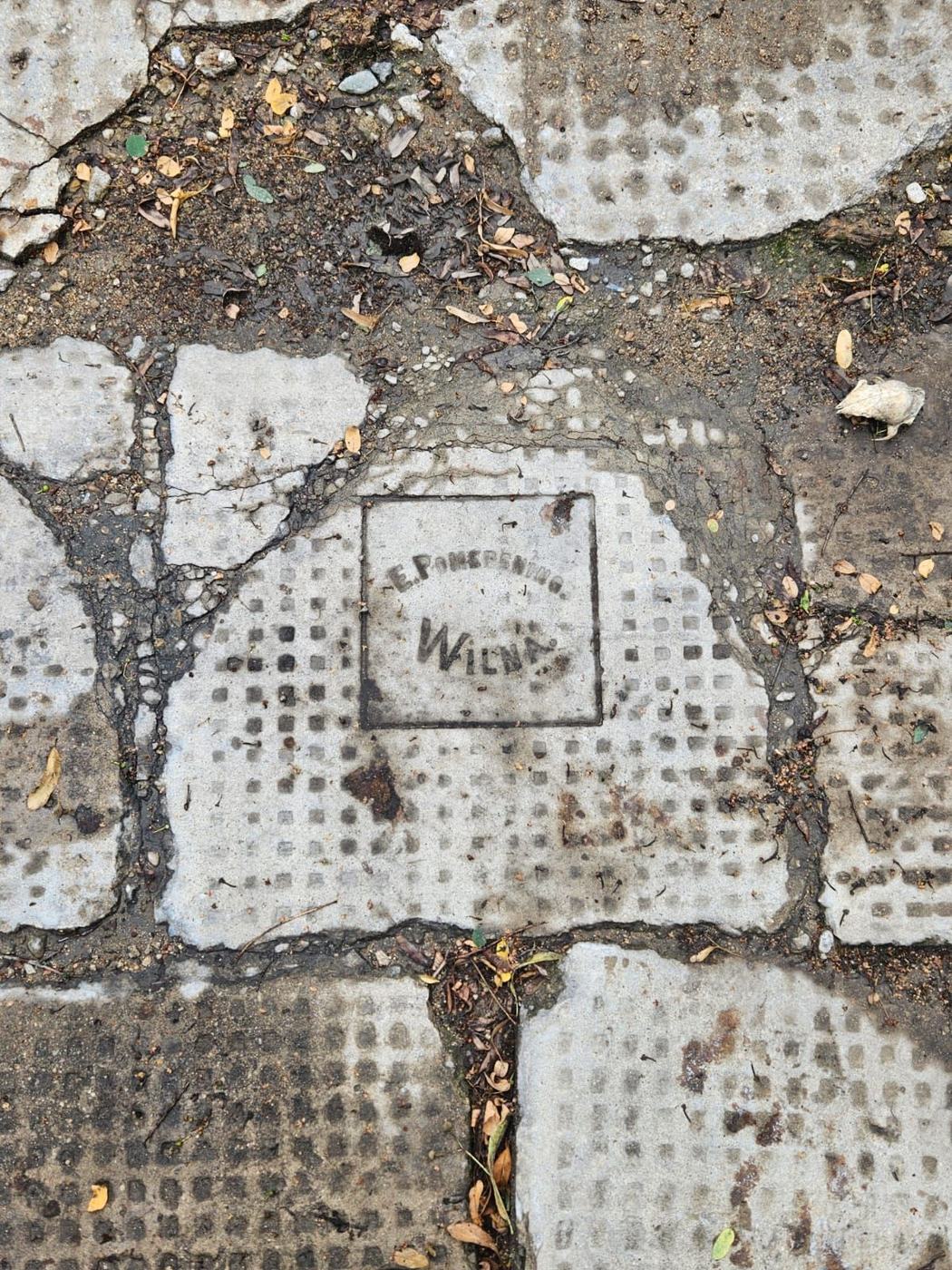
The main entrance from Jewish Street to the Shulhoyf and the Great Synagogue was on the eastern side of the structure. On the other side of the synagogue, leading under an arch on the western edge of the Strashun library, was a small pathway which passed behind to the Ezrat Nashim (women’s section) to the bathhouse and miqve building at the back of the synagogue. The pathway was paved with cheap grey concrete tiles, probably in the early decades of the 20th century. In our intial work we uncovered the pathway, paved with these tiles and detected an inscription named with the tile maker, his name impressed in a square frame in the middle of the central tile. The tile maker is noted as ‘E. Pomerening’ from Wilna. Historical analysis shows that most floor tiles used in structures in Vilnius during the 19th to 20th centuries, were imports from Germany, Poland, and also from the surrounding governates of the Russian Empire of Kovno (Kaunas), Minsk, Grodno and Vitebsk. The tiles used for the pathway of the Shulhoyf were supplied by a local manufacturer, named Eduard Pomerening, who established the oldest concrete tiling factory in Vilnius in 1888.
Small stories, such as this, tell us about the day-to-day lives of the people who lived and worked in Vilna and in the Yidisher Gas (Jewish Street – Zydu gatve).
Just one week to go!
We will be back in field next Monday (8th July). Organising guided visits to the site to be announced as we progress. Check in for details over the coming weeks.
The Great Synagogue & Shulhoyf of Vilna (Vilnius) Excavation Project - The 2024 Season
● - We will be returning to Vilnius to continue the excavation this summer. Join us!
● - A quick summary of the work until now
The successful outcome of previous seasons of work have shown both the potential of continued excavation at the site to uncover further sections of the Great Synagogue and the surrounding buildings and the huge public interest in our work. Still, given the limited resources available to the team, we decided to initially concentrate on issues relating to the water system of the Shulhoyf that developed in and around the Great Synagogue in the 18th century.
Previous seasons of excavations have exposed the women’s and men’s miqva'ot (ritual baths). This consisted of an almost rectangular bath that belonged to the latest renovation of the bathhouse, probably dated to 1881. In the SW corner of the installation were the remains of steps, two of which are complete. Originally there would have been four steps from the entrance of the pool.
We also exposed the back wall of the bathhouse that including the boundary wall of the Shulhoyf itself, beyond which were two rooms of an apartment courtyard of the building adjacent to the Great Synagogue complex.
With the closure of the school operating inside the modern building built over the Great Synagogue after its destruction, we had the opportunity to excavate beneath its floors. Utilising historic plans of the now lost building, we identified the possible location of the Bimah, in the area of the former principal's office. After removal of the floor and excavation 3 metres below, we were able to reveal a significant portion of the Bimah itself, including the decorative outsets on its outer face. Also evident was the base of one of the back columns in Tuscan style of the Bimah itself.
In 2019 and 2021 our excavations focused on further exposure of the Bimah, rebuilt by the Yesod, a community benefactor, during the 18th century. Parts of the columns, the colourful floor and the balustrade of the readers table were found. The most important find of the excavation was of an important memorial inscription. The Hebrew inscription, engraved on a large stone slab, is a complex rabbinic text filled with biblical allusions, symbolism, gematria, and abbreviations. The text describes the donation of a Torah reading table in 1796 in honour of R. Hayim ben Hayim and of Sarah by their sons, R. Eliezer and Shmuel. The inscription notes the aliyah (emigration) of Hayim and his wife Sarah to Eretz Israel, the Land of Israel. The interpretation of the inscription shows the use of multiple messianic motifs. Historical analysis identifies the involvement of the Vilna community with the support of the Yishuv (the Jewish community in Ottoman Palestine) and the aliyah of senior scholars and community leaders at the end of the 18th and early 19th centuries. Amongst these figures were Hayim ben Hayim and Sarah, with Hayim ben Hayim going on to represent the Vilna community in the Land of Israel as its emissary, distributing charitable donations to the scholarly Ashkenazi community resident in Tiberias, Safed, and later Jerusalem.
Further excavation exposed the floor area between the Bimah and the Aron Kodesh, including its stairs. On the floor of the synagogue were the destroyed remains of the four huge columns which once supported the roof.
● - Goals for the 2024 Excavation Season
In our original project proposal we set out a series of research questions. First and foremost among these where the continued excavation of the Great Synagogue to expose the remainder of the Bimah, the Torah ark, the floor and the southeastern and northwestern walls of the synagogue. The major result of the excavation in 2018 and 2019 was the exposure of the Bimah, and the work in 2021 focused on the area of the Aron Kodesh. This year we will be excavating the area of the synagogue to the left of the Aron Kodesh, up until the eastern wall of the building. Furthermore, we hope to be able to discover remnants of the original miqve of Vilna which is described in Rabbinical literature of the 19th century, but has since been lost.
● - Excavation Dates and Volunteering
Here is the opportunity to become involved in this important and exciting project. Beyond the involvement in an important heritage project to recover part of the lost heritage of the Jews of Lithuania, the Litvaks, this project also provides the opportunity for many Jews of Litvak origin, to reconnect with their own history by helping to discover the remains of the most important monument of Litvak Jewry.
The Great Synagogue & Shulhoyf of Vilna Project is scheduled this year to last three weeks. The excavation will commence on the 8th July 2024 and will continue for three weeks until the 26th July 2024. If you are interested in participating then you are welcome to contact us at seligman.jon@gmail.com .
Unfortunately no stipends are available. Volunteers will need to make their own way to Vilnius. We can suggest accommodation options. During the excavation visits will be available to sites in the city, with an emphasis on the history of the Jewish community.
● - Please follow our Facebook and website for updated information.
https://www.facebook.com/Vilna.Synagogue.Project/
http://www.seligman.org.il/vilna_synagogue_home.html
● - The 2024 Excavation Season is Sponsored and Partnered by:
Good Will Foundation
Jewish Community of Lithuania
Israel Antiquities Authority
Kulturos paveldo išsaugojimo pajegos
Center for Jewish Art, Hebrew University of Jerusalem
Bezalel Academy of Arts and Design
Duquesne University
Vilna Gaon Jewish State Museum
University of Wisconsin in Eau Claire
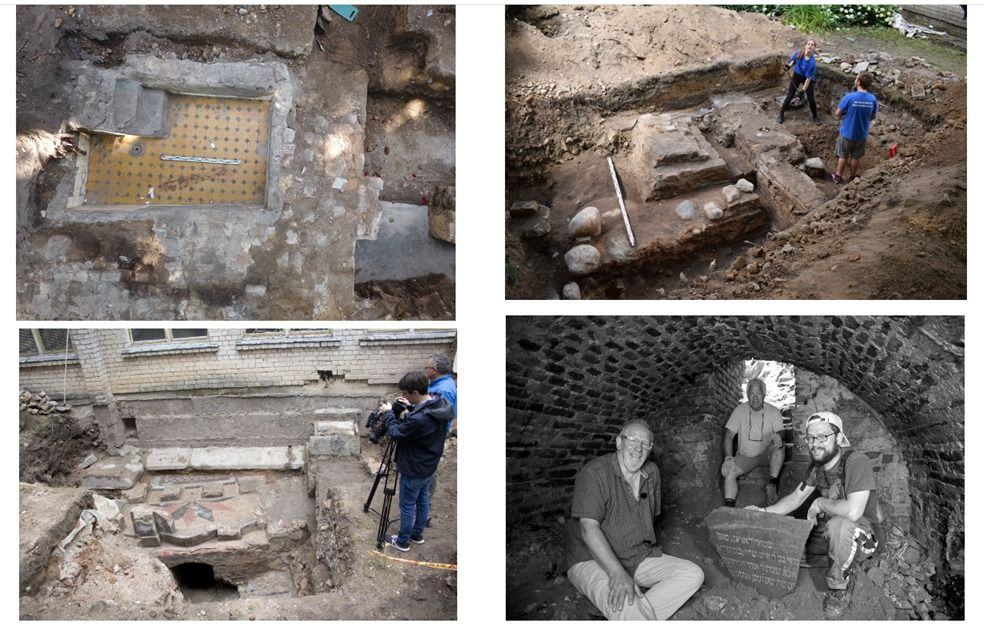
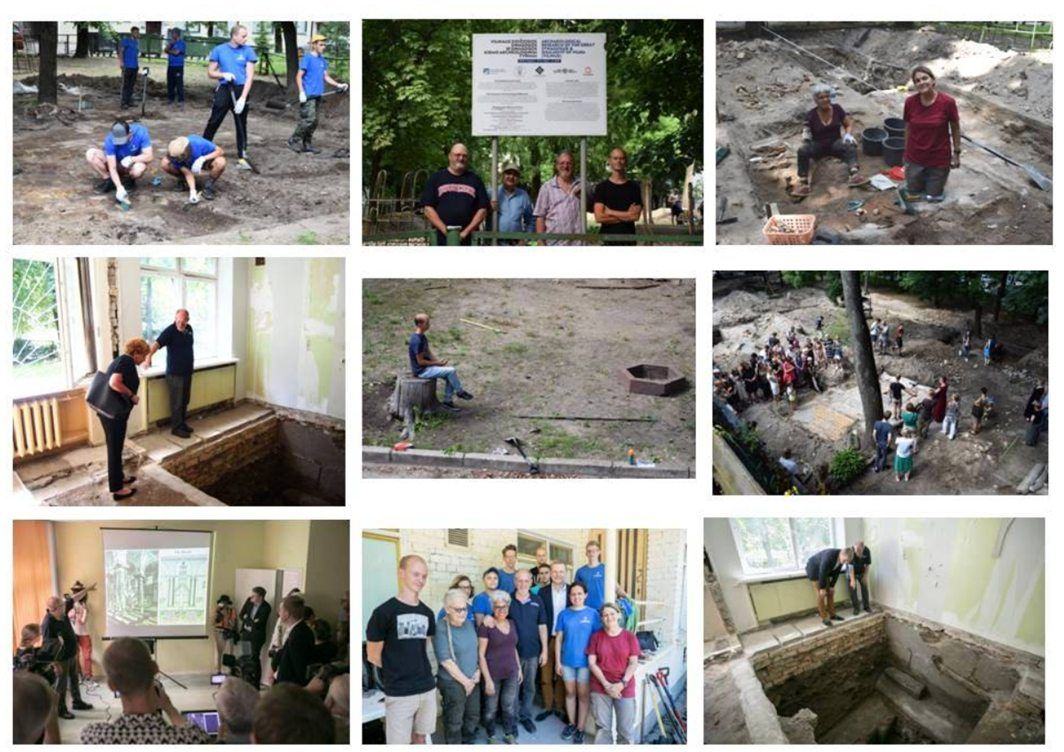
Taking a Bath – A New Article
A new article discussing the bathhouse of the Shulhoyf of the Great Synagogue of Vilna.
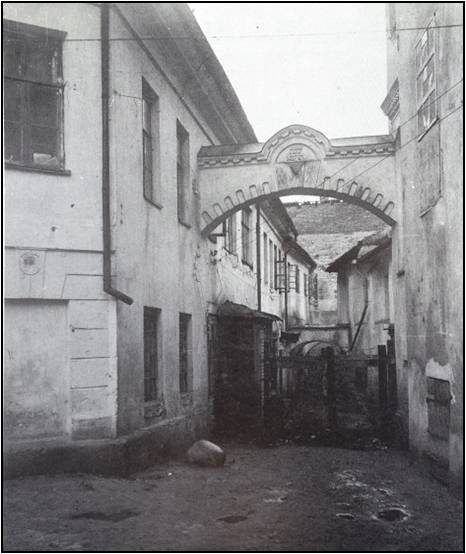
The Zavl and Zarech’e kloyzn
A new article on the Zavl and Zarech'e kloyzn presenting new finds documented during our work in Vilnius.
En français
Une petite contribution en français sur vos fouilles de la grande synagogue de Vilna.
Merci au 'Musée d'Art et d'Histoire du Judaïsme' de Paris et
'Inrap' (Institut National de Recherches Archéologiques Préventives).
2023 (7 stories)
From Vilna to Gaza - A Great Tragedy
For many years the Dinaburg-Levinboim-Cooper family have been a central part of our excavation. Varda Dinaburg-Cooper, her late husband, Motti Cooper, and their daughter Dorit Cooper-Margalit have participated in many seasons of work to reveal the remains of the Great Synagogue of Vilna.
It is with great sorrow that we pass on the terrible news of the murder of their daughter and grand-daughter, Adi Margalit, at the hands of the beasts of Hamas-ISIS. Adi was a vibrant young lady, only 24 years old, with hopes and dreams. Her loss is too horrible to comprehend.
May her memory be blessed - יהי זכרה ברוך

With the Academies of Science
CONFERENCE
The Intellectual Heritage of the Jews of Vilna
10–11 October 2023, Vilnius
KONFERENCIJA
Vilniaus žydų intelektualinis paveldas
2023 m. spalio 10–11 d., Vilnius
On 10–11 October 2023, the Lithuanian Academy of Sciences and the Israel Academy of Sciences and Humanities are holding the international scholarly conference ‘The Intellectual Heritage of the Jews of Vilnius’.
In Lithuania, the year 2020 was the Year of Lithuanian Jewish History and of the Vilna Gaon, Elijah ben Solomon Zalman, in commemoration of the 300th anniversary of his birth. A conference of the Lithuanian Academy of Sciences and the Israel Academy of Sciences and Humanities in Vilnius was part of the commemorative programme.
Unfortunately, this goal did not materialise because of the pandemic. As soon as it was over, both academies decided to revive the idea of the conference.
As part of the celebrations of the 700th anniversary of Vilnius and in view of the influence of the Jewish people and culture on the history of Vilnius, a decision was made to broaden the scope of the conference by exploring the rich intellectual heritage of the Jews of Vilnius from the eighteenth century onwards and the impact it has had on Vilnius and the wider world.
To achieve this goal, the conference will focus on the intellectual heritage of Vilna Jews in the eighteenth-nineteenth centuries (the first day of the conference), the process of the intellectual modernisation of the Jews of Vilnius, and the spread of the Jews of Vilnius in the world (the second day of the conference).
Thanks to the support of the Research Council of Lithuania, we were able to invite such world-renowned experts in Jewish history and culture as Prof. Israel Bartal, Prof. David E. Fishman, Prof. David G. Roskies, Prof. Benjamin Brown, Prof. Alex Lubotzky, Prof. Marcin Wodziński, Dr Jon Seligman, Prof. Avner Holtzman, Prof. Tsvia Walden, Prof. Mordechai (Motti) Zalkin, and others.
The conference will also feature presentations by prominent Lithuanian scholars: Prof. Giedrė Jankevičiūtė, Prof. Mindaugas Kvietkauskas, Dr Lara Lempertienė, Prof. Jurgita Verbickienė, and the doctoral student Saulė Valiūnaitė.
Promotion of scholarly cooperation between the Lithuanian Academy of Sciences and the Israel Academy of Sciences and Humanities is one of the central goals of the conference.
The conference ‘The Intellectual heritage of the Jews of Vilnius’ is the first joint scholarly event organised by the two academies.
‘I Often Forget’
The Ronald H. Silverman Fine Arts Gallery in Los Angeles is exhibiting 'I Often Forget', a solo exhibition by Jonas Kulikauskas (with many photographs from the excavation of the Great Synagogue).
Ronald H. Silverman Fine Arts Gallery,
California State University, Los Angeles,
5151 State University Drive, Los Angeles CA 90032,
USA
The Remains of the Great Synagogue Receive Official National Protection
Announcement of the official protective registration of the remains of the Great Synagogue
The Archaeologists Meet
A visit to Vilnius is a good reason to meet up with colleagues from the archaeological team of the excavation of the Vilna Great Synagogue project, Zenonas Baubonis and Justinas Racas. Unfortunately, there will be no excavation this year, but at least we had an opportunity to see the new multimedia sign with a 3D reconstruction of the lost edifice opposite the original site.
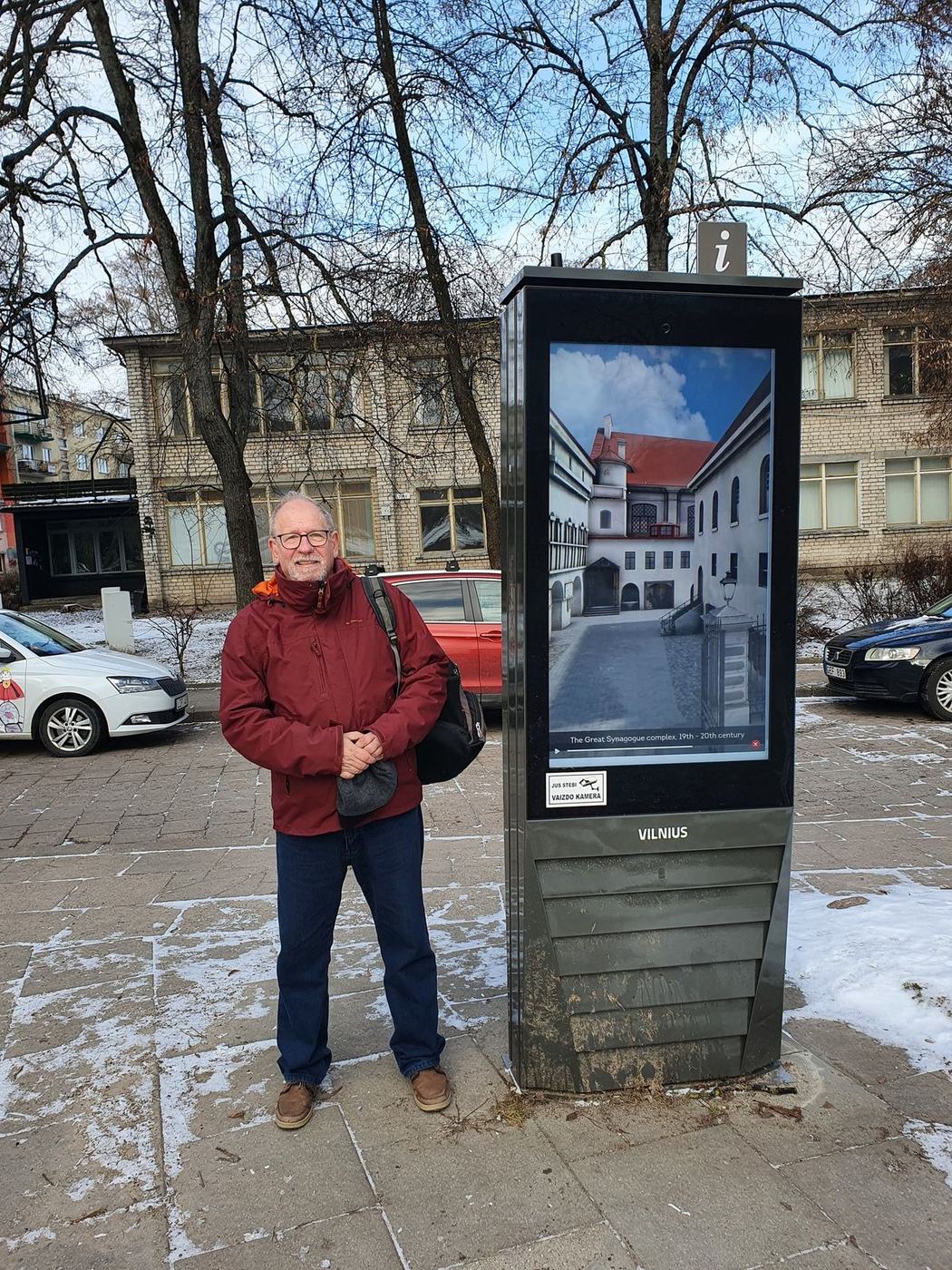
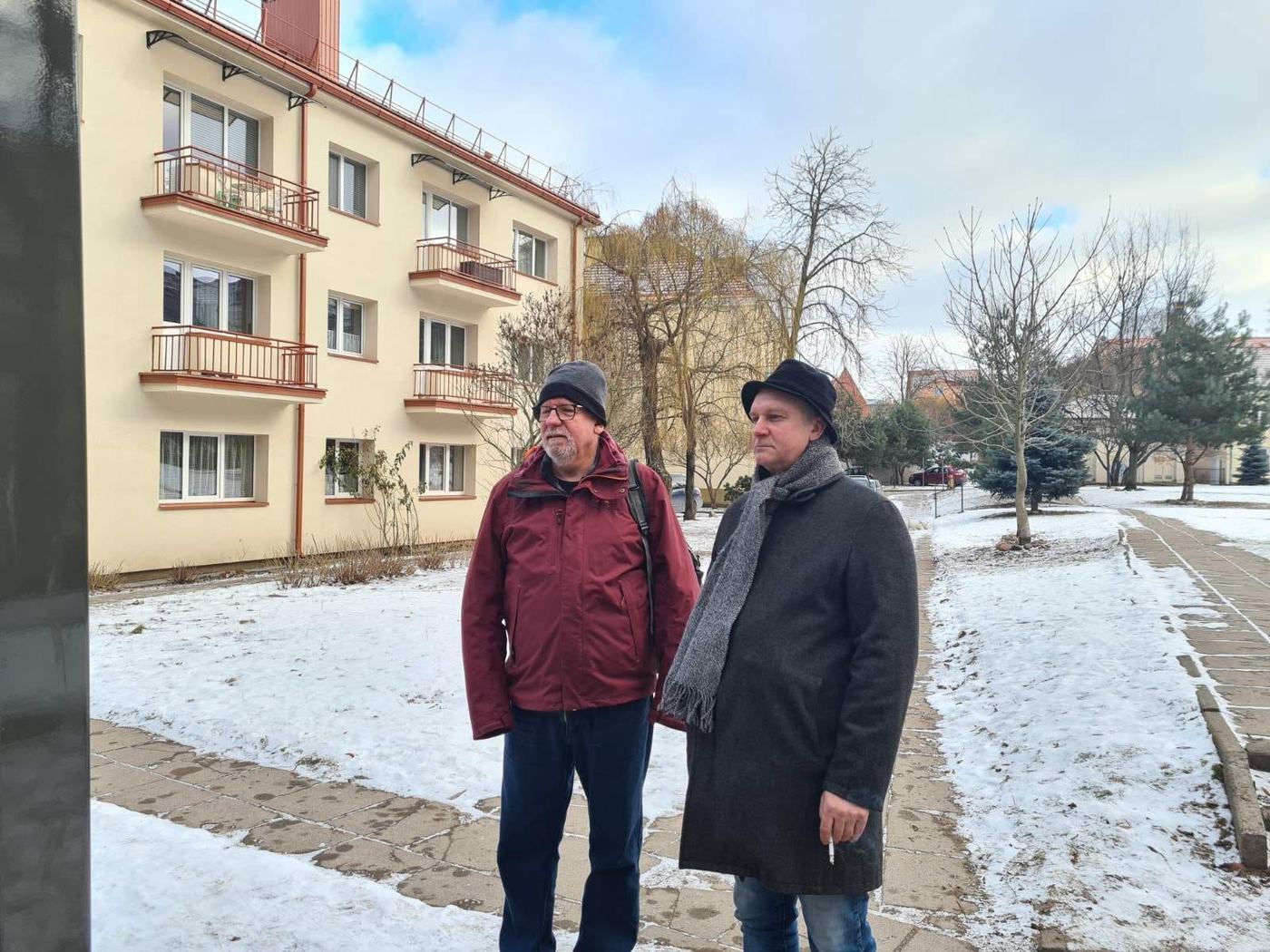
The active visual sign placed outside the site of the Great Synagogue on Zydu gatve.
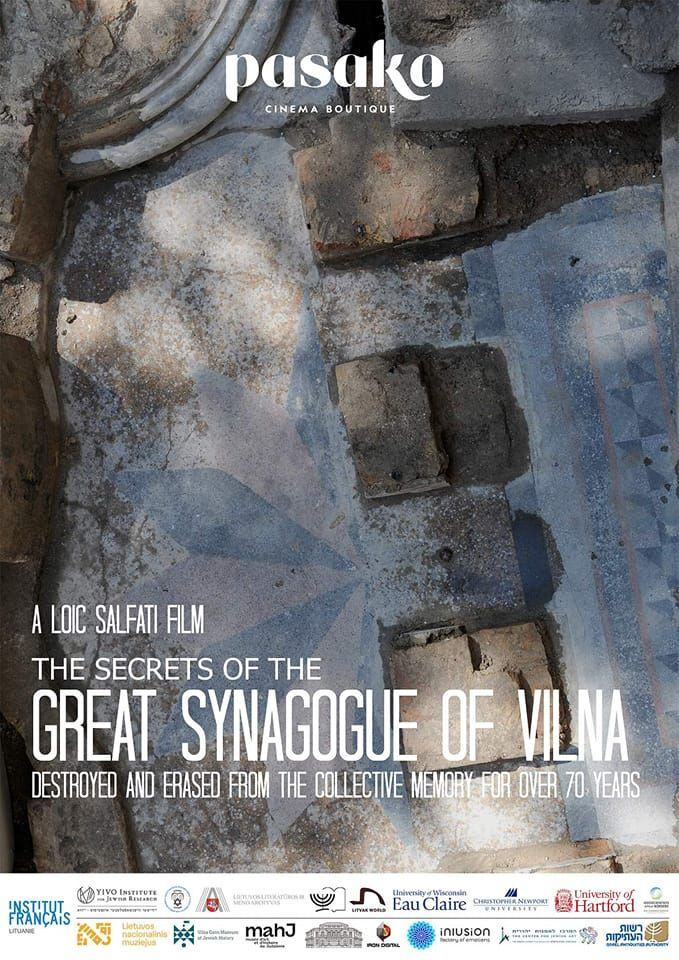
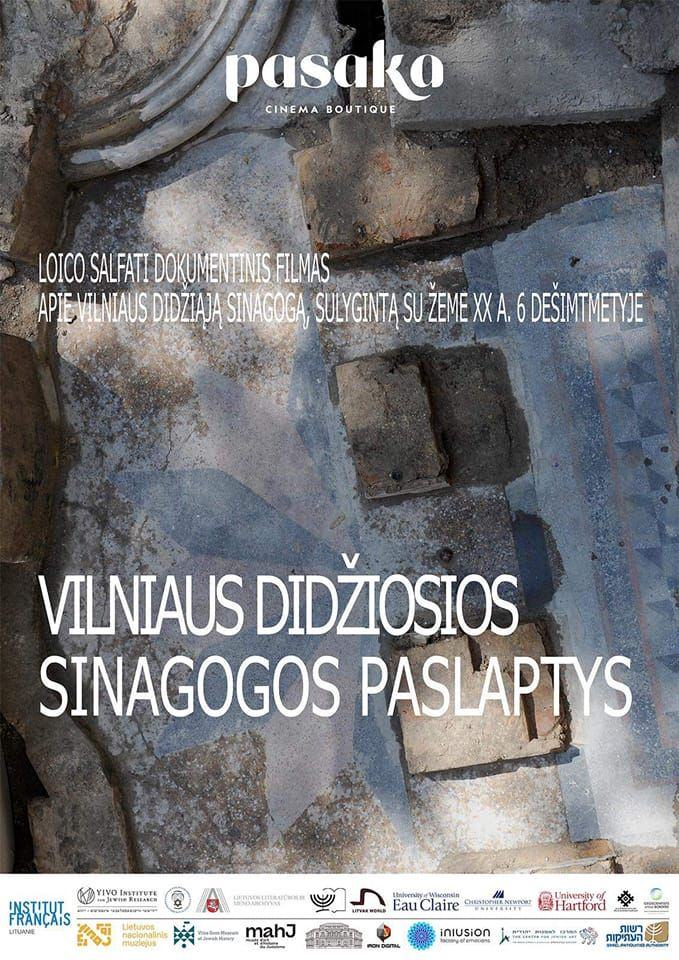
An Old Teaser for Loïc Salfati’s Film, ‘The Secrets of the Great Synagogue of Vilna’
‘The Secrets of the Great Synagogue of Vilna’ Premieres
The film of Loic Salfati's film, 'The Secrets of the Great Synagogue of Vilna' premieres tonight in Vilnius.
2022 (2 stories)
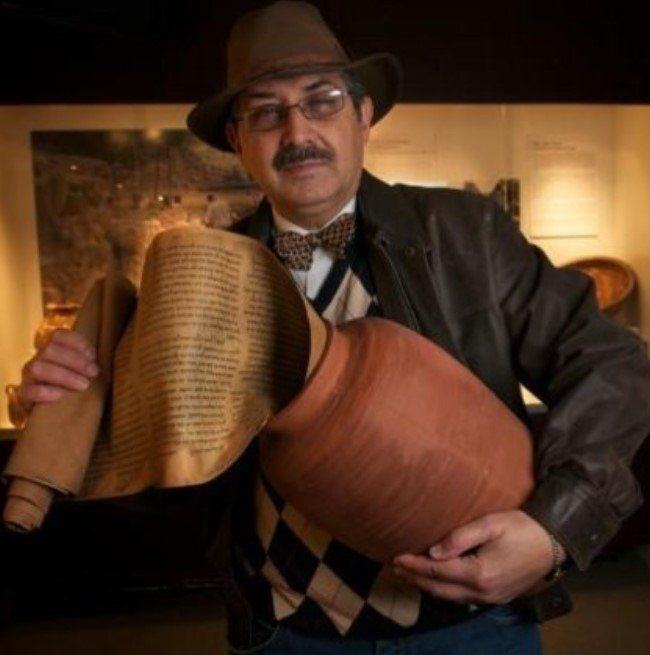
RICHARD FREUND - OBITUARY - 1955-2022
With great sadness we learned that our friend and colleague, Dr. Richard Freund passed away peacefully on July 14, 2022, at the age of 67, in Charlottesville, Virginia (USA).
Richard was born to the late Chester Freund and Beatrice Berkowitz in Long Island, NY in 1955.
Determined to learn more about Jewish history and culture, he booked a one-way ticket to Israel where he studied, learned Israeli dancing, and met the love of his life, Eliane, who he married in 1983. For nearly 40 years, Richard worked as a professor in Jewish history and archaeology, starting at Oberlin College and traveling to the University of Denver, the University of California-San Diego, the Seminario Rabinico Latinoamericano, the University of Nebraska at Omaha, the University of Hartford, and finally ended his career at Christopher Newport University in Virginia. Through his time in academia, he mentored thousands of students and collaborated with countless other faculty members from across the country in pursuit of answers to some of our history's greatest questions.
Richard directed and co-directed over a dozen archaeological projects in Israel at Bethsaida, Mary's Well in Nazareth, and climbed the caves of Qumran in search of the Dead Sea Scrolls, all in located in the State of Israel. In recent years Richard was one of the initiators of the Vilna Great Synagogue project and at the extermination site at Ponar. Richard and his team of students from the University of Hartford and Christopher Newport University were an important part of the team and it is essential that this work is brought to term.
In addition to his wife Eliane, he is survived by his three children, Eli, Ethan, and Yoni; his siblings and their spouses, Andrea and Richard Eisen, Charles and Renee Freund, and Sharon and Jody Rockmaker.
Richard will be buried tomorrow (17th July, 2022) at the Jewish Cemetery of the Virginia Peninsula, in the Hampton, VA in the United States.
May his memory be blessed - יהי זכרו ברוך

2021 (13 stories)
'link' - Exhibition by Eglė Ridikaitė
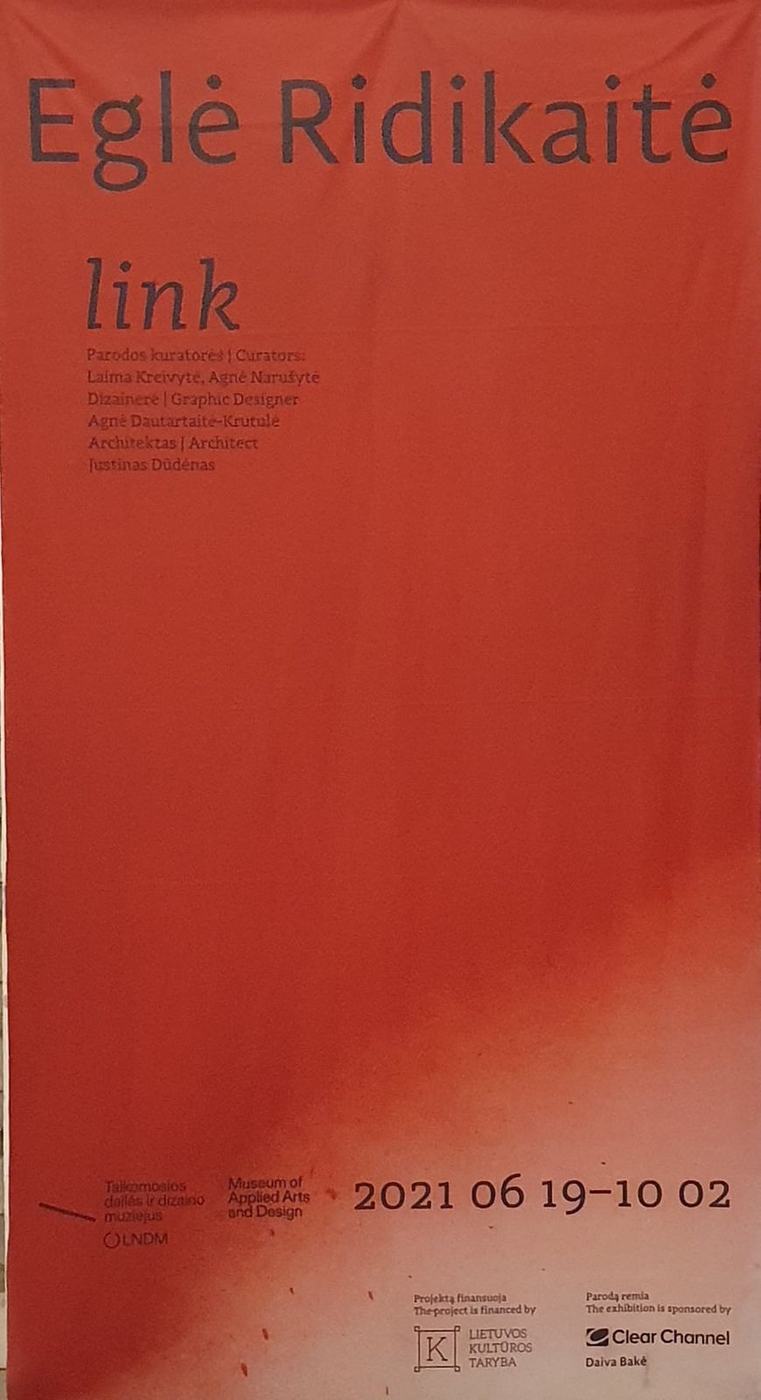
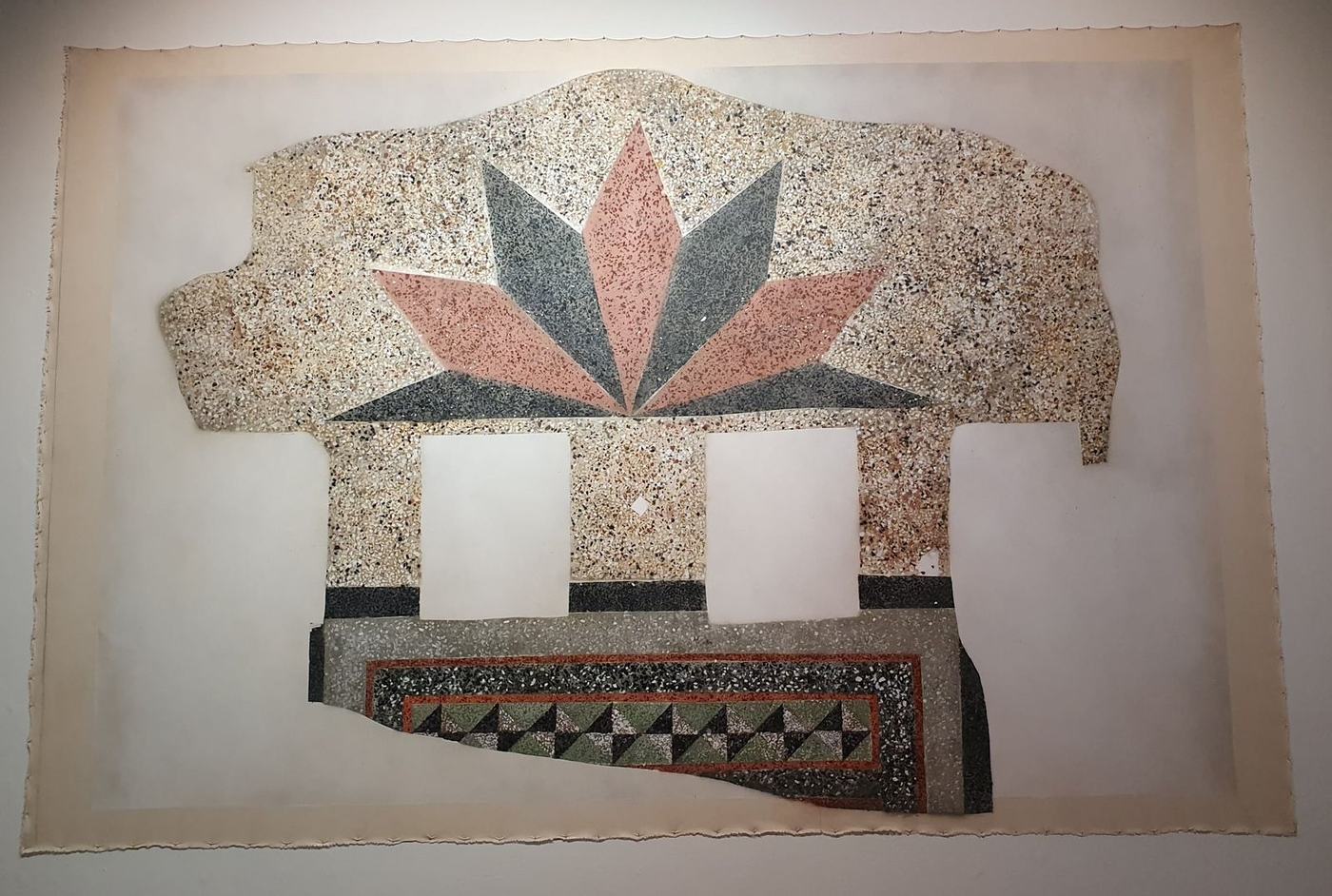
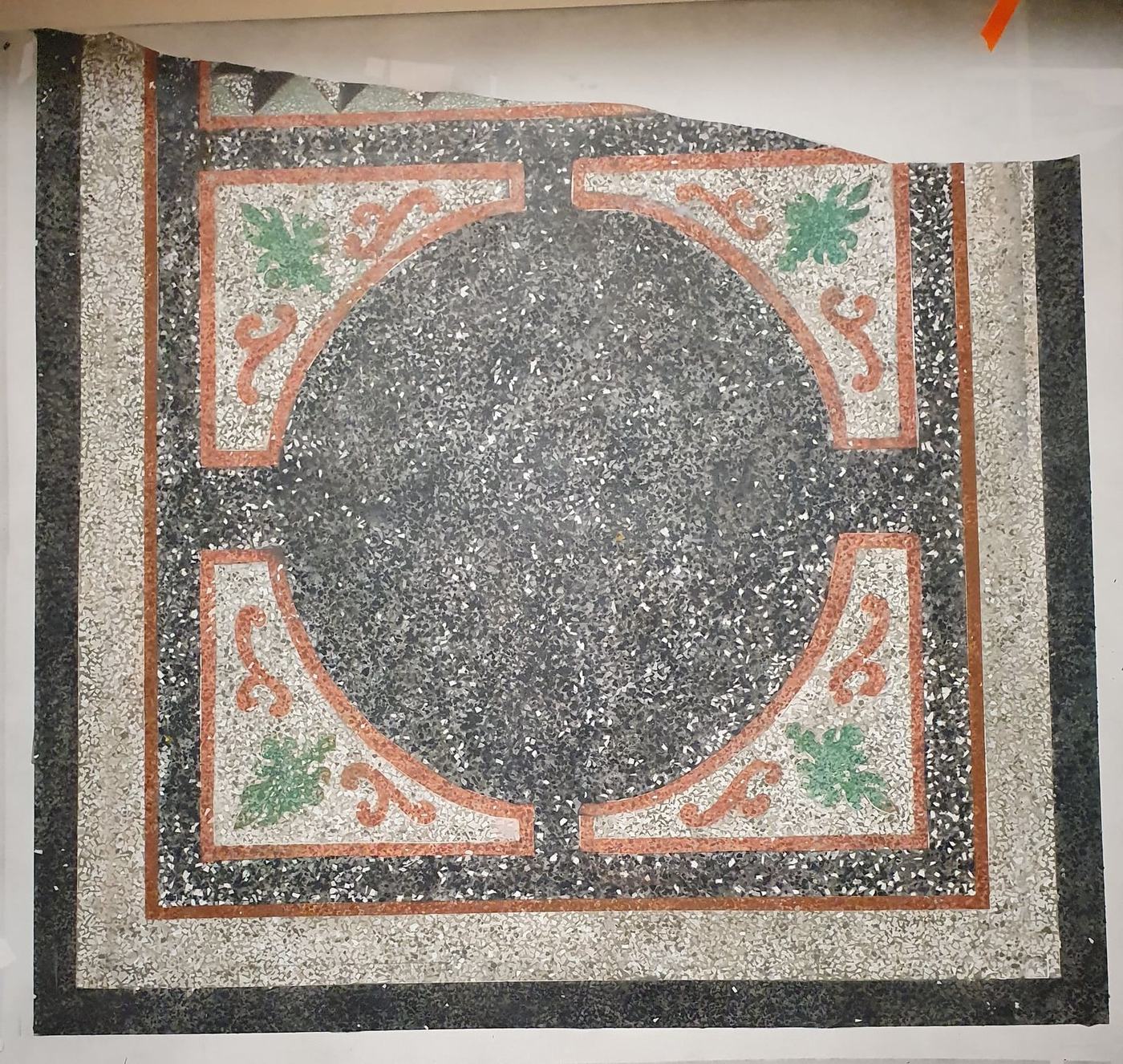
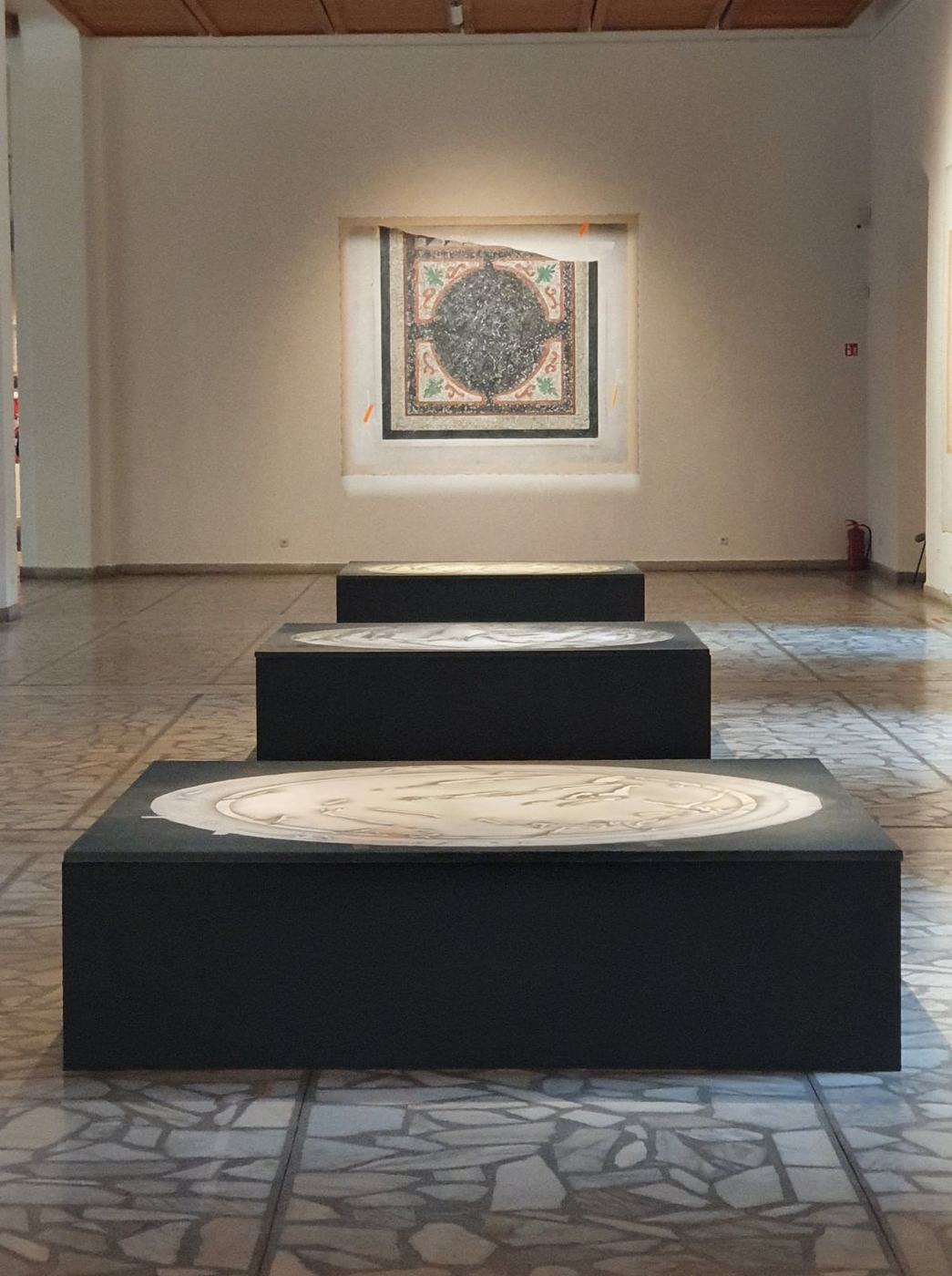
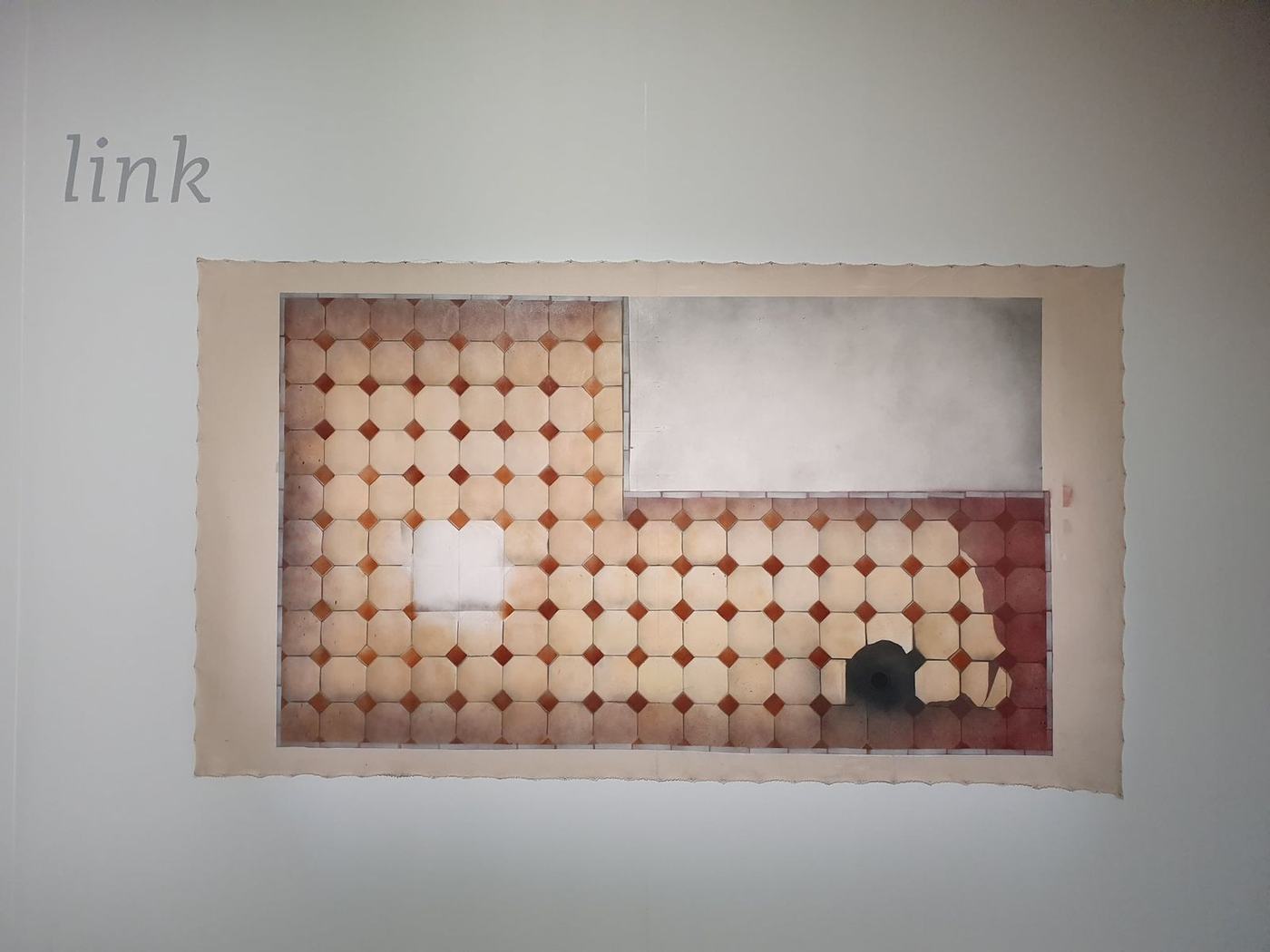
Eglė Ridikaitė is one of Lithuanian’s leading artists and she has a studio in the school building built above the Great Synagogue, with windows overlooking our excavation. Her new exhibition, titled ‘link’, at the Museum of Applied Arts and Design in Vilnius is her journey into memory, linking the locus of her studio with the history of what went before. As the curator of the exhibition notes, “The archaeologists excavating the site have uncovered the remains of the Great Synagogue of Vilnius. While nobody will repair the historical injustice for the dead, Eglė leads the living towards (link) reconciliation and closure by linking what is underground with what is overground via her paintings”.
In her incredible exhibition Eglė Ridikaitė presents full sized images, mostly drawn directly from our excavations of the Great Synagogue. At the entrance you are faced with superb documentation and interpretation of the black and red radial star-burst that covers the floor of the Bimah. Inside further images, again drawn at full scale, detail the women’s miqve (ritual bath) we excavated in 2017 and the internal space of the Bimah in full colour. At the back of the exhibit the ‘artist in residence’ is now recreating a similar terrazzo star-burst, again in red and black, from the floor of the Zavl Synagogue on Gėlių Street.
Teleilat el Ghassul and Vilna: 6,000 Years Apart, But Remarkably Similar
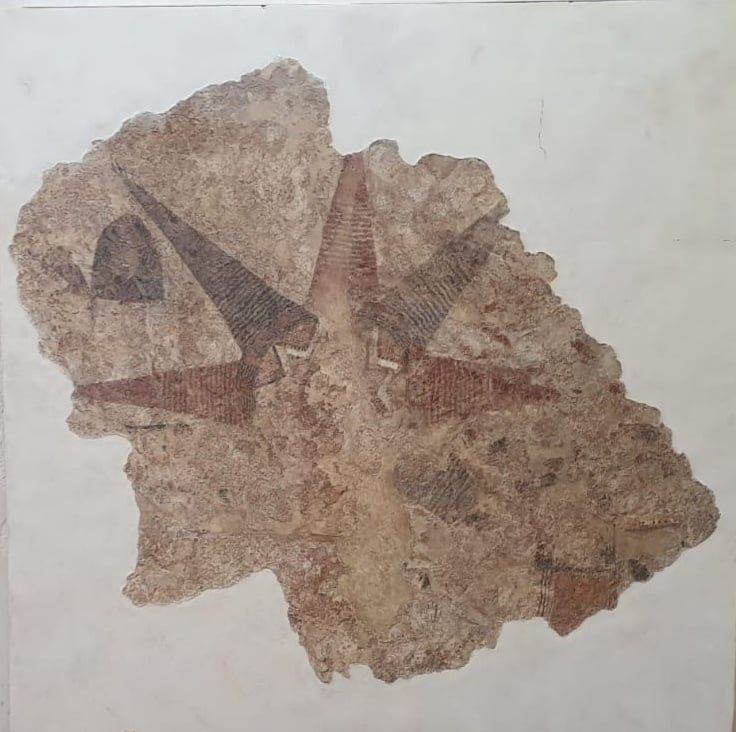
Teleilat el Ghassul is a Chalcolithic site some 6,000 years old in the Jordan Valley, to the north of the Dead Sea. The most impressive discovery at el Ghassul is the colourful wall paintings found in some of the houses, and especially a large star with alternating black and red rays that is part of a ritual mural.
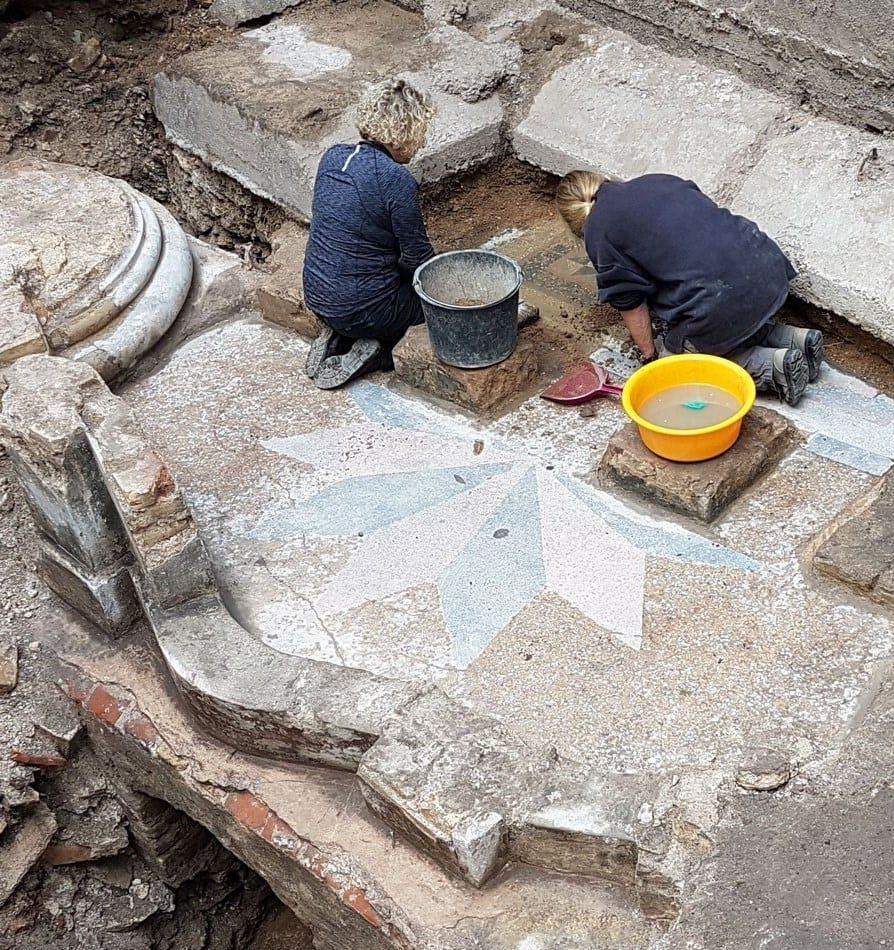
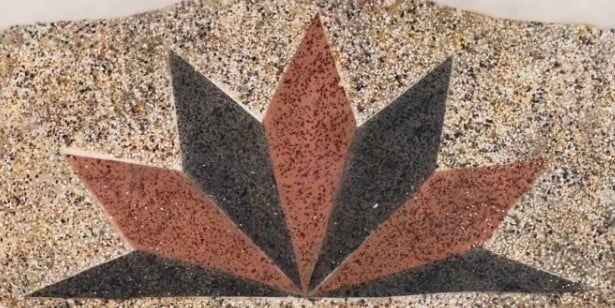
On the Bimah of the Great Synagogue of Vilna was a terrazzo floor also decorated with a large star with alternating black and red rays focusing the direction of prayer towards the Aron Kodesh, the most important religious loci in the edifice.
Obviously there is no connection or continuity between Teleilat el Ghassul and the Great Synagogue of Vilna, but the design, colouring and even meaning are remarkably similar, even if divided by around 6,000 years.
The Tzar and a Prayer for Good Governance
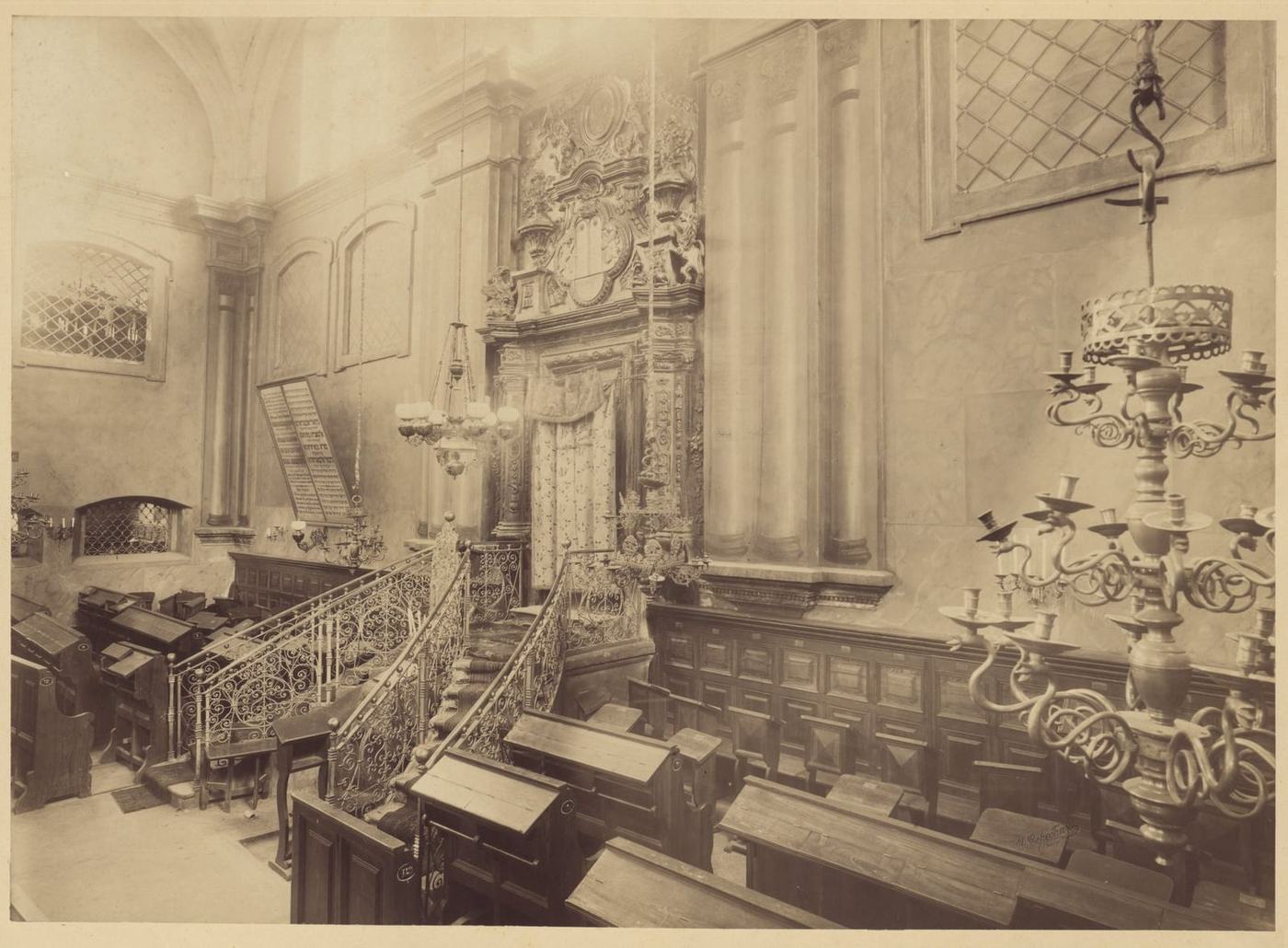
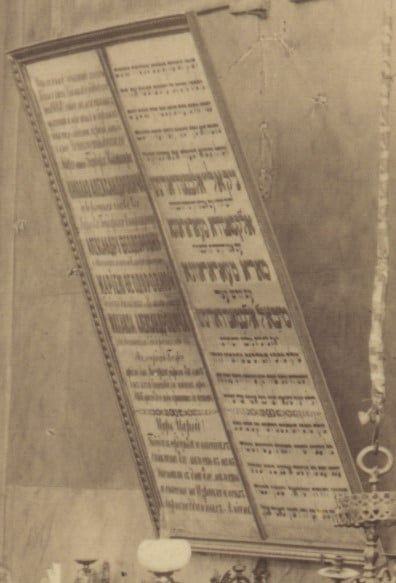
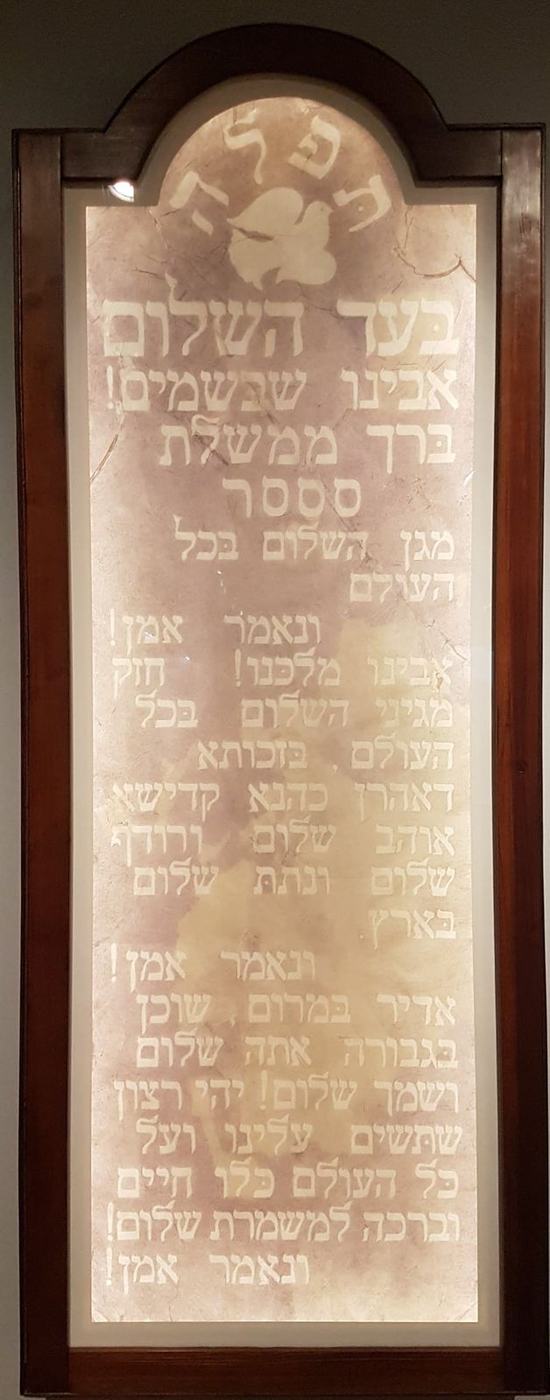
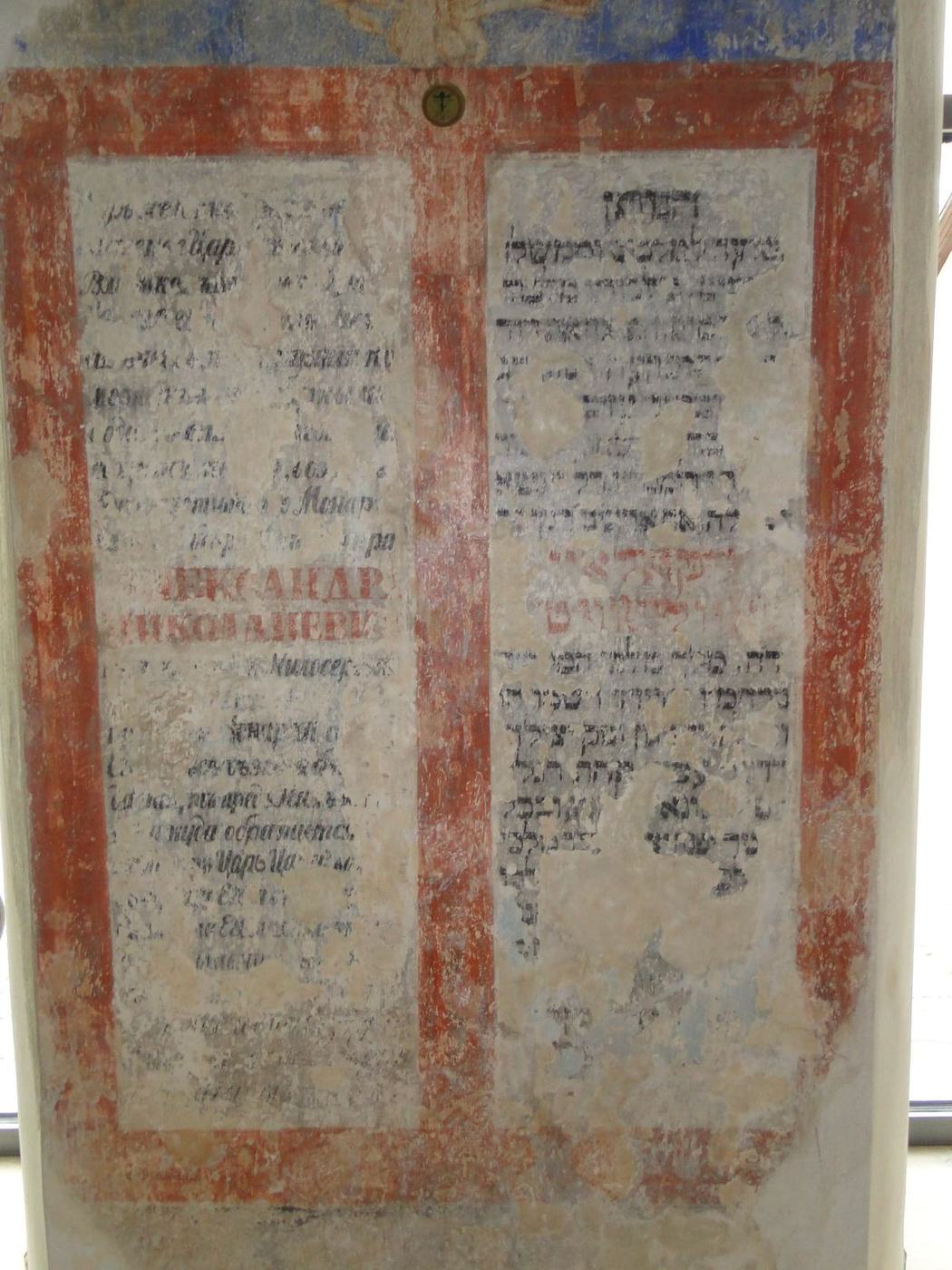
Even though Halakha (Torah law) guides the religious Jew, the Talmudic religious sages stated that the law of the land, any land, was the law (דינא דמלכותא דינא). As a minority community, peace, security and good governance was essential, so hanging on the wall of the Great Synagogue at the beginning of the 20th century was a prayer, in Hebrew and in Russian (for the benefit of visiting officials), for the welfare and good governance of Tzar Nikolai II Alexandrovich (1868-1917), together with Tsarina Alexandra Feodorovna, his mother Tsarina Maria Feodorovna and crown prince Grand Duke Michael Alexandrovich. The prayer was painted on a ‘temporary’ board ready for a quick name change of any particular Tzar or even regime. Which regime was in power was inconsequential, as long as the welfare of the community was guaranteed, as is shown by a board from a synagogue from the time of the Soviet Union, which similarly asks for the good governance of the USSR, the ‘protector of peace for all peoples’.
The third such prayer for Tzar Aleksander II Nikolayevich (1818-1881) comes from the former Zaretche (Užupis) Synagogue.
During the excavation evidence for the passing of regimes and rulers is provided by coins gathered in the debris from the periods of the Polish-Lithuanian Commonwealth, Tzarist Russia, Poland, Nazi Germany, the USSR and Lithuania.
A New Week, Coloured Glass and Chagall
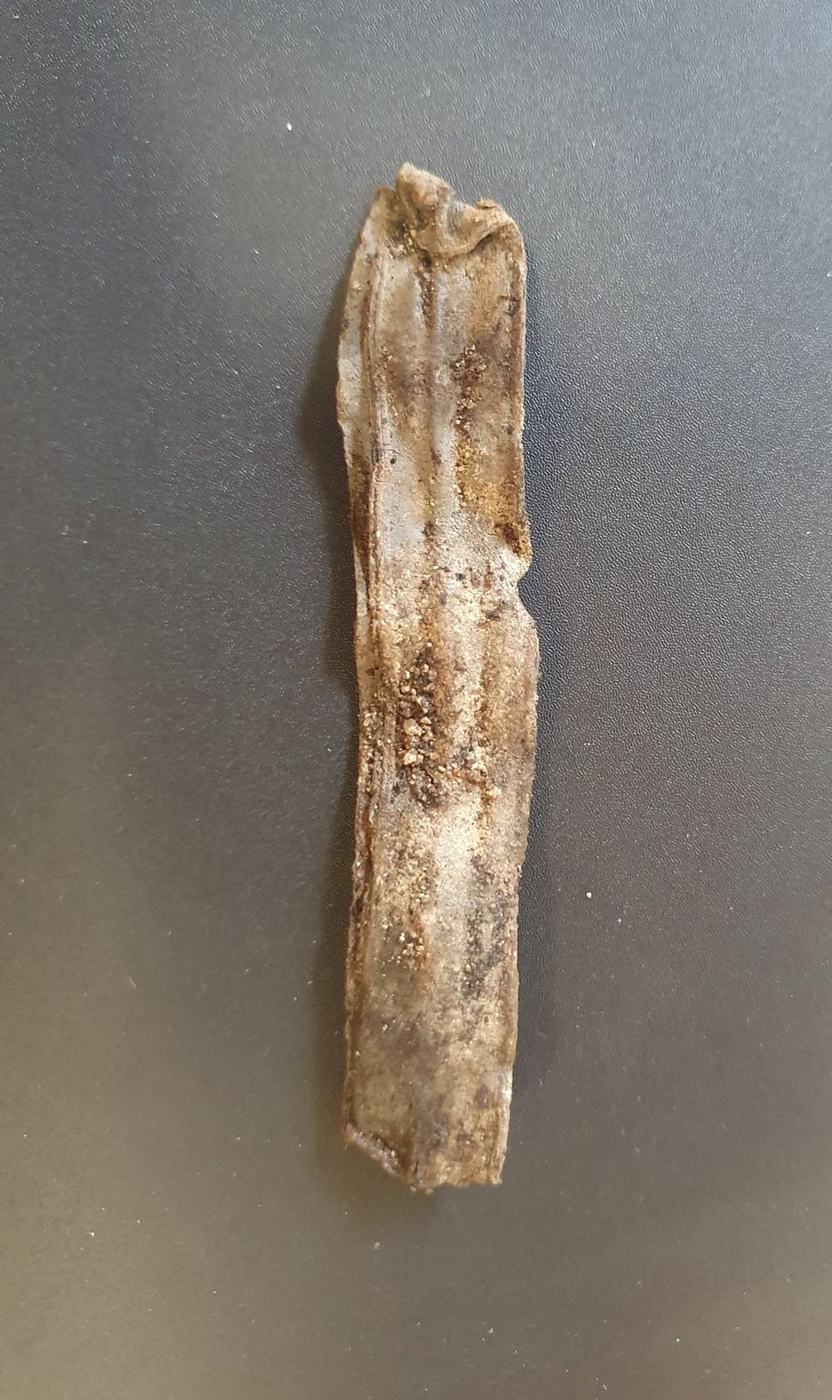
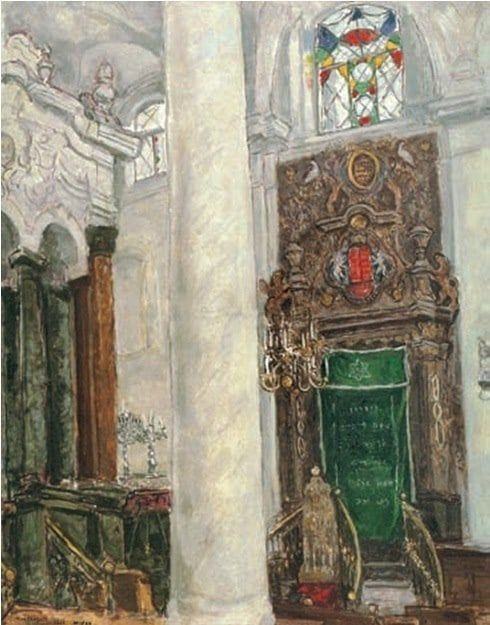
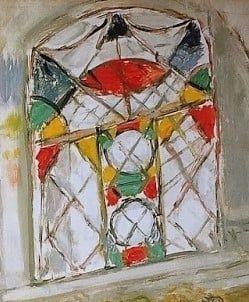
It may not look like much, but this crumpled piece of metal found beside the Aron Kodesh is a clip used to fix coloured glass in position. Coloured glass in hues of red, blue, green and yellow decorated the window above the Torah Ark. While we have no colour photgraphs of the window, Chagall, during a visit to Vilna, documented the window in a suprisingly realist painting allowing us to reconstruct the interior of the Great Synagogue.
Where has the Grass Gone
Shabbat Shalom after the first week of the excavation.
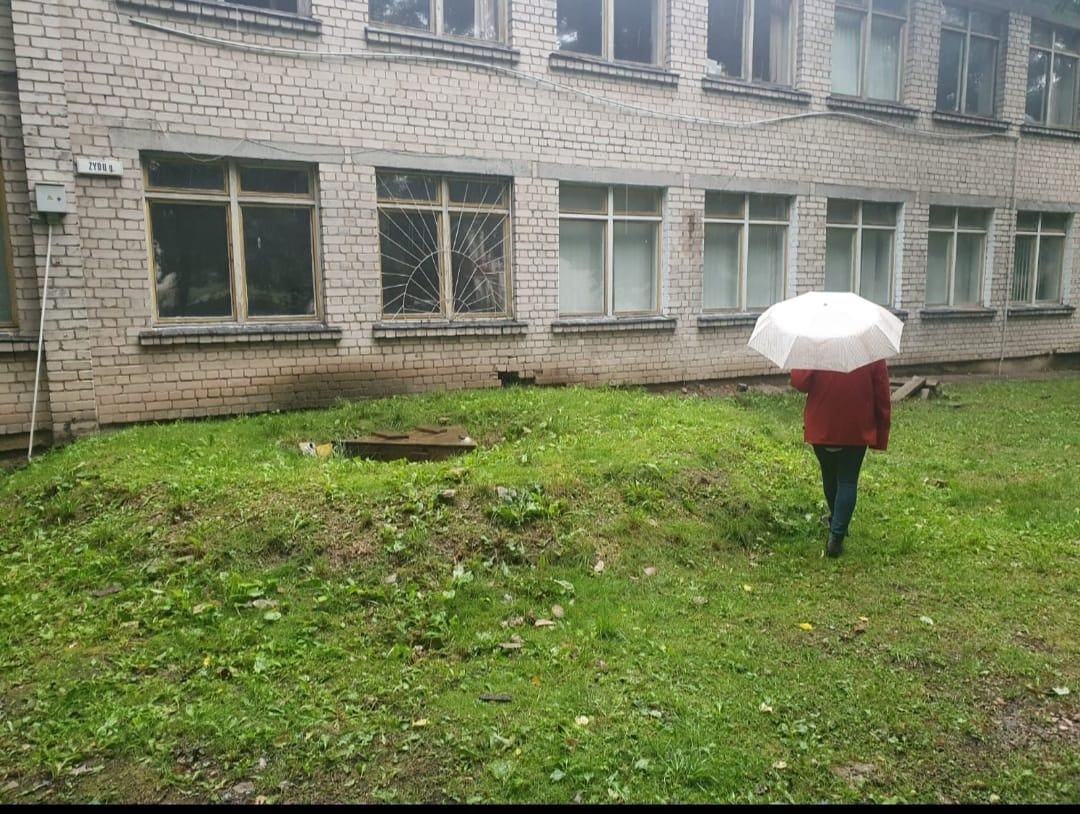
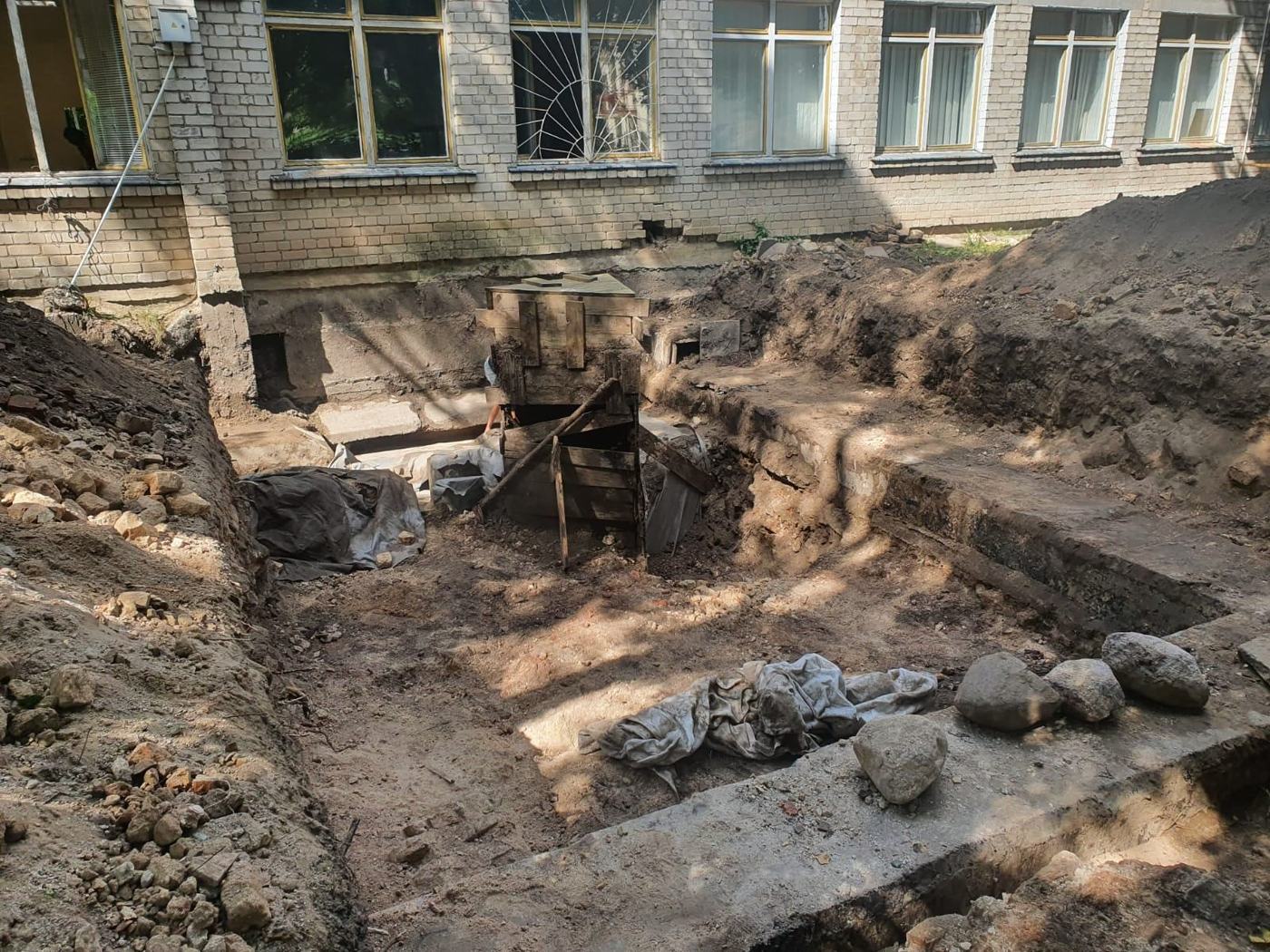
What difference a week makes!! We arrived seven rainy days ago to a green grassy courtyard and after a week we have a huge hole in the ground. In two weeks the Bimah and the Aron Kodesh will appear from the earth.
(Thanks to Jacob Levenboim for the photos)
A Column Appears
One of the central columns of the Great Synagogue slowly reappears from the debris. More later today.
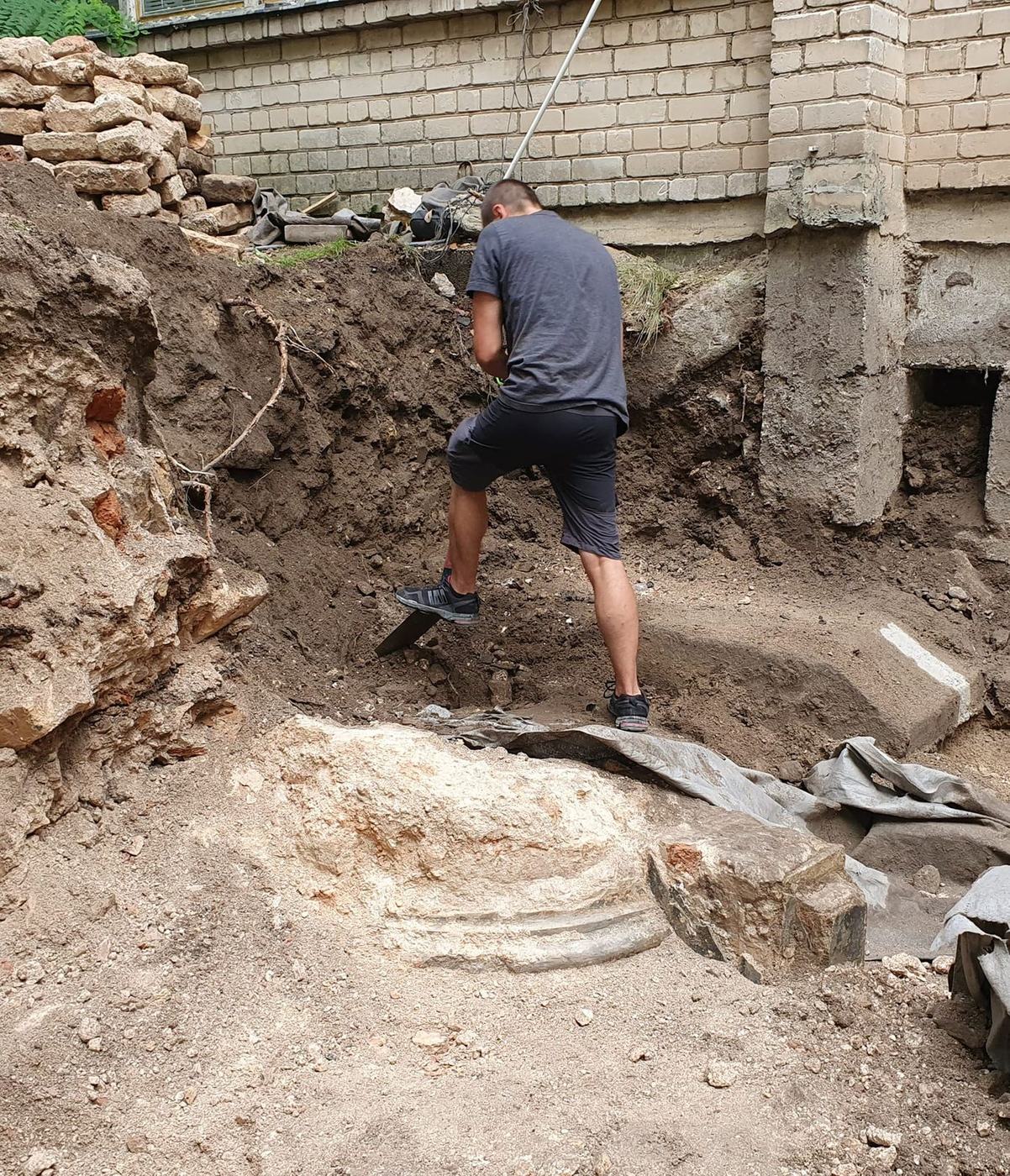
Day 4 and every little bit helps
After discovering the colourful Bimah floor in 2019 outside the school building built over the Great Synagogue, we returned to the section found earlier inside the structure to check if we had missed something. We had. A tiny excavation along the edge of the Bimah and a quick scrub of the floor revealed a panel of black, green and grey triangles in a red and black frame and the same floral ornament we discovered on the other side of the Bimah. The question that remains is what was the central motif of the Bimah floor. Unfortunately the centre of the Bimah is now located below the wall of the school and is inaccessible to our investigations.
Vladislovas Mikučianis – Destroyer of the Great Synagogue
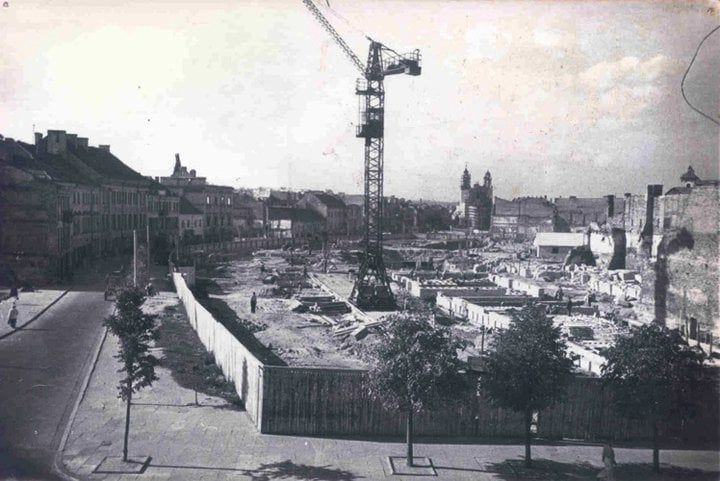
In the mid 1950s the city architect of Vilnius, Vladislovas Mikučianis, at the behest of the Lithuanian Soviet Socialist Republic, decided to introduce a bold new plan to build a wide processional avenue from the Town Hall on Didžioji street, down through Vokiečių (German) street, Vilniaus street and on to the main street of the city, then Lenin avenue and now Gediminas Avenue. The plan included the destruction of sections of the old city of Vilnius, included apartments along Vokiečių street and much more importantly, the criminal destruction of the remains of the buildings of the Shulhoyf, including the magnificent Great Synagogue, prior to the construction of a kindergarden.
The picture below shows the area of the Great Synagogue after its demolition in 1956/7 and the construction of new apartements and school. Now, during our excavation, we have uncovered the destroyed vaulted ceiling of the synagogue, toppled as a result of Mikučianis' programme.
While the German Nazis were responsible for the annihilation of the Jews of Europe, Lithuania and Vilnius; the Soviet Union and the LSSR were responsible for the destruction of their memory, often through the removal of Jewish monuments and cemeteries in Vilnius and elsewhere.
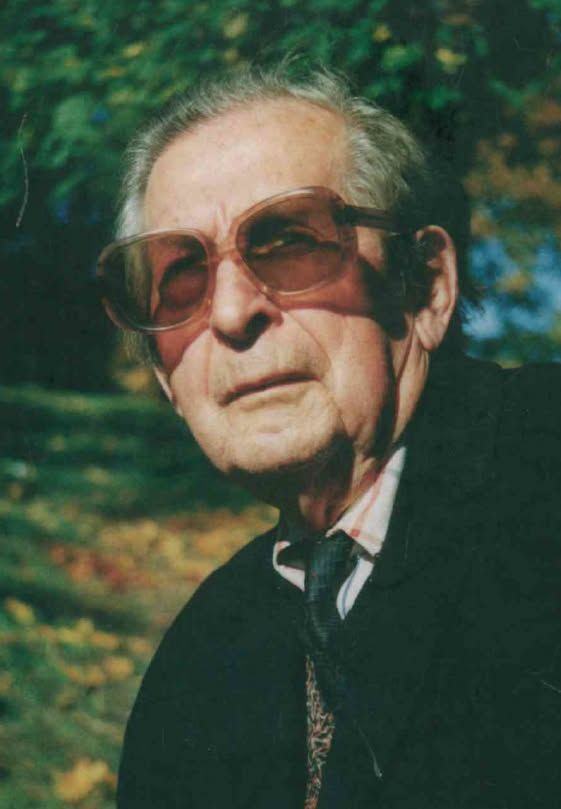
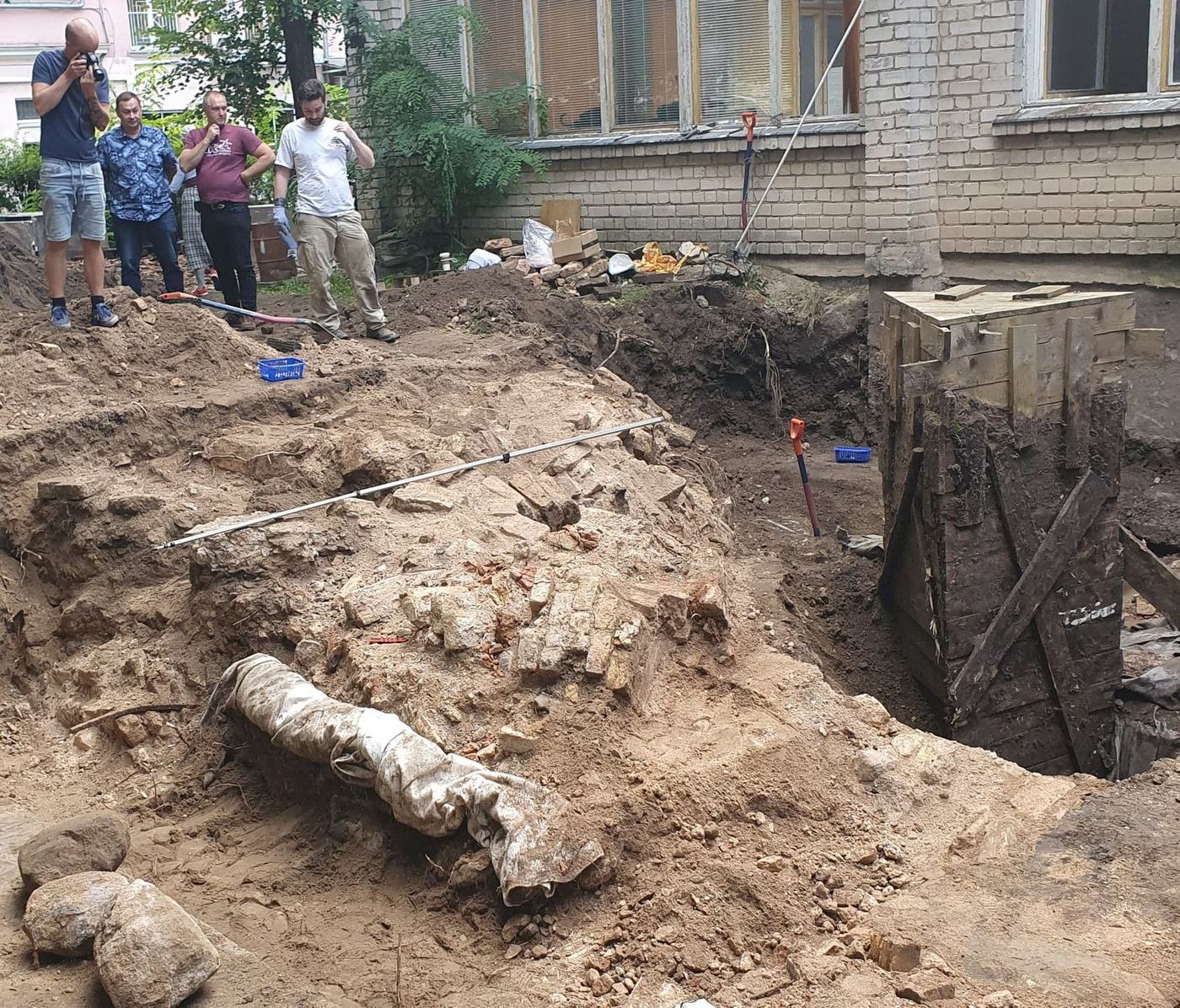
The Rumble of the Mechanical Digger
Day 2 and we are using a mechanical digger to remove the layers of backfill from previous seasons. This will help us uncover the remsins faster and enable us to concentrate on the archaeology. Meanwhile we have also returned to the floor of the bimah to uncover more of the designs.
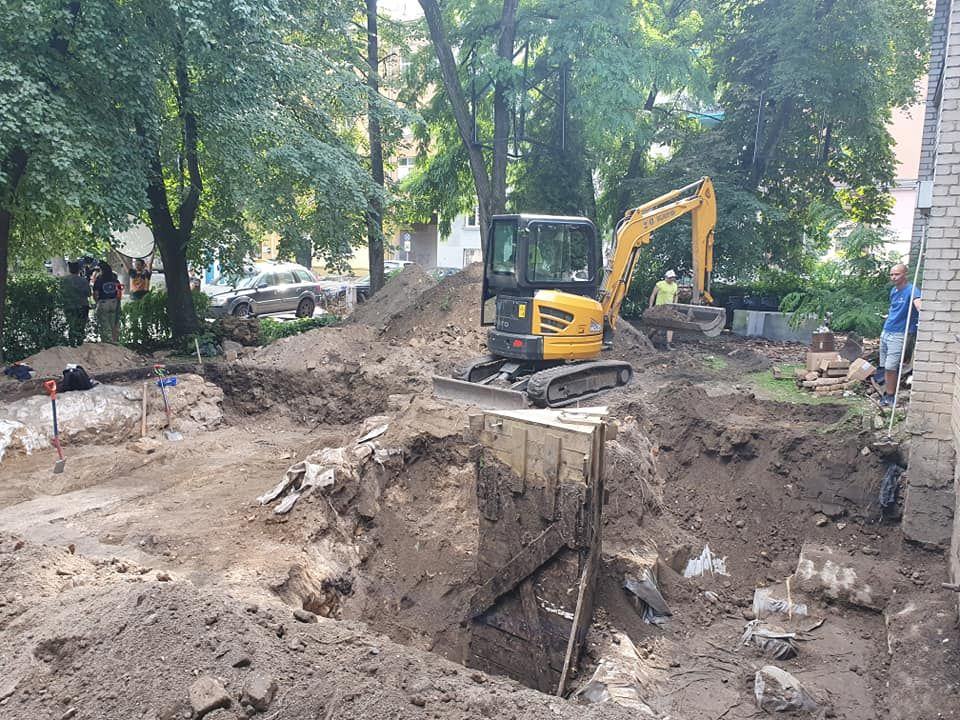
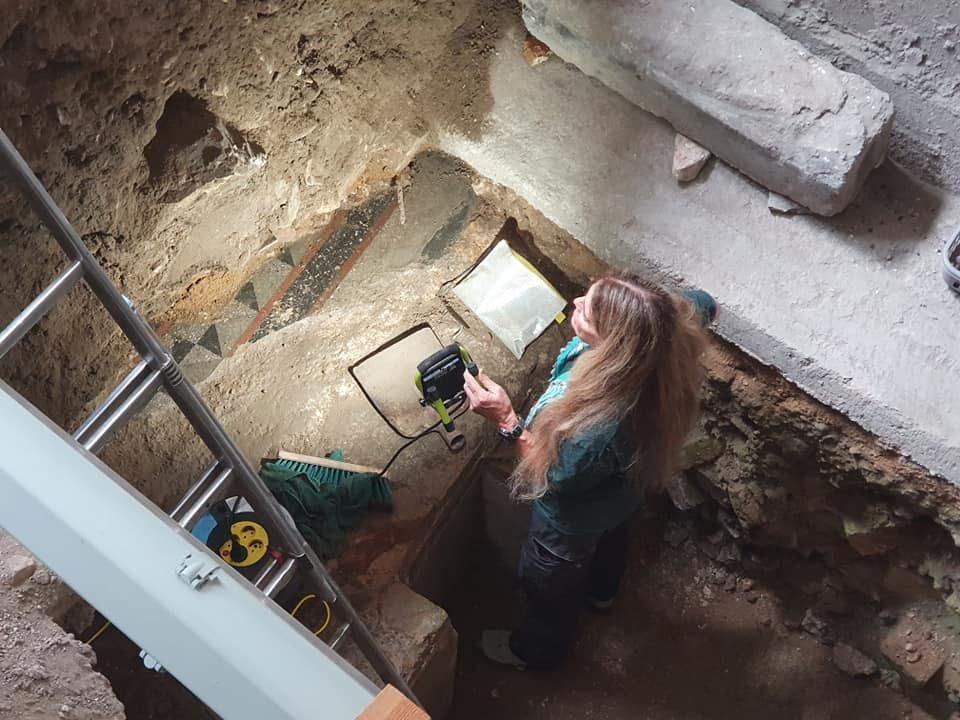
Day One with Harry Jol and the GPR Team
The first day of the renewed excavations was spent clearing surface debris above the Aron Kodesh (Torah Ark) and conducting a ground penetrating radar survey to locate the mutual walls of the synagogue and the Strashun Library.
Stay posted for coming developments.
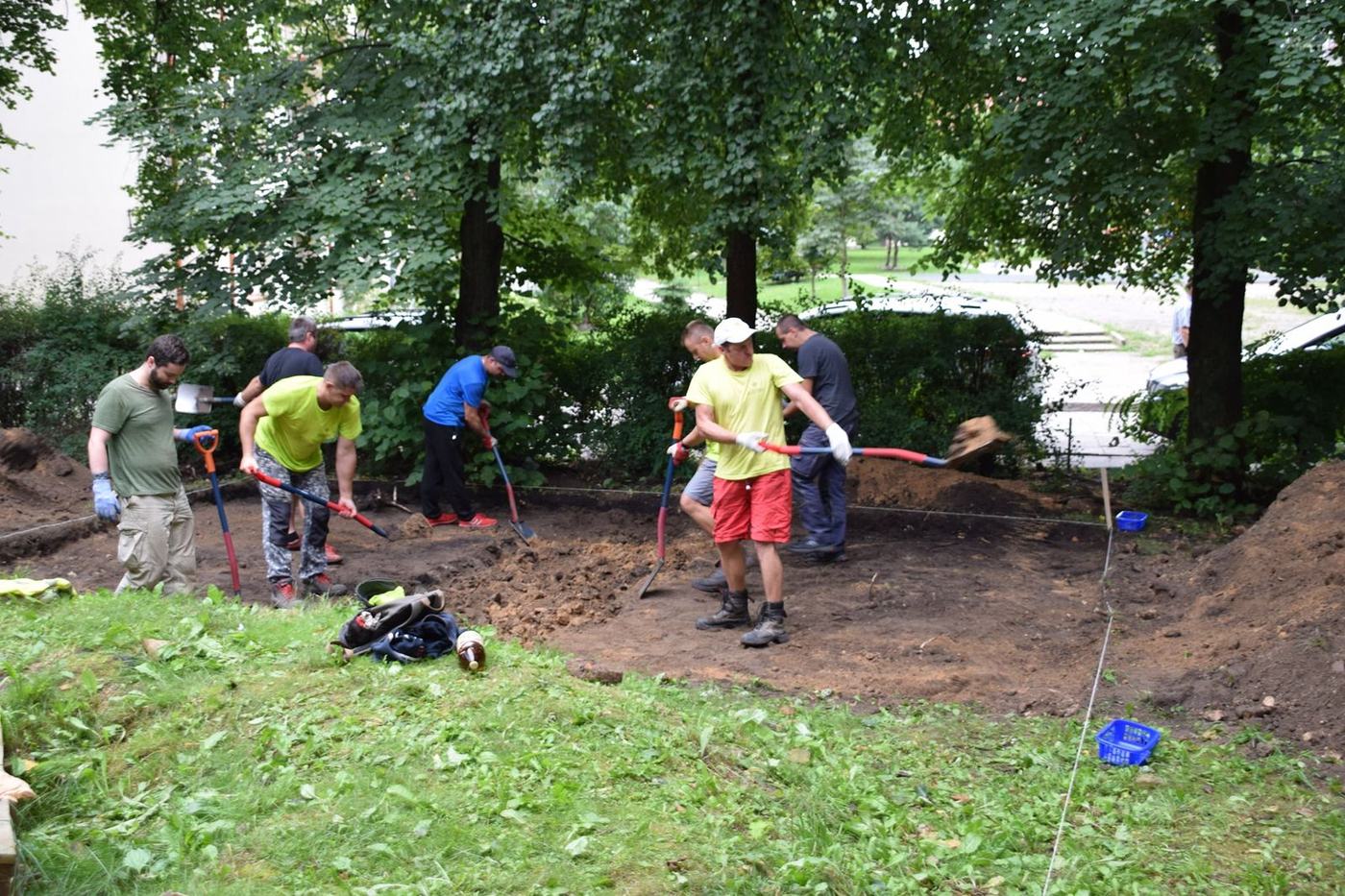
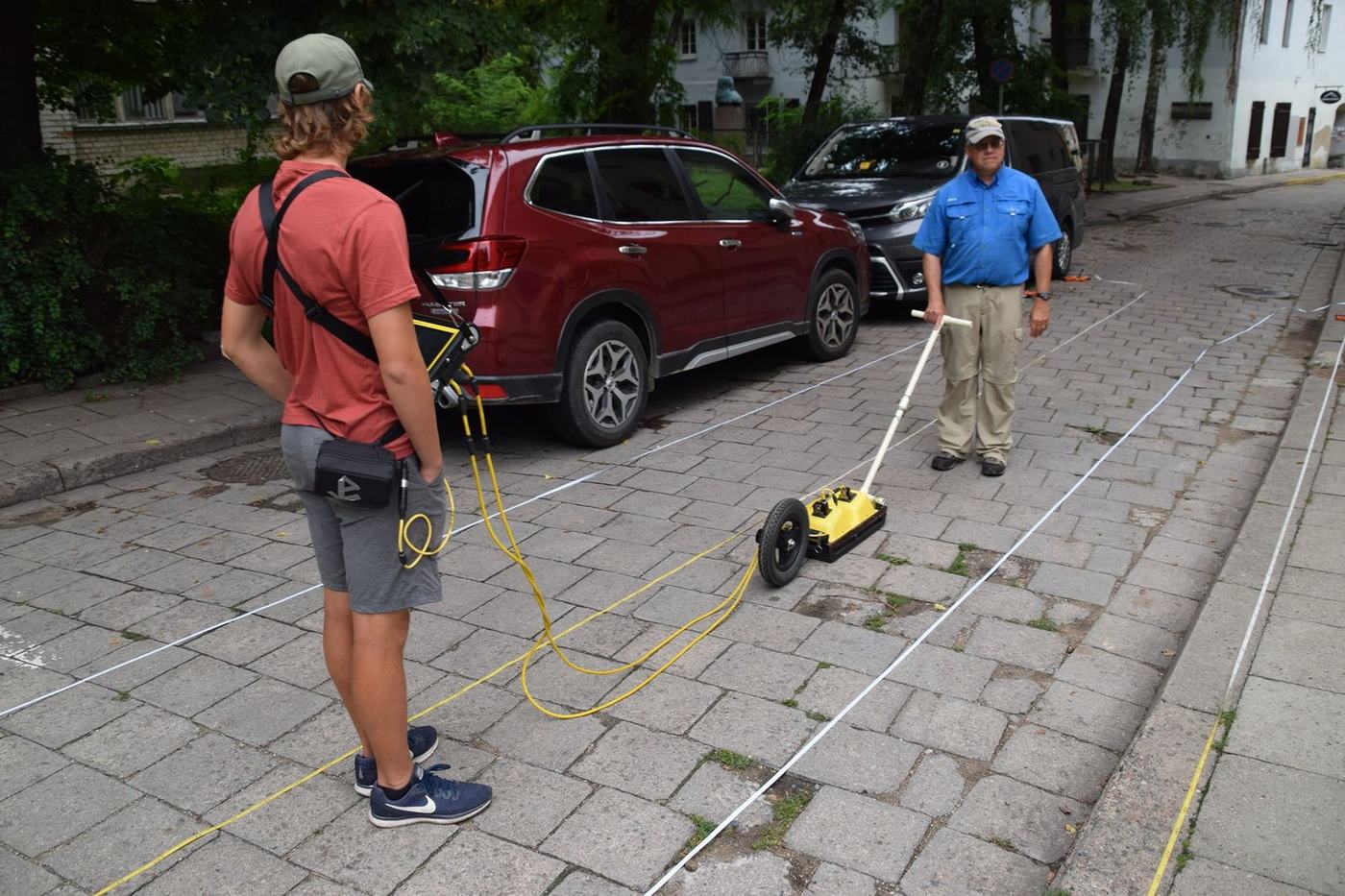
With Hadas Kalderon, the Granddaughter of Avrom Sutzkever
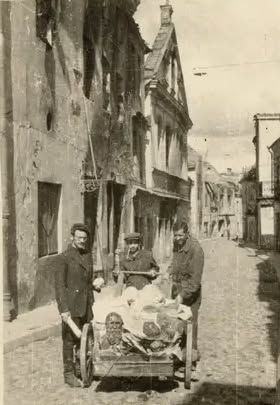
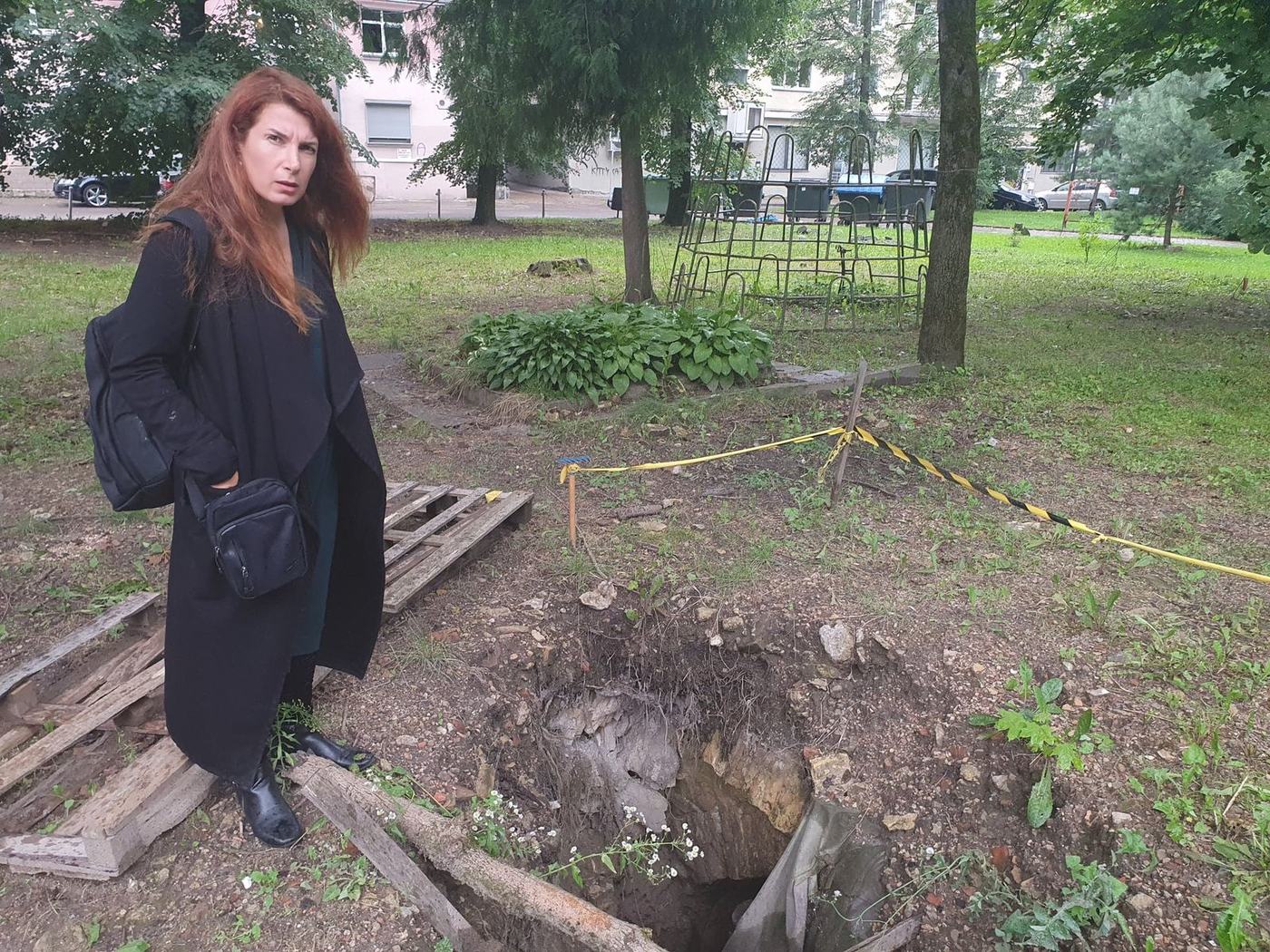
A visit by Hadas Kalderon, the granddaughter of Avrom Sutzkever, probably the greatest Yiddish poet of the 20th century, and a survivor of the Vilna Ghetto, to the site of the Great Synagogue, provided an opportunity to have a second look at one of the most famous images of Sutzkever. In the image, taken immediately after the war, Sutzkever on the left pushes a cart, laden with artifacts recovered from the Ghetto, together with Smerke Kaczerginski (on the right) and a third man. The man in the centre is Israel Zelikman, a relation of Jon Seligman, the excavation director. After the war Israel made his way from Vilna to Poland and later migrated to Denmark where his family still resides. The items collected by the three would form the basis for the short lived Jewish Museum established in the city in the late 1940s.
2020 (8 stories)
Dovid Katz’s ‘Yeshivot of Lithuania’ Map
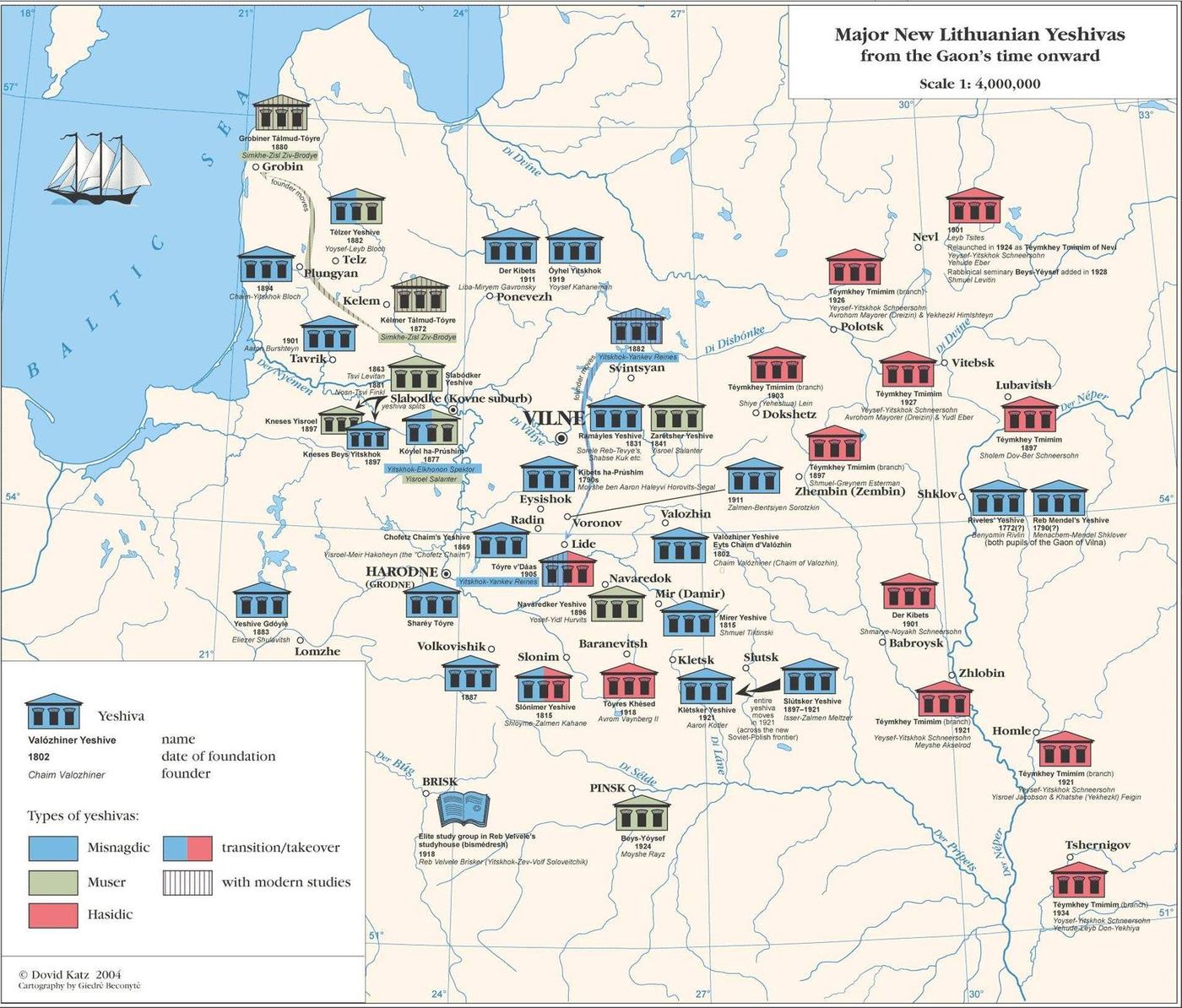
Dovid Katz's important map of the yeshivot of Lithuania clearly shows the geographic lines dividing traditional Mitnaged (Slabodke, Ponovezh, Mir, Volozyn, Ramailes etc.) and Musar (Telz, Pinsk, Navaredok, etc.) Yeshivot in the west and the Hasidic Yeshivot (Lubavitsh, etc.) in the east. This divide was far more than a simple difference in religious instruction, for this was a deeply cultural difference that greatly affected Litvak life.
As a generalisation the Mitnaged Yeshivot precede the Hasidic institutions, most of which were established only at the beginning of the 20th century. Vilna and the surrounding area are, as expected, dominated by Mitnaged yeshivot. Of these, the famous Ramailes Yeshiva, founded in 1815 by Rabbi Avraham Abli Posveller, was located in the alley opposite the entrance of the Shulhoyf. Its actual name was 'Yeshivas Tomchai Torah' (ישיבת תומכי תורה), but it was nicknamed 'Ramailes' after the owner of the the building, Reb Mailes. This decrepit structure collapsed in 1910 after which the Yeshiva moved to a new building at 7 Naugarduko street. After the Shoah the Ramailes Yeshiva was reopened in Jerusalem.

Vilna – 'Jerusalem d’Lita' in Jerusalem
A few months ago we uploaded a post about touches of Vilna in Tel Aviv, but reminders of Jerusalem d’Lita can be found in multiple cities around Israel and especially in Jerusalem.
We should always remember that disciples of the Gaon, known as the Perushim, settled in Jerusalem at the start of the 19th century, forming the core of the Old Yishuv. These Litvaks would be the central Ashkenazi population in Israel and Jerusalem until the Zionist Aliyot (immigration) a century later.
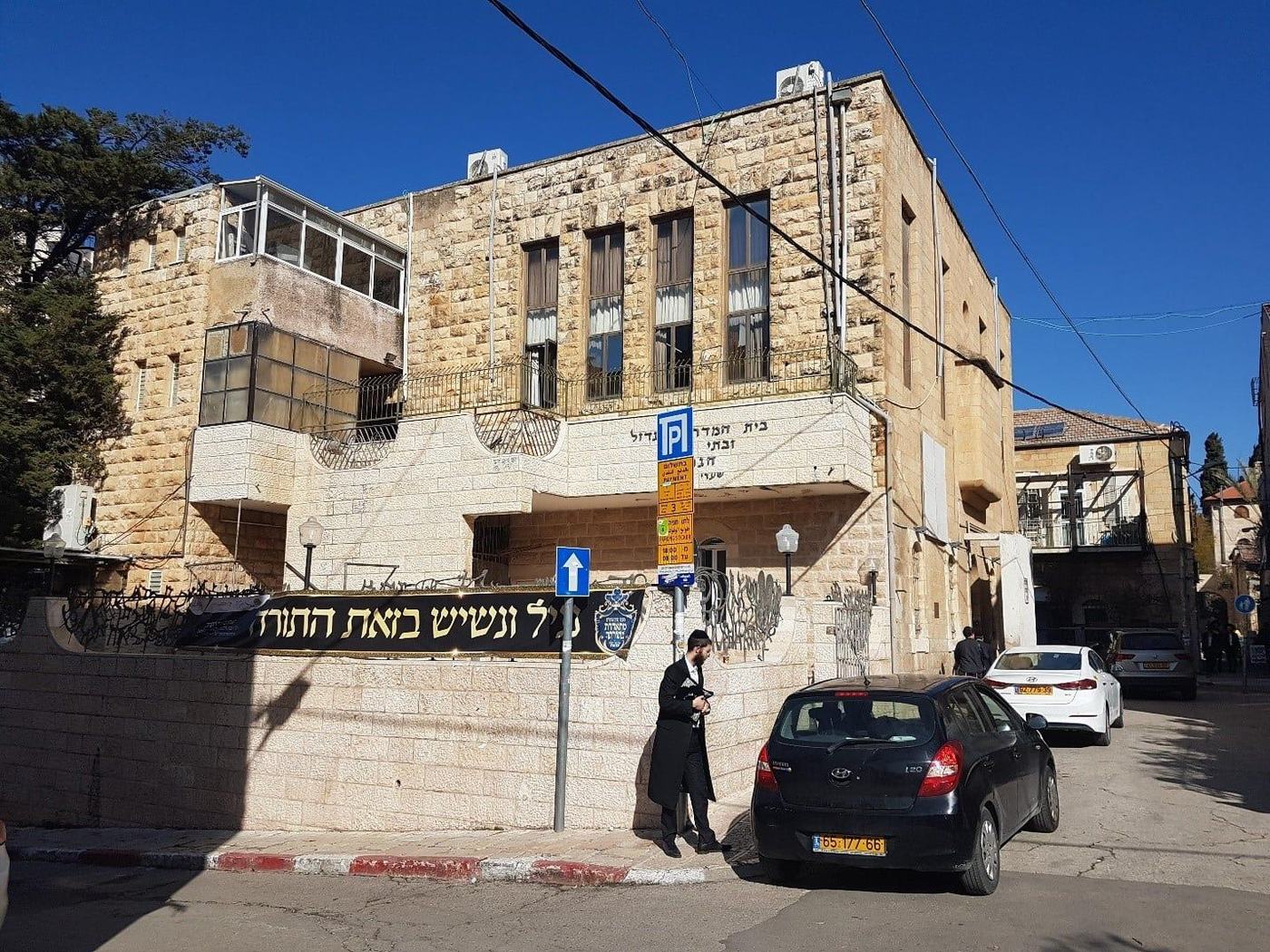
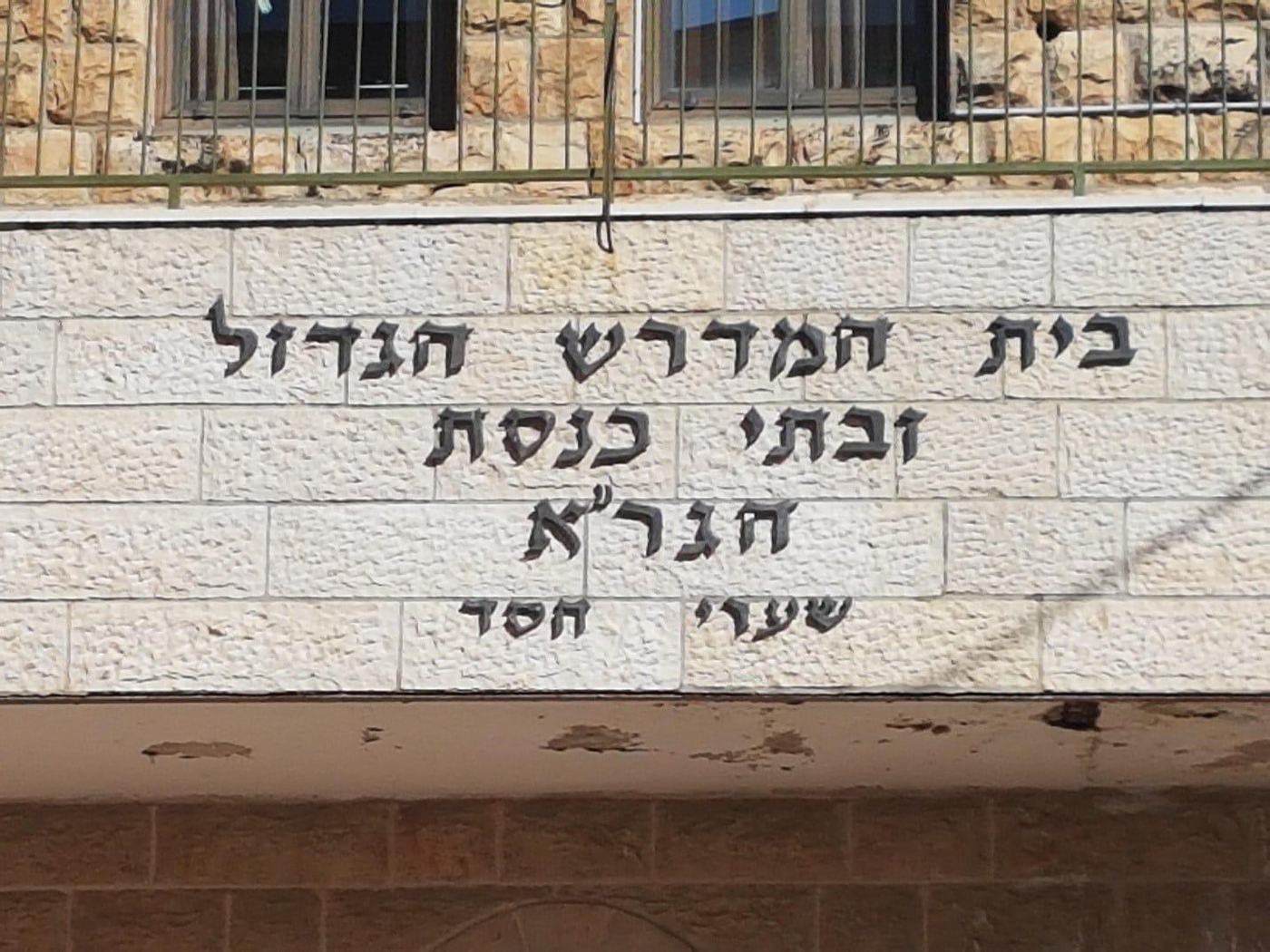
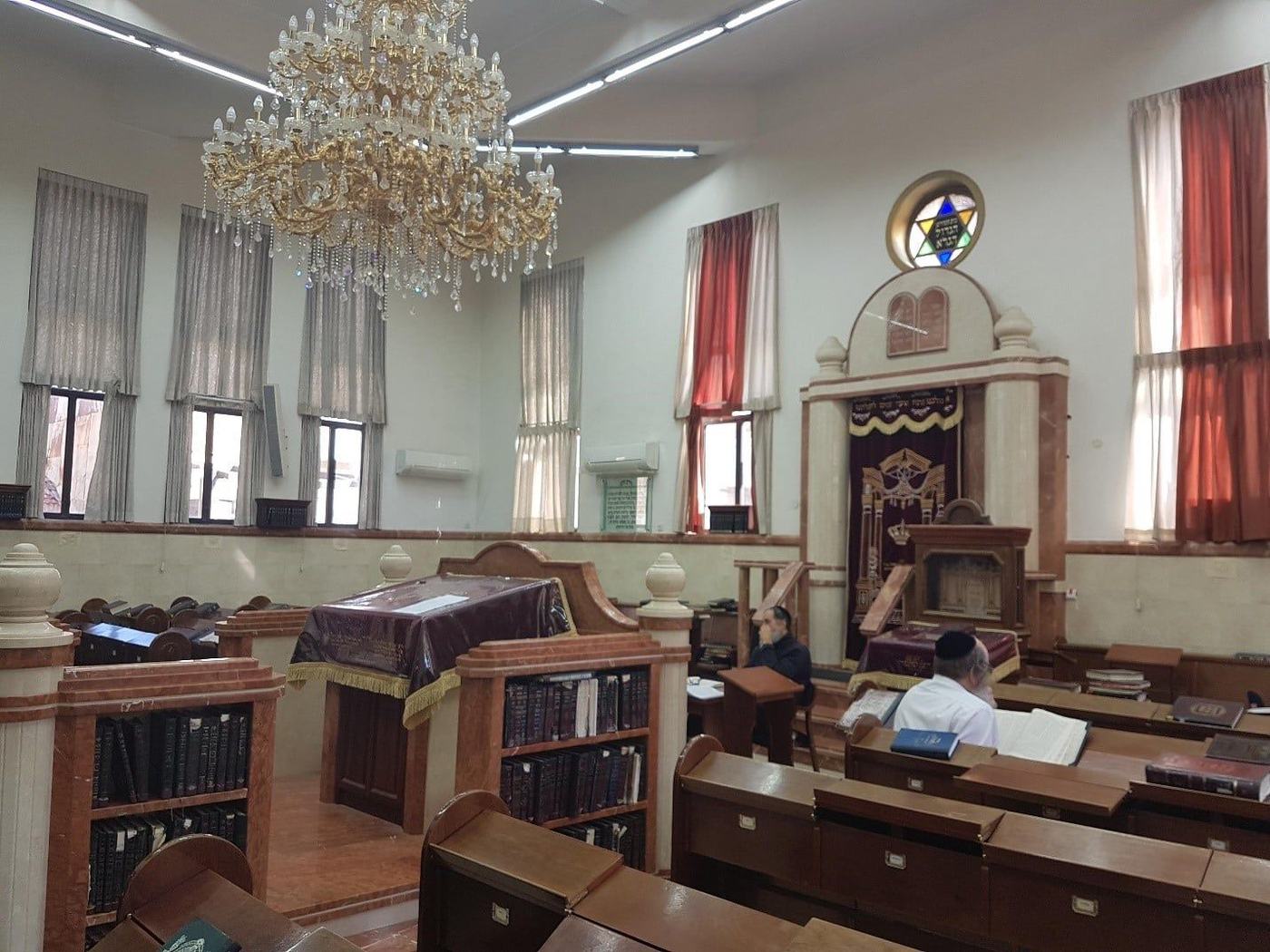
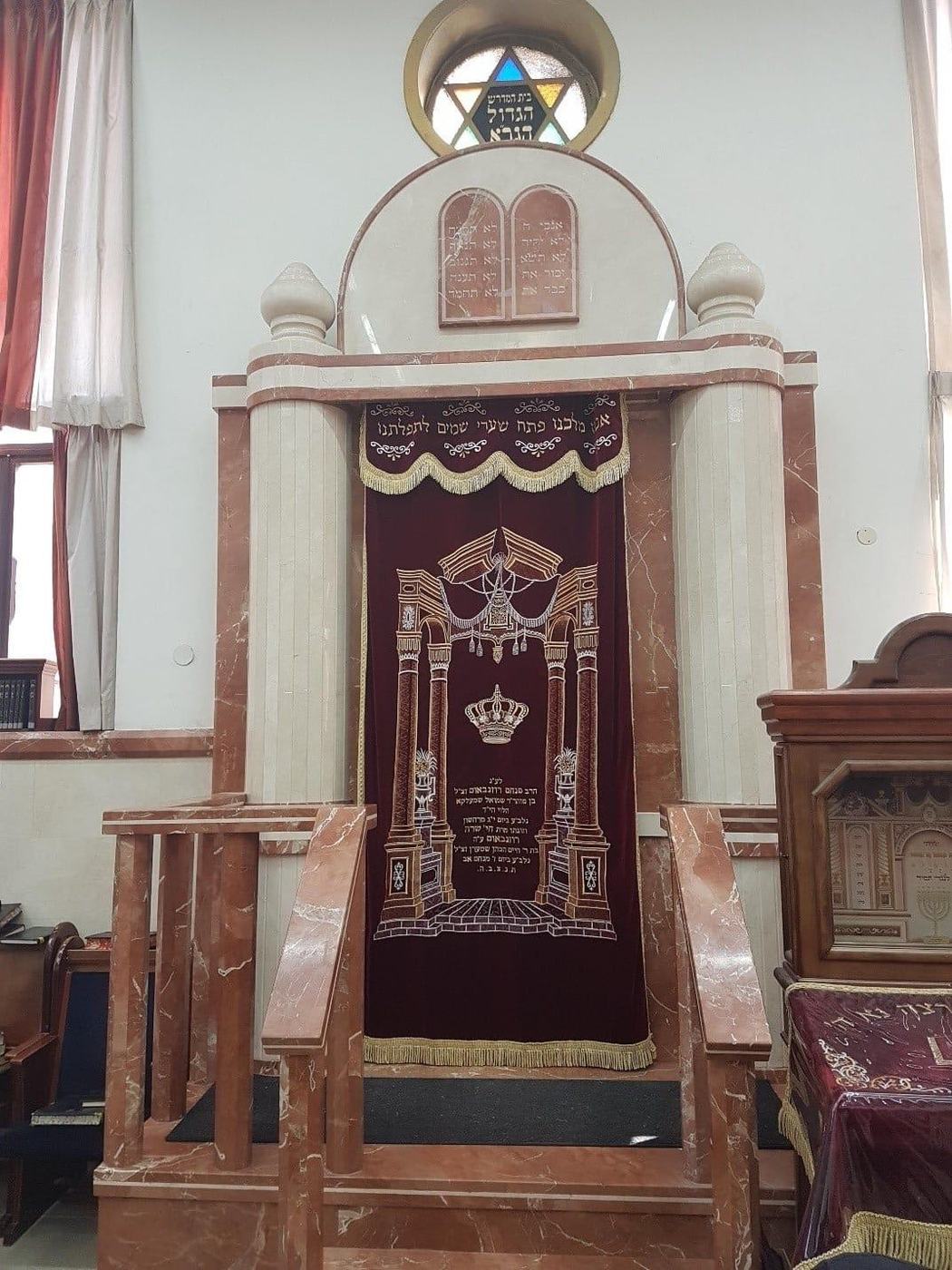
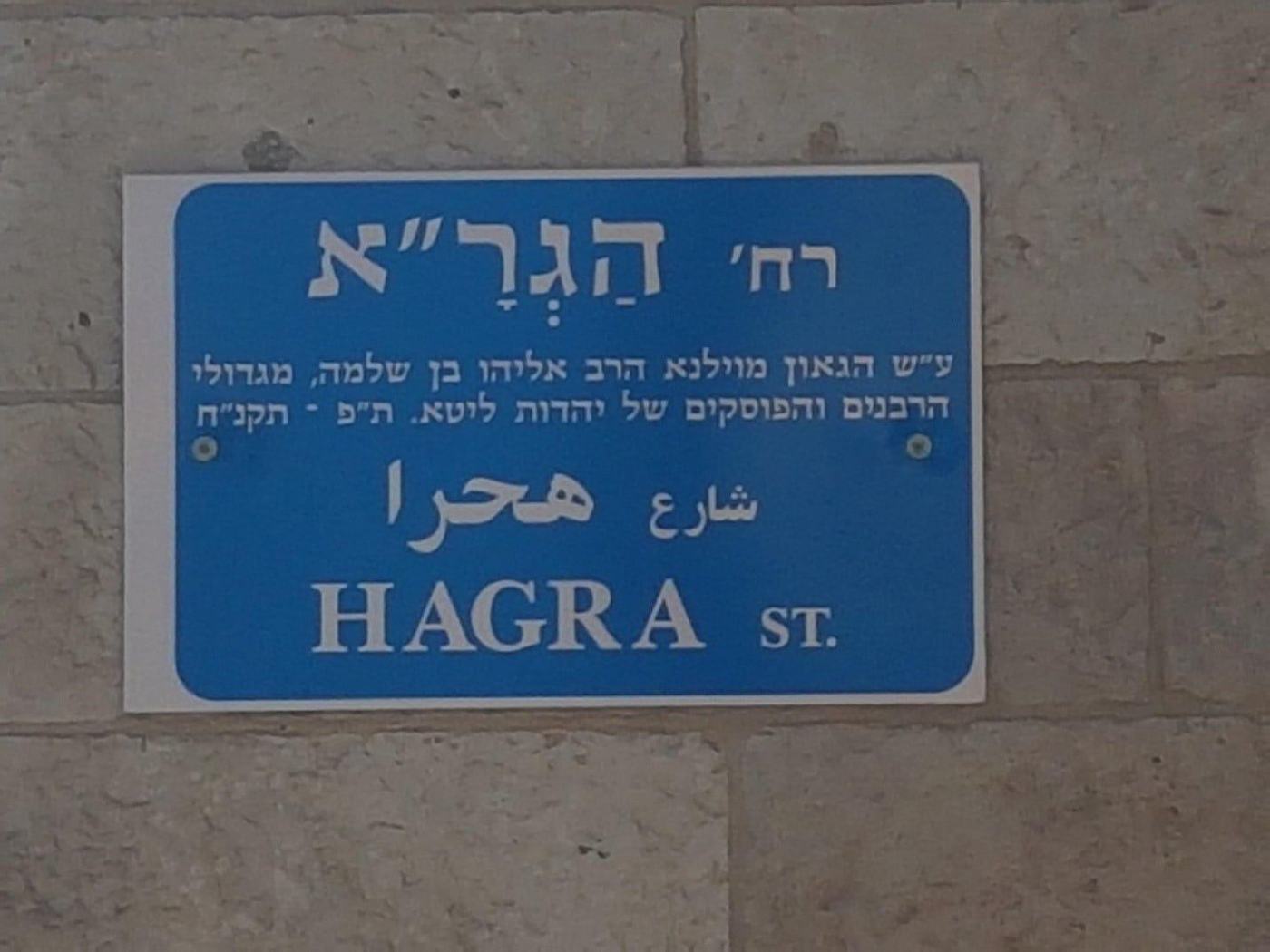
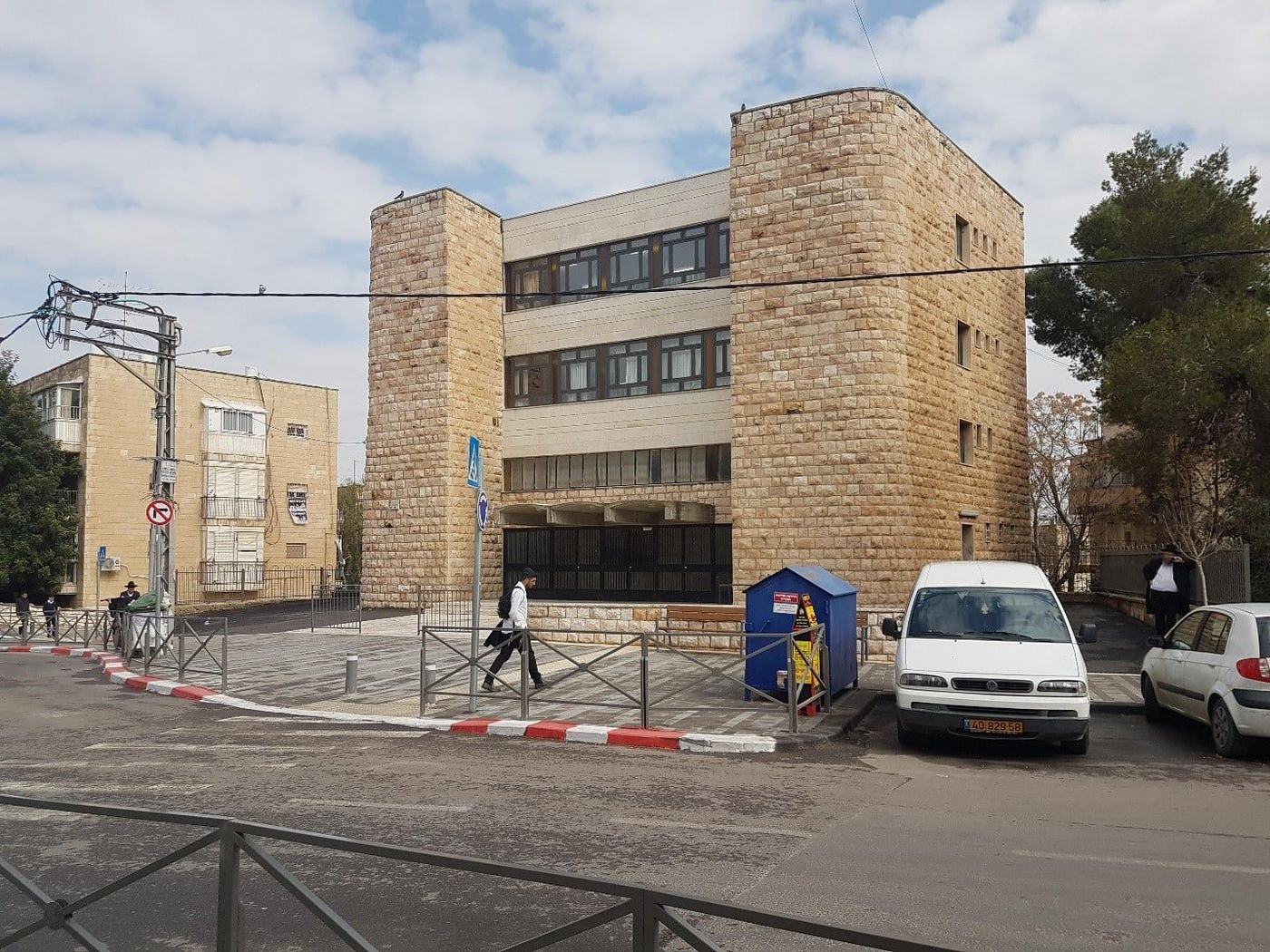
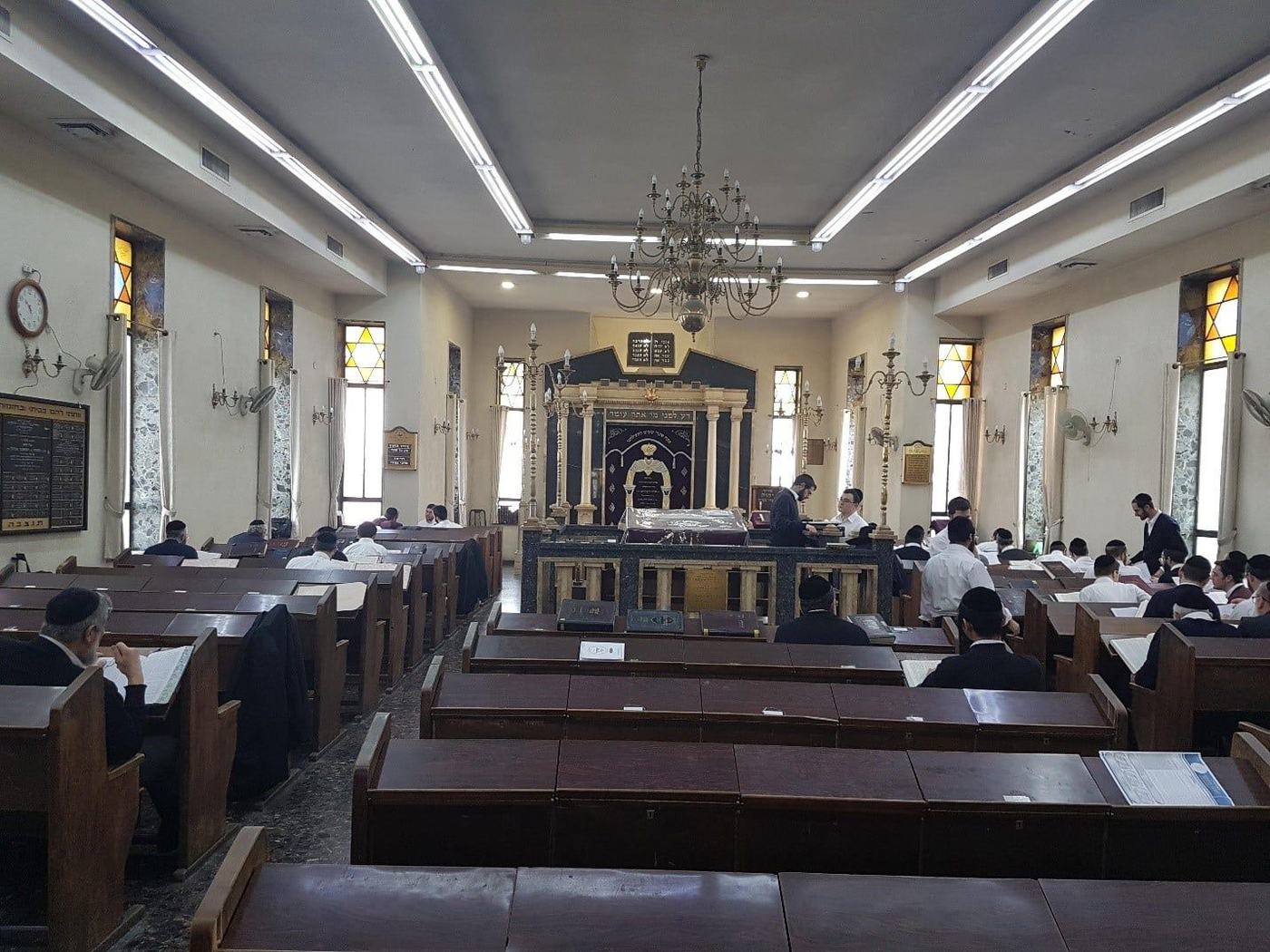
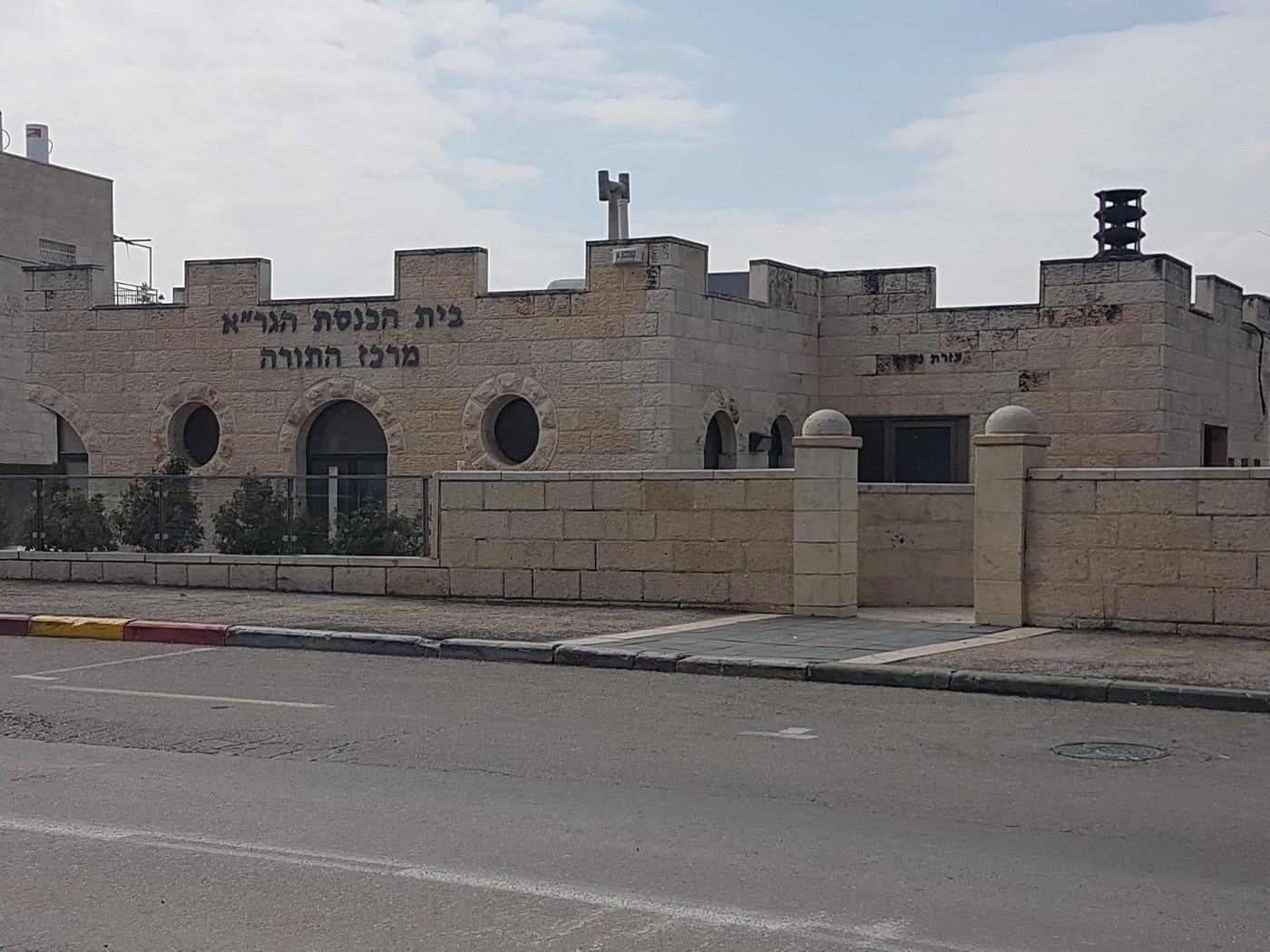
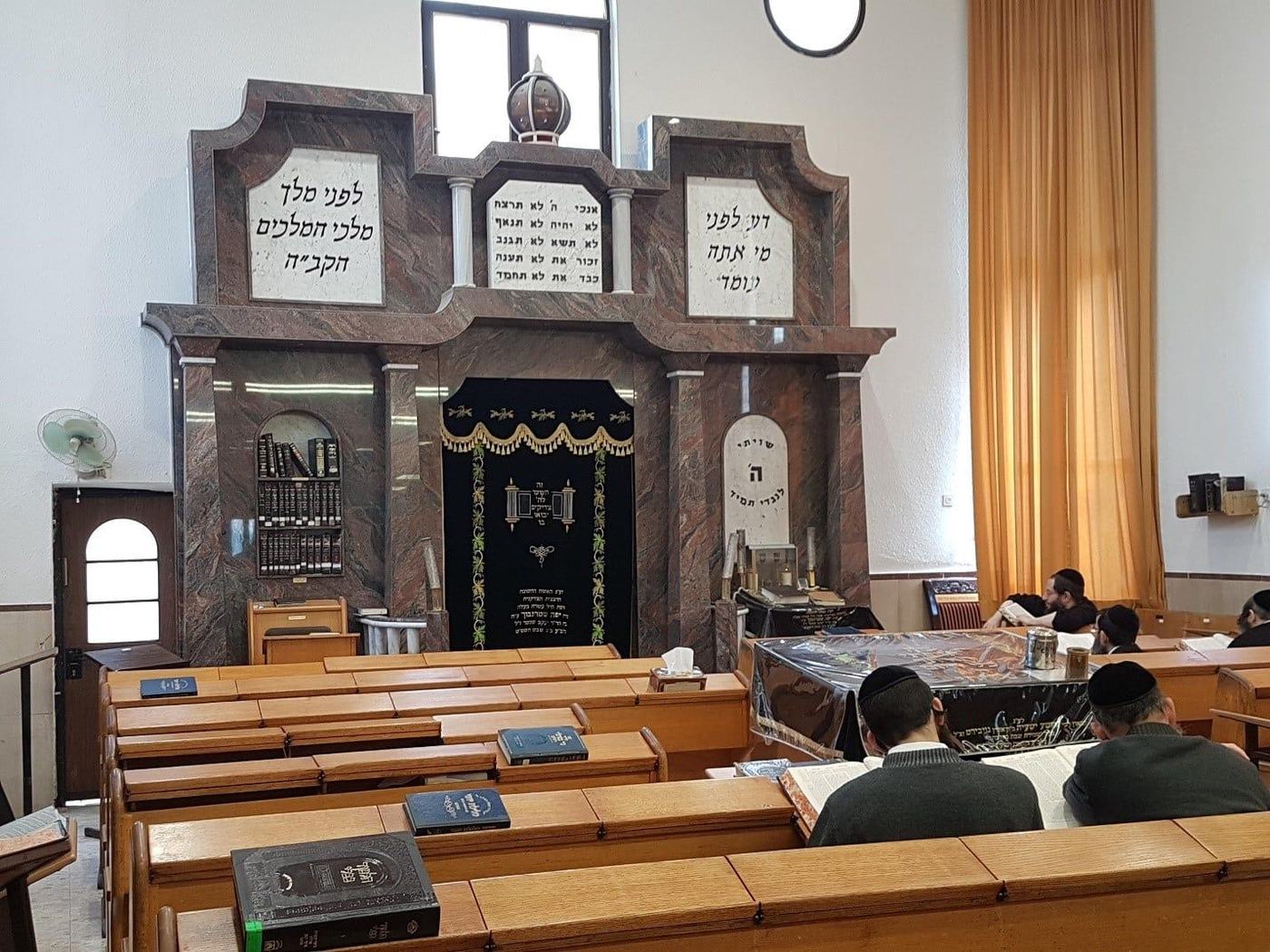
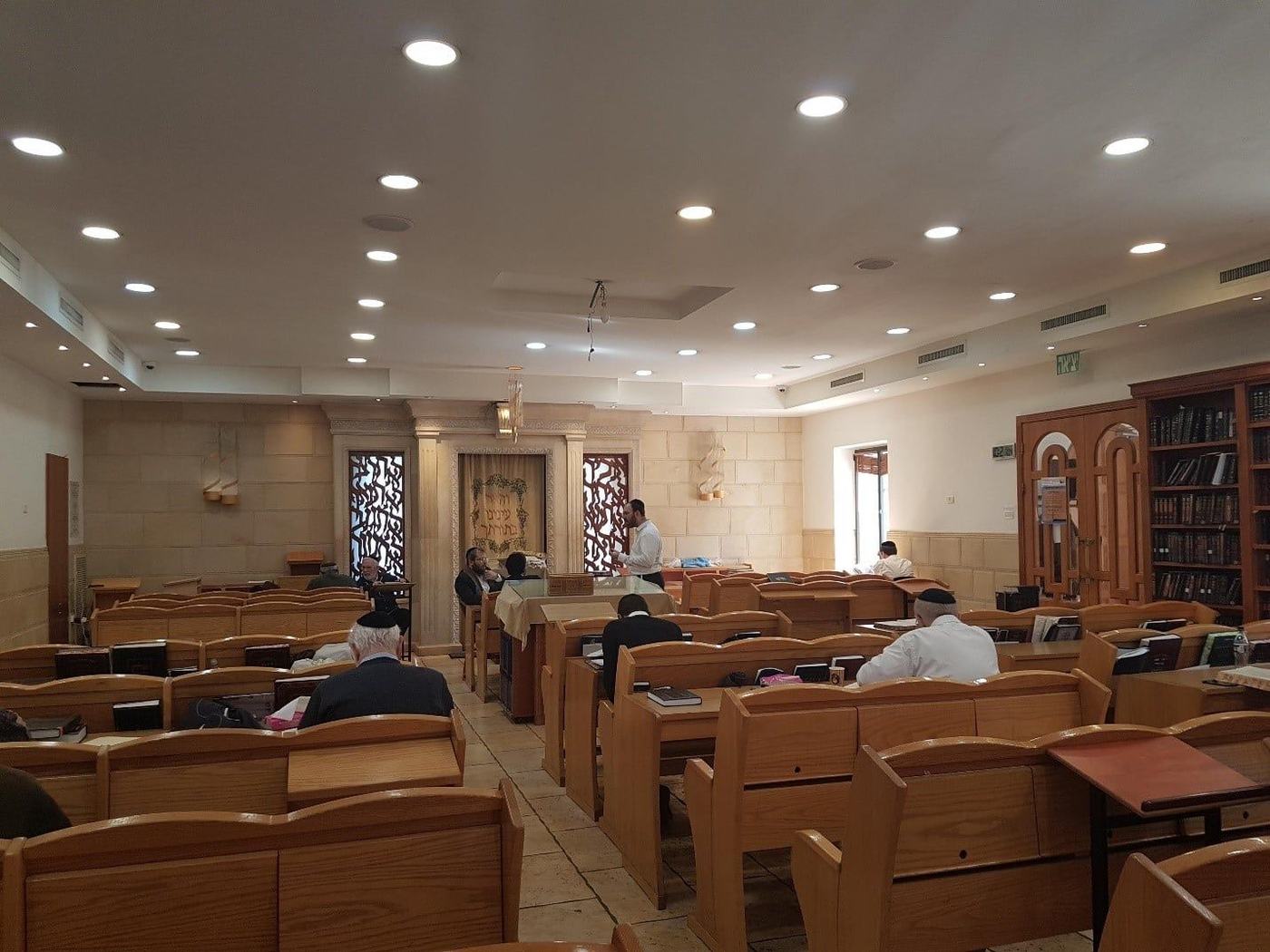
Unlike Tel Aviv, Jerusalem is a religious centre. Consequentially reminders of Vilna in Jerusalem relate almost exclusively to its religious heritage. The Ha’Gra synagogue in Sharei Hesed, adjacent to Ha’Gra street, was founded in the early 20th century and is the oldest synagogue to carry the name of the Gaon of Vilna in Israel. Later further synagogues named for the Gaon were added in the neighbourhoods of Beit VeGan and Har Nof.
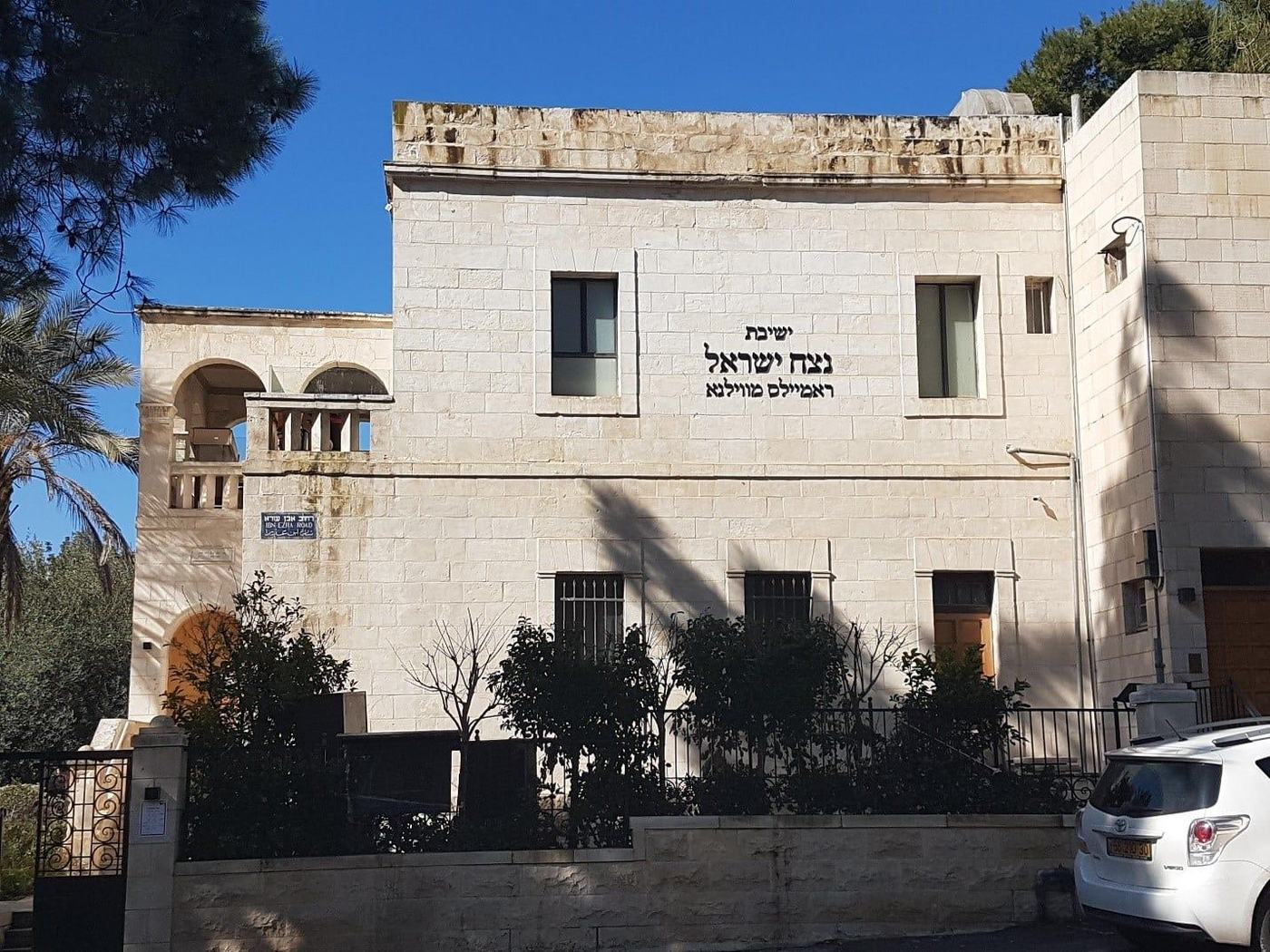
But our attention should be drawn to the Yeshivat Netzach Yisrael in Rehavia. This yeshiva was established by Rabbi Yisroel Zev Gustman, a Dayan (rabbinic judge) in Vilna prior to World War II in the court of Rabbi Chaim Ozer Grodzinski. Gustman was also the son-in-law of Rabbi Meir Bassin and inherited his position as the Rosh Yeshiva (Director) of the Ramailes Yeshiva. The Ramailes Yeshiva, which opened in 1815, was the premier institution of rabbinic learning in Vilna until its destruction by the Nazis and Netzah Israel (the Eternity of Israel) in Jerusalem, founded by the last Rosh Yeshiva of Ramailes in Vilna, carries the name of the lost yeshiva as a memorial.
Happy Birthday Gaon
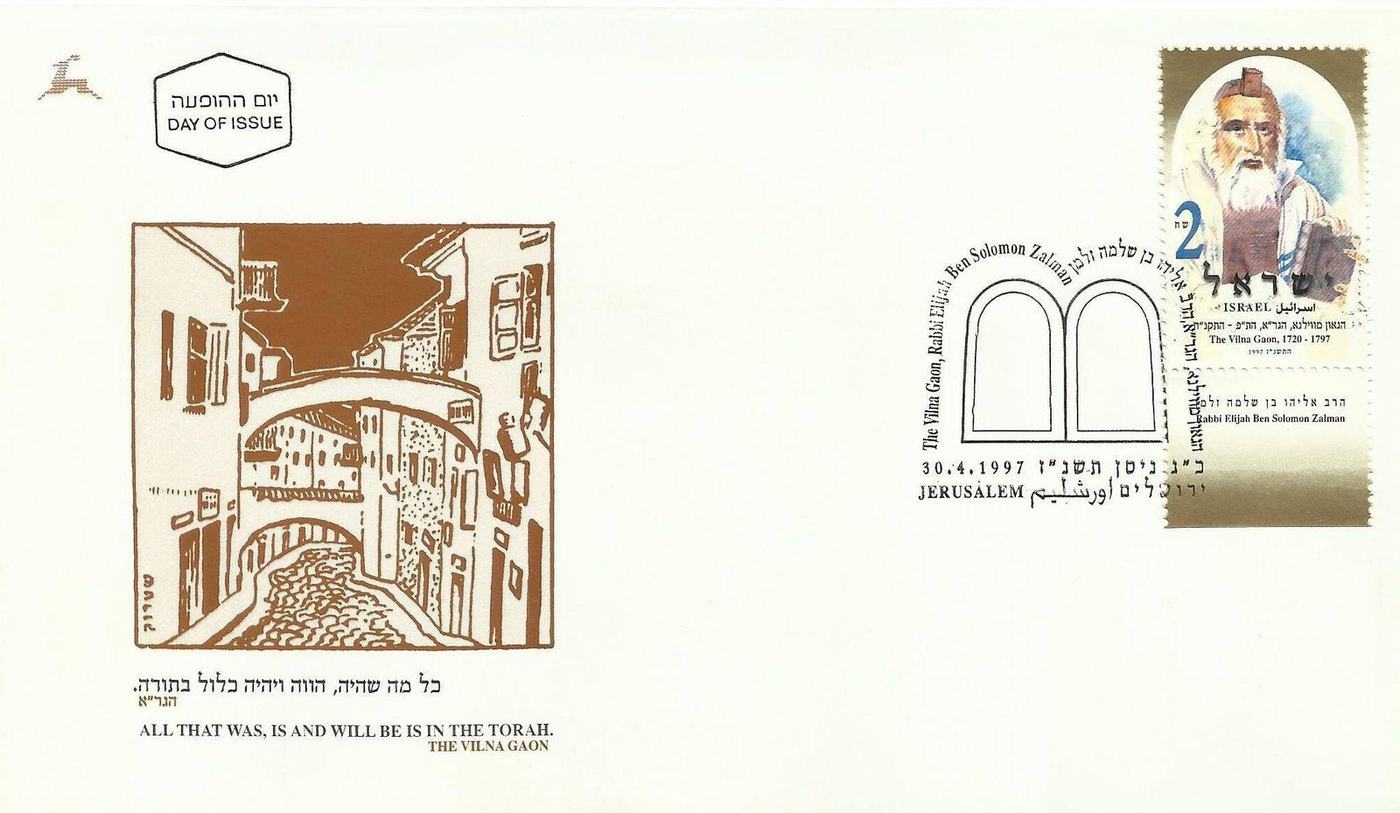
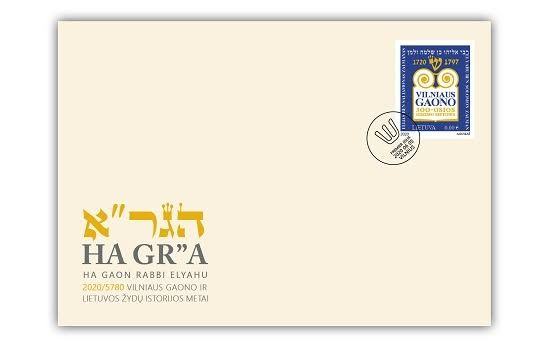
The Lithuanian Post Office has issued a commemorative stamp to mark the 300th birth anniversary of the Vilna Gaon. This joins a similar stamp issued in his honour by the Israel Postal Authority in 1997.
9th Litvak Days in London 2020: Embracing its Jewish Legacy – Has Lithuania Reached a Milestone?
Organised by the Lithuanian Embassy in the United Kingdom.
(For our comments see between 0:53:30 - 1:12:00)
Over the past few years, a growing interest in the lost world of Jewish Lithuania and a determination to grasp the significance of this loss could be felt across the country. Confronting this painful issue is driving Lithuanian society to deeply reconsider the past and how it relates to core issues of the present.
Today, Jewish culture exists in fragments of spiritual and material heritage, as seen in literature, architecture, music and the sciences. Despite the appalling destruction of Jewish life and heritage, what remains provides a crucial foundation for the on-going process of rediscovery.
This major online panel event opens with a keynote address. Entitled 𝑹𝒆𝒔𝒕𝒐𝒓𝒊𝒏𝒈 𝒕𝒉𝒆 𝑪𝒐𝒍𝒍𝒂𝒈𝒆 𝒐𝒇 𝒕𝒉𝒆 𝑱𝒆𝒘𝒊𝒔𝒉 𝑽𝒊𝒍𝒏𝒂, it is delivered by Mindaugas Kvietkauskas, Minister of Culture of Lithuania, who is also a literary scholar and translator of numerous Yiddish texts into Lithuanian. In the panel discussion following his address, five distinguished speakers engage in a collective inquiry into issues such as how the culture of embracing Jewish heritage has evolved over the past three decades of independent Lithuania, along with the opportunities and challenges that lie ahead.
The five panellists are: Lara Lempertienė, a specialist in Jewish cultural history and the head of the Judaica Research Centre at the National Library of Lithuania; Kamilė Rupeikaitė, the director of the Vilna Gaon Museum of Jewish History and a specialist in Jewish musical heritage; Violeta Davoliūtė, professor at Vilnius University Institute of International Relations and Political Science; Michael Berkowitz, professor of modern Jewish history at UCL, and, Jon Seligman, an archaeologist and the Director of the Excavations of the Great Synagogue of Vilna, one of the most prominent landmarks of Vilnius.
Chair: Rosie Goldsmith, former BBC journalist, director of the European Literature Network and Chair of the Judges of the EBRD Literature Prize.
אתם מוזמנים להרצאה בזום: 'מווילנה לירושלים ובחזרה - תגליות חדשות בחפירות בית הכנסת בווילנה, ליטא'
בסדרה 'מבט אל העבר' - חידושים בארכיאולוגיה לשנת תש"ף, על שם ד"ר דוד עמית ז"ל
יום שלישי, 19.5.2020, כ"ה באייר בשעה 16:00 | ללא תשלום |
מפגש בזום ובשידור ישיר בדף הפייסבוק של יד בן-צבי
בית הכנסת הגדול של וילנה שהוקם במאה ה-16 ונבנה מחדש בסגנן הבארוק במאה ה-17, היה המונומנט העיקרי של יהדות ליטא ושל העיר וילנה, עד לימי השואה. אף שחלק מהמבנה עמד לאחר חורבן קהילת וילנה, השלטונות הסובייטים החריבו את המבנה כליל בסוף שנות החמישים. בחמש השנים האחרונות צוות של רשות העתיקות יחד עם ארכיאולוגים ליטאים, עוסק בחפירת שרידי בית הכנסת. ההרצאה תתמקד בגילוים העיקריים, כולל חשיפה של מספר מקוואות וכתובת מפוארת בעברית המתארת את מסעם של בכירי הקהילה מווילנה לירושלים בסוף המאה ה-18.
מרצה: ד"ר ג'ון זליגמן (רשות העתיקות) | מגיב: יורם חיימי (רשות העתיקות)
נשמח לראותכם!
להרשמה (בלא תשלום) למפגש בזום < https://act.ybz.org.il/he/vilna-jerusalem
300th ANNIVERSARY OF HaGRA – THE GAON OF VILNA
Today marks the 300th anniversary of the birth of Eliyahu ben Solomon Zalman Kremer, better known by his acronym – HaGra – the Gaon of Vilna. There have been numerous post today commemorating this event, though few have actually related to his complex intellectual legacy. His writings can hardly be described as presenting ideas of universal appeal, which may be the reason why so many of the posts issued in his memory have concentrated on his portrayal, rather than dealing with his ideas.
The works of HaGra institute new philological methods to the study of the Bible (Mikra), the Mishna and the Talmud, often founded on critical examination of the text, through short and precise explanation that differed from the use of intense textual and often tenuous analysis (pilpul) favoured by his rabbinic predecessors. At the same time the Gaon was not afraid to tackle the secular sciences and his writings include many treatises on aspects of geometry, astronomy and medicine, but deeply set within the tight boundaries of Jewish orthodox religious tradition.
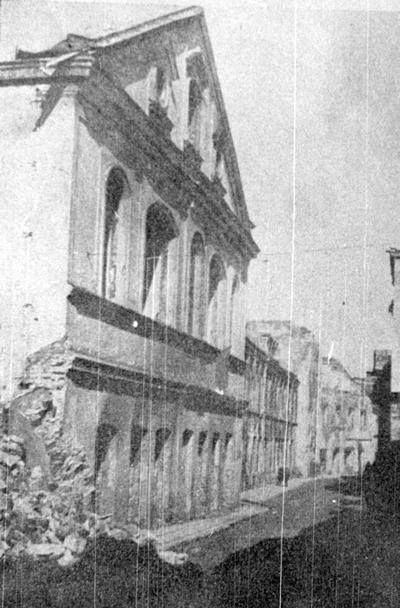
Much of the work of the Great Synagogue of Vilna project has concentrated on the building of the Great Synagogue itself. Still given that today honours the Gaon, it is suitable that we add a few words about the building that stood on the opposite side of the entry path of the Shulhoyf. This was the large study house dedicated to the Gaon, known as the HaGra Kloyz, that was located on the site of the building where the Gaon studied and prayed together with a small group of personally chosen students. The structure was remodeled for his personal use and after his death in 1797, became a small synagogue dedicated to the Gaon that operated right up until the Holocaust. At the end of the war the gutted HaGra Kloyz was still standing, until it was demolished by the Soviet authorities in the late 1950s.
For more information on the Gaon and the HaGra Kloyz see – http://www.seligman.org.il/vilna_synagogue_gaon.html.

Vilna in Tel Aviv
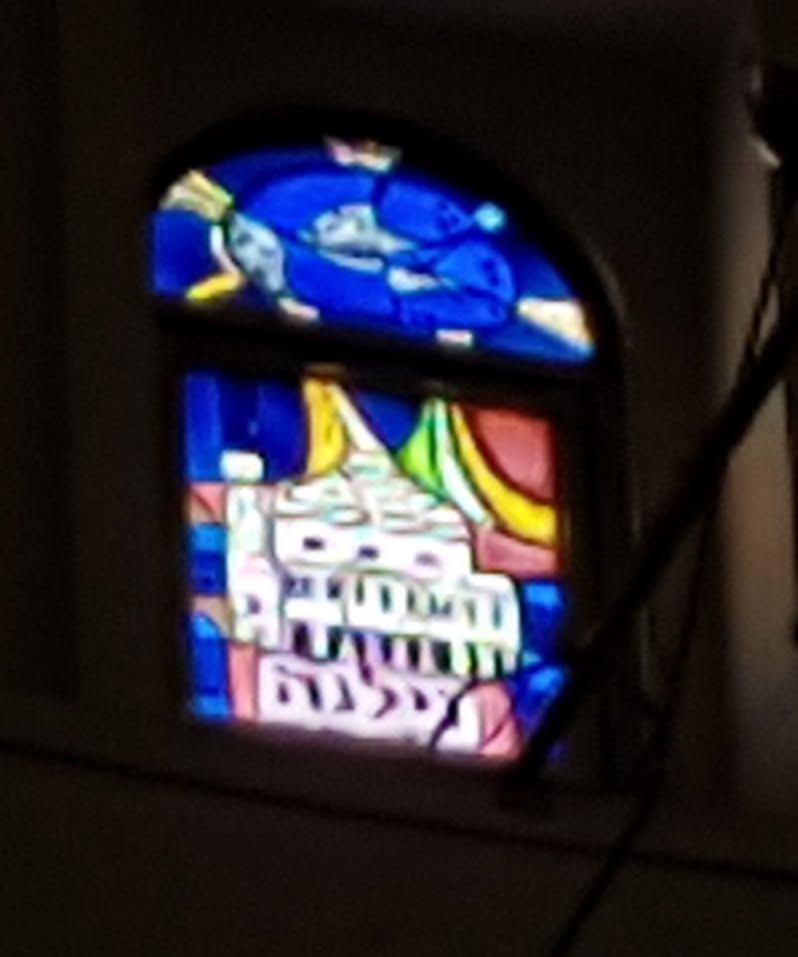
Wandering around Tel Aviv can provide you with glimpses of the Great Synagogue of Vilna and even of the Gaon.
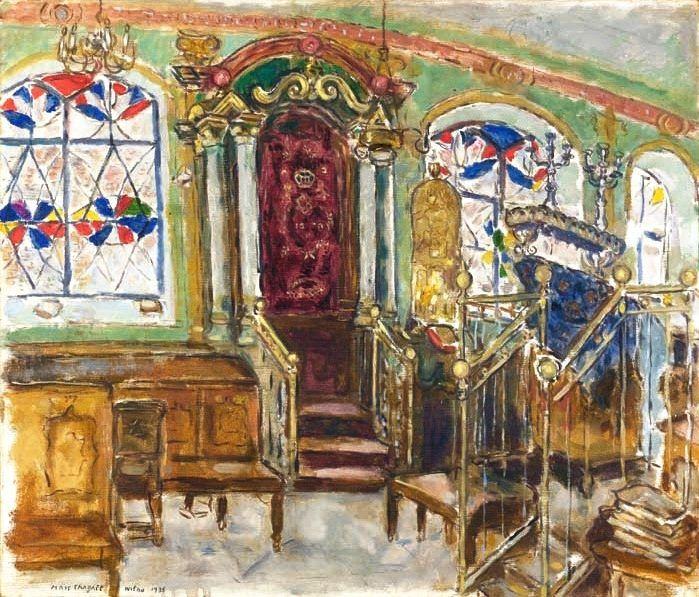
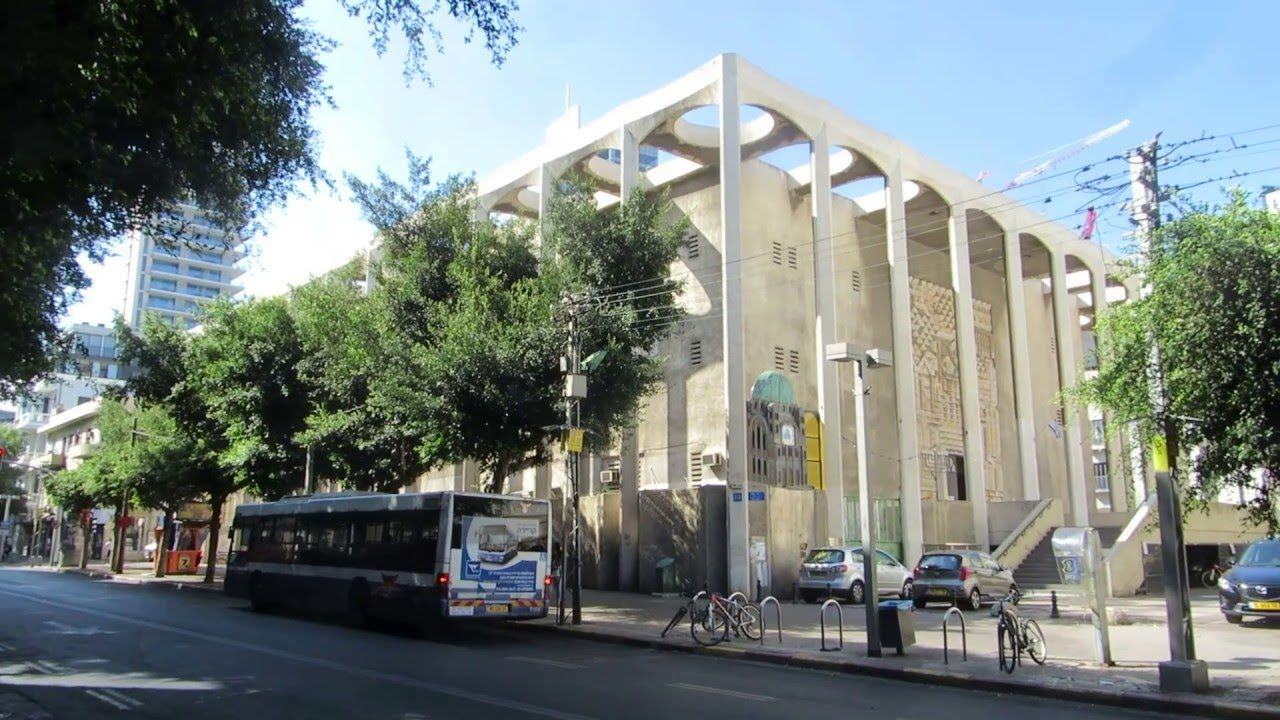
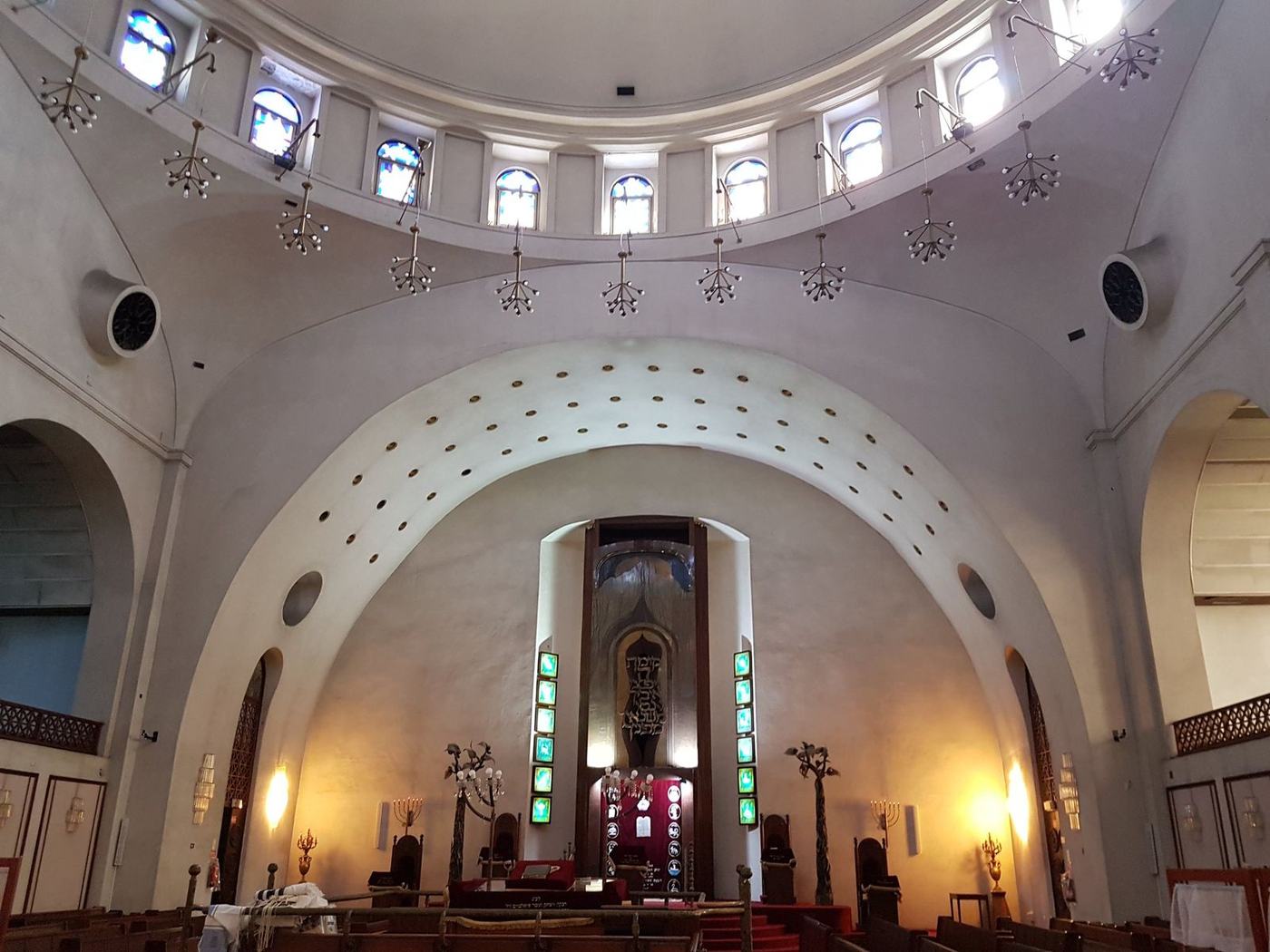
High in the windows of the dome of the (rather ugly!) Great Synagogue of Tel Aviv are a series of stained glass images of the major synagogues of the world created by the artist, Avraham Shadmi. One of the synagogues set above the Aron Kodesh is none other than the Great Synagogue of Vilna (we apologise for the poor photograph).
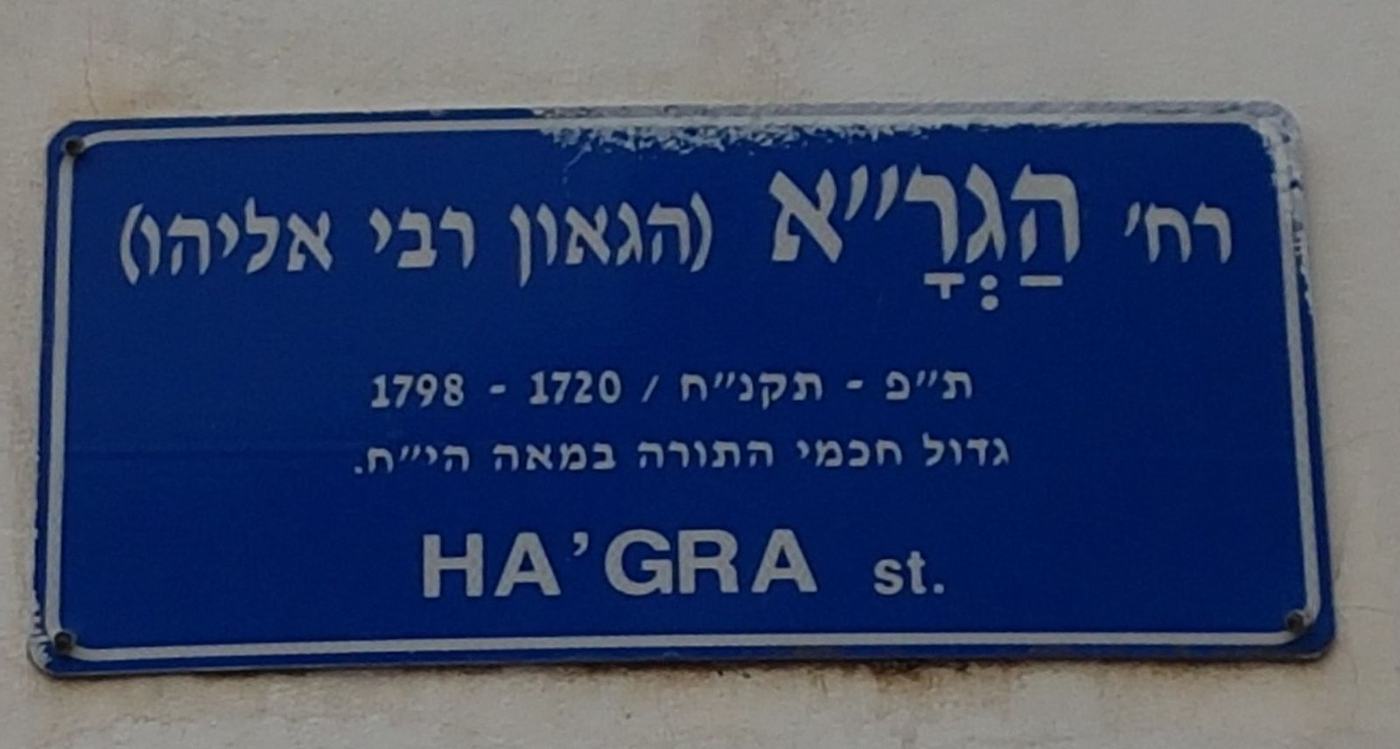
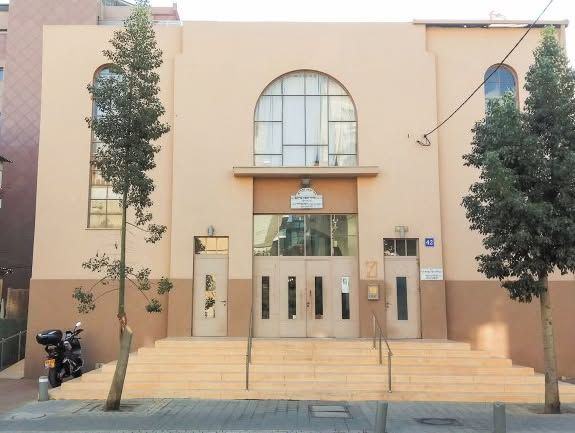
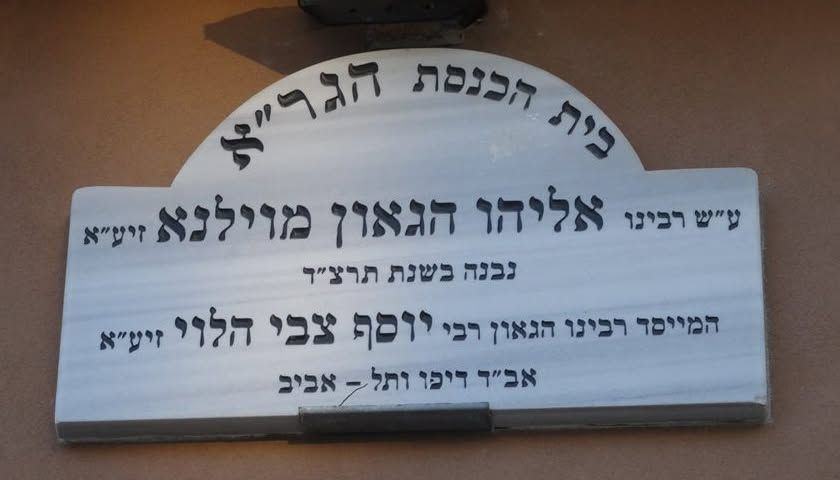
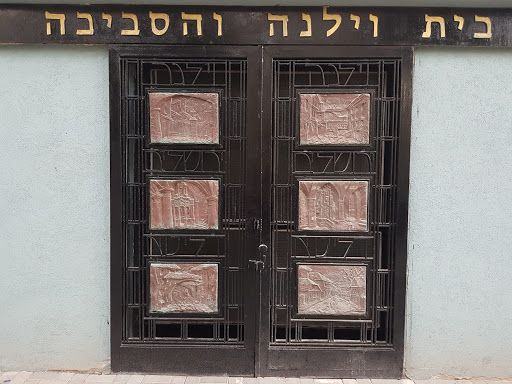
Moving south, close to Tel Aviv's decrepit central bus station, will bring you to Gaon of Vilna Street (Rehov HaGra), while a trip north will take you to the Gaon of Vilna synagogue built in 1936 on Yarkon street under the tutelage of Rav Yosef Zvi Landau, himself a descendant of the Gaon. Wandering to the Montifiori neighbourhood will take you to the centre of Vilna life in Tel Aviv, Bet Vilna - the community centre for Litvaks from Vilna and the surrounded shtetlach. The bronze doors of Bet Vilna show various scenes of the Great Synagogue and of Yiddishe Gas (Zydu gatve).
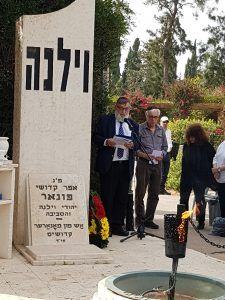
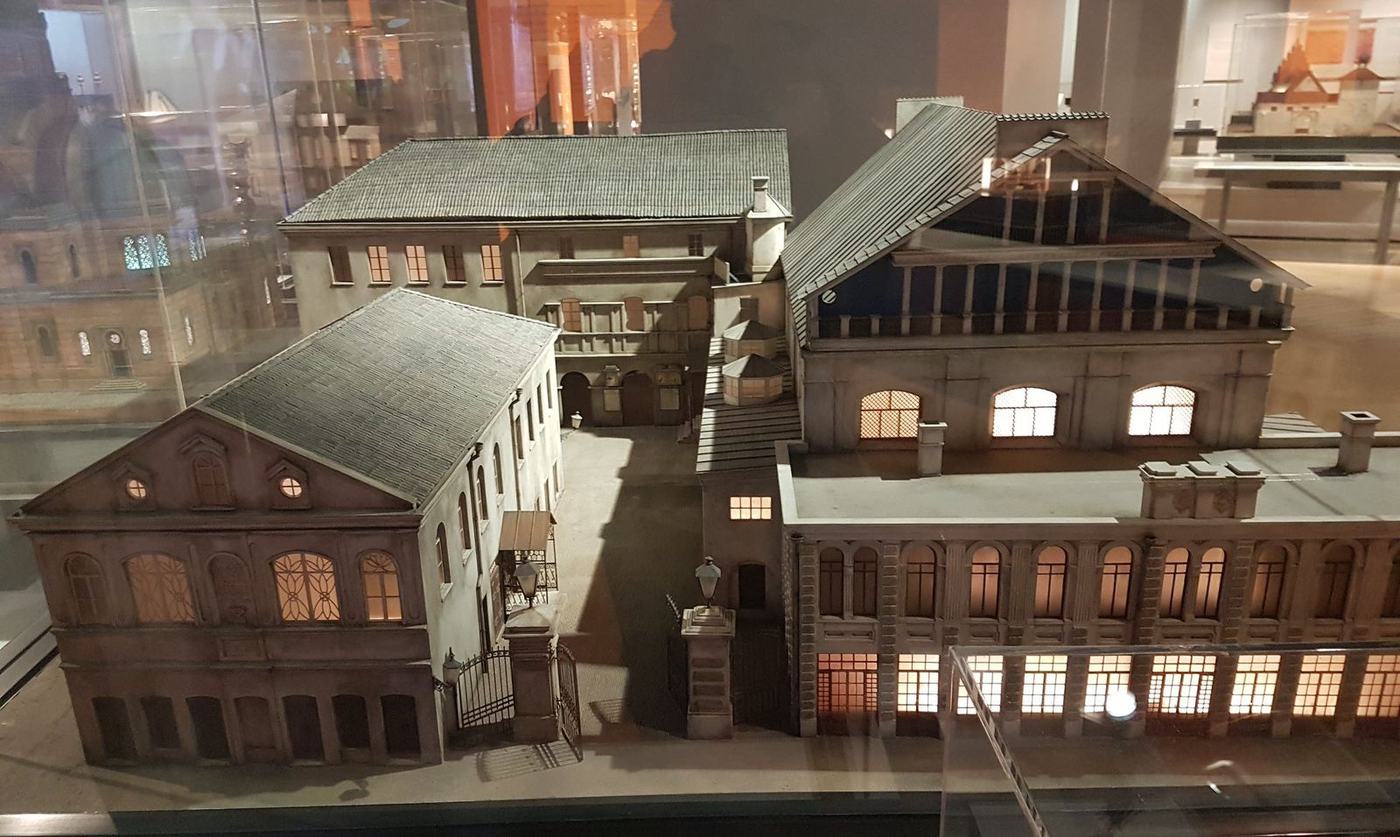
A Holocaust memorial to the Jews of Vilna can be found in the Kiryat Shaul cemetery and finally we suggest a visit to the Diaspora Museum on the campus of Tel Aviv University, where a superb model (even with a number of inaccuracies) of the Great Synagogue of Vilna is a central display of the exhibit.
http://www.vilna.co.il/
https://www.bh.org.il/
http://tlvgreatsynagogue.org/English
https://www.hamichlol.org.il/בית_הכנסת_הגר%22א_(תל_אביב)
2019 (22 stories)

Malka Schirvindt (מלכה שירווינדט) - Who are you?
One of the amazing things archaeology teaches us is that layered beneath great historical stories of great monuments are real people.
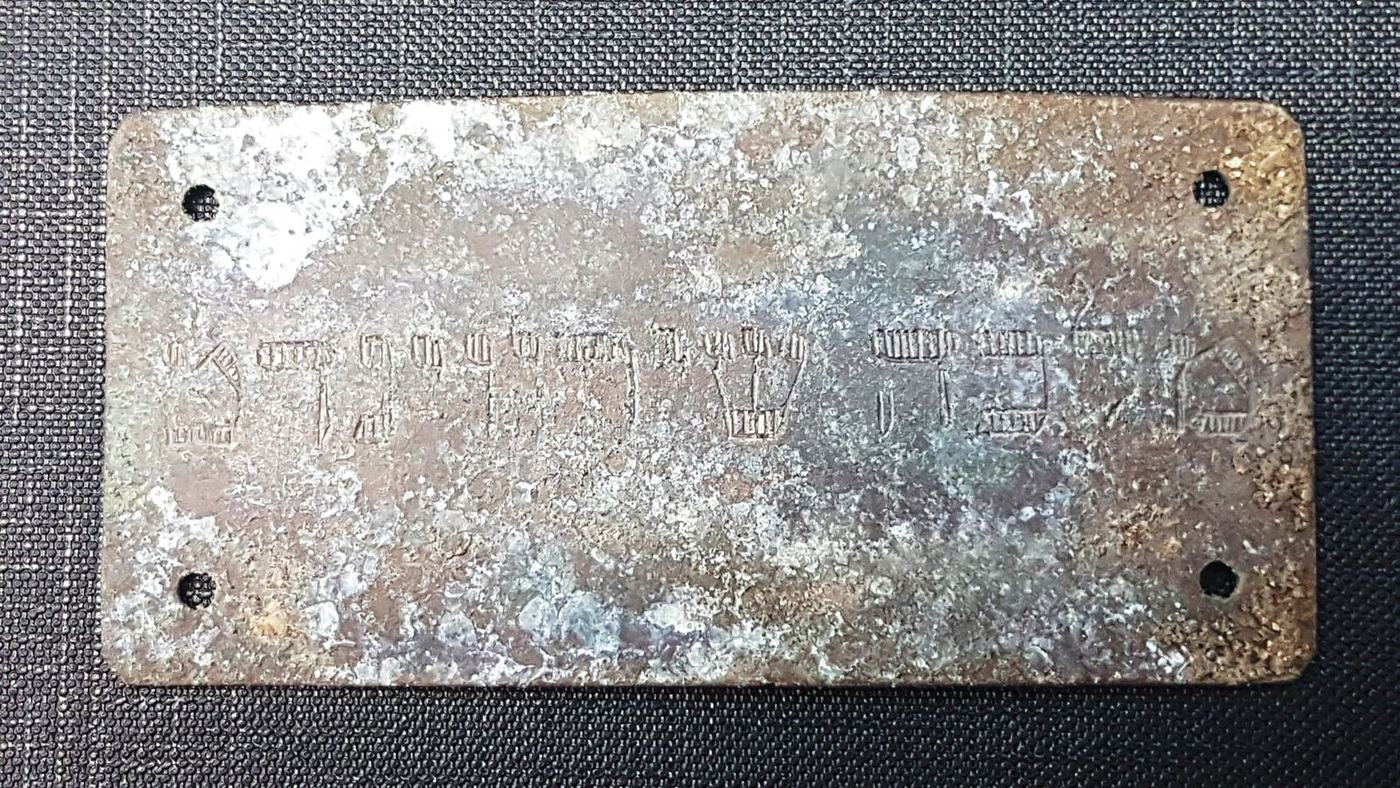
During this year's excavation of the Great Synagogue of Vilna we uncovered two small metal plaques with holes in the four corners. These were name plaques that were once attached to the backs of the seats in the synagogue, sponsored by congregants who provided contributions for the upkeep of the Great Synagogue. One of these two plaques was engraved in Hebrew with the name מלכה שירווינדט - 'Malka Schirvindt' from a seat once located in the Ezrat Nashim, the woman's section of the synagogue, on the gallery level of the structure.
The name Schirvindt probably indicates a family origin in the town of the same name that once was the eastern-most city of East Prussia, on the Neman river and bordering the Lithuanian border (opposite the present day Lithuanian town of Kudirkos Naumiestis - known as Nayshtot Schirwindt in Yiddish), but who was Malka Schirvindt? By 'owning' a seat in the Great Synagogue, Malka was obviously from an affluent background and a quick search in the databases that list the Jewish residents and merchants of Vilna gave us the answer.
Malka, the daughter of Tankhel Rosensweig, was born in 1832 in Vilna. In 1851 she married Eliyash Schirvindt, the son of Leizer Schirvindt, a wealthy merchant who specialised in drapery and haberdashery with outlets in a series of premises in the streets around the Great Synagogue during the 19th century. The family probably lived at 19 Bolshaya Ul. / Wielka St., today Didžioji gatve in the centre of Vilnius, and had at least seven children. Malka passed away in 1904 from a blood attack (I also have no idea what that is), while Eliyash died in 1906, aged 79, from an apoplexy.
Descendants of this family would become well known as senior academics and artists, especially in Soviet Russia, the best known being Alexander Schirvindt, a famous actor in Russia and the present director of 'Moscow Theater of Satire' (Московский академический театр сатиры).
Virtual Reality Model of the Great Synagogue of Vilna
The video trailer of the virtual reality model of the Great Synagogue of Vilna created by Inlusion last year. With new data from the excavation we can already suggest changes.
The 2019 Excavation Results
Watch a short video describing the results of the 2019 excavtion of the Great Synagogue of Vilna.
Filmed by Loïc Salfati.
ממצאי החפירה של בית הכנבת הגשול של וילנה בעונת נחפירה החמישית - 2019
צילם: Loïc Salfati
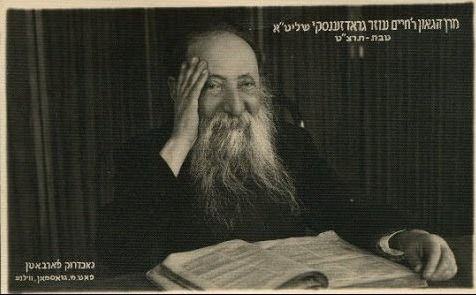
Rabbi Chaim Ozer Grodzinski
Another Riddle Solved.
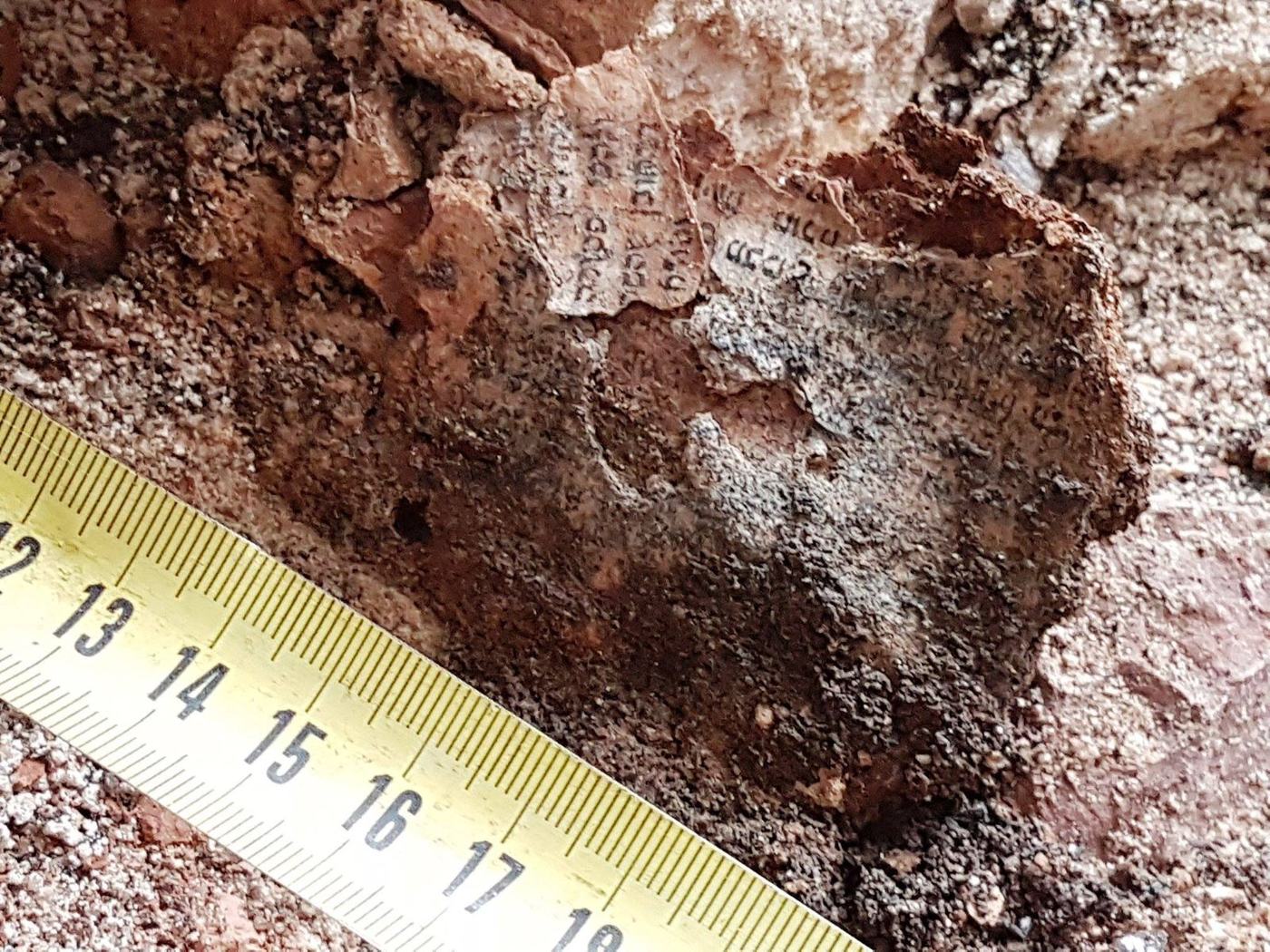
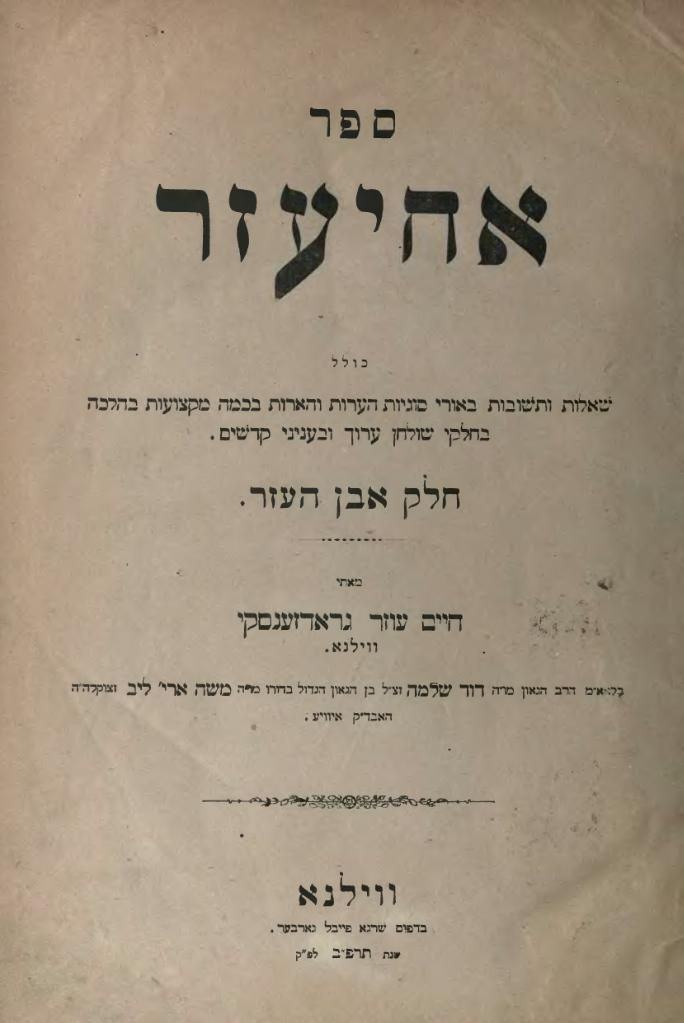
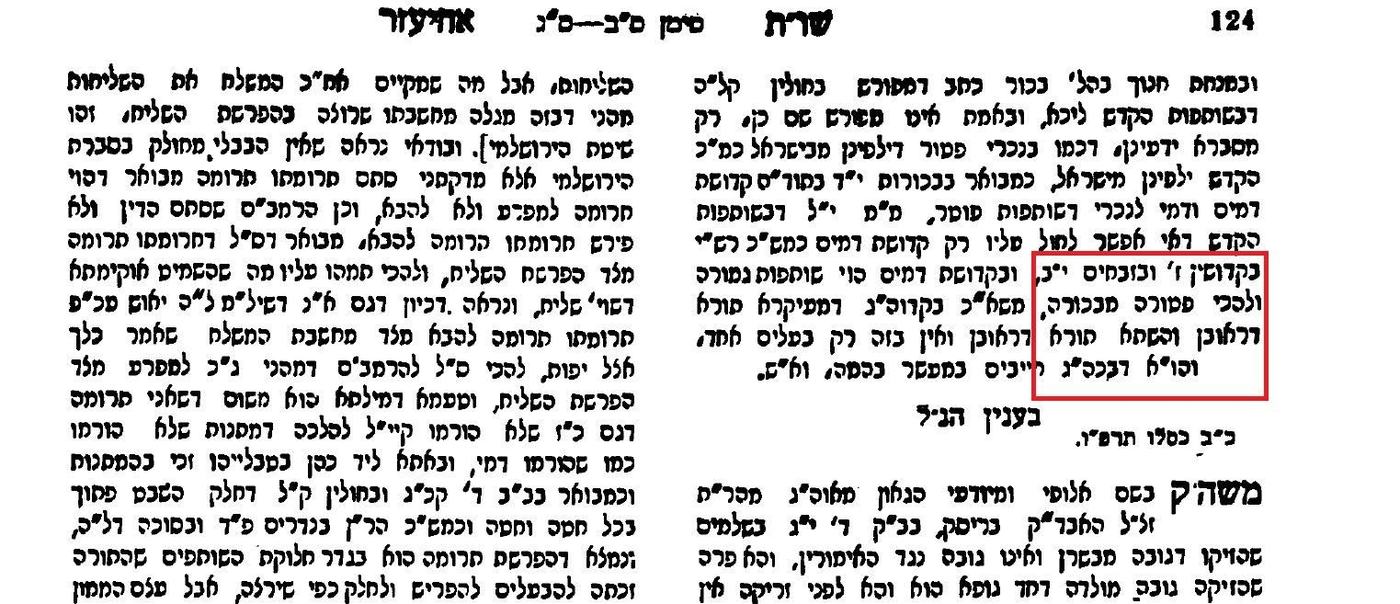
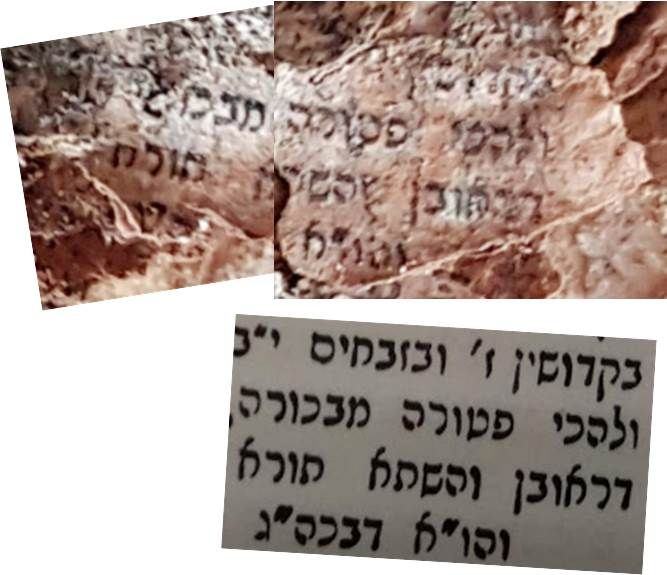
Last week we uploaded a picture of a tiny piece of paper taken from a book we uncovered in the excavation. After seven decades in the ground, the paper was crumbled and extremely fragile. Only a few words were visible and we had little hope that we would be able to identify the text. However, Daniel Lipson, a tenacious and scholarly librarian at the National Library in Jerusalem, was amazingly able to identify the text. It is a portion of Rav Chaim Ozer Grodzinski’s monumental interpretation (responsa) of Jewish religious texts titled ‘Achiezer’ (אחיעזר).
Chaim Ozer Grodzinski was the leading Halakhic figure in Vilna from 1885 till his death in 1940. He served as the Rav of Vilna and as Dayan of the Beth Din (religious court). More importantly he was the leading Talmudic scholar in Vilna and probably in Lithuania for many decades. The fact that the book was Grodzinski's is extremely satisfying, for few can genuinely be considered a truer representative of pre-WWII Vilna than Rav Chaim Ozer.
'Achiezer' was originally published by Grodzinski in Vilna in 1922 and the section identified is from chapter 62 in part 3 of the book, this section dealing with tithes to the Temple.
https://web.nli.org.il/sites/nli/english/pages/default.aspx
https://en.wikipedia.org/wiki/Chaim_Ozer_Grodzinski
Sensational Discoveries!
This is the time to announce our most important discoveries to date.
These include the front section of the Bimah and a magnificent inscription that was originally set below the Hazzan's (Cantor's) reading table.
We have discussed the Bimah before, but this year we uncovered the front section, including two of the massive columns that once supported the roof of the Great Synagogue. The Bimah had two sections, the central square section that would often host the synagogue choir, and the front porch, where the Hazzan would chant the weekly Parasha (Bible segment) to the congregation. The floor of the Bimah was decorated with coloured terrazzo with red and black patterns. To our surprise, below the floor of the Bimah we found an underground cellar. The cellar's contents were sifted and we found close to 200 coins dating from the 17th to early 20th centuries, buttons of Napoleon's Grand Armée, seating plaques and many pieces of the smashed Bimah superstructure.
The most important find was a large inscription, cut into red sandstone, with four lines of Hebrew text coloured in gilded lettering. The inscription had been smashed with a hammer blow into multiple pieces. Dr. Vladimir Levin of the Hebrew University and Rabbi Yehiel Poupko both aided us interpret the inscription, which read:
'לפרט 'תעלנו' (שנת 1796) בשמחה לארצנו. נדבו ר' אליעזר ור' שמואל בני ר' חיים שחי בטבריא תוב"ב וחי"ש תמת שרה אב"ר שבתי ד' אדר, ולירושלים 'מבשר' (שנת 1782) אתן, וא"ר חיים ב"ר חיים מת שם ז' ניסן, אתה 'תקום' (שנת 1786) תרחם ציון.'
The inscription contains multiple Biblical references, abbreviations, plays on words based on numerical inference and poetic styling.
'In the year "Bring us with joy to our country" [a verse from Amidah prayer] [=1796]. [This Torah reading table] was donated by R. Eliezer and R. Shmuel, the sons of R. Chaim who lived in Tiberias, be it rebuilt and reestablished soon in our days. "And died Sarah" [Gen. 23:2] our mother, the daughter of R. Shabbtai, on the 4th of Adar "I gave to Jerusalem a messenger of good news" [Is. 41:27] [=1782] and our father R. Chaim son of R. Chaim died there on the 7th of Nissan "arise and have mercy on Zion" [Ps. 102:14] [=1786].'
This stone had without question been one of the most important inscriptions in the synagogue and was placed in an auspicious place on the front of the Bimah. The plaque describes the donation of the Hazzan's reading table to the Great Synagogue in 1796 by two brothers in honour of their father who had emigrated (Aliyah) to Tiberius in Eretz Israel and had later died in Jerusalem and their mother, Sarah. These few sentences express the deep connection between the Litvak community and Israel that existed from the time of the Gaon of Vilna until today.
Without question, the exposure of the original inscribed prayer table and the exact place on the Bimah from where the Torah was read to the Jewish community of Vilnius for three centuries before the building was destroyed is this season's most an exciting development.
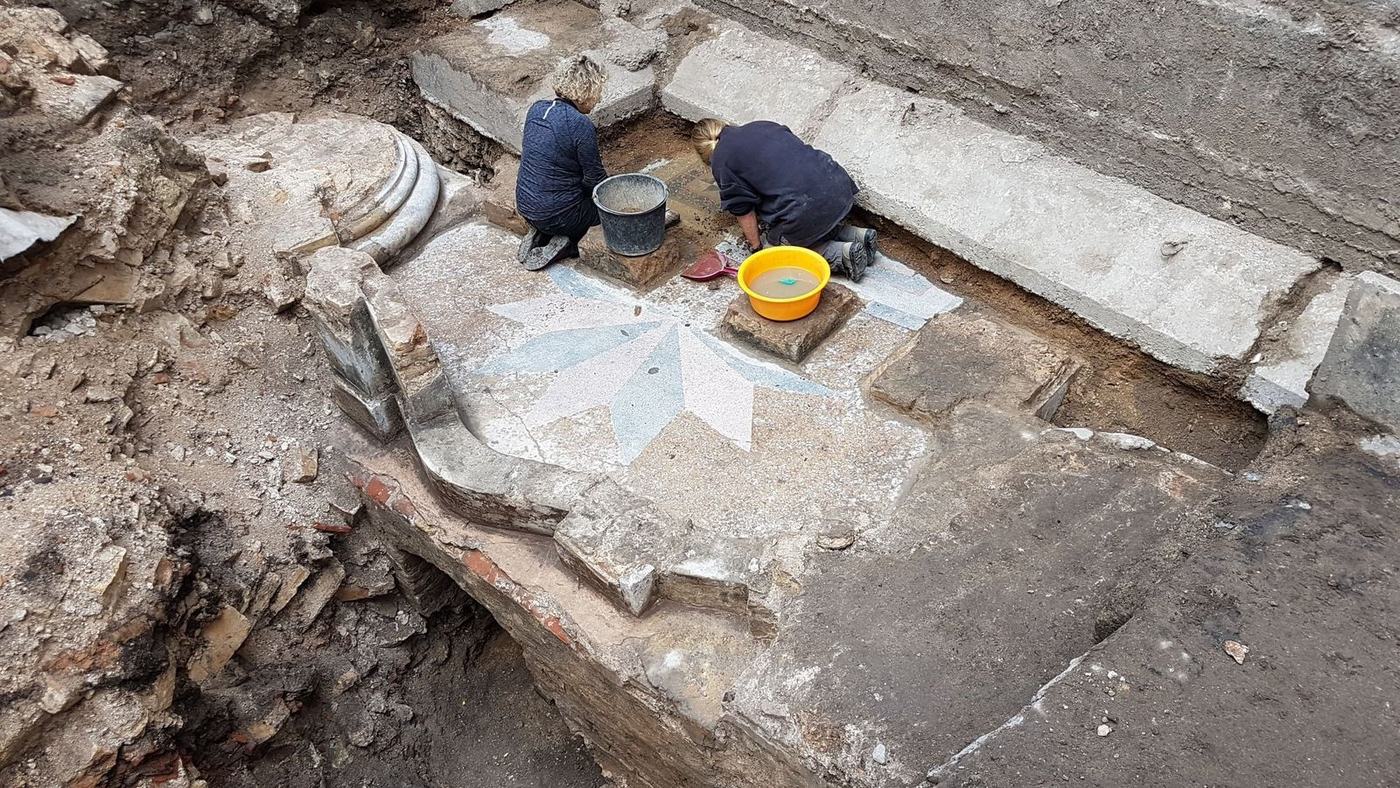
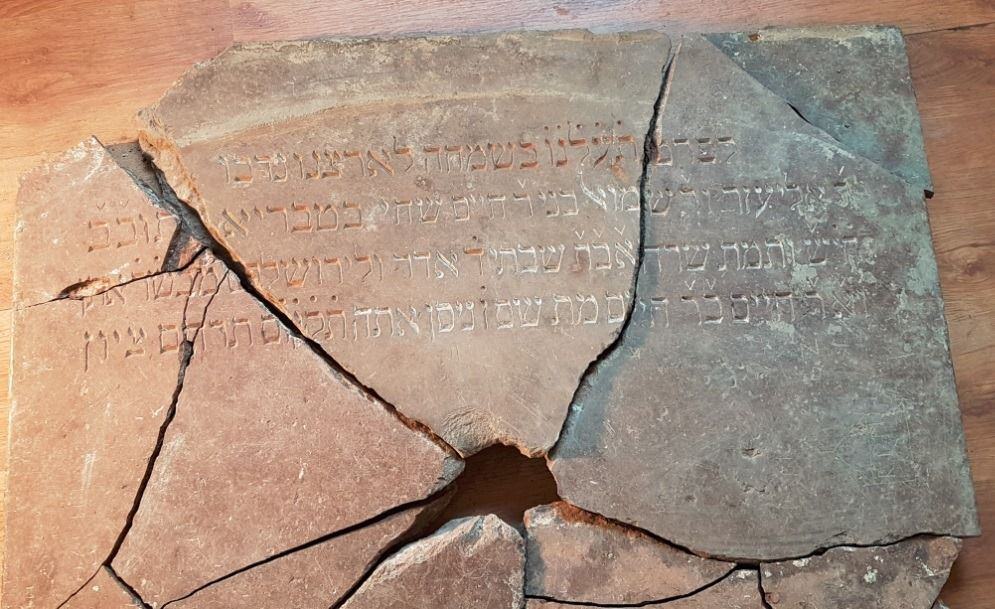
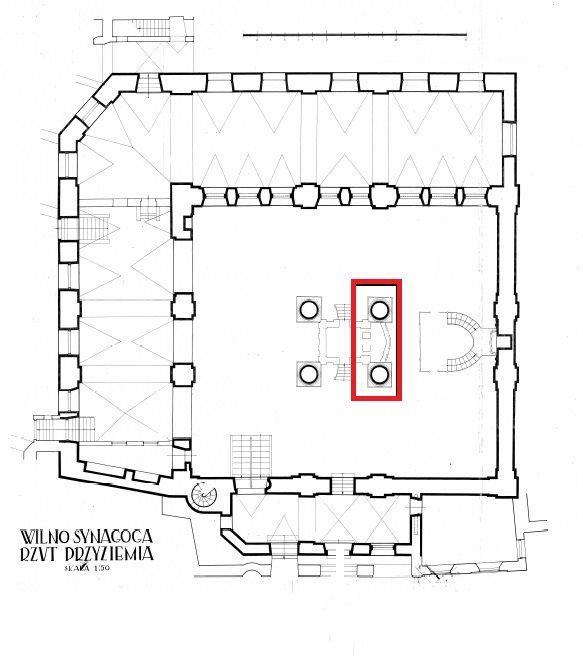
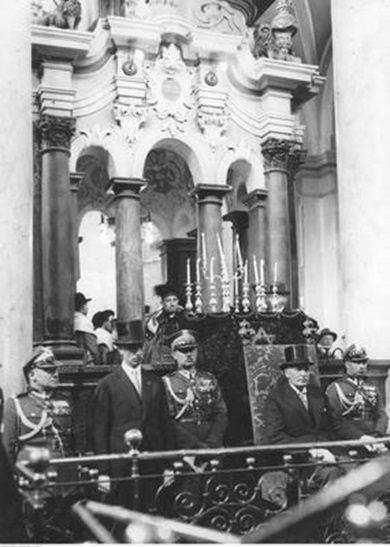
The People of the Book
For many Jews the printed word is their greatest treasure. After the Great Synagogue was ransacked, burnt, abandoned, left open to the elements and finally bulldozed, the likelihood to find remains of scrolls, books or manuscripts was extremely remote. Till now we have found no written material and then today, in an unlikely place, that changed. Pieces of Rashi script were suddenly seen in the soil, stuck to the side of the north-west corner of the building. We immediately reached out to the Conservation Institute and they dispatched a paper conservator who carefully removed a few pieces of a text, the nature of which we still need to decipher.
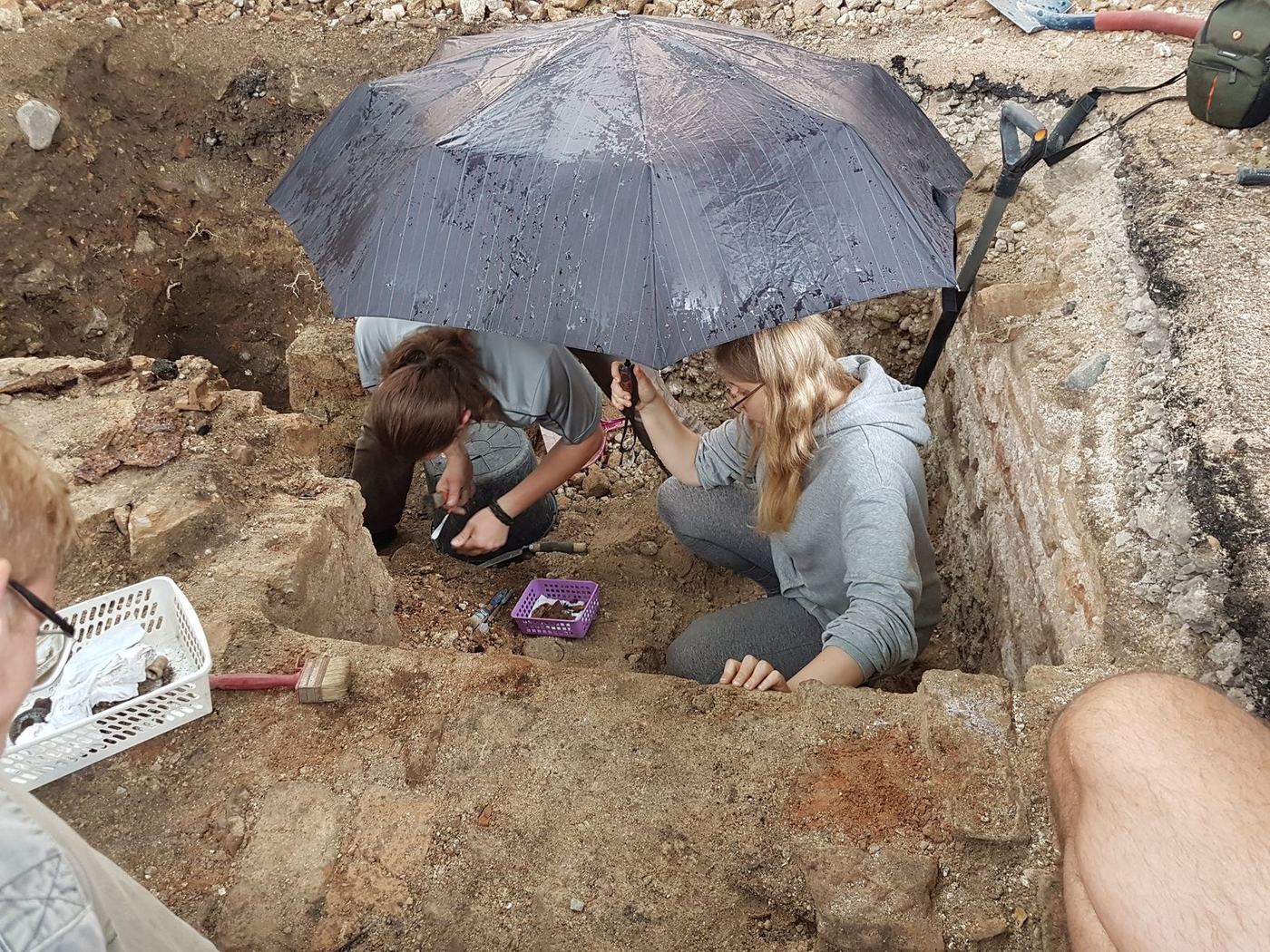
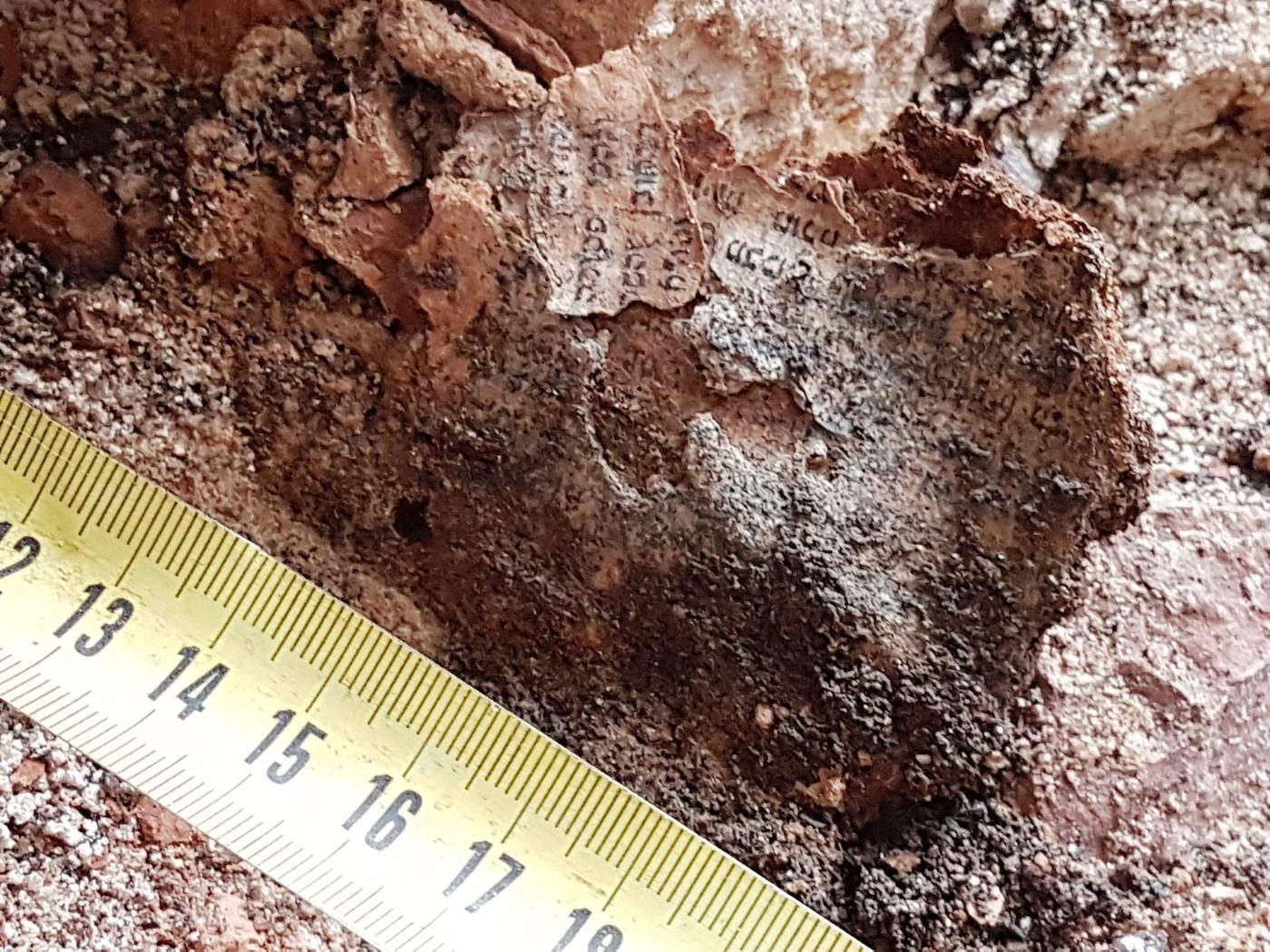
The Tzdekah Gedola Society
This small metal plaque from the debris around the area of the Bimah tells us something about the day-to-day management of the Great Synagogue and of Vilna's vibrant Jewish life. The plaque belongs to the Tzdekah Gedola Society, the most important charitable foundation in the city from the 16th century until it was disbanded in 1931. With the breaking up of the Kahal, the autonomous Jewish community council in the early 19th century, the Tzdekah Gedola Society took over many of the functions of community and synagogue management.
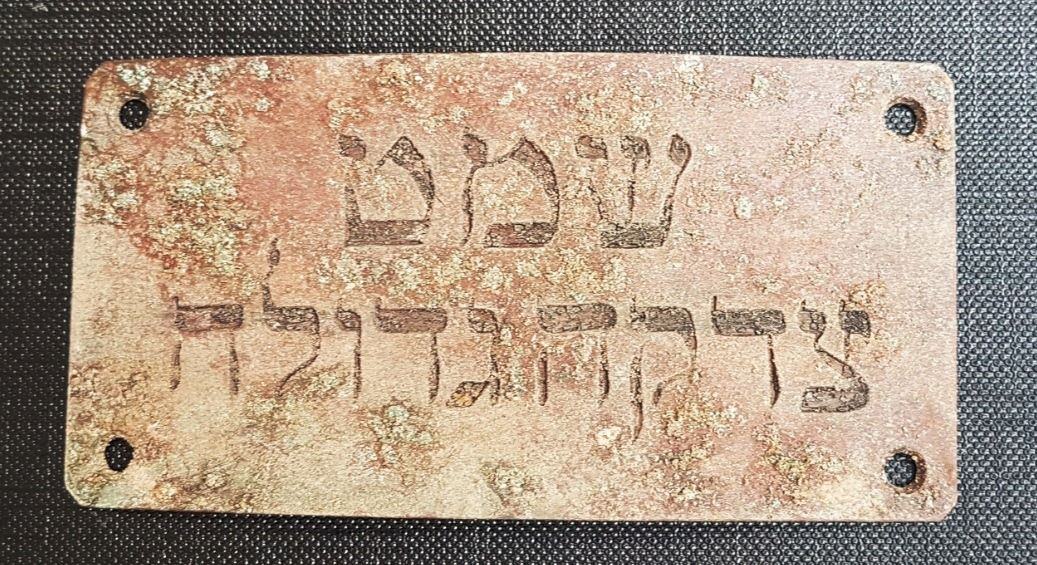
Go Stand in the Corner
This part of the excavation examines the south-west corner of the Great Synagogue. The excavation in the original 17th century section of the structure exposed sections of the original brick wall, some 1.5 metres thick. Just beyond the line of the southern façade wall, and in front of the inquisitive tourists, is the back wall of the adjacent Stashun Library building opened between the synagogue and Yiddisher Gasse, present Zydu gatve, in 1903. The Strashun Library was the most important collection of rabbinic literature, Hebrew books and manuscripts.
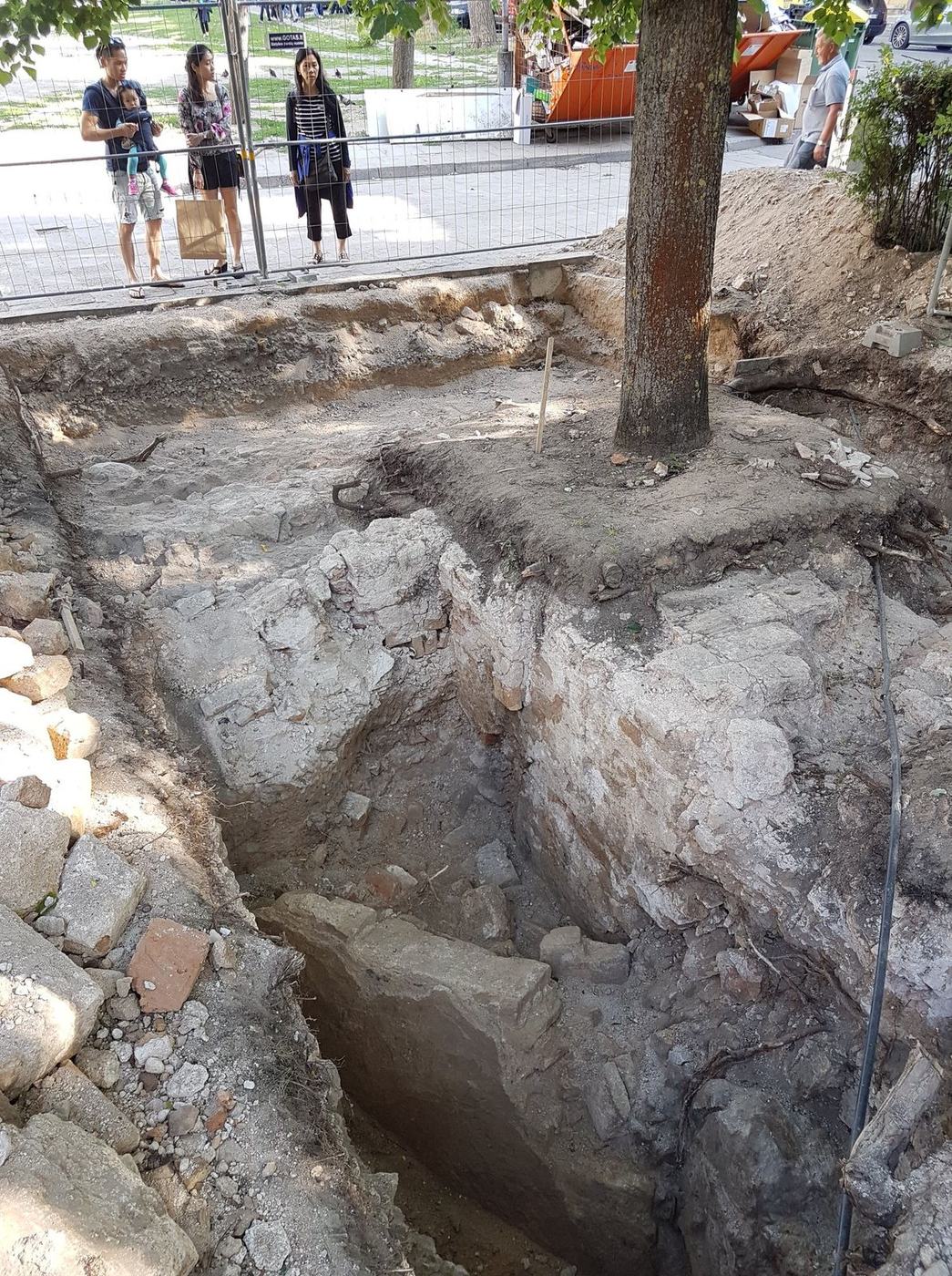
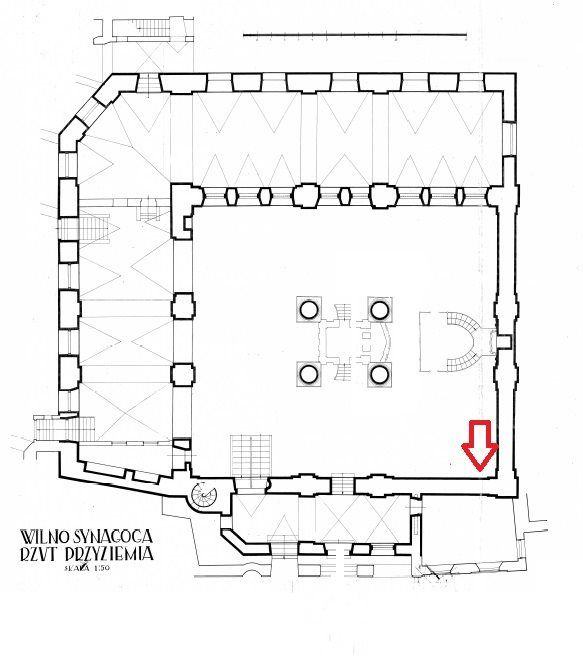
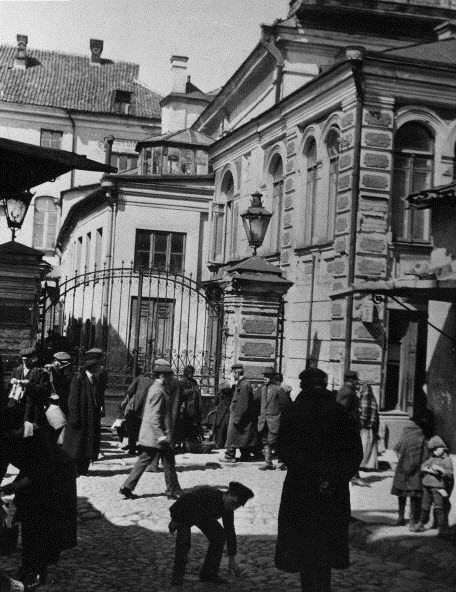
A Nazi Five Reichspfennig Coin
We find coins at the excavation of the Great Synagogue of Vilna every day. Most of the coins belong to the period of the Polish-Lithuanian commonwealth (1544-1795), to Tsarist rule (1795-1918), to the Polish Republic (1920-1939) and to the Soviet Union (1939-1941, 1944-1990). However, the coin we found today inside the Great Synagogue was a German-Nazi coin valued at five Reichspfennig. Though this should be just another coin in an excavation, somehow it was different. Finding a German coin from the time of the Holocaust, in this particular place, still has the power to kick one in the gut.
During the Nazi occupation of Vilnius, the Great Synagogue and the Shulhoyf were included in the short lived Small Ghetto. The two Ghettos of Vilna were formed in early September 1941 after the aktion known as 'the Great Provocation'. Eleven thousand Jews were forced into a crowded area, in four short streets of the old Jewish neighbourhood of the city. Immediately murder of the inhabitants of the Small Ghetto began at the extermination base at Ponar (Paneriai). By the 21st of October 1941 the Small Ghetto was liquidated and the remaining 2,000 Jews were moved to the Large Ghetto across the street. The 9,000 other residents were already dead by this time.
During WWII, the Great Synagogue was looted, burned and partly destroyed by the Nazis, leaving a coin inside the ruins.
Somehow the murder of the inhabitants of the Small Ghetto and destruction of the Great Synagogue is brought home by finding just a simple five Reichspfennig coin, dated to those awful times.
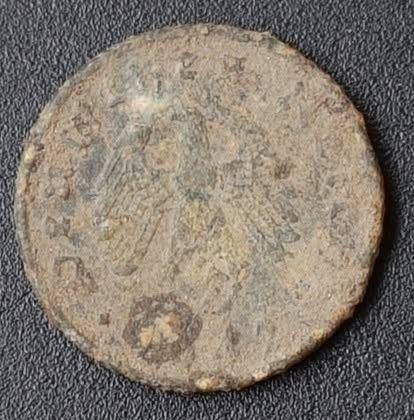

What Colour Was It?
One of the conundrums of working with black-and-white documentation is colour. Looking at the photographs we ask ourselves what colours covered the walls and ceiling of the Great Synagogue. A surprising source is none other than a painting by the great Litvak artist, Marc Chagall. In 1935 Chagall visited Vilna and painted a picture of the interior of the synagogue. Chagall was a surrealist and an expressionist, well known for his use of a fantasia of colour - so can we rely on his colouring of the painting as a correct rendition of the various elements of the synagogue? The painting shows the Bimah and the Ark, with a shield of red and blue set above the doors of the Ark. Luckily the shield survived and can presently be viewed in the Vilna Gaon State Jewish Museum, the colouring identical to that in Chagall's painting.
Chagall's painting also shows the ceiling. Unfortunately this part of the painting is in the background and the colour is not clear, though the ceiling was generally suggested to be sky blue, the colour often used to represent the heavens on many synagogue ceilings. Today we located many pieces of plaster from the ceiling in the excavation. The plaster was, to our surprise, almost royal blue. This hue would certainly have created a lasting impression on the congregants, the colour also representing the transcendental nature of the heavens.
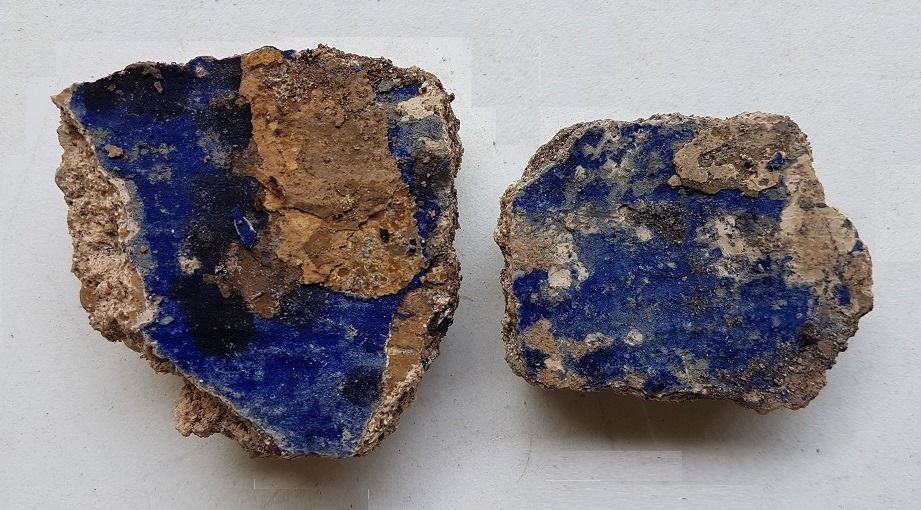
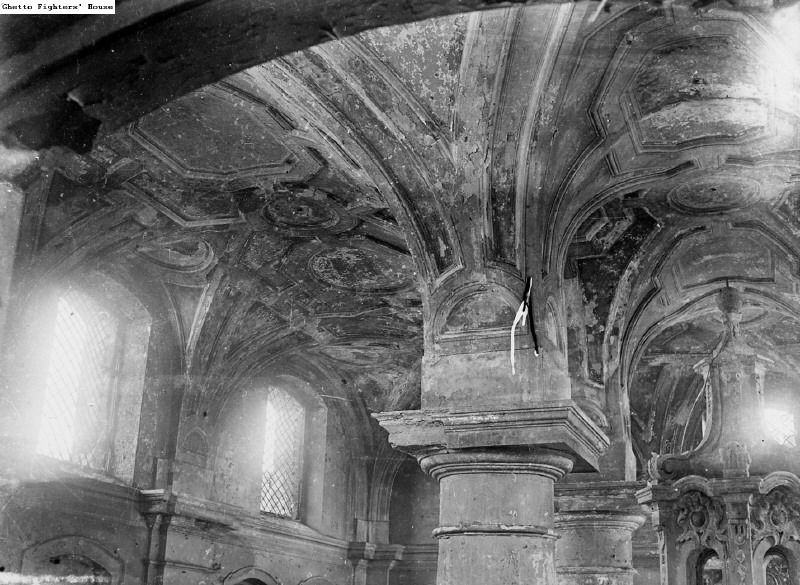
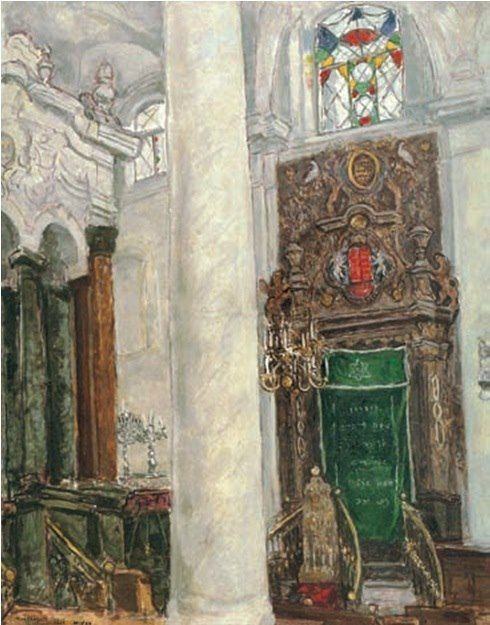
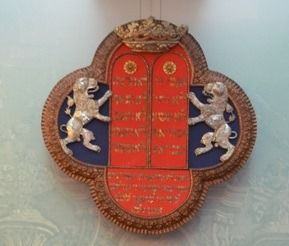
The Gates of the Shulhoyf
The iconic iron gates into the Shulhoyf from Zydu gatve (Jews Street) were topped with spikes. Among the finds today was a spike that most possibly came from the top of the historic gates.
Piece by piece were are recovering more and more of the elements of the Great Synagogue.
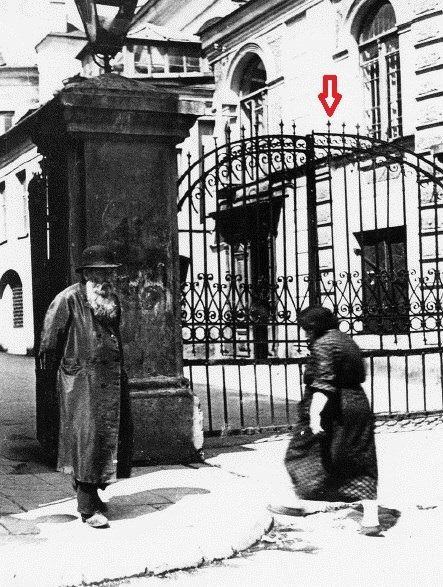
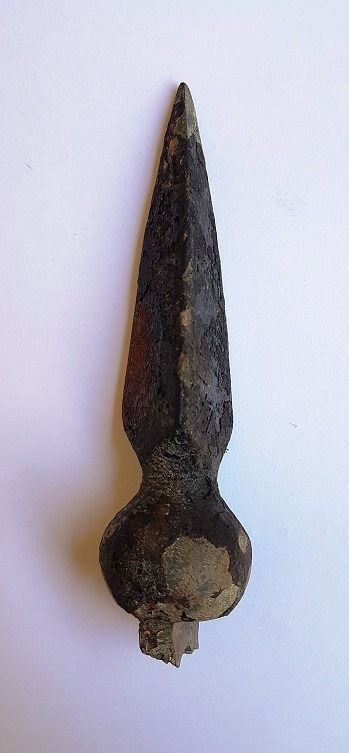
The Arcade at the Synagogue Entrance
A Jew going to the Great Synagogue would have entered the gates of the Shulhoyf, past the Strashun Library and then on the left would have passed two arches of an arcade before the entrance and the staircase down into the synagogue. This part of our excavation this year has exposed a wall and a square pillar, the location of which is marked on the plan. This wall is the wall of the synagogue annex, while the pillar is the base of the arch.
The old picture of the eastern flank of the Great Synagogue, facing out of the Shulhoyf, shows the arched arcade on the left before its destruction, while the colour photograph shows a similar arcade in the historic centre of Vilnius.
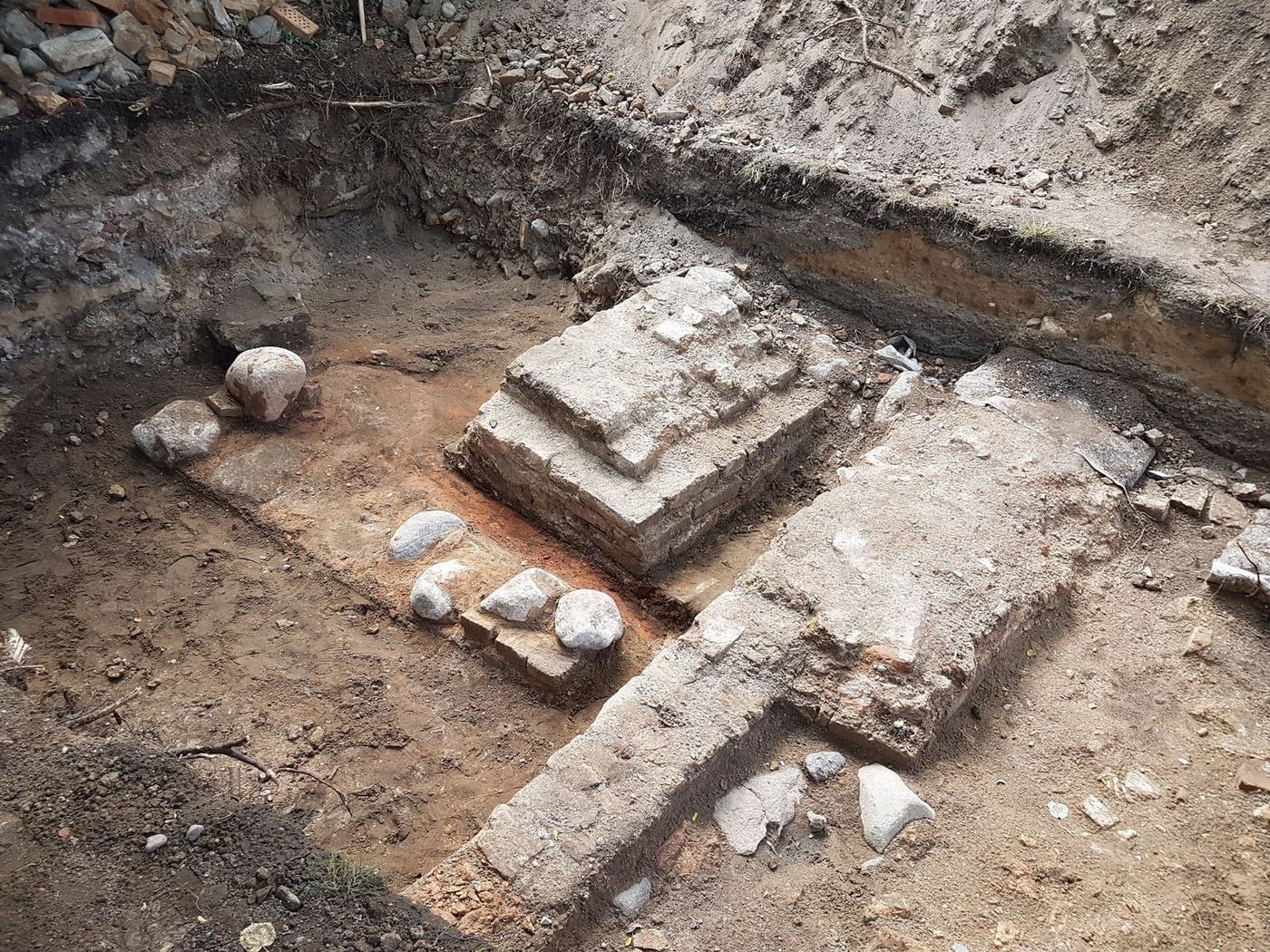
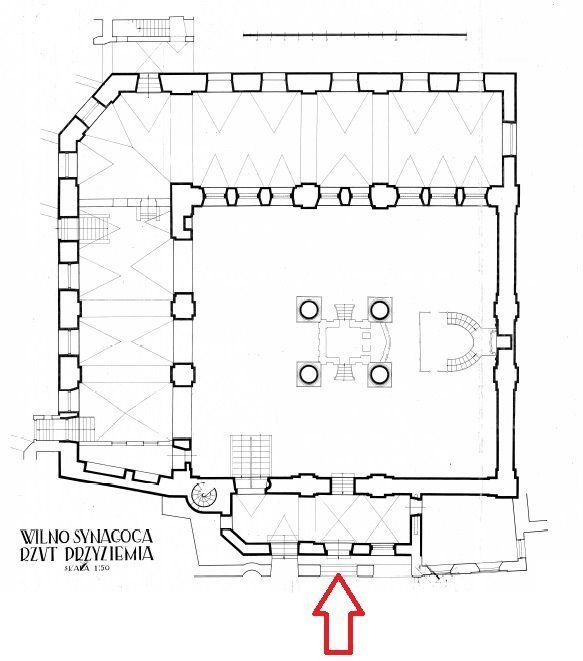
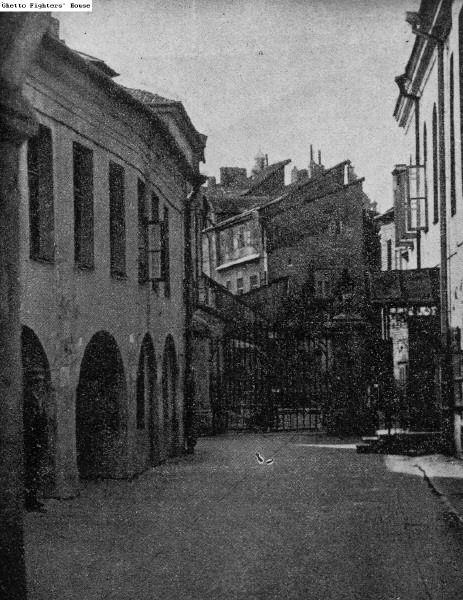
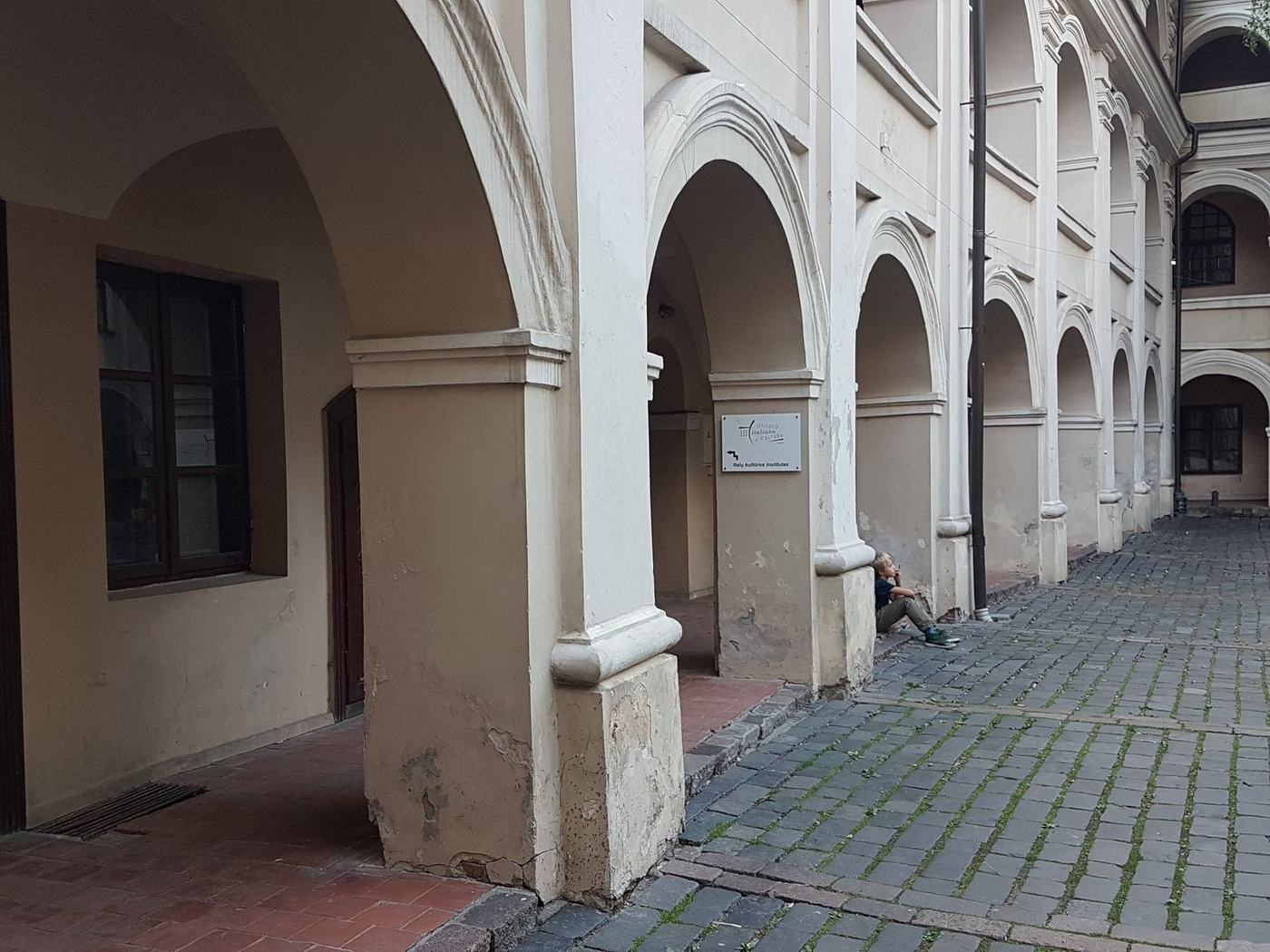
Thanks to Šiauliai – Shavel
Thank you to the pupils of the Šiauliai High School who have helped out at the excavation for the past few days. Their work is very much appreciated and they are a credit to their school and town.
In Yiddish Šiauliai was known as Shavl, a town well know for its leather making and the huge white synagogue (also now unfortunately destroyed), known affectionately as the 'White Swan'.
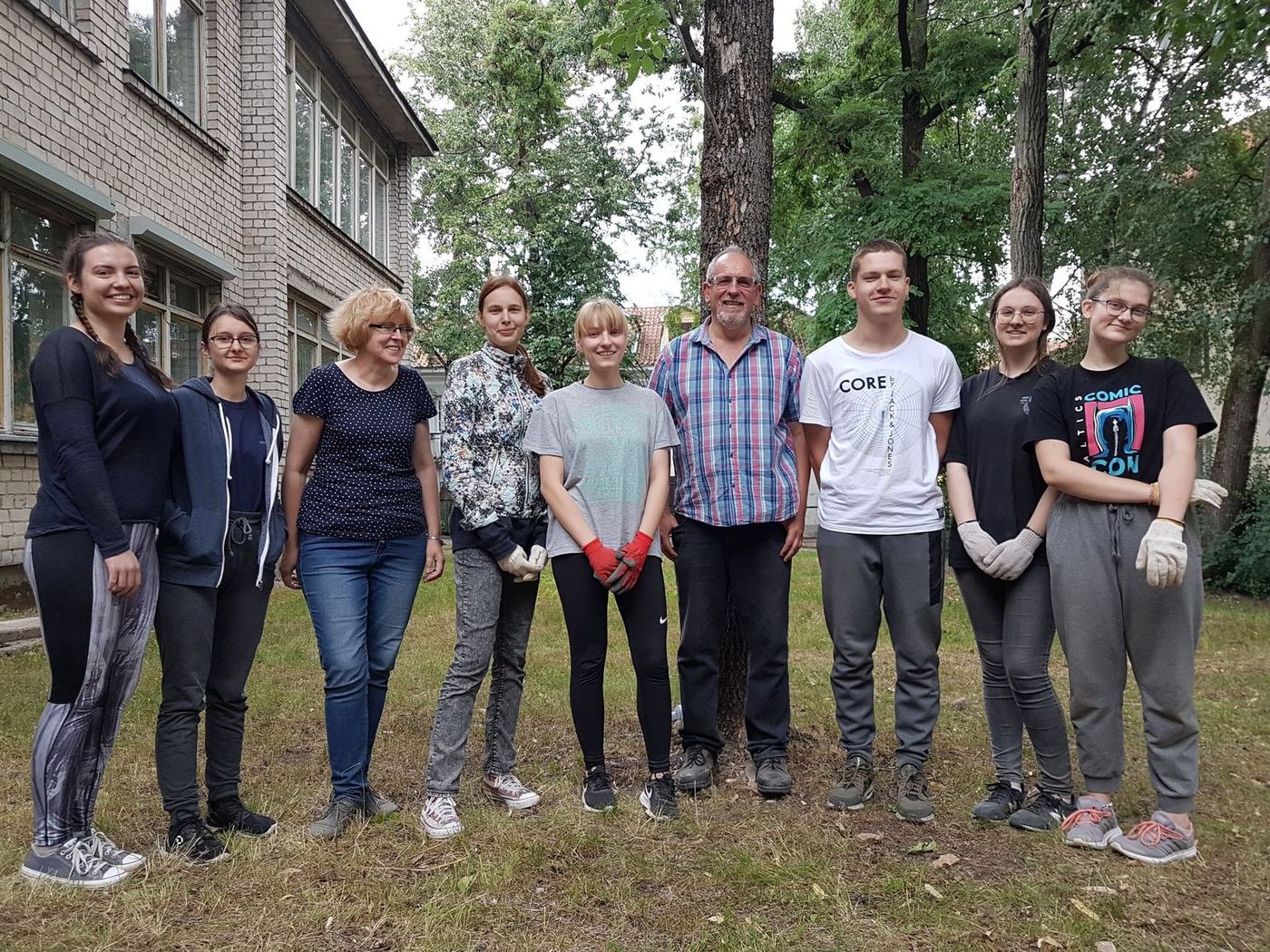

Every Little Bit Counts
Three of our excavators uncovered the top step of the back entrance to the Great Synagogue today. The floor of the synagogue was over 2 metres below street level, so the congregation had to step down into the structure.
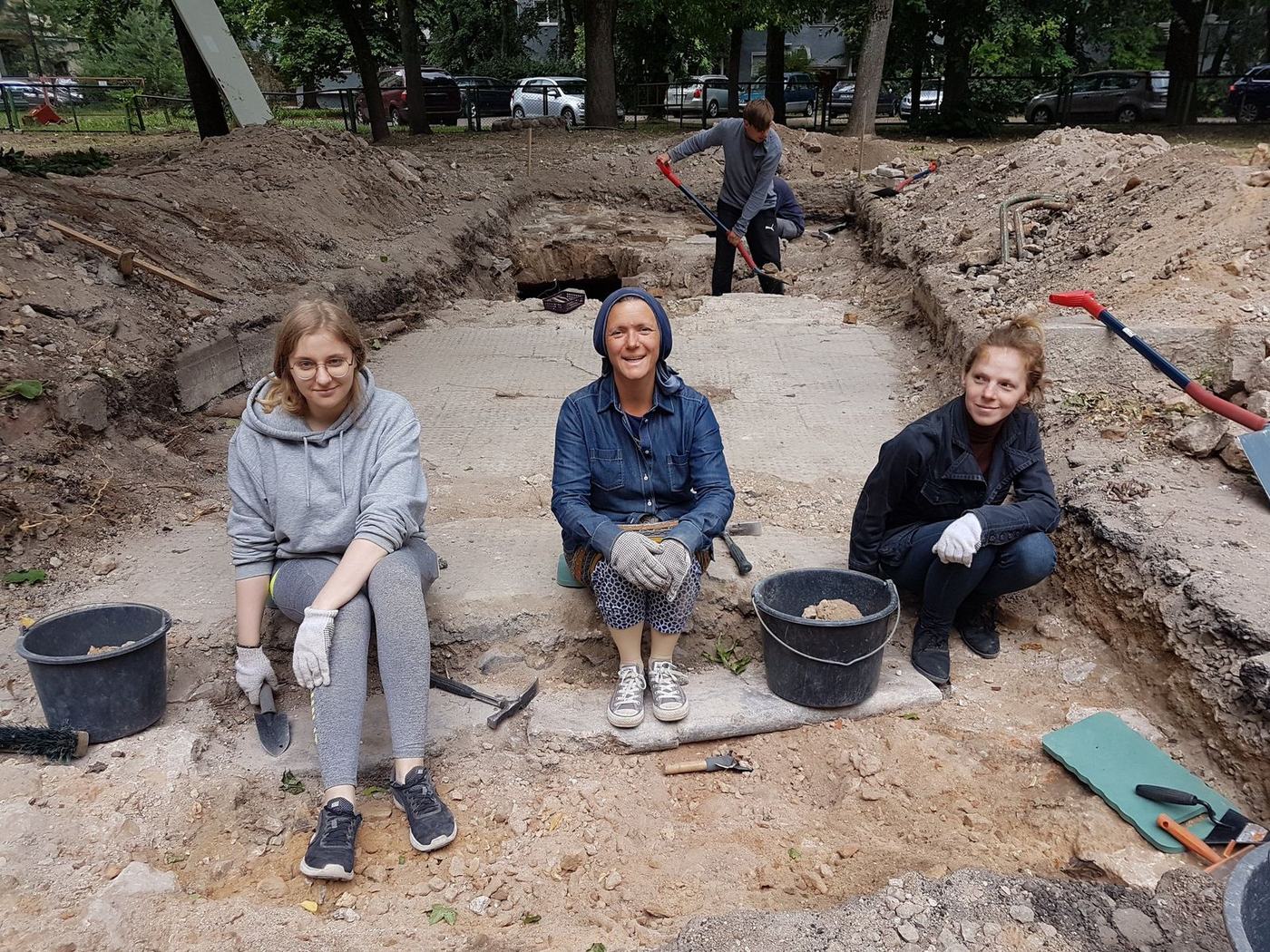
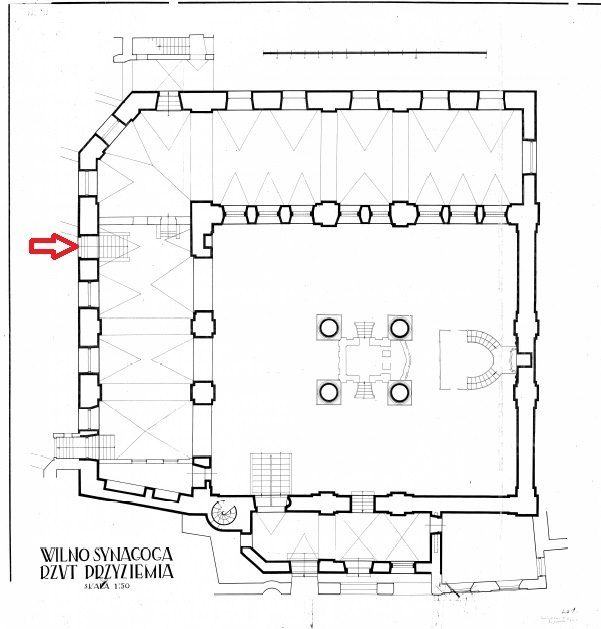
What is it?
One of the enjoyable parts of archaeology is to understand a whole puzzle from one piece.
Today we found this piece of plaster, rounded and outlined with black paint. So what could it be?
In this case we know the answer. This part of the rib of the ceiling vault set on the columns of the Great Synagogue marked with the red arrow in the photograph of the ornate ceiling above the Bimah.
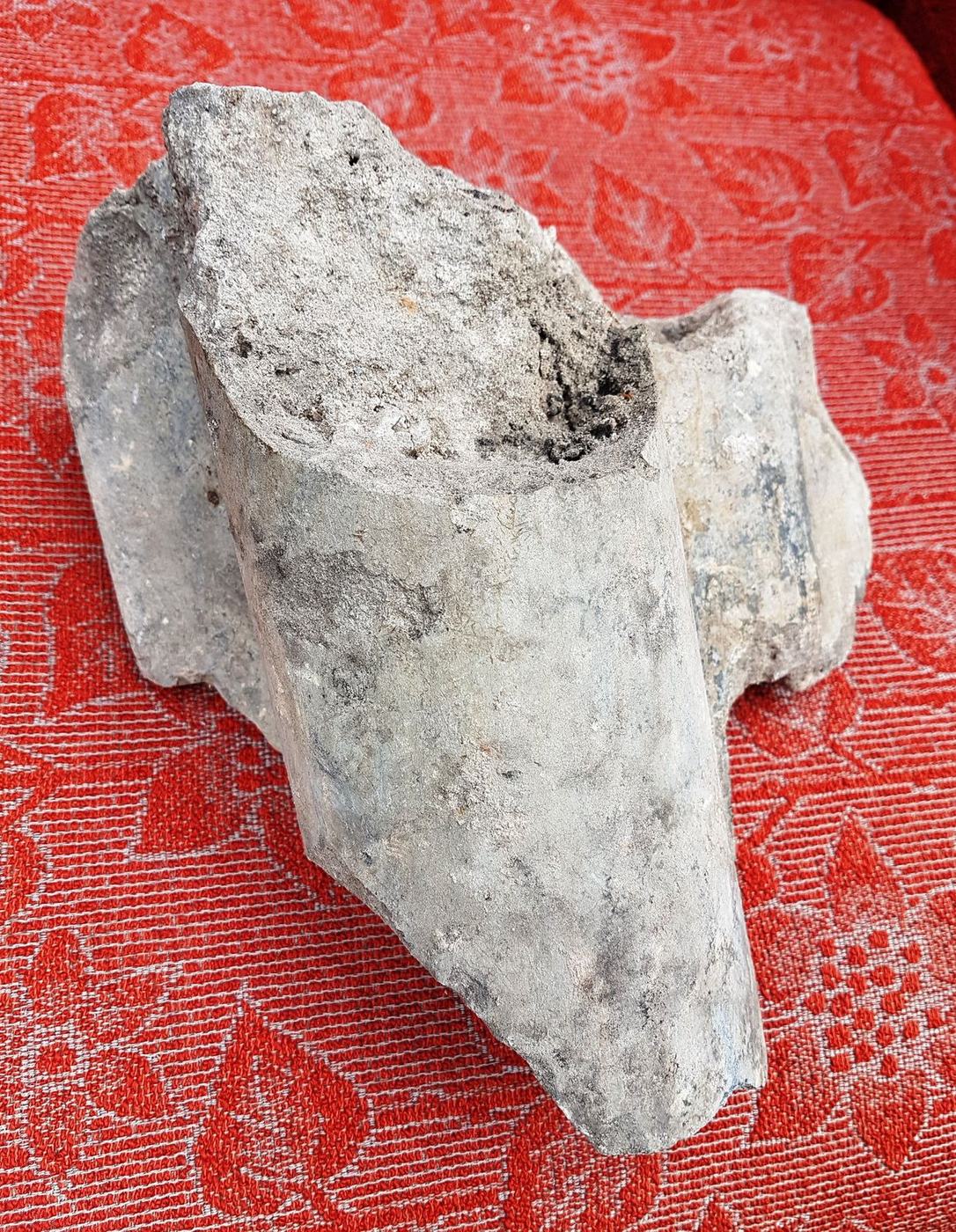
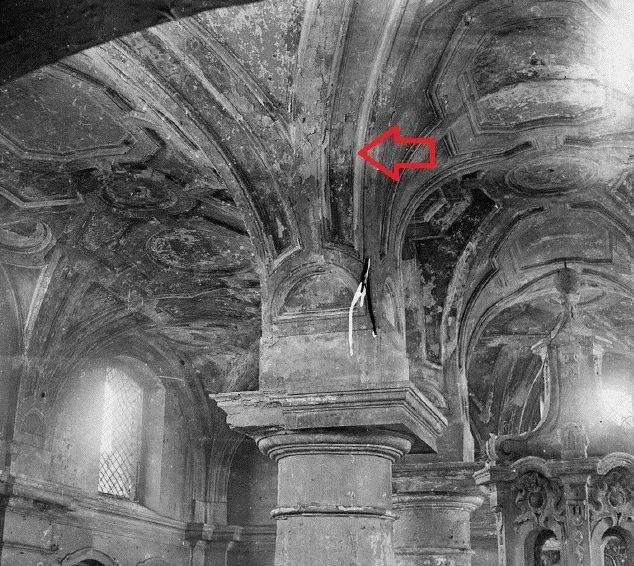
The First Spade of Earth
Opening the 2019 season, staff cut the earth over a vault of the bathhouse we first identified in 2016. Other areas of the excavation this year are aimed at the completion of the excavation of the southern section of the Bimah and the south-west corner of the synagogue.
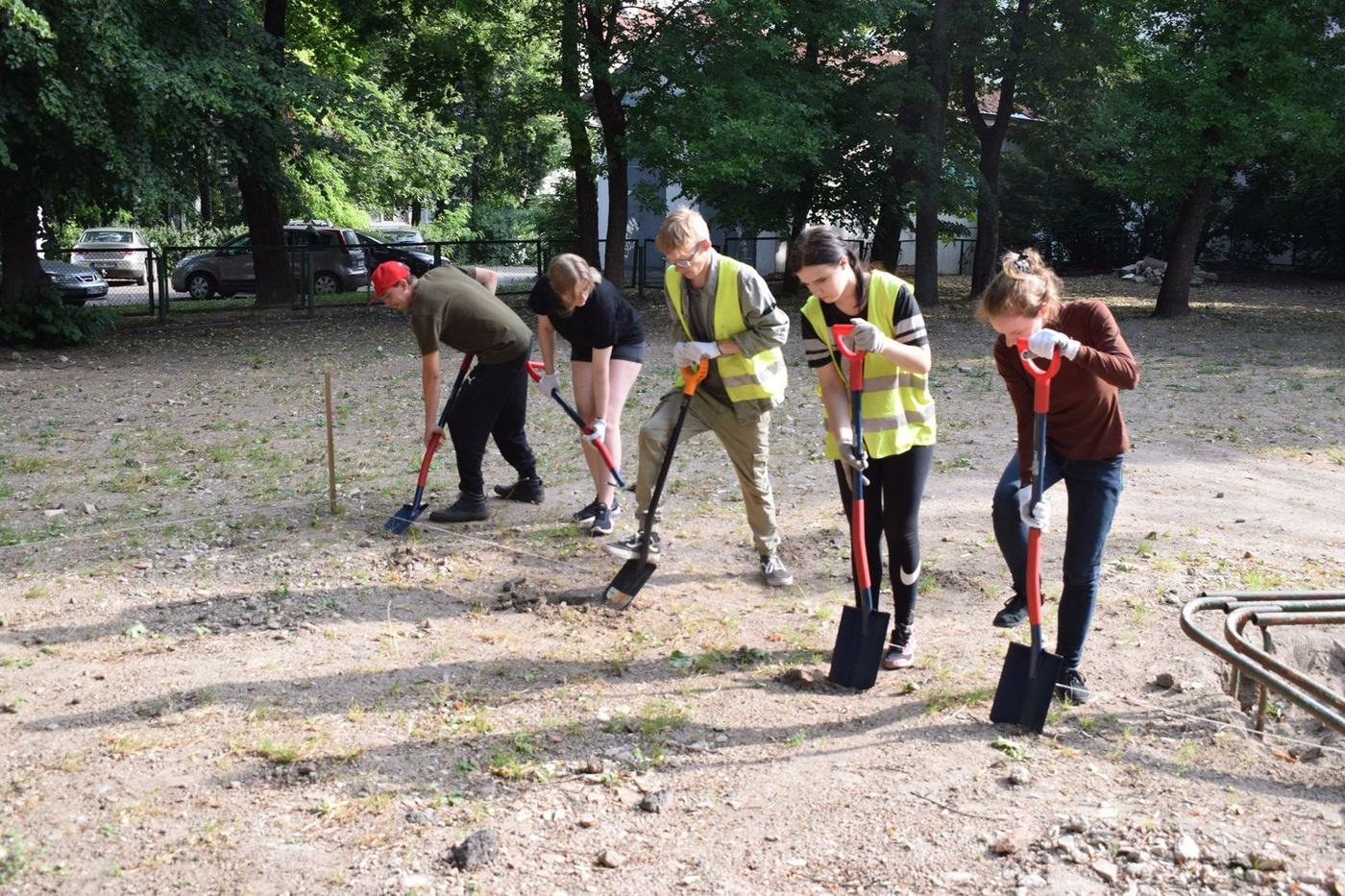
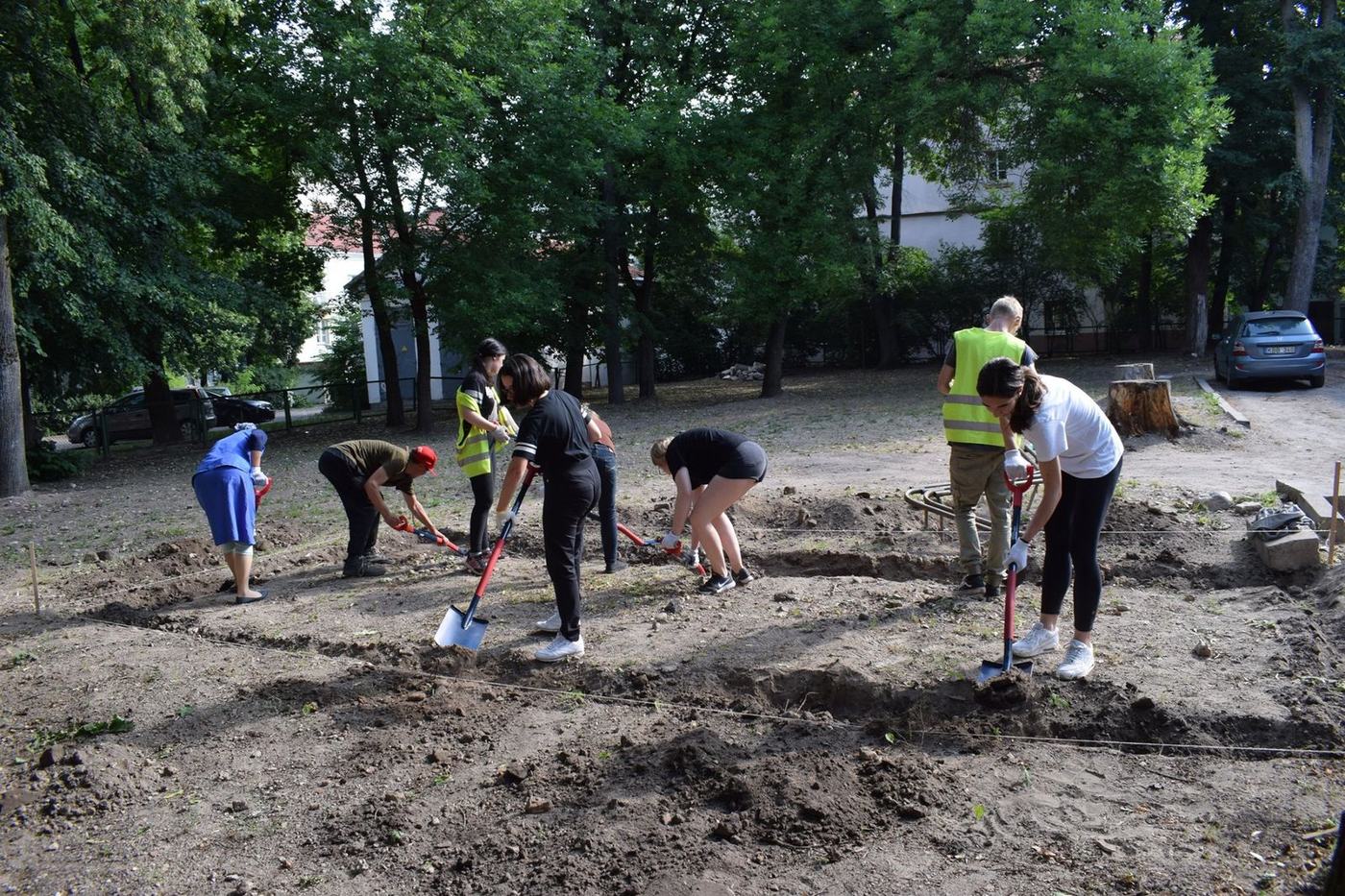
El Malei Rehamim
Cantor Rita Glassman, whose father owned a shop on Stikliu gatve, sings El Malei Rehamim (God full of mercy) on the site of the Bimah of the Great Synagogue.
We're Back!
The 2019 excavation at the site of the Vilna Great Synagogue starts on Monday morning (1st. July). This year we will complete part of the excavation of the bathhouse and miqve building, together with exposure of further sections of the Great Synagogue itself.
If you pass by, from the 1st. to 19th July, you are welcome to visit.
Volunteers can contact us by messaging here or ringing +370-62307633 or +972-524284390.
Updates on the excavation will be posted throughout.
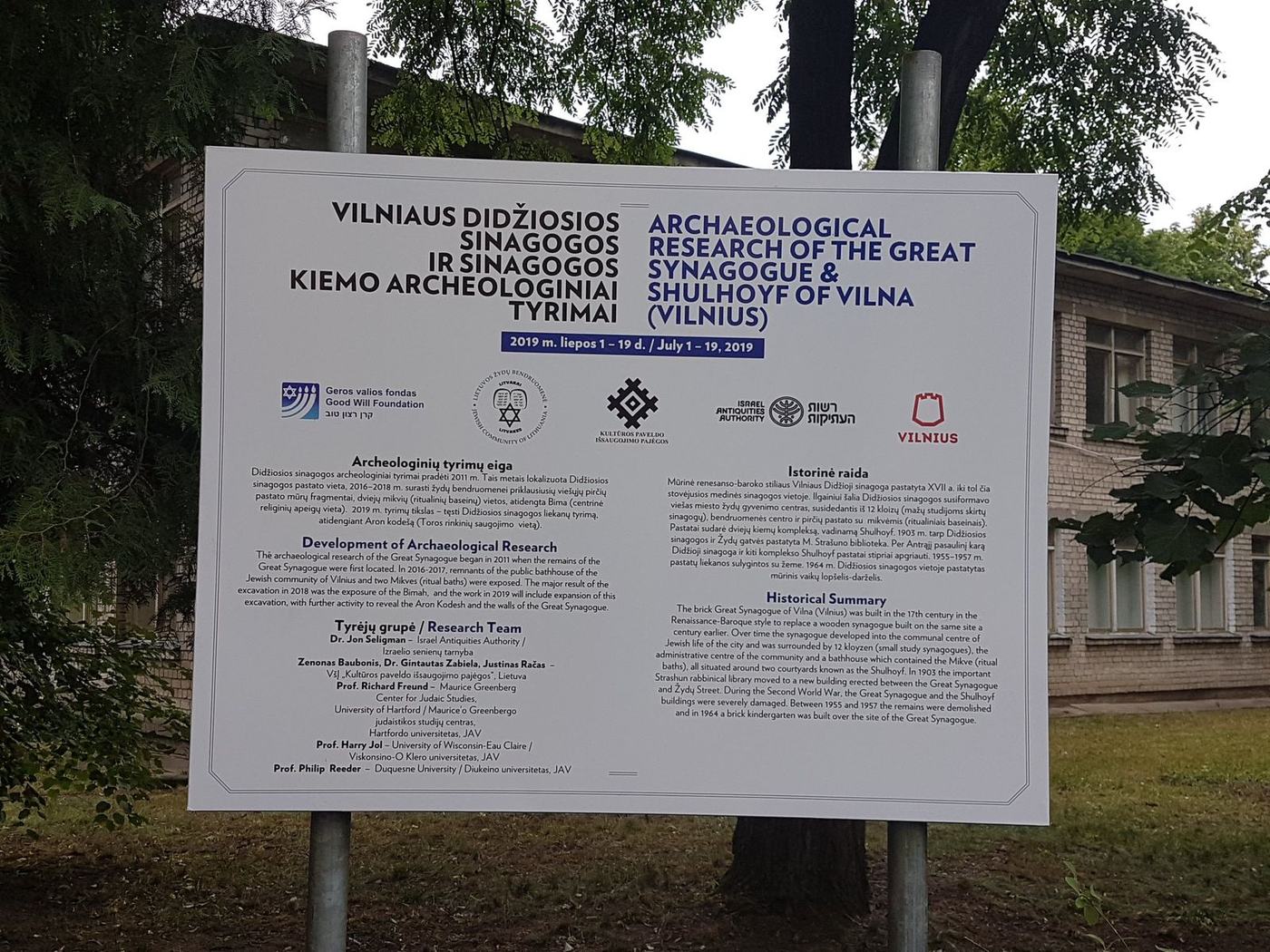
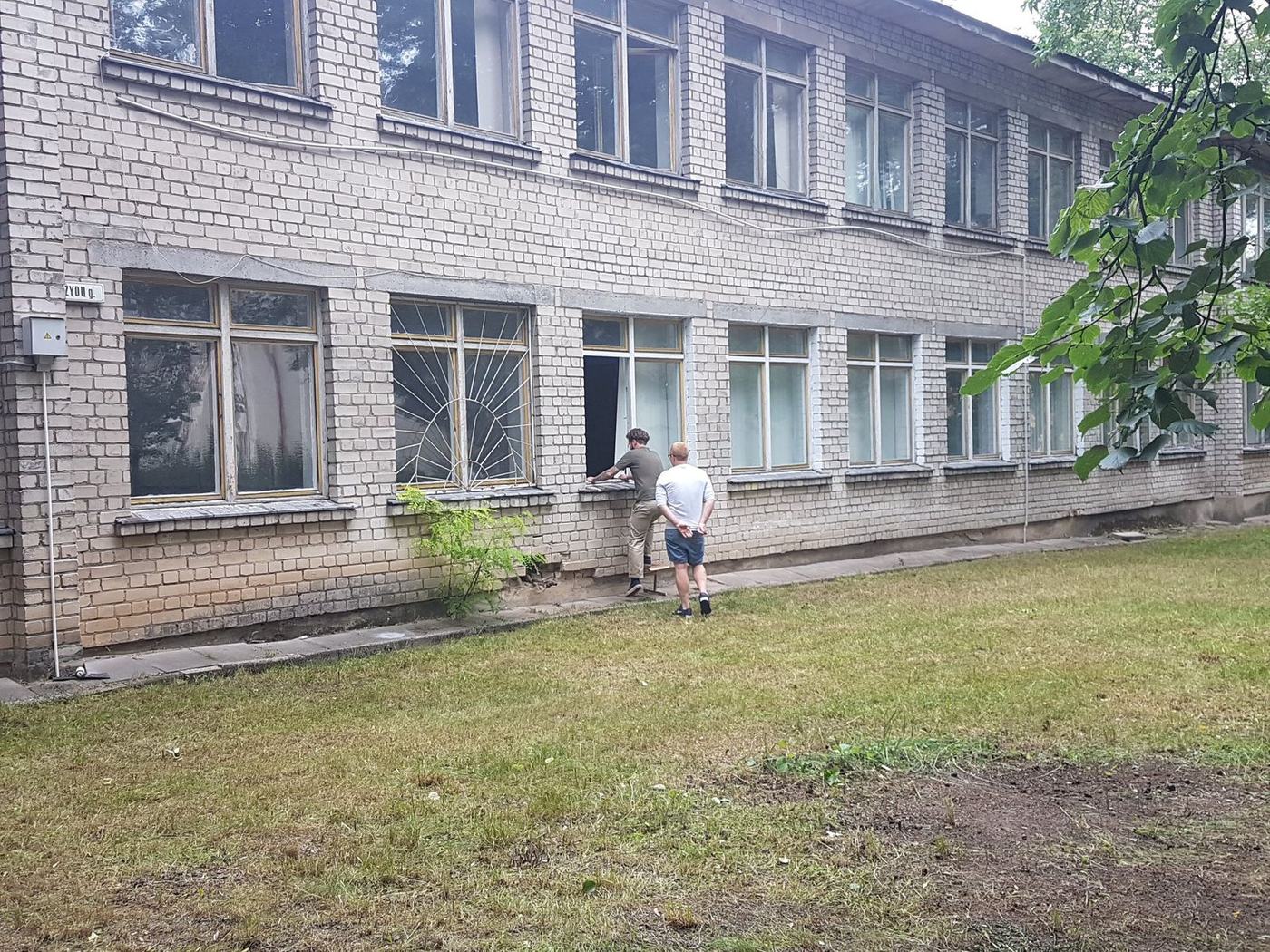
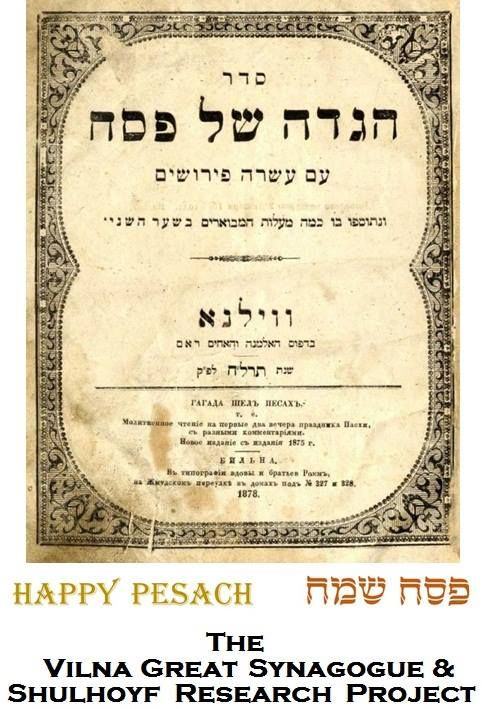
2018 (21 stories)

Thanks to All the Staff
Thank you everybody for your work, your participation, your interest and your enthusiasm. The season was a great success and we achieved results beyond our expectations, which of course gives us an appetite for more.
A special thank you to this season's archaeological requisition, Justinas Račas. It has been a honour to work with Justinas and his professionalism, even at times when things got a little crazy, continues our fruitful collaboration with his colleagues during previous seasons.
Jon Seligman
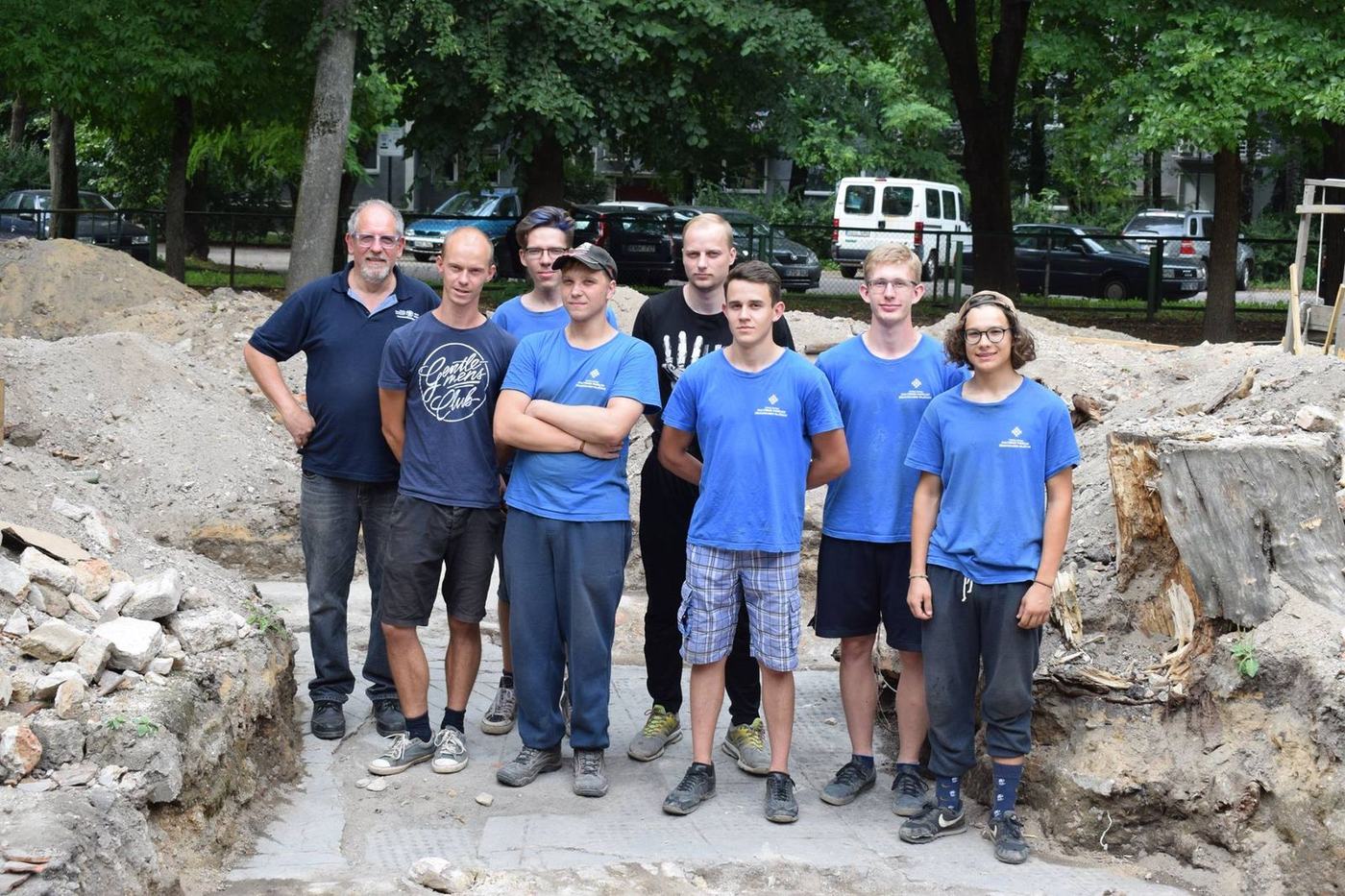
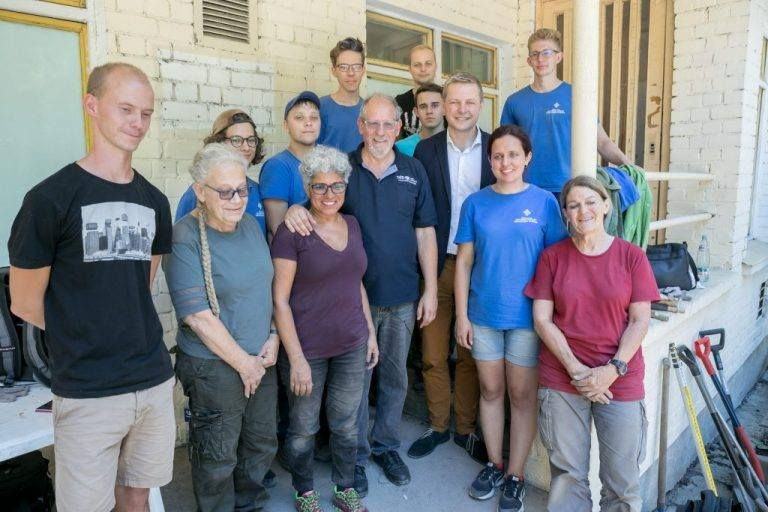
The Discovery of the Bimah is this Year's Excavation Highlight
During the 18th century the most influential benefactor of the Jews of Vilnius was Yehudah ben Eliezer, known by the acronym YESOD (יסו"ד) (Yehudah Safra ve-Dayana, i.e. Yehudah, writer and judge, the Hebrew word meaning ‘foundation’. The YESOD provided for the poor, for religious students and also built a Kloyz (study synagogue) inside the complex of the Shulhoyf.
After the fire of 1748, the YESOD provided funds for the construction of a new Bimah and parts of the Aron Kodesh. The Bimah was a two tier baroque structure built of four Corinthian and eight Tuscan columns, decorated with lions facing the Aron Kodesh. The Bimah was entered from both sides by staircases.
The Bimah is located beneath the floor of the school built over the destroyed synagogue. The remains of the Bimah exist to the height of a metre and show the great potential for future excavation.
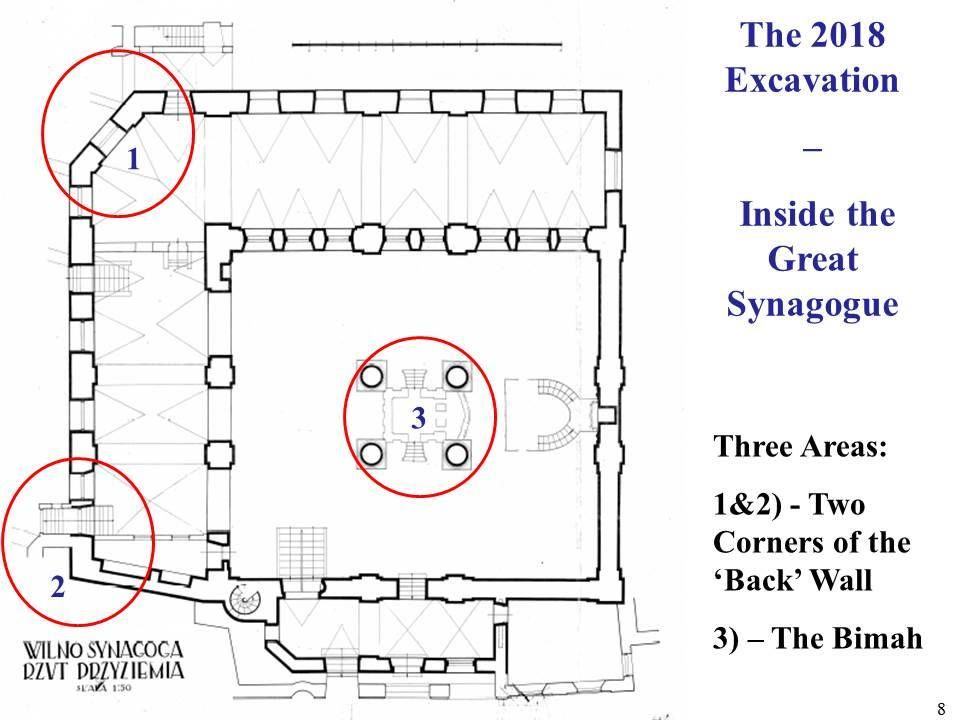
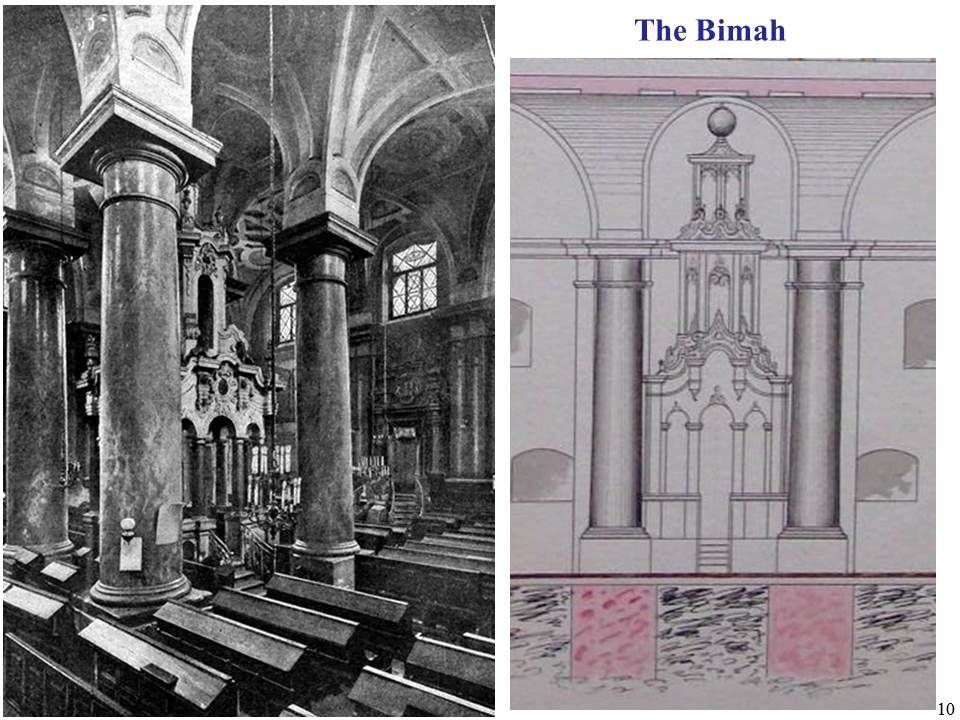
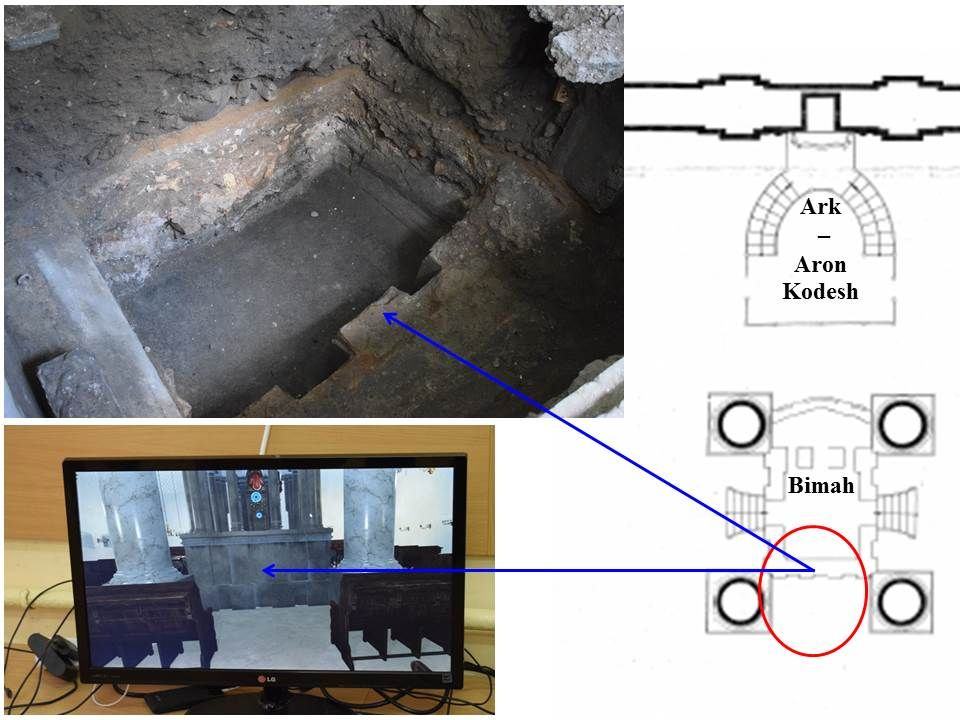
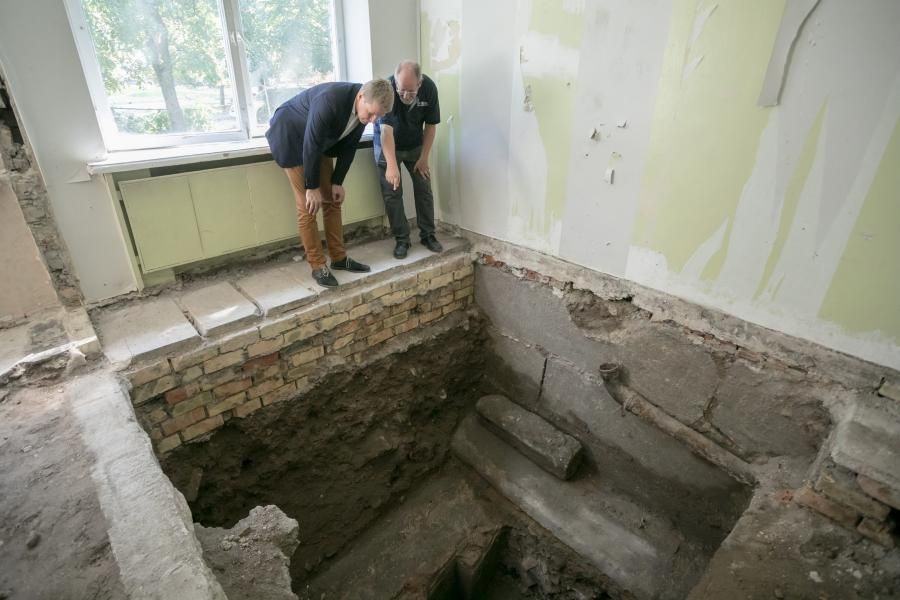
Atrasta centrinė Vilniaus didžiosios sinagogos dalis - bima
Izraelio kultūros vertybių tarnyba, Kultūros paveldo išsaugojimo pajėgos, VšĮ Geros valios fondas ir Lietuvos žydų (litvakų) bendruomenė praneša apie puikius trečiojo sezono Vilniaus didžiosios sinagogos teritorijos archeologinių tyrimų rezultatus.
Šių metų archeloginiai tyrimai, vedami Dr. Jon Seligman (Izraelio kultūros vertybių tarnybos) ir Justino Račo (Kultūros paveldo išsaugojimo pajėgos), susitelkė ties išorinių sinagogos mikvos (pirties) sienų nustatymu ir Didžiosios sinagogos galinės sienos atvėrimu.
2018 m. liepos 27 d. (penktadienį) 11 val. kviečiame žiniasklaidos atstovus į Didžiosios sinagogos archeologinių tyrimų vietą (Vokiečių g. 13 A) iš arčiau susipažinti su unikalaus didžiojo judėjų religinio centro paveldo išlikimą liudijančiais radiniais.
Tarptautinės izraeliečių, amerikiečių ir lietuvių archeologų grupės atliktų tyrimų metu buvo ne tik atrasta didžiulė išorinė galinė Didžiosios sinagogos siena, dalis Sinagogos grindų, bet taip pat dalis bimos. Bima – centrinė sinagogos dalis, pakyla, nuo kurios paprastai rabinas skaito Torą ir veda pamaldas – buvo atrasta tiesiai po buvusiu darželio pastatu, pastatytu 1952 m.
Bima sukonstruota 18 a. ir padovanota Sinagogai garsaus žydų mecenato, kuris buvo žinomas Yesodo vardu. Sudėtingą dvipakopę barokinę bimą puošė keturios toskaniško ir aštuonios korintietiškos stiliaus kolonos. Šių kolonų dalys taip pat buvo atrastos tyrimų metu. Išlikusi Vilniaus didžiosios sinagogos bima, nuo kurios šimtmečiais buvo skaitoma Tora Vilniaus žydų religinės bendruomenės nariams iki kol sinagogą padegė naciai, o vėliau sunaikino sovietai, yra istorinės reikšmės atradimas.
Taip pat pirmą kartą buvo atvertos didelės sinagogos pirties ir spalvingomis plytelėmis dekoruotos vyrų mikvos (ritualinės vonios) dalys.
Šie atradimai liudija didžiulį tolimesnių archeloginių turimų potencialą – tikėtina, kad išliko ir daugiau unikalių Didžiosios sinagogos fragmentų.
Darbai atlikti padedant Zenonui Bauboniui (Kultūros paveldo išsaugojimo pajėgos, Lietuva), prof. Ričardui Freundui (Hatfordo universitetas, Konektikuto valstija, JAV); prof. Harry Jol (Viskonsino universitetas, Eau Claire, JAV) ir prof. Philip Reeder (Duquesne universitetas, Pitsburgo valstija, JAV).
Kontaktai pasiteiravimui:
Dr. Jon Seligman - Izraelio kultūros vertybių tarnyba, jon@israntique.org.il
Zenonas Baubonis and Justinas Račas - Kultūros paveldo išsaugojimo pajėgos, Vilnius, Lietuva, z.baubonis@gmail.com
+37067240942, Lietuvos žydų (litvakų) bendruomenė
The Bimah of the Great Synagogue of Vilna (Vilnius) is Rediscovered
TODAY'S PRESS RELEASE
(Photographs to follow)
The Israel Antiquities Authority, Kultūros paveldo Išsaugojimo pajėgos, the Good Will Foundation, and the Jewish Community of Lithuania are pleased to announce the results of the third season of excavation at the Great Synagogue of Vilna (Vilnius) & the Shulhoyf.
This year's excavation, led by Dr. Jon Seligman of the Israel Antiquities Authority and Justinas Račas.of the Kultūros paveldo Išsaugojimo pajėgos, focused on defining the outer walls of the bathhouse first exposed last year and finding the back wall of the Great Synagogue. The work, conducted by a mixed team of Lithuanians, Israelis and Americans, succeeded not only to find the massive external wall of the Great Synagogue, part of its floor and but also a part of the Bimah, excavated below the floors of the school that was built over the Great Synagogue in the 1950s. The Bimah, constructed in the 18th century, was donated by the noted Jewish benefactor known by his acronym as the Yesod. The ornate Bimah, was a two tiered Baroque structure with four Corinthian and eight Tuscan columns. Pieces of these columns were found during the excavation.
Without question, the discovery of the Bimah is an exciting development, as it was from this platform that the Torah was read to the Jewish community of Vilnius for three centuries before the building was burnt by the Nazis and later demolished by the Soviets.
In addition large sections of the walls of the bathhouse, and the men's miqve (ritual bath) decorated with coloured tiles, was exposed for the first time.
The discovery of the walls of the Bimah and the miqve shows the further potential for excavation at the site and the exciting possibility to present the remains of the Great Synagogue of Vilna (Vilnius) & the Shulhoyf in the future.
The work was aided by Zenonas Baubonis (Kultūros paveldo išsaugojimo pajėgos); Prof. Richard Freund (University of Hartford); Prof. Harry Jol (University of Wisconsin, Eau Claire) and Prof. Philip Reeder (Duquesne University).
Dr. Jon Seligman - Israel Antiquities Authority, Jerusalem, ISRAEL, jon@israntique.org.il
When is a Back Wall not a Back Wall
Our excavation has exposed a 1.5 meter thick section of what we call the back wall of the synagogue. The wall (marked on the plan in red), excavated from just below ground level, survives to the height of almost two metres, and was constructed with hand made bricks in the 17-18th centuries.
The back wall of the Great Synagogue of Vilna would for most synagogues be the front wall, that is congregants usually enter a synagogue through the facade and walk right through the structure to the Aron Kodesh at the far end, usually on the back wall of the synagogue. In Vilna the Aron Kodesh faced the street, making it the facade and entrance was from the side. So where then should we place the back wall?
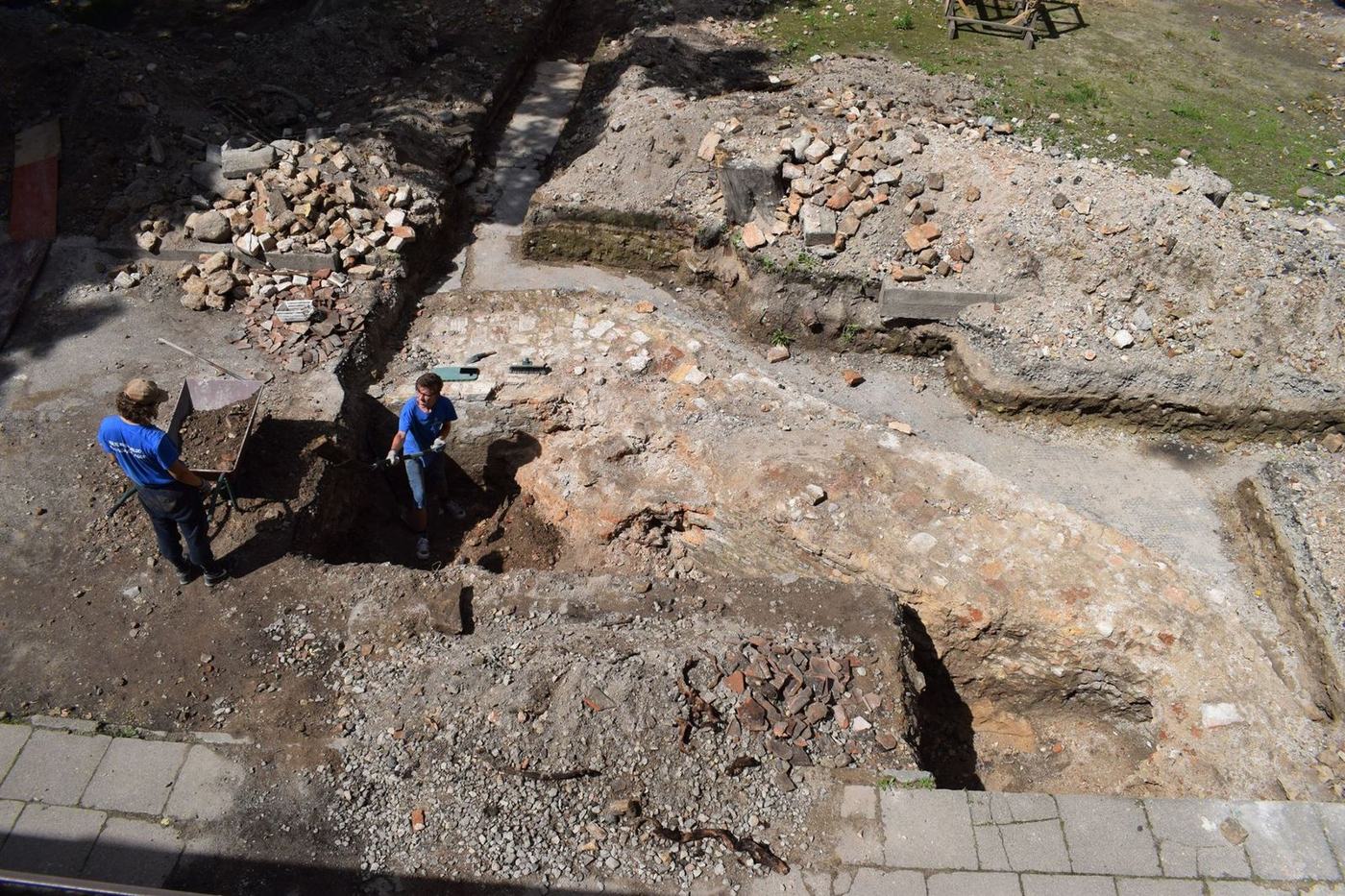
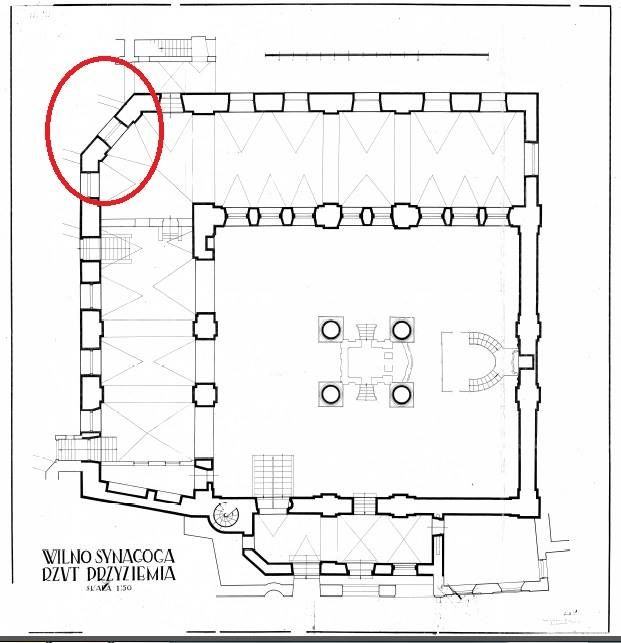
Tisha B'Av in Vilna
Tisha B'Av, the ninth day of the month of Av, which begins this evening, is a memorial day for the loss of the first and second temples in Jerusalem. On a day that Jews recite kinnot, that is lamentations for those events, we can also turn our eyes the the destruction of the temple of Jerusalem of the North, the Great Synagogue of Vilna. Just as the destruction of the temples marked the forfeiture of Jewish independence, the loss of the Great Synagogue of Vilna was symbolically similarly calamitous.
Vilna, once the home to vibrant Jewish life, was home to some of the most important religious and secular scholarship in the Jewish world, the home to Yiddish language and culture, the home to political life ranging from the Bund to Zionism and so on.
After the regaining of Jewish self-determination in Israel, today, on Tisha B'Av, we can direct some of our lamentations to the loss of the Litvak world and culture, symbolised by the loss of its temple, the Great Synagogue of Vilna.
The picture shows the Great Synagogue of Vilna, the temple of Jerusalem of the North, after been gutted during the Holocaust and before its demolition in 1955-6. The excavation of the Great Synagogue of Vilna is part of the process to assuage some of that loss.
The Vilna Great Synagogue and Shulhoyf Research Project - https://www.facebook.com/Vilna.Synagogue.Project/
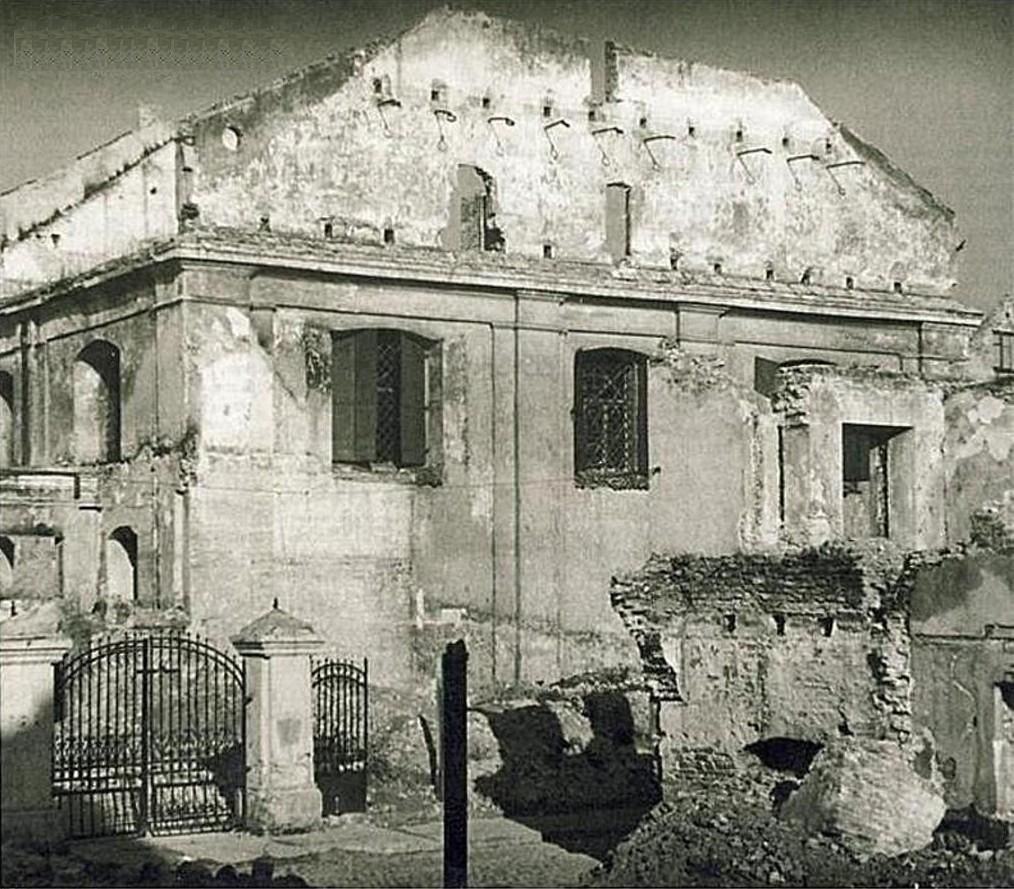
Beautiful Stove Tiles from the Bathhouse of the Vilna Great Synagogue
While we enjoy the Lithuanian summer sun, interspersed by showers, we need to remember that the winters in Vilnius are very cold. Every room of the Old City, including the rooms of the Shulhoyf, were heated by stoves covered with colourful moulded tiles decorated with flowers, lions, eagles, heraldic symbols and geometric designs. The same tiles are an important tool used by archaeologists to date the sites of late-medieval Lithuania. Our tiles date from the 16th to 18th centuries.
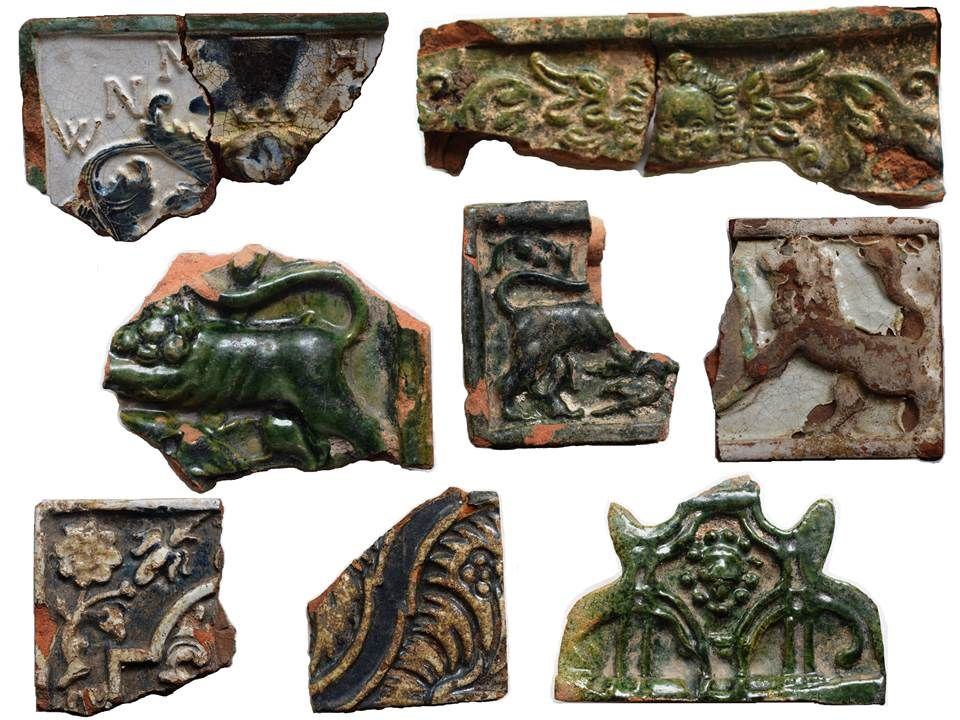
Public Outreach for the Future
Though Vilnius was once home to a thriving Jewish population forming up to 47% of its citizens, today it is mostly populated by Lithuanians who are now the guardians of the city's amazing heritage. To make sure that the public understands the physical and symbolic importance of the Great Synagogue of Vilna and Shulhoyf to the history and heritage of Vilnius, an important aspect of our work is public outreach. Today we hosted the first of four tours to the site during our excavation.
The tour is aimed at the neighbours living in the surrounding houses and we were greatly encouraged by the reactions to the work. Many noted the significance they gave to the exposure of the Great Synagogue and how they saw the need to reintroduce the monument to the city as a symbol of its history and its future.
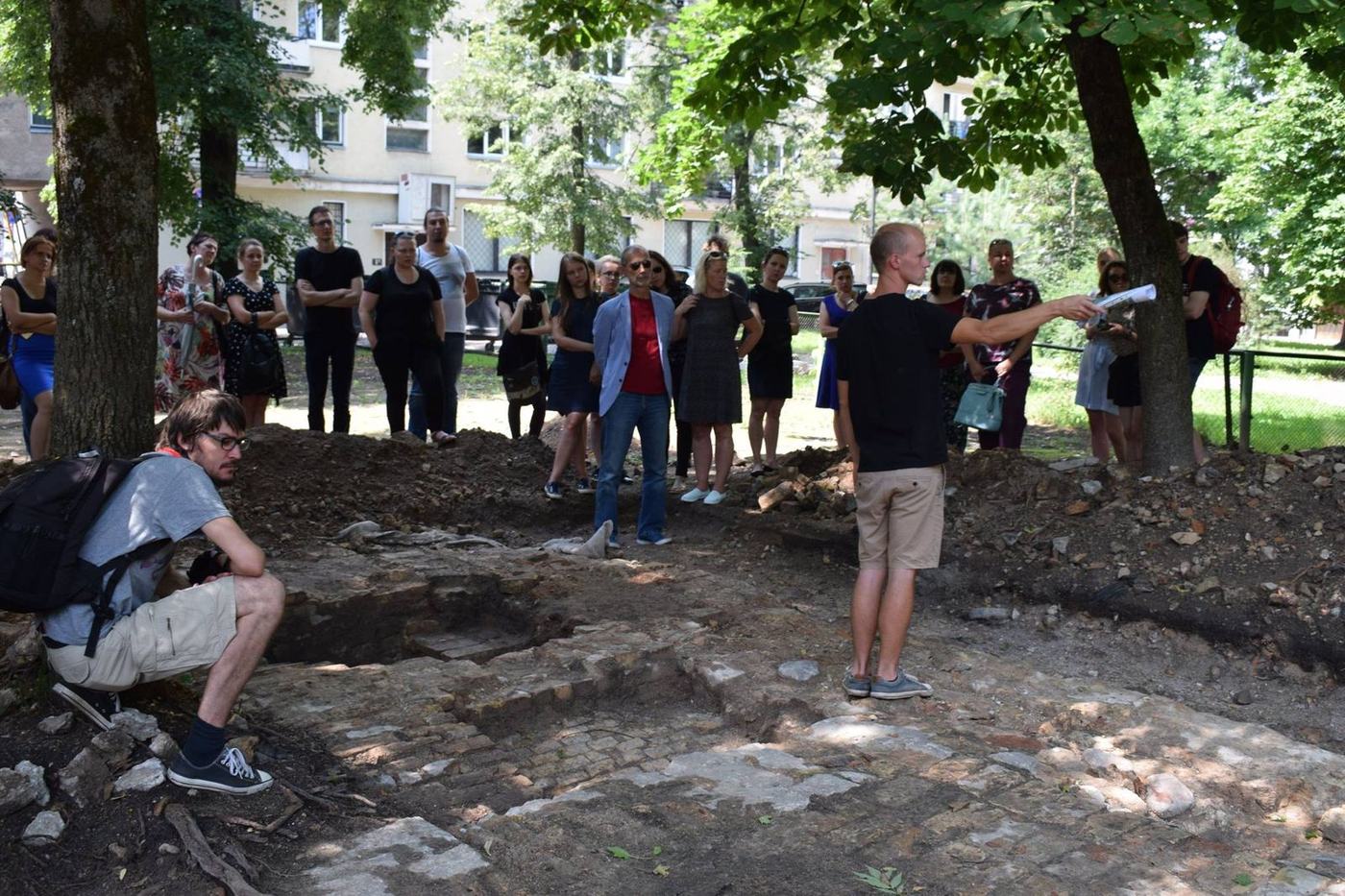
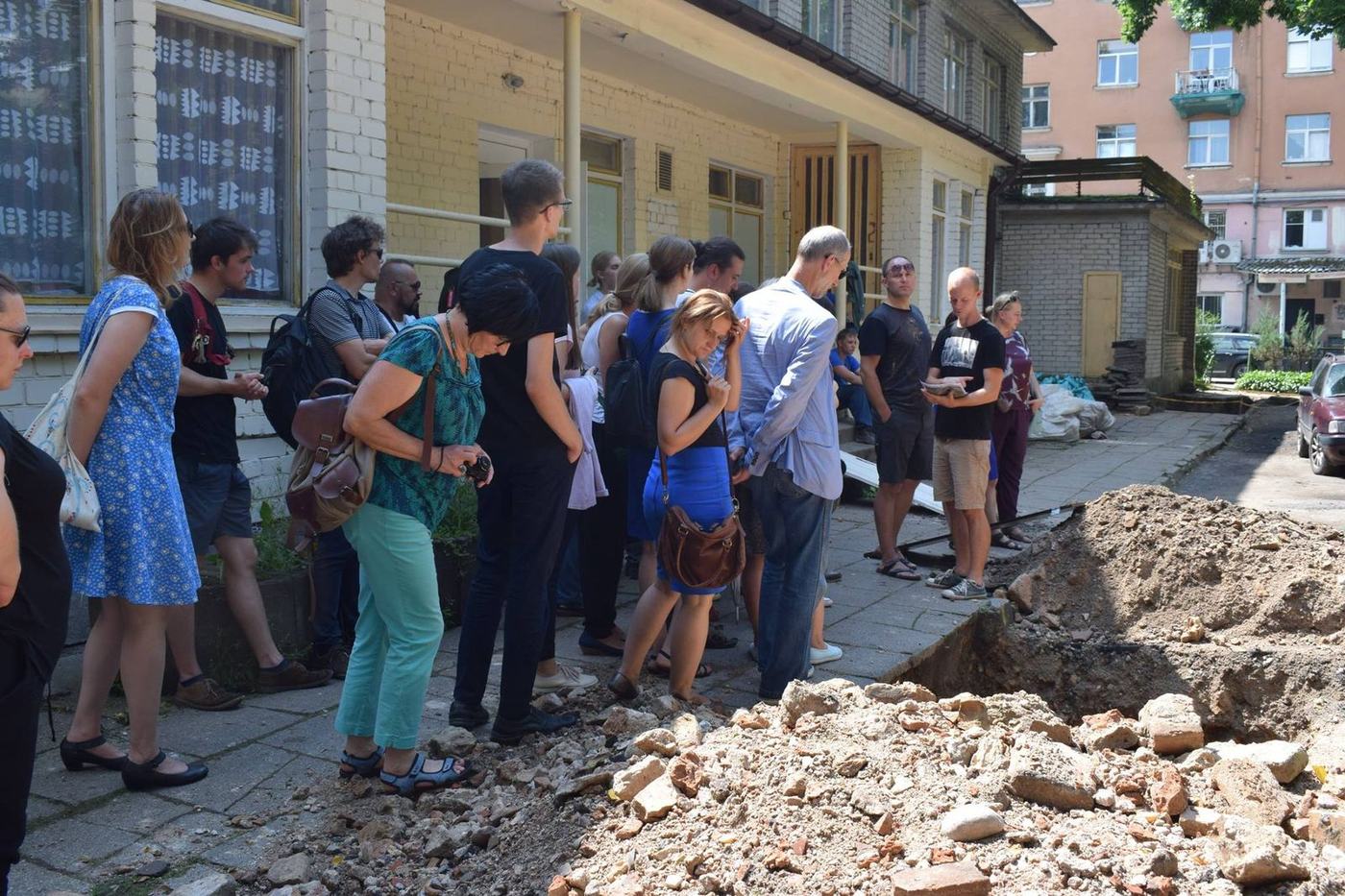
What lies below the bathhouse?
As we work on the bathhouse we slowly realise that the floor is set above underground cellars. We originally found a single cellar in our excavation in 2016, but now it is becoming clear that this was one of a series of parallel cellars that may well cover the whole area of the bathhouse. Were these cellars strictly structural, to support the foundation of the building, or were these a functional part of the bathhouse. As we have yet to get into one of these cellars, we will have to wait.
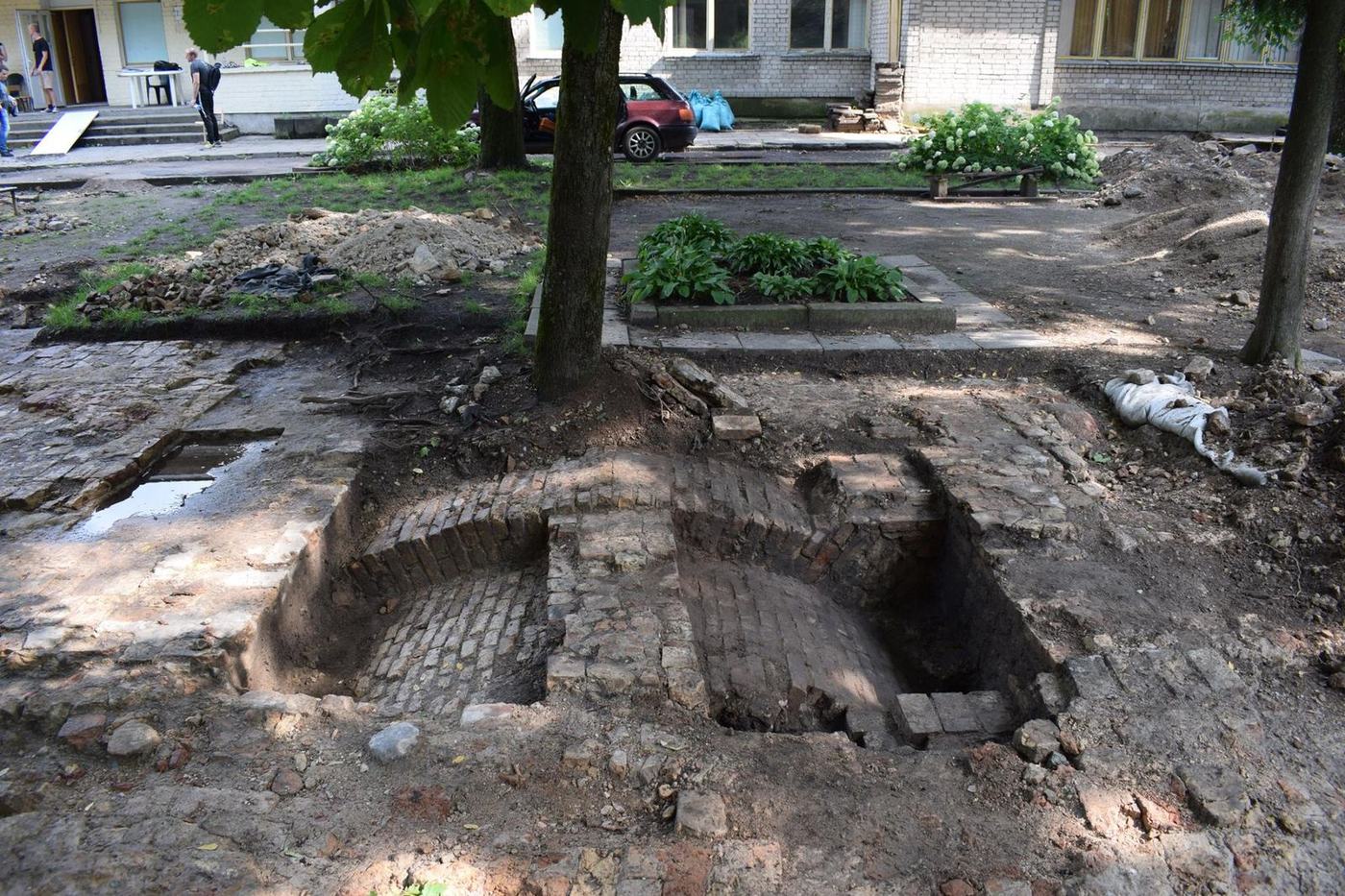
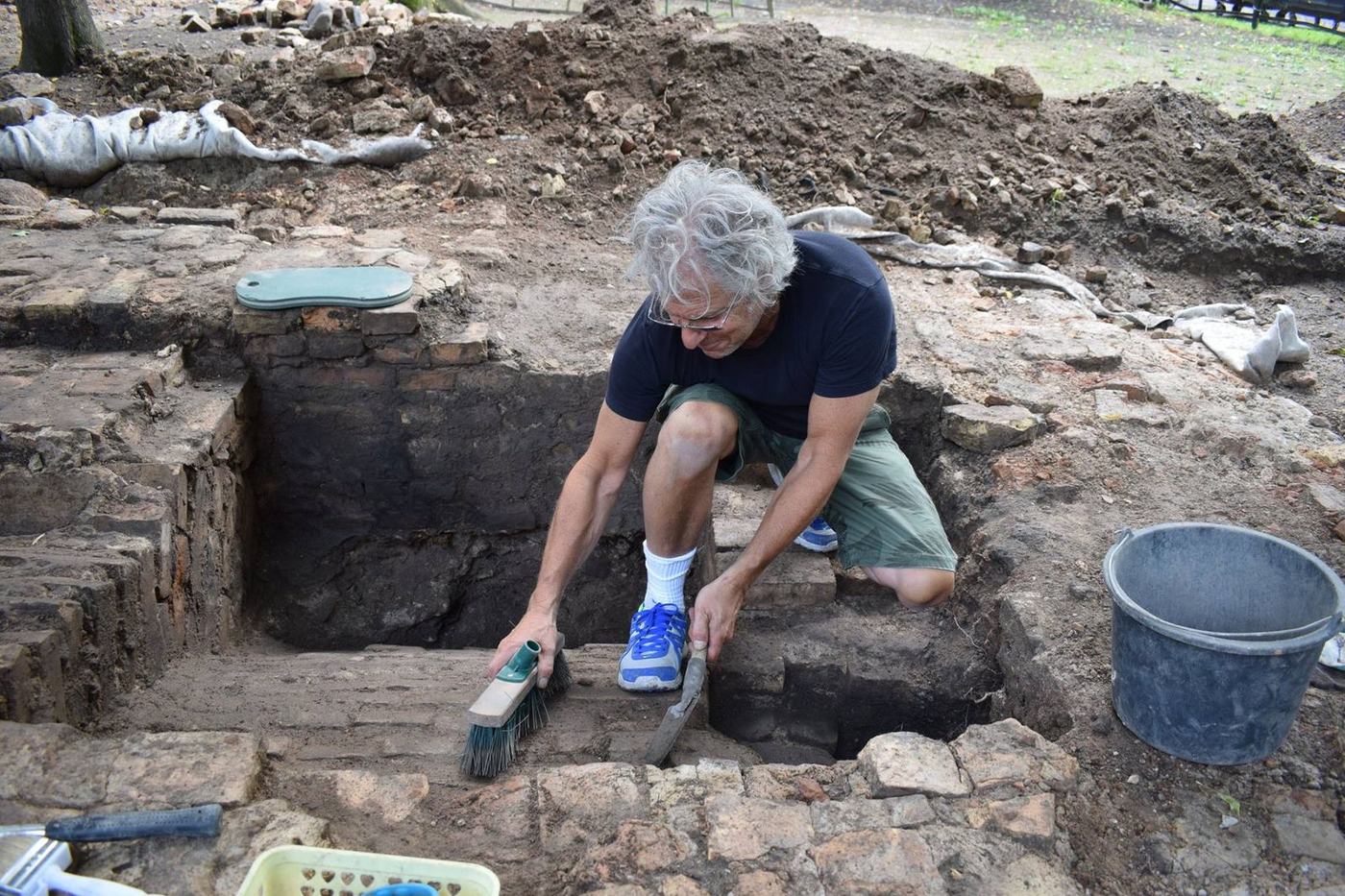
The Miqve in the Rain
Today we finished excavating the miqve we started last year. Note the floor decoration and the red and yellow tiles that lined the miqve and the adjacent room. The walls of the miqve were covered with white and blue tiles.
Just as we completed the excavation, the heavens opened and filled the miqve with rain-water.
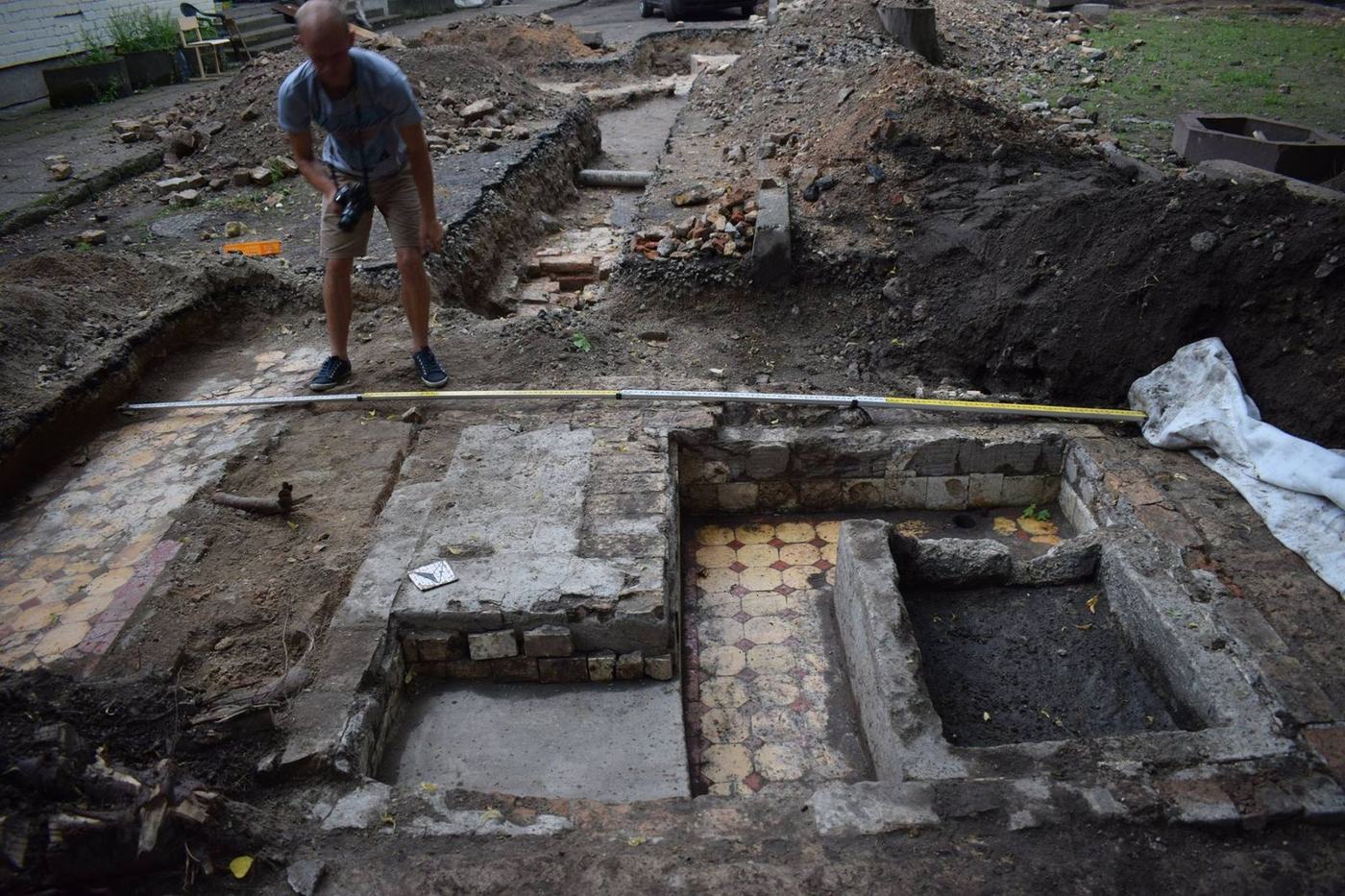
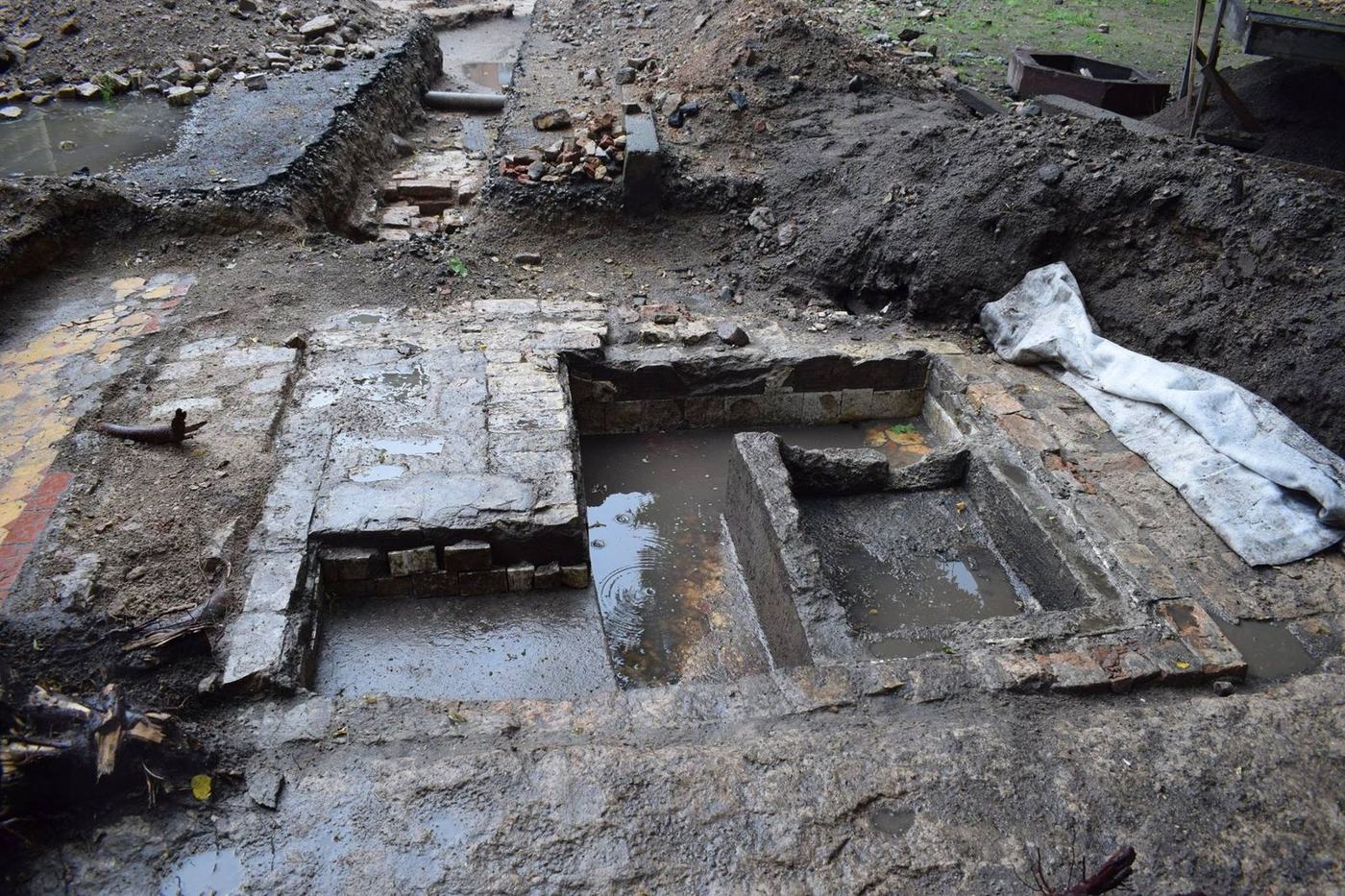
2018 Gets a Good Start
At the end of the first exciting week of excavation we can already feel satisfied that we are achieving our goals. On the plan of the Great Synagogue we show two areas in which the back wall of the synagogue has been discovered. At point 'A' we can see one of the staircases leading down to the floor of the synagogue and at point 'B' the wide back wall is located right beside part of the courtyard, exposed here for the first time in 63 years.
We have also exposed part of the miqve we started last year, decorated with coloured tiles.
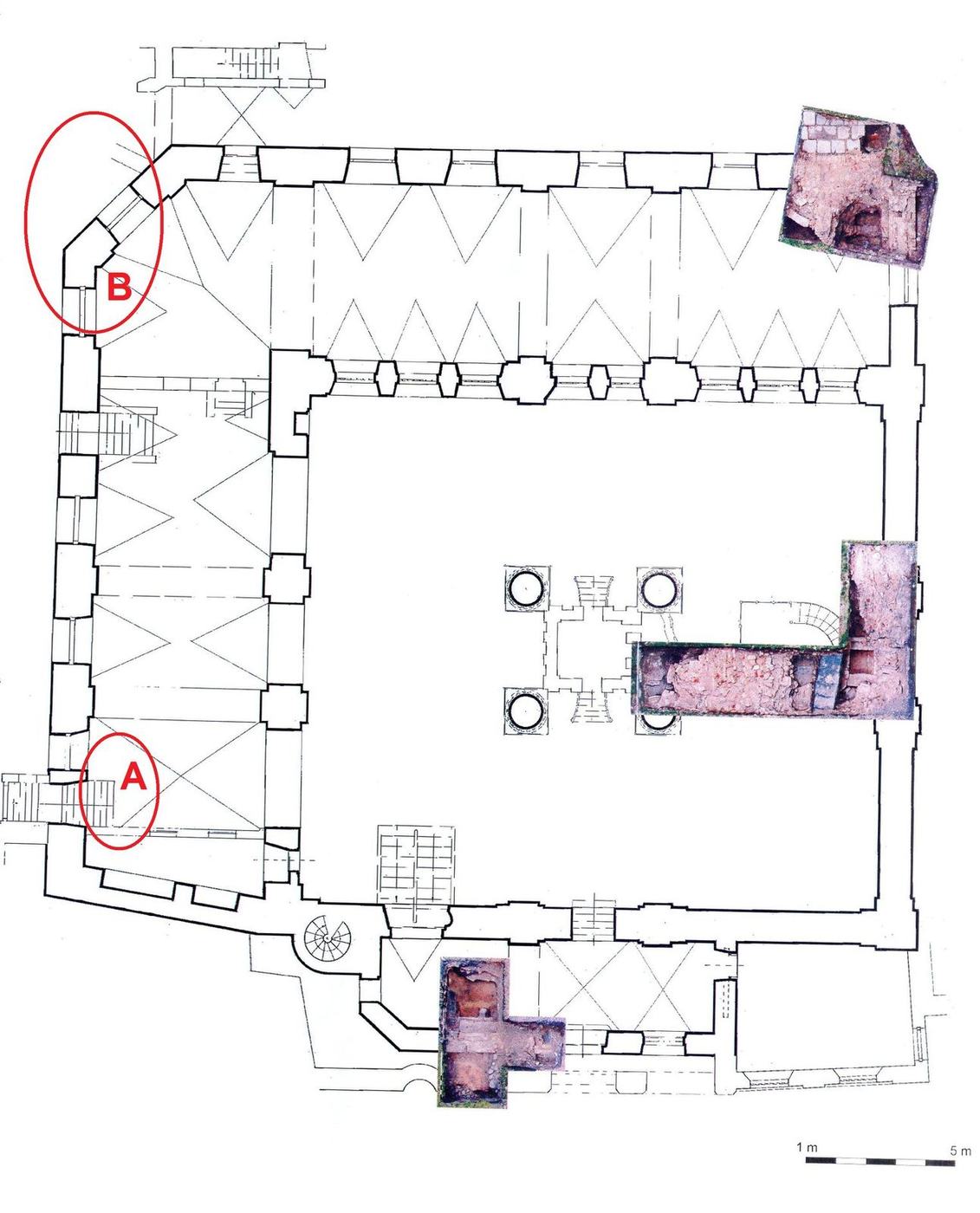
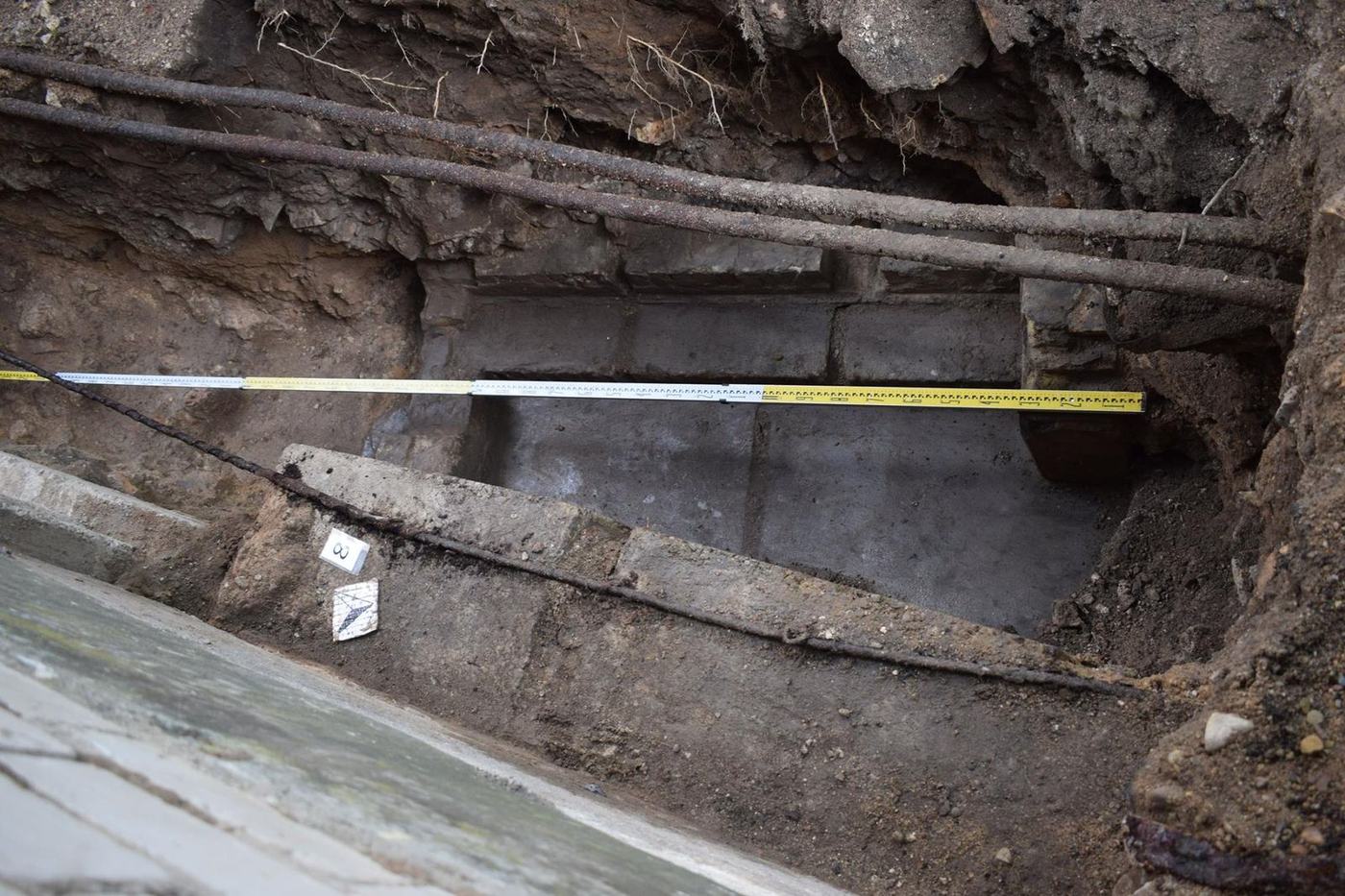
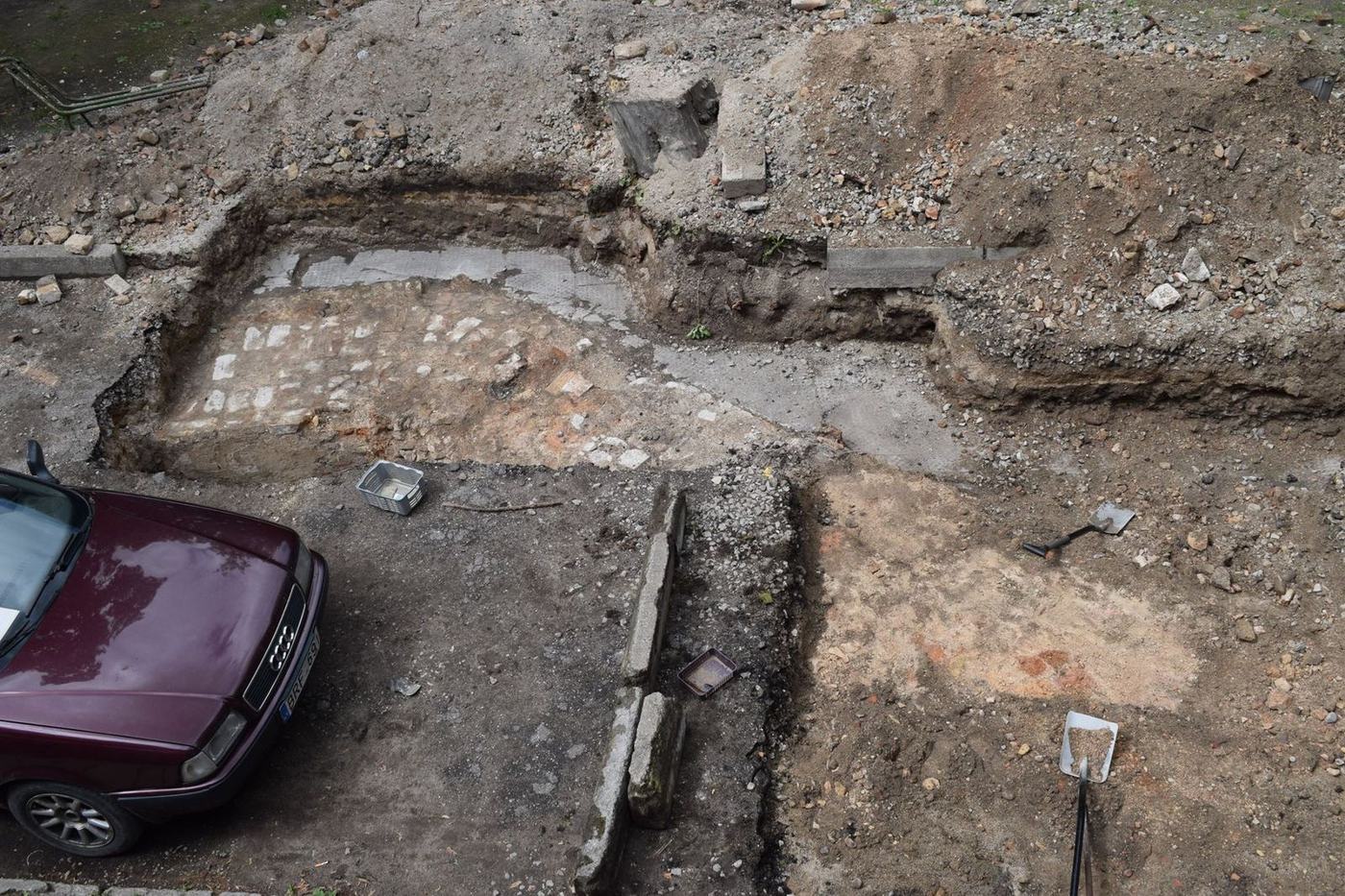
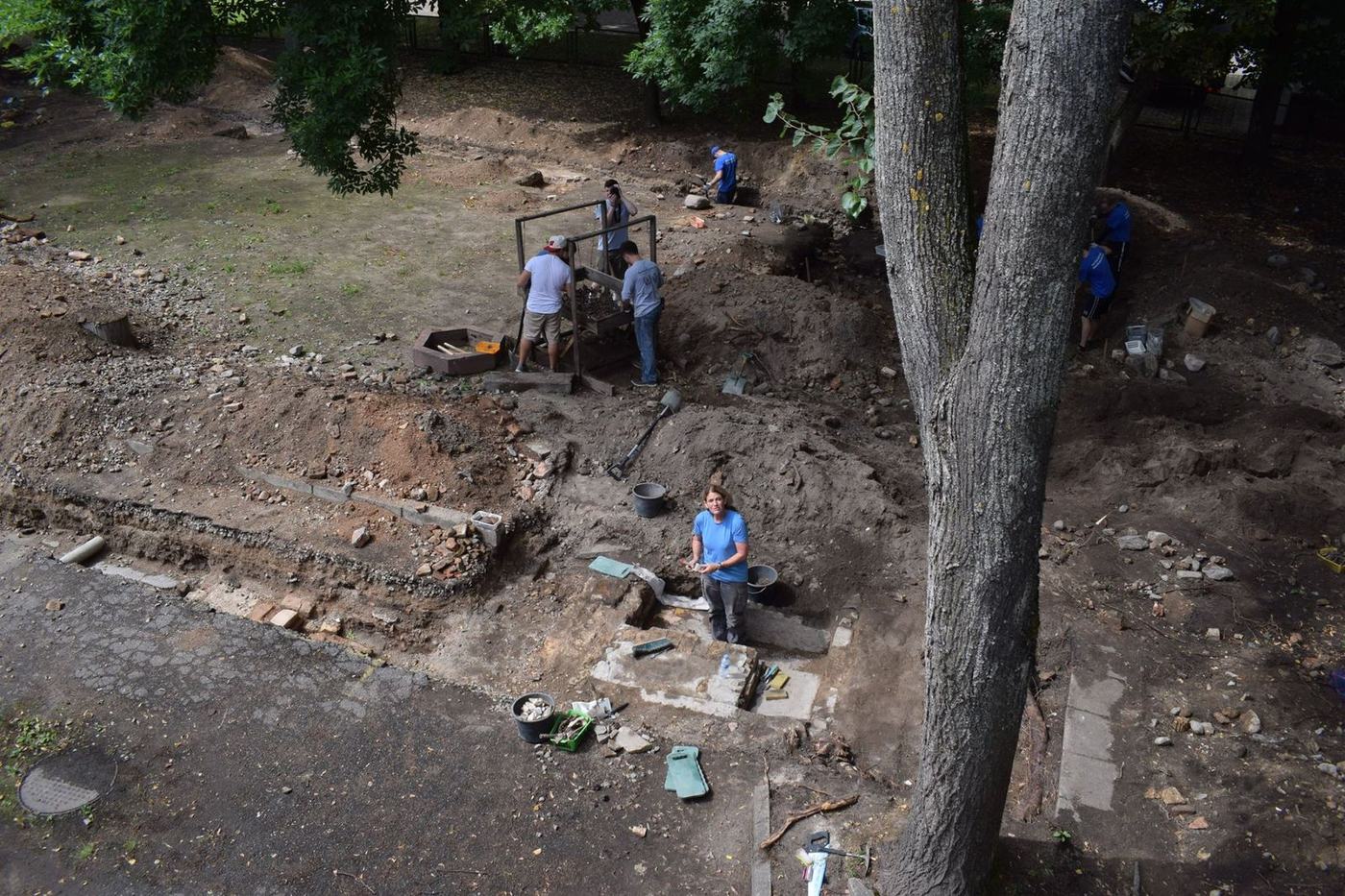
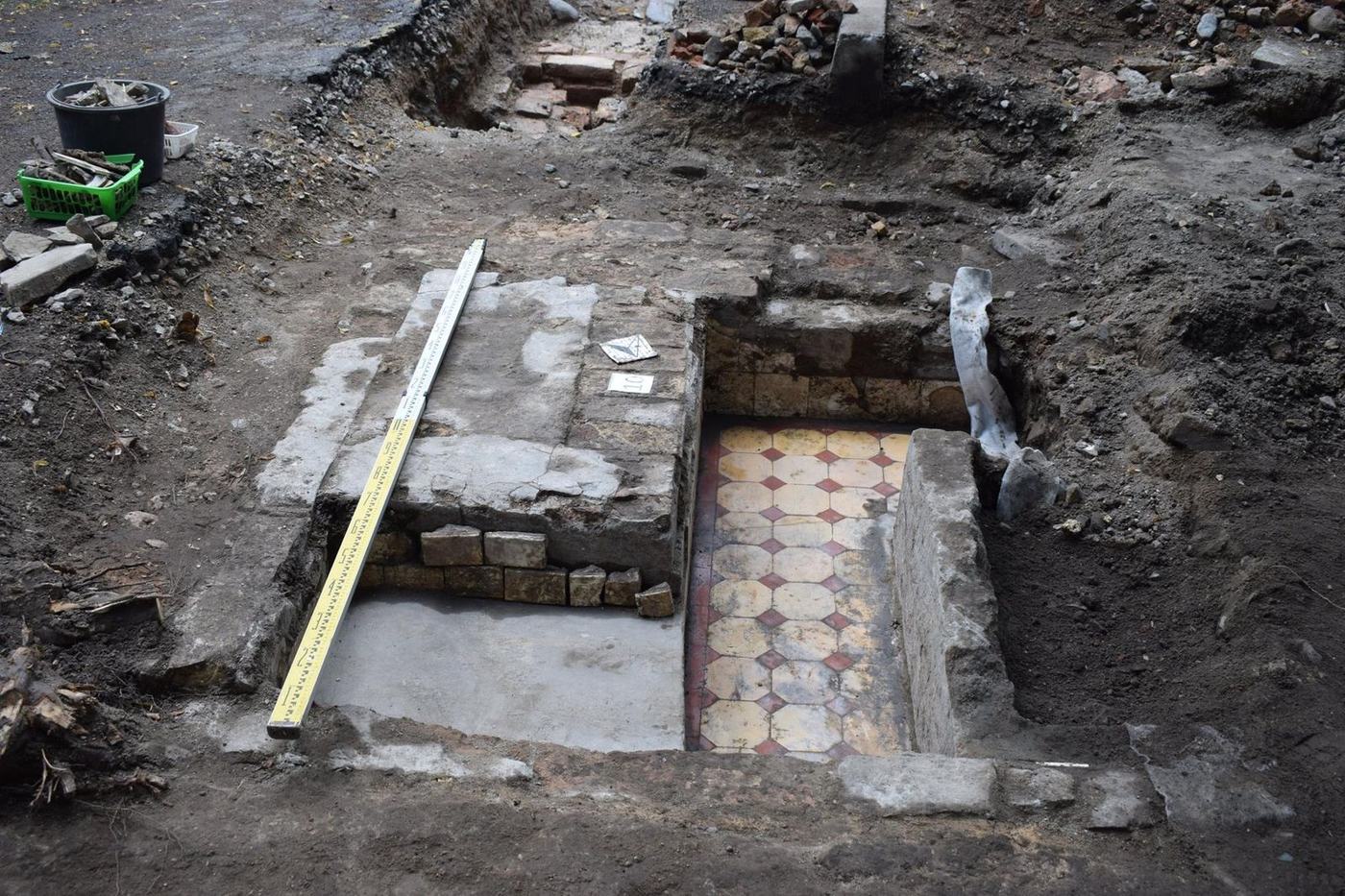
The Embassy of Israel Gets Mud on their Hands
Our staff together with the staff of the Israel Embassy to Lithuania, excavating at the Great Synagogue of Vilna today.
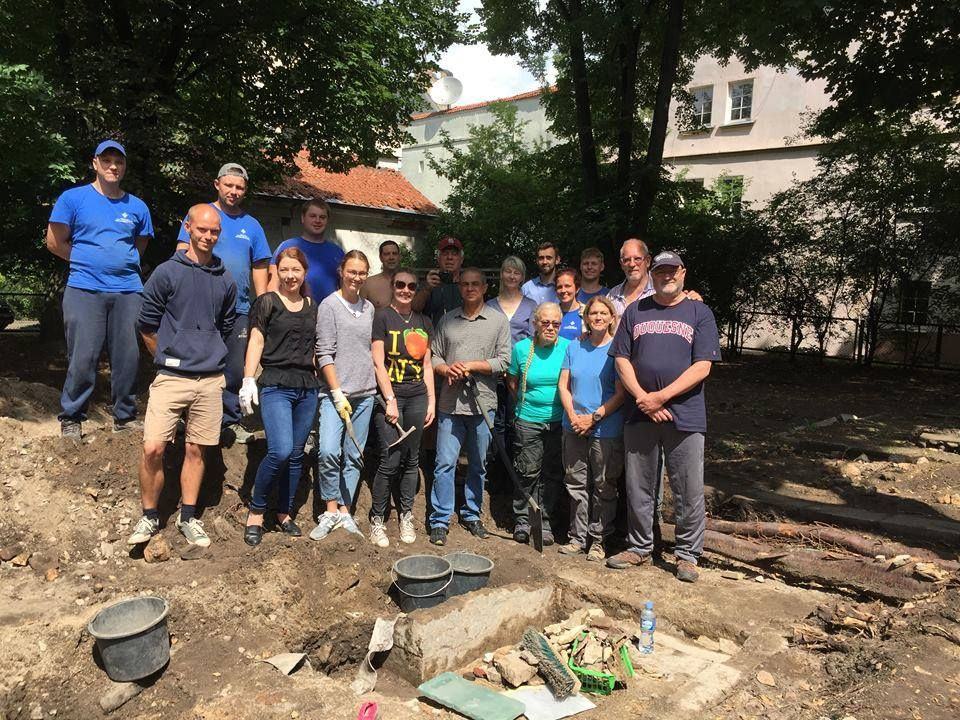
A New VR Model of the Great Synagogue
A virtual model of the Great Synagogue for your enjoyment.
Thank you to the Discover Jewish Lithuania project and Dr. Jurgita Verbickienė of Vilnius University.
Our New Sign
The Vilnius municipality today put up a sign outside our excavation informing the public about out activities. It was exciting to see our names and institutional logos in the street so far from home.
From left to right: Phil Reeder, Richard Freund, Jon Seligman and Justinas Račas.
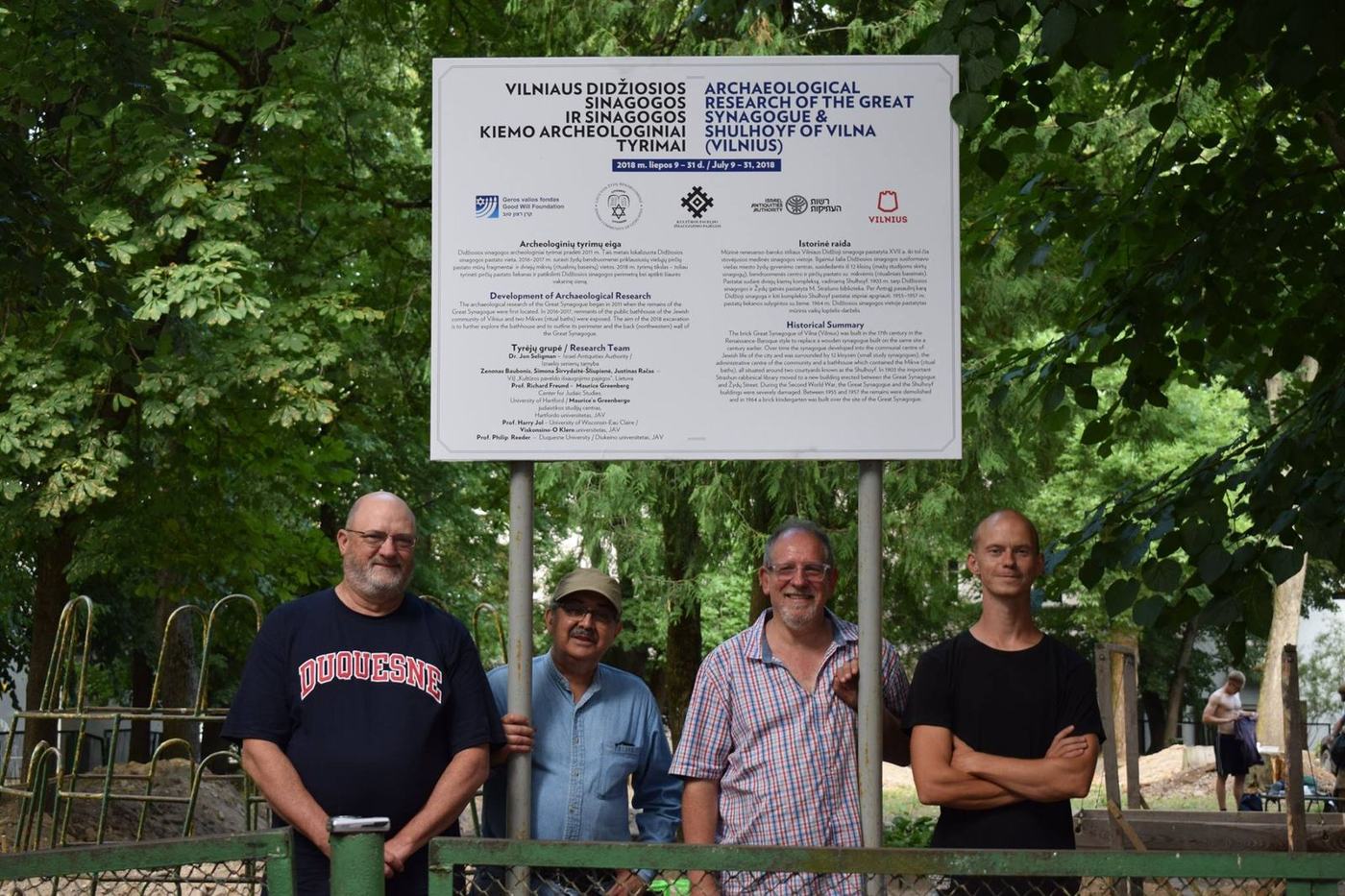
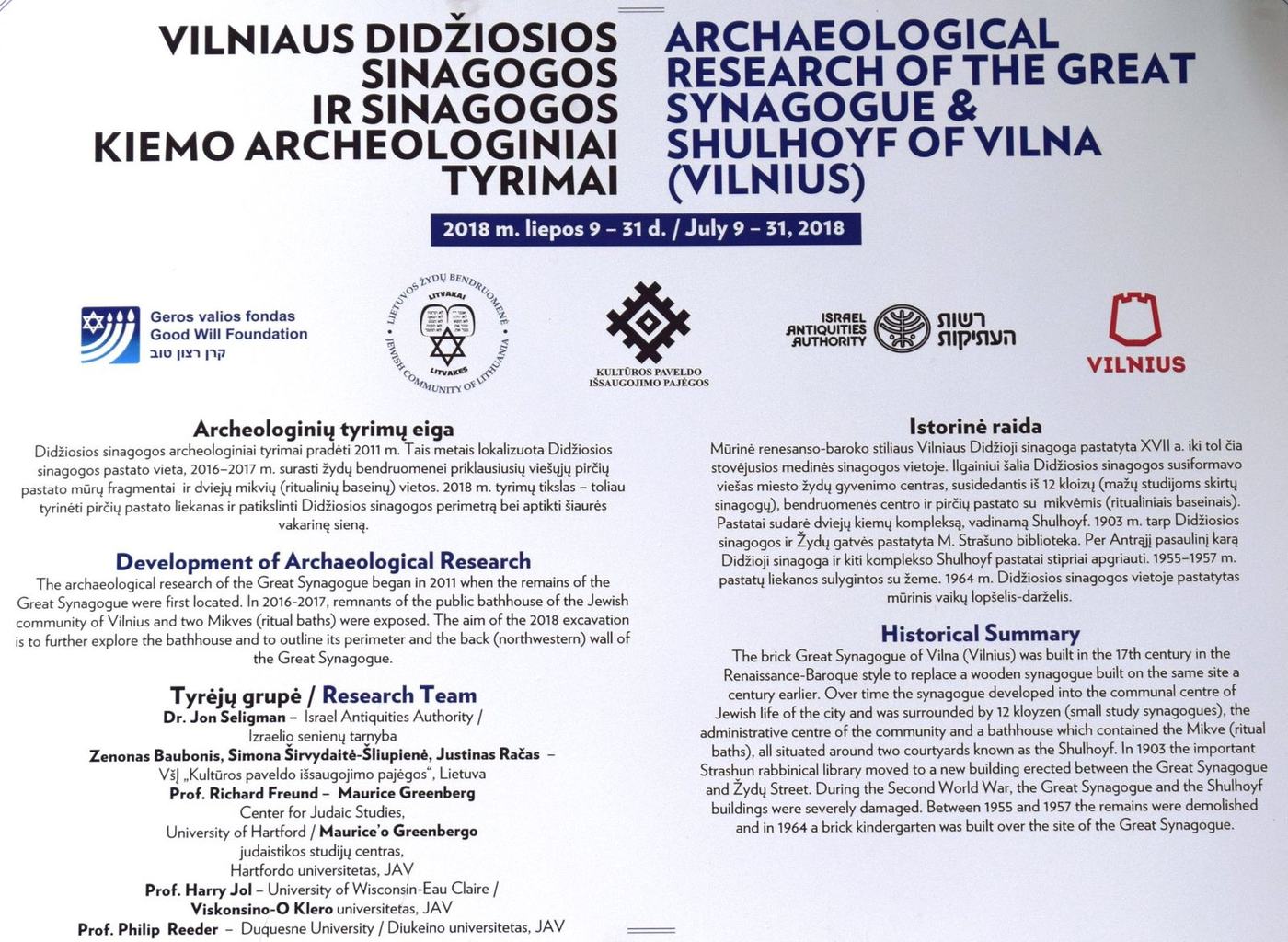
Giving Notice to the Neighbours
The Vilnius municipality, one of our partners this season, has posted notices about the Great Synagogue excavation at the entrances to all the apartment buildings surrounding the site. The notice gives information about the work, about the participants and invites the neighbours to come to an organised tour of the site.
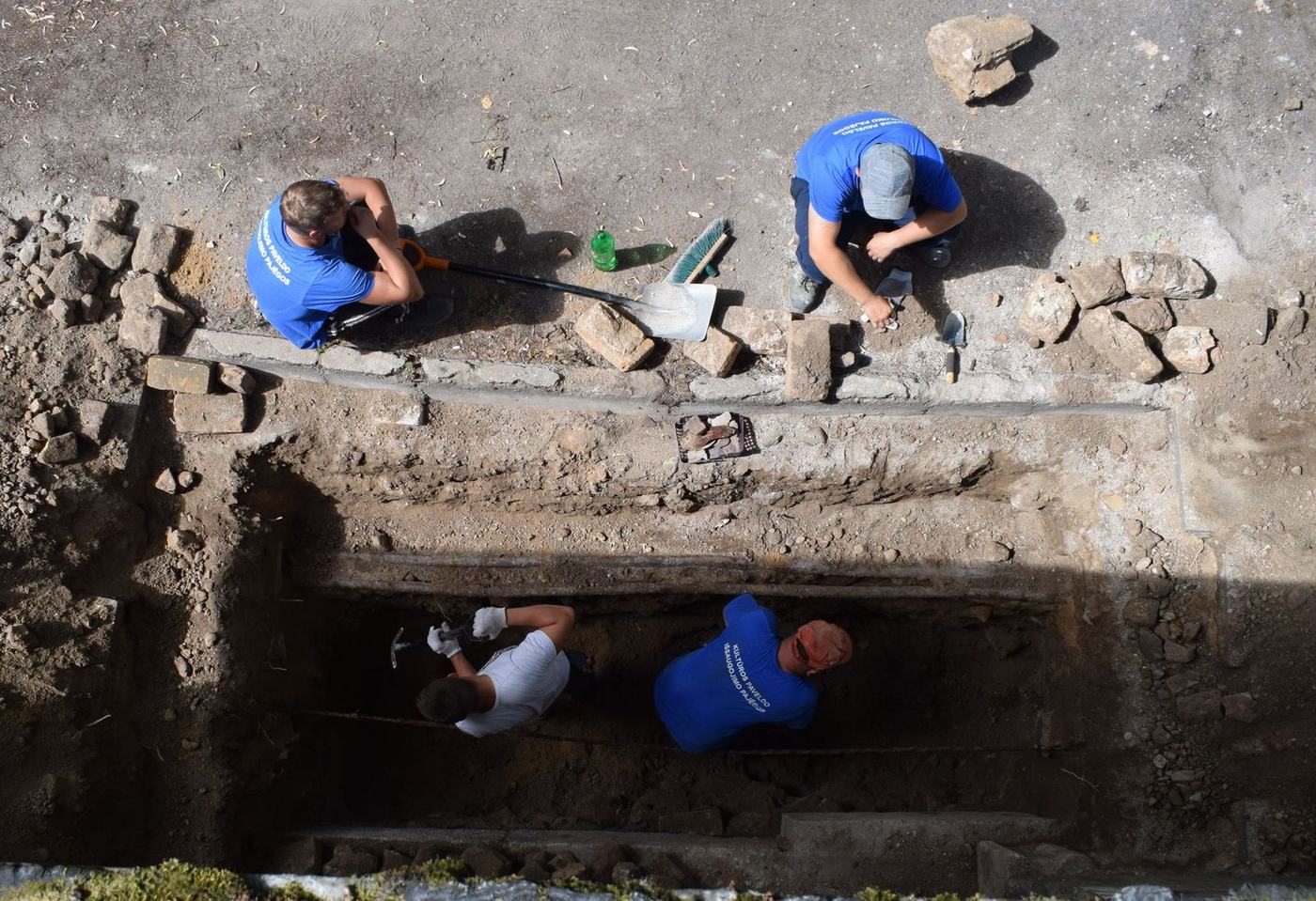
Off We Go
The first day of the excavation in a sunny Vilnius during which we immediately reached the top of the back wall of the bathhouse of the Shulhoyf.
Early visitors included Paul Packer, Chairman of the United States Presidential Commission for the Preservation of America's Heritage Abroad together with Ted Janis of the US Embassy in Lithuania; and Faina Kukliansky, President of the Jewish Community of Lithuania.
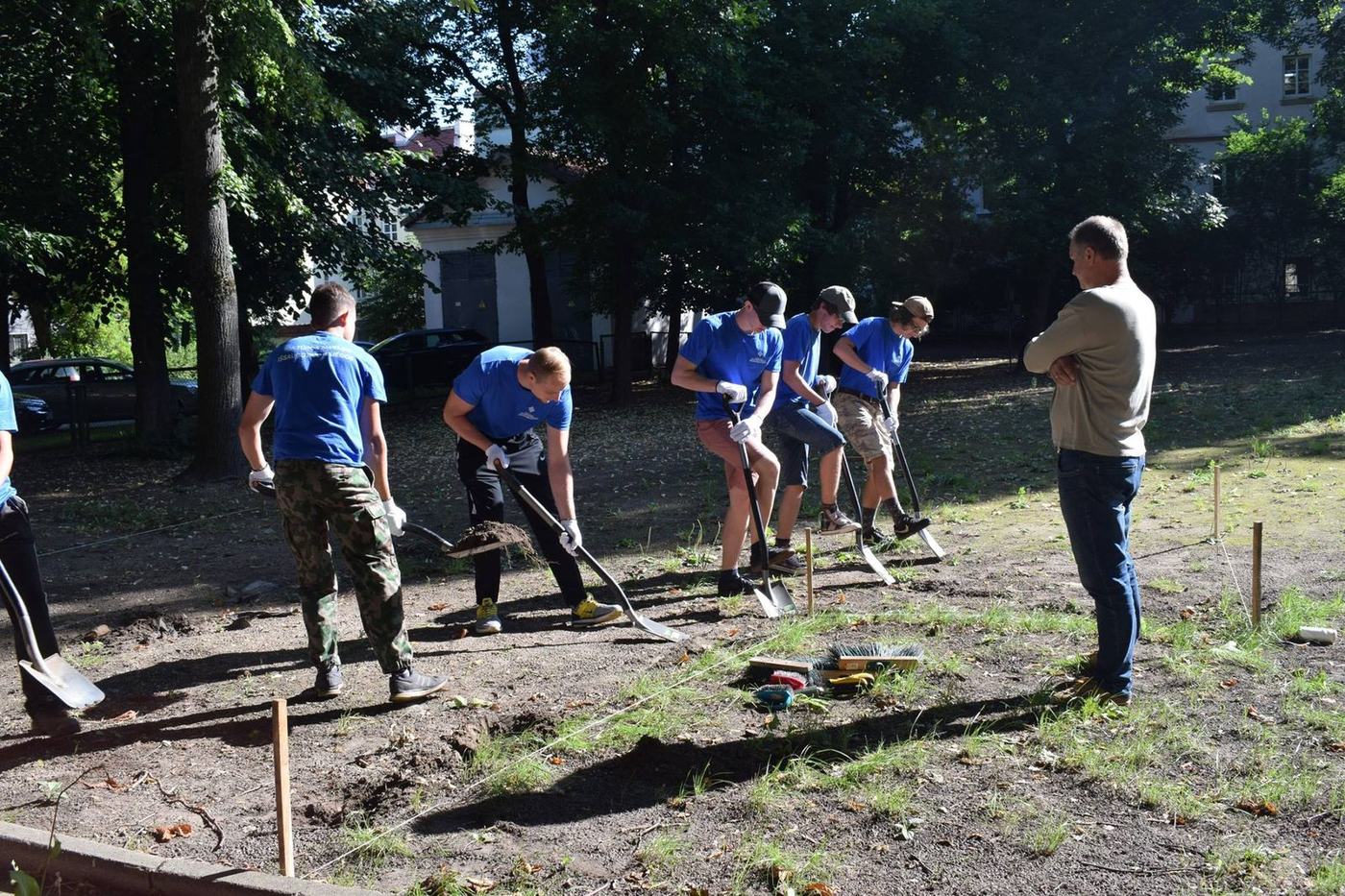
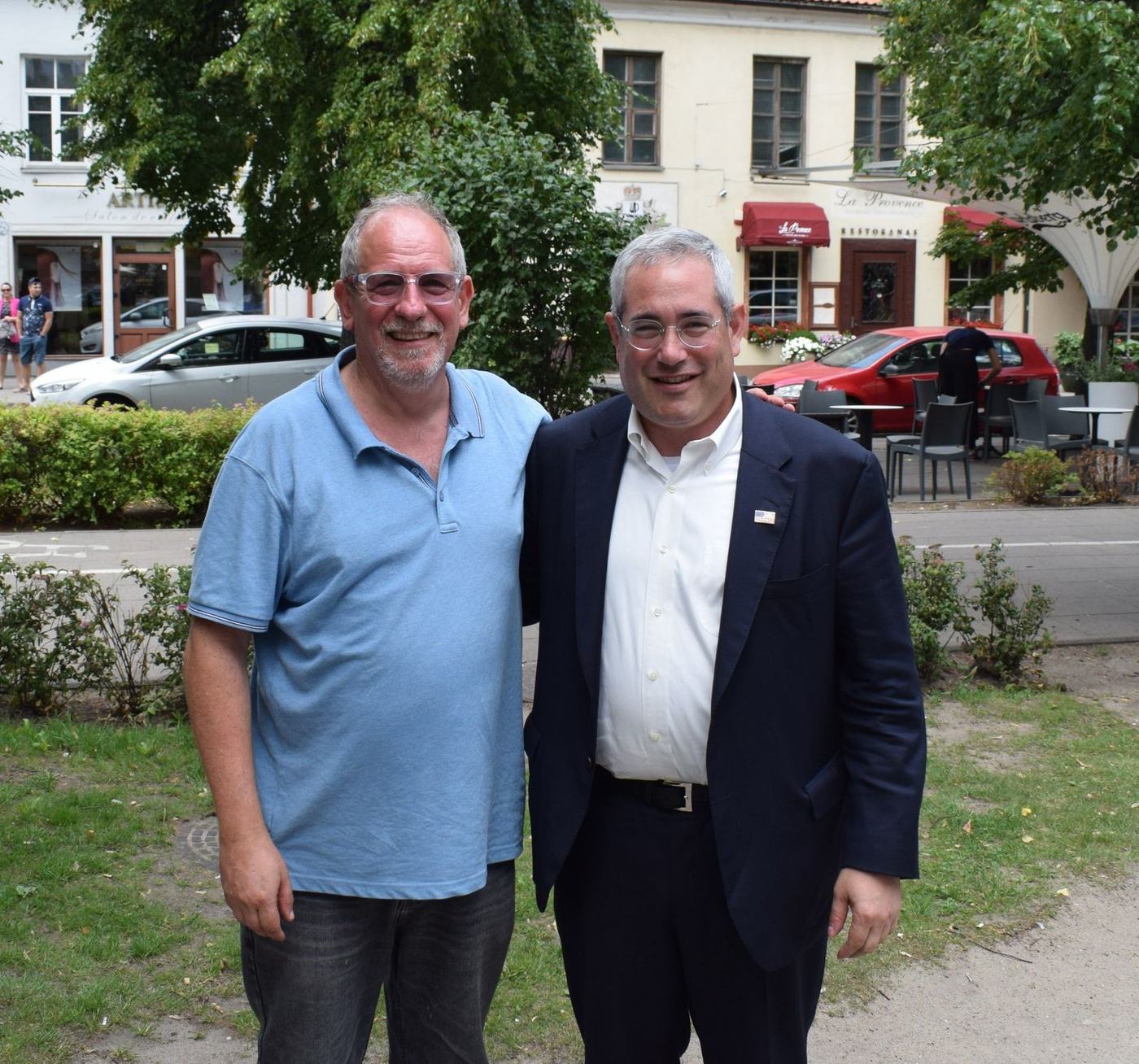
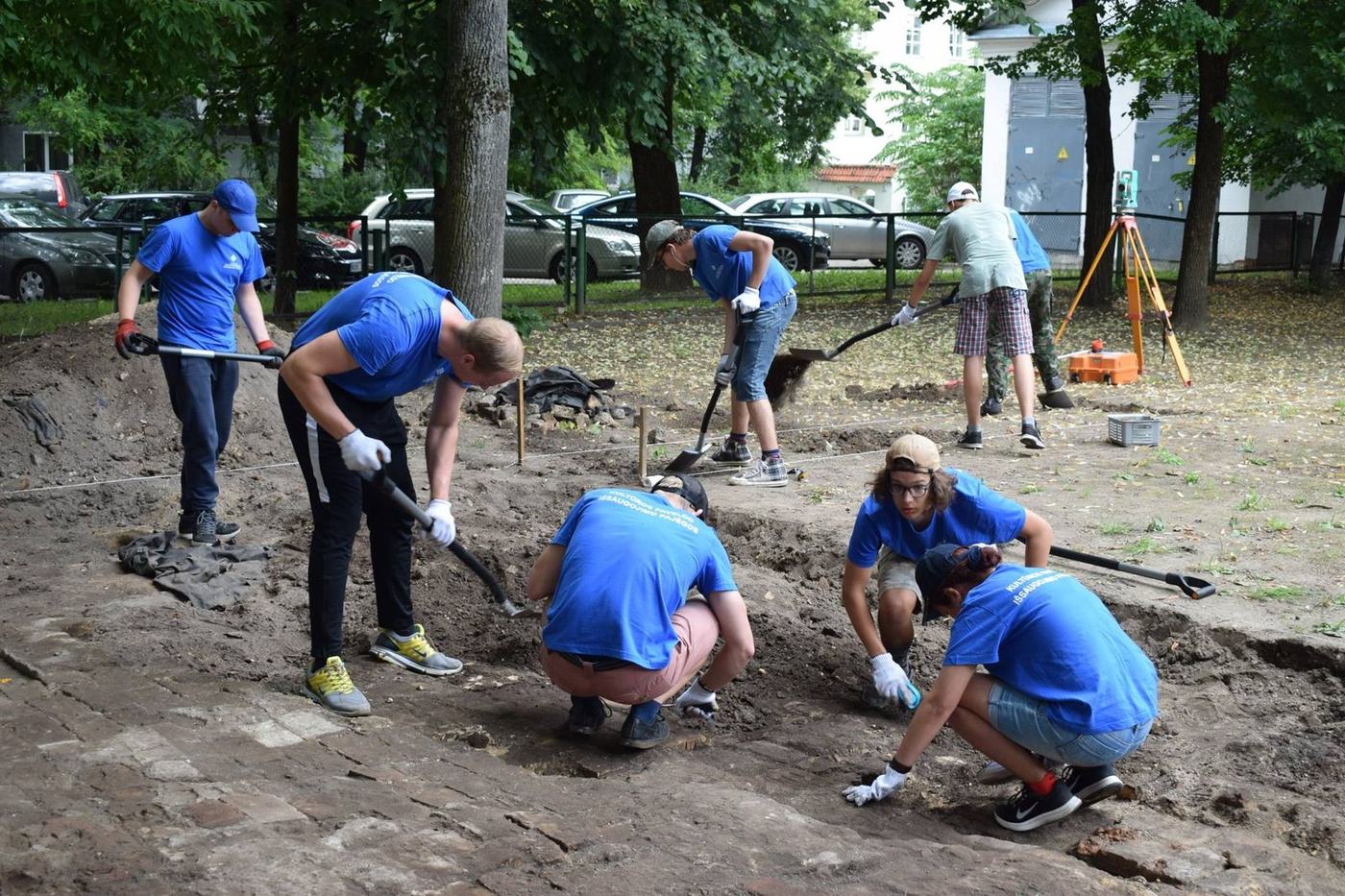
Mantas Daubaras
Thank you Mantas.
Mantas Daubaras, our talented young Lithuanian field archaeologist, will not be joining us this year, so he can concentrate on completing his doctoral studies. Even though Mantas specialises in aspects of the Baltic Neolithic (http://istorija.academia.edu/MantasDaubaras), he has been our guide to the archaeology of late-medieval and early-modern Vilnius. Any venture outside of our immediate area of knowledge is a challenge, and Mantas has eased our way into new worlds.
So thank you for your help and good luck with the doctorate.
Shalom ve-LeHitra'ot - Goodbye and we will see you soon.
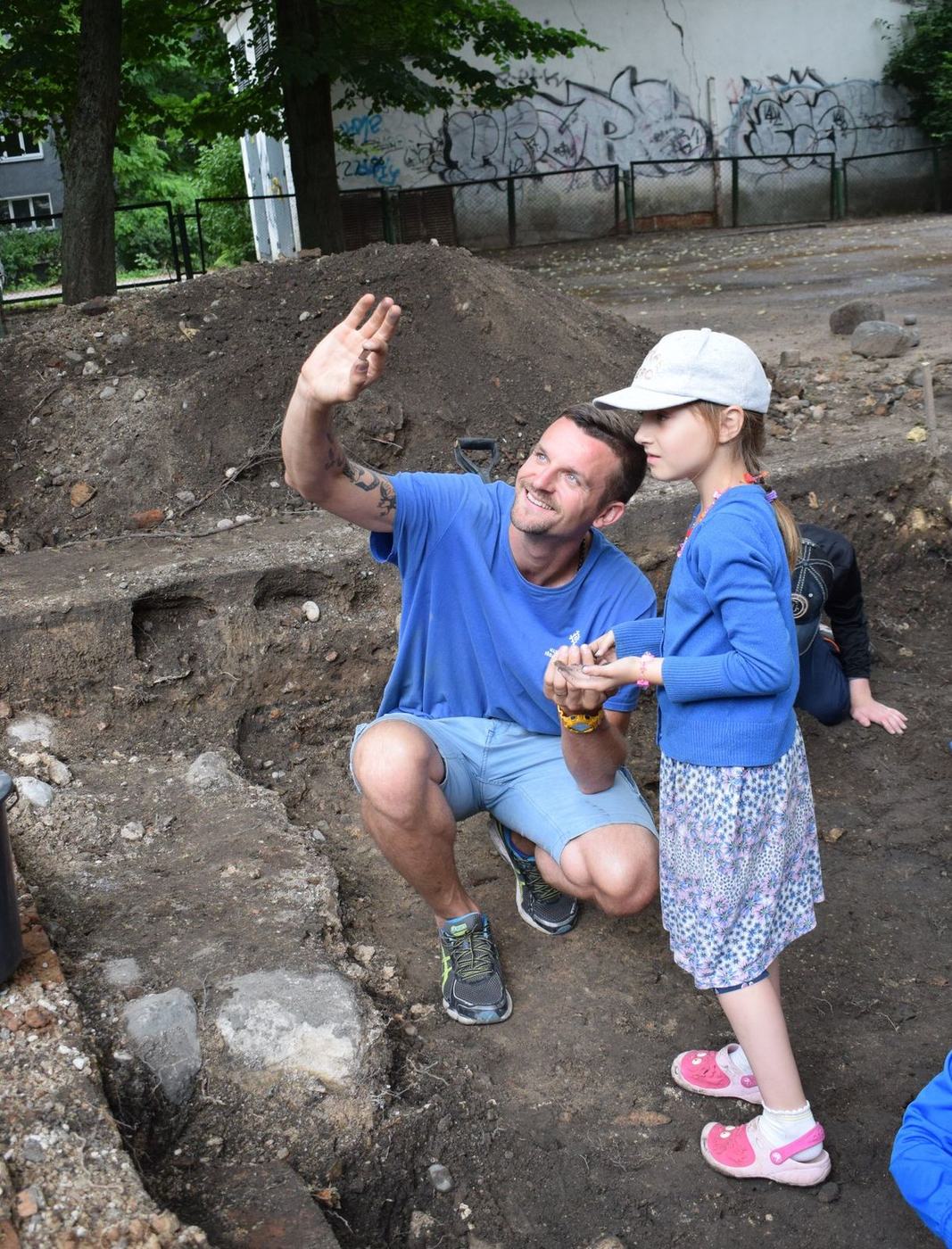
THE EXCAVATION RETURNS TO VILNIUS
We are pleased to announce that the excavation of the Great Synagogue and Shulhoyf will be returning to the field in July.
As always we will welcome volunteers. Details to follow.
Holocaust Escape Tunnel
הסרט אודות פרויקט החפירה בבית הכנסת הגדול של ווילנה ומנהרת הבריחה מפונאר ישודר לראשונה בטלוויזיה הישראלית ביום השואה (12/4/2018). הסרט ישודר בערוץ 'כאן11' בשעה 04:55. מומלץ להקליט.
The film 'Holocaust Escape Tunnel' with be aired for the first time on Israeli television on Holocaust Day (12th. April). The broadcast is at 04:55, so we suggest you record the film.
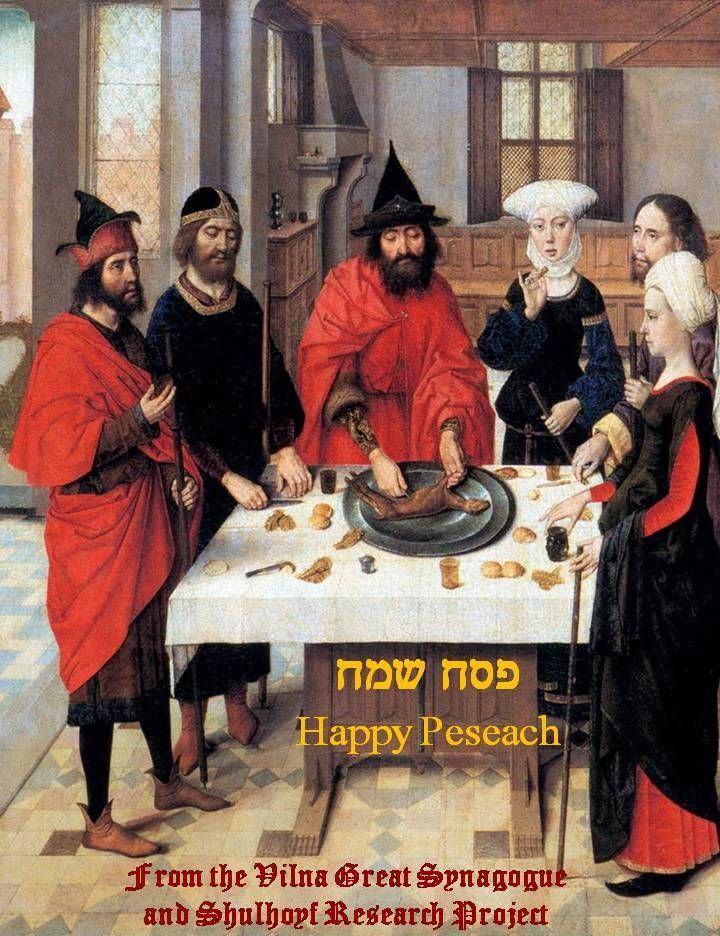
2017 (16 stories)
European Day of Jewish Culture at the Seimas
Viktoras Pranckietis, Speaker of the Seimas; Faina Kukliansky, Chair of the LZB and H.E. Amir Maimon, Israeli Ambassador to Lithuania, opening the conference on the occasion of the Day of Remembrance of Lithuanian Jewish Victims of Genocide and the European Day of Jewish Culture at the Seimas this week.
The Massacre Site at Nanjaneriai
A moving memorial ceremony today at the massacre site at Nanjaneriai, just outside Vilnius, led by Ruta Vanagaite and Ephraim Zuroff of the Simon Weisenthal Centre.
Ruta is the author of a recent book titled 'Musiskiai' (Our People), a book which bravely broaches the issue of the complicity of Lithuanians in the Holocaust.
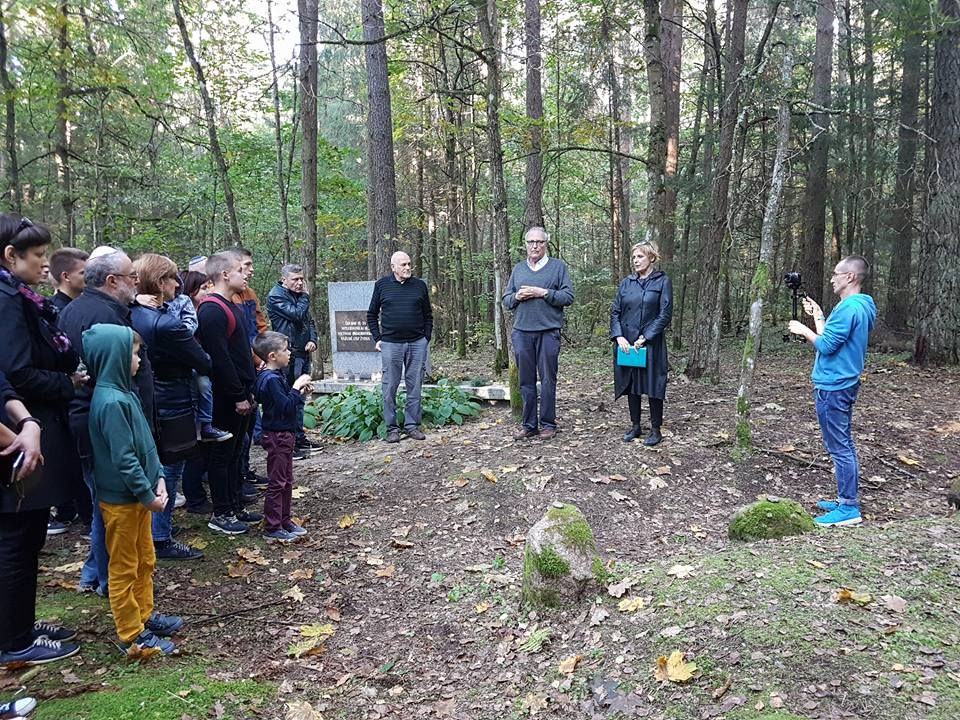
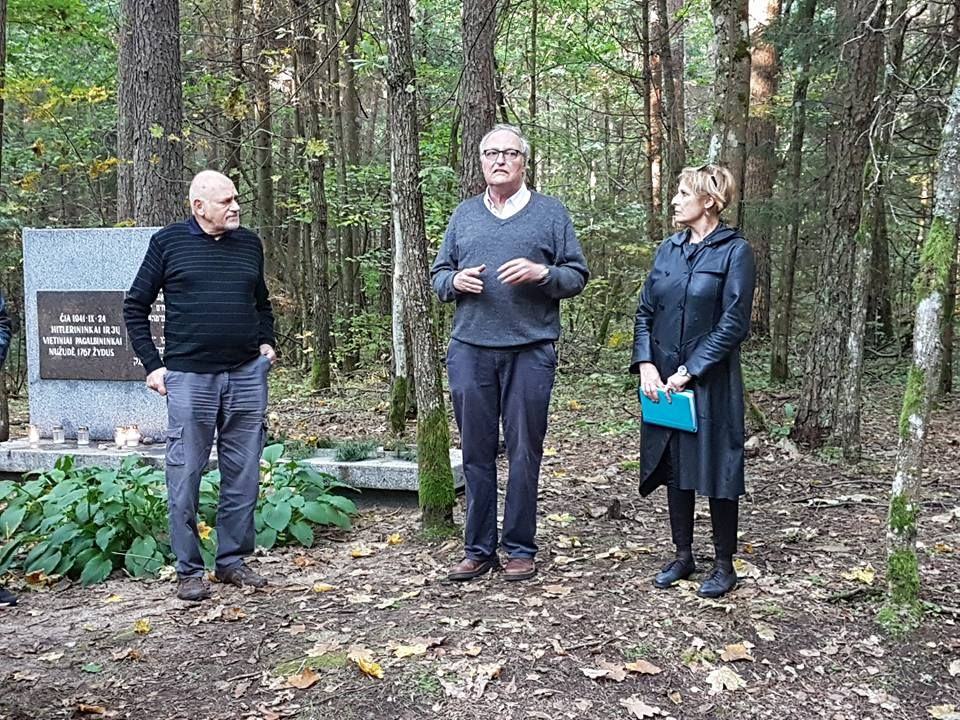
Ruta Vanagaite and Ephraim Zuroff lead a memorial at the Holocaust massacre site of Nanjaneriai, just outside Vilnius.
How to Commemorate the Great Synagogue of Vilna
Great and fruitful discussion about history, memory and a little archaeology today at the conference in Vilnius on 'How to commemorate the Great Synagogue of Vilna".
The conference had the honour to be greeted by the former President of Lithuania, Valdas Adamkus; the former Head of State, Professor Vytautas Landsbergis; Minister of Culture, Liana Ruokytė-Jonsson; Mayor of Vilnius, Remigijus Šimašius and others.
http://litvakworld.com/events/
Wrapping up the conference, the participants asked the authorities to facilitate the excavation and engage in a quick process of design and implementation of a plan for a memorial at the site of the Great Synagogue of Vilna.
Thank you to Anna Avidan and Litvak World for organising this event.
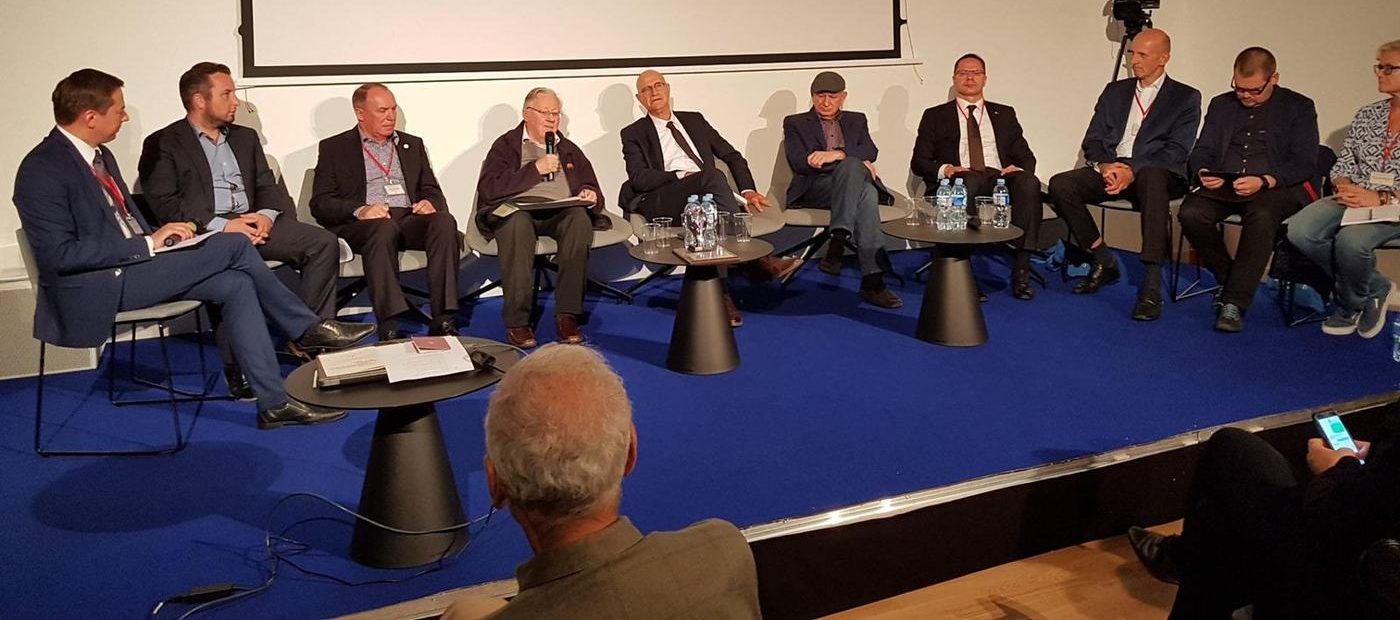
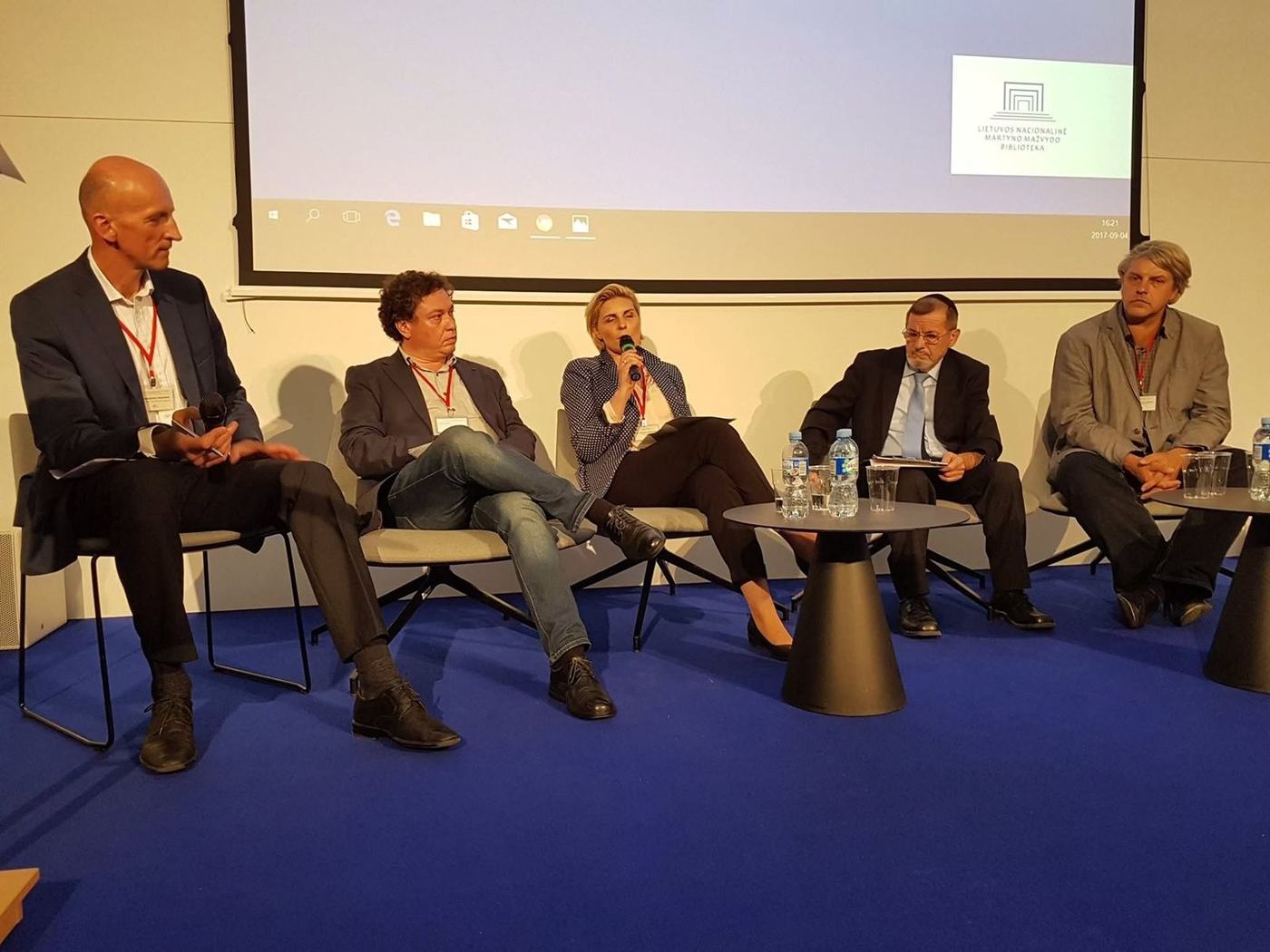
Two Ritual Baths (Miqva'ot) of the Great Synagogue of Vilna are Exposed Seventy Years after their Destruction in the Holocaust
(The project press announcement about the 2017 season of excavation at the Great Synagogue of Vilna)
In July, a team of Israeli, Lithuanian and American archaeologists unearthed the remains of two ritual baths that were used by congregants at the Great Synagogue in Vilna, today the capital of Lithuania. This synagogue, which was at heart of the Vilna's large Jewish community for hundreds of years, was completely destroyed in the Holocaust, but evidence of underground spaces discovered in a study carried out last year led to the excavation of the site and the exposure of the ritual baths.
The Great Synagogue of Vilna, built in the 17th century in Baroque-Renaissance style, was a large community center and a center of Torah study. It was at the heart of Lithuanian Jewry and included 12 synagogues and batei midrash (study halls), miqva'ot (ritual baths), the community council building, Kosher meat stalls, the Beit Midrash of Rabbi Eliyahu, the Gaon of Vilna, and more. After hundreds of years of existence, with the destruction of the entire Jewish community of Vilna during the Holocaust, the most holy place of the Jews of Lithuania was looted and burned by the Germans, and the standing remains were completely destroyed by the Soviet authorities who built a modern school in its place.
In the words of Dr. Jon Seligman of the Israel Antiquities Authority, who leads the research team "Most of the historical descriptions of the Great Synagogue in Vilna and the community courtyard (the Shulhoyf) relate to the Great Synagogue and the surrounding prayer halls. Until now, we have found little information about the bathhouse and Miqve building of the Jewish community, a community that comprised almost half of the city's population".
The excavation has followed an architectural plan from the end of the 19th century that was discovered in the municipal archive of Vilna, a plan for the restoration of the ancient bathhouse by the community. According to this plan, the bathhouse consisted of two main floors, many rooms, and a large service wing. It was also possible to identify two installations that were built as ritual baths – the Miqva'ot. This plan guided the researchers during the archaeological dig.
The two Miqva'ot were discovered in July in the excavation led by Dr. Jon Seligman of the Israel Antiquities Authority, together with Mantas Daubaras of the Lithuanian Cultural Heritage Organization and Prof. Richard Freund of Hartford University. The two installations discovered are of the final phase of the Miqva'ot dated to the early 20th century. They have tiled walls and floors, steps leading to the pool and an otzar, an auxiliary pool in which water is collected for the miqve, in order to make it kosher for ritual purification.
In the words of the researchers, "These discoveries add a new dimension to the understanding of the daily lives of the Jews of Vilna, and will certainly provide a new focus for understanding the lost cultural heritage of the Jewish community of Vilna, the "Jerusalem of Lithuania'".
Video: Saulius Berzinis
A short video summarising the excavation of 2017.
Honoured by the Mayor of Vilnius
A big thank you to the Mayor of Vilnius, Remigijus Šimašius, for the thank you.
We value the interest and the appreciation shown for the excavation of the Great Synagogue of Vilna by the Mayor of Vilnius and his staff. The municipality and the people of the beautiful city of Vilnius are and will be the stewards of this important site and the positive encouragement we receive from the city's government is vital for our continued work.
Together we can find the way to preserve the remains, present them to residents and visitors and provide a suitable memorial to the lost Jewish 'Cathedral' of Vilnius.
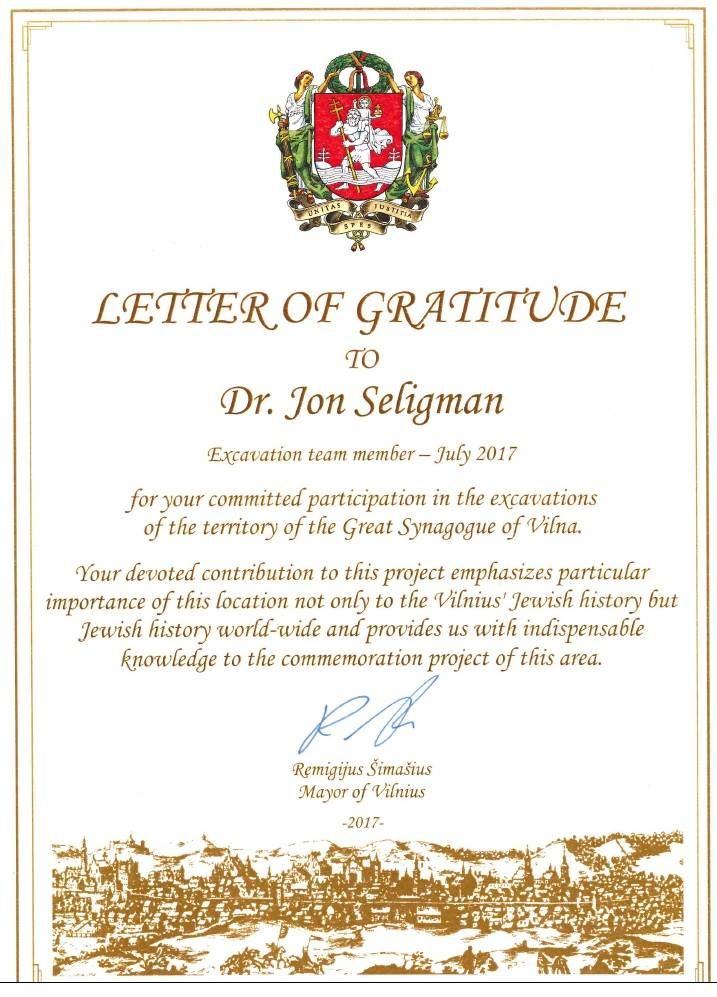
Thanks to All our Supporters and Visitors
During the excavation we welcomed many visitors to the site of the Great Synagogue. No less important than the officials and researchers who visited was the interest shown by passers-by, parents of children at the school, neighbours and tourists.
Here are just a few of those who we happily guided around the site.
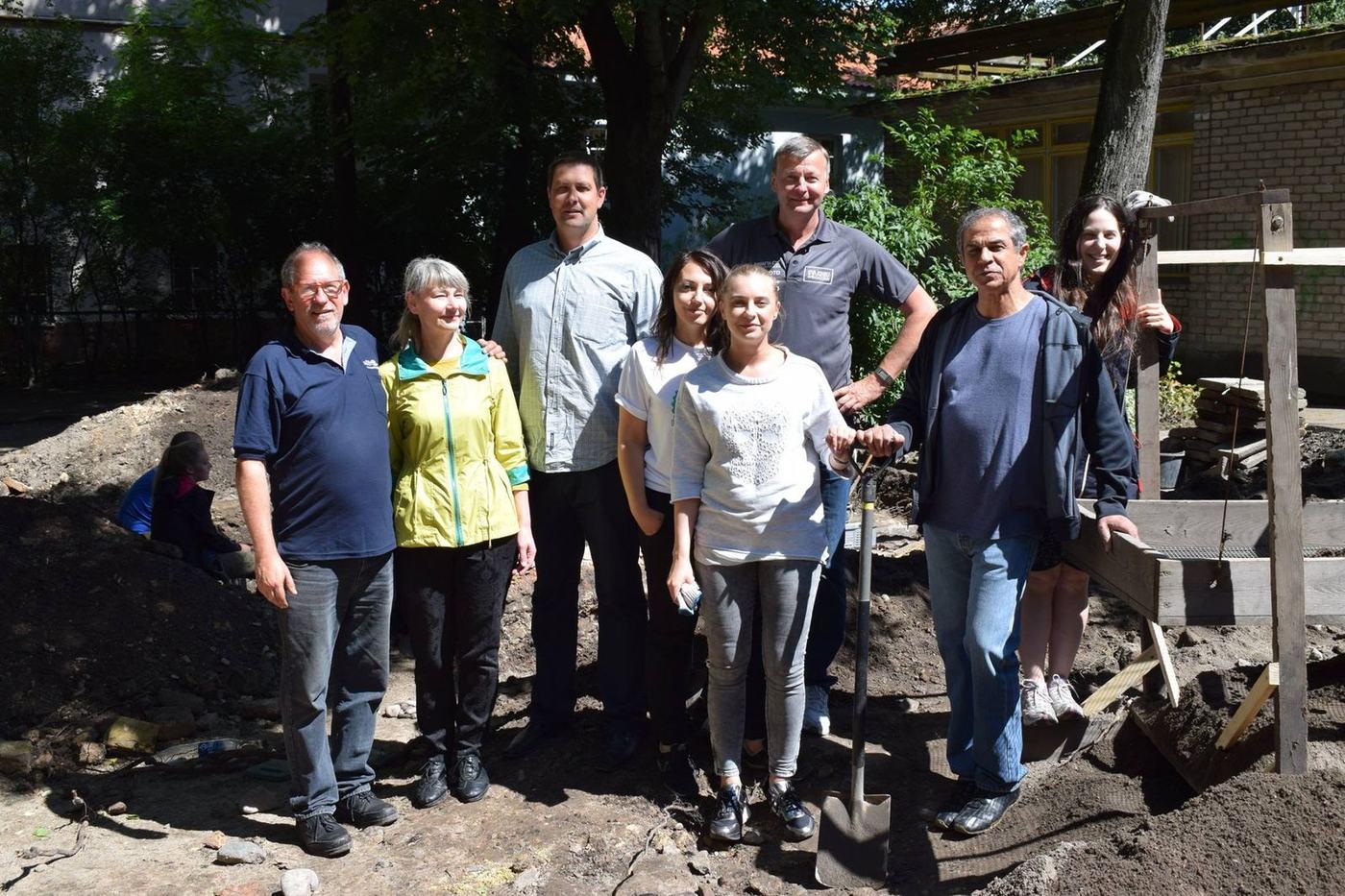
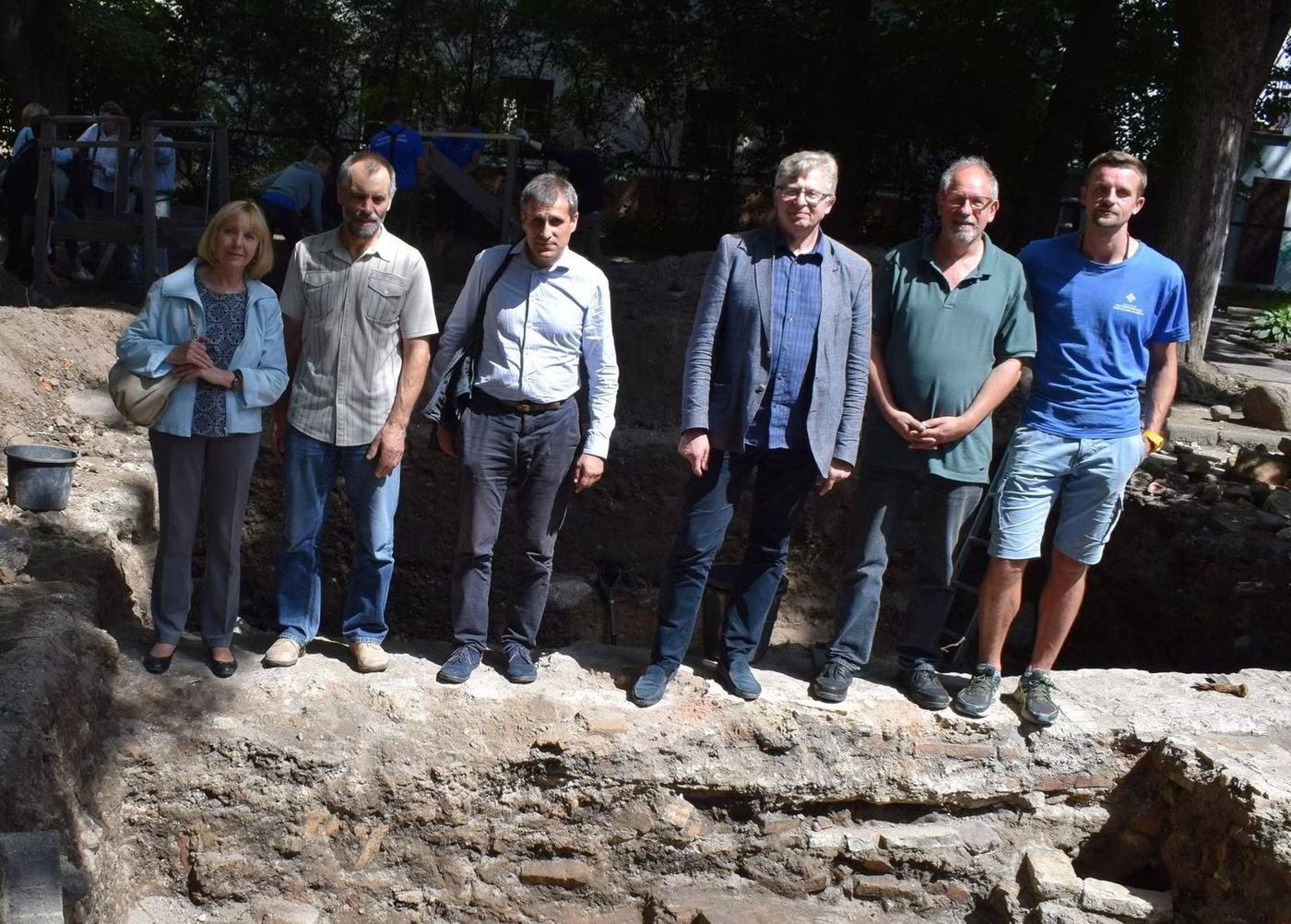
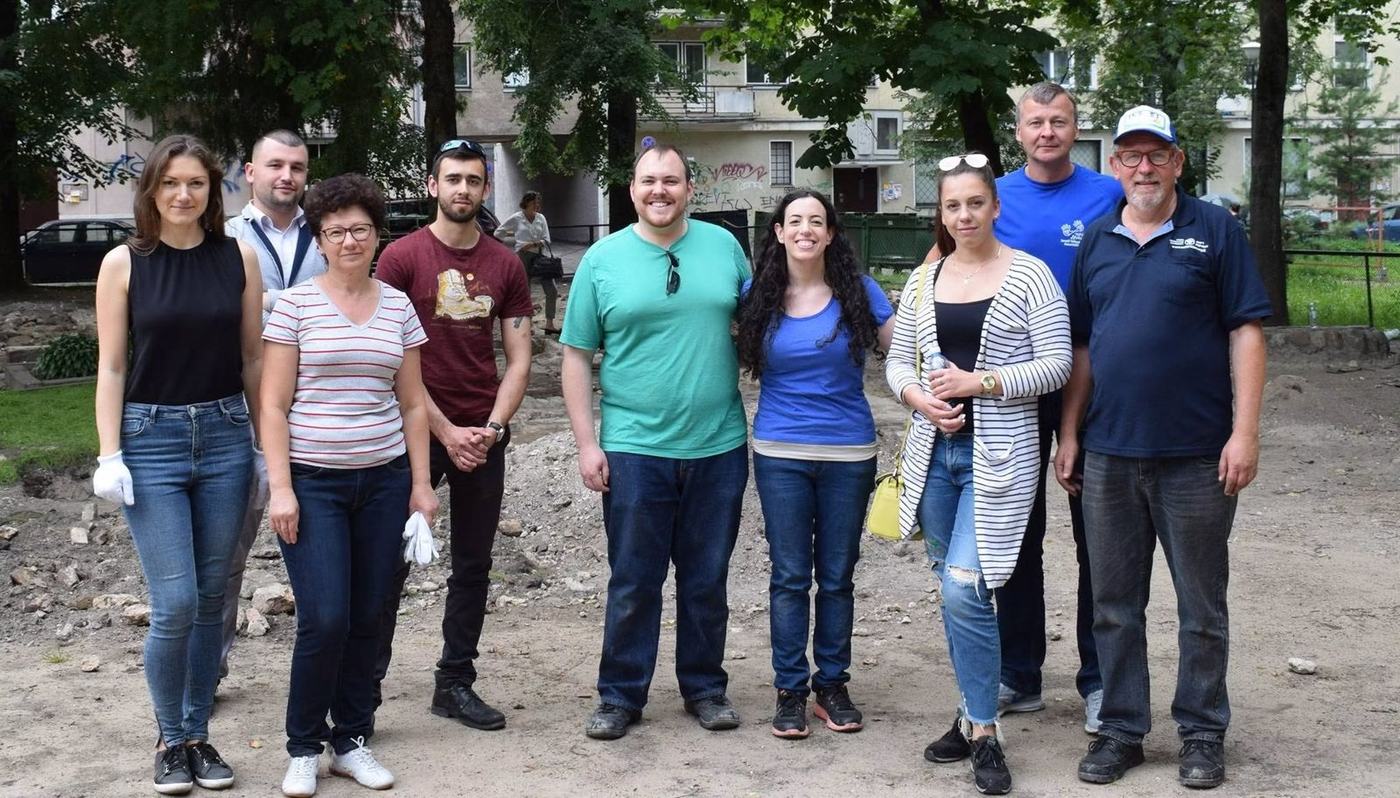
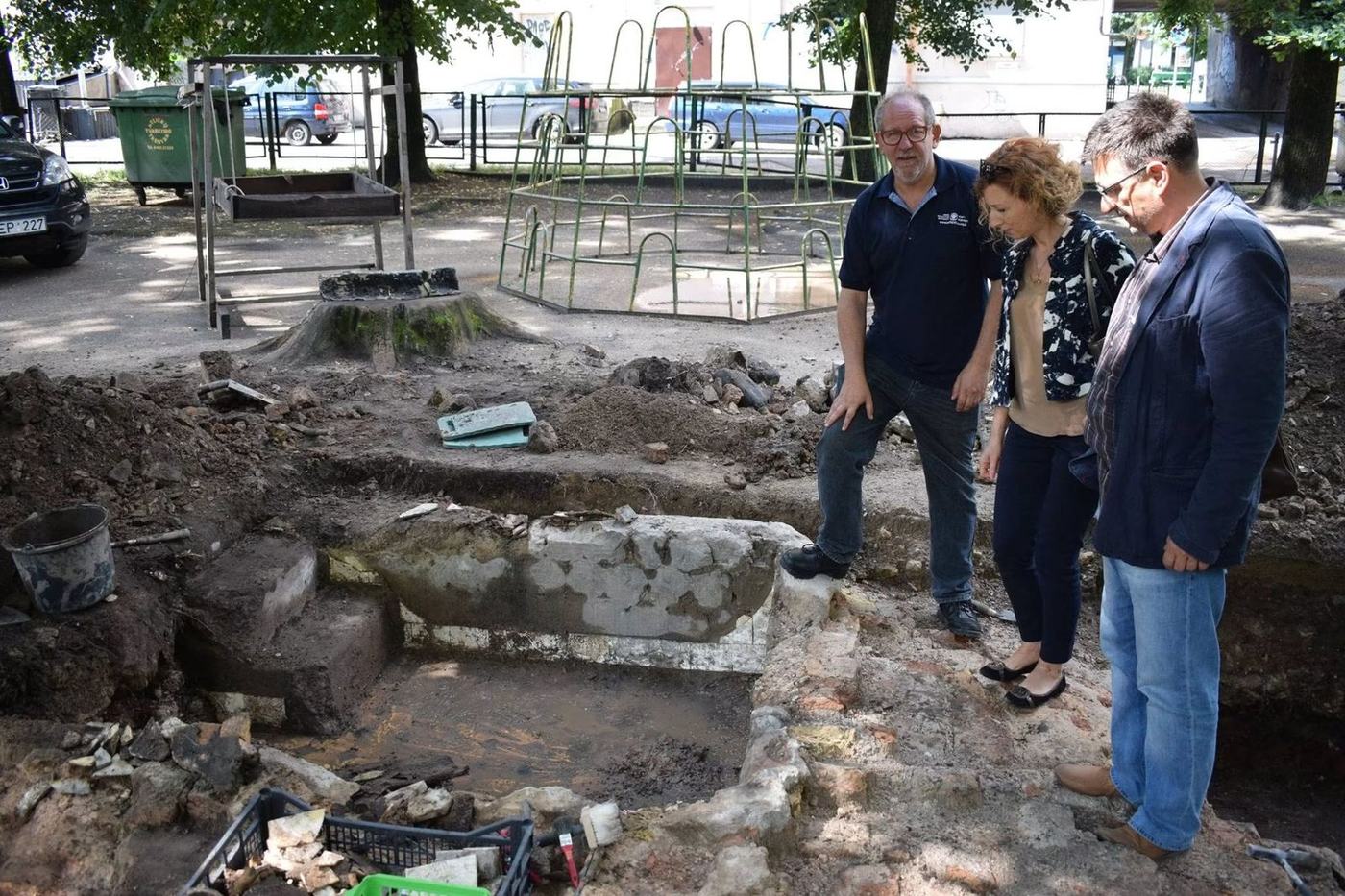
A Bird’s Eye View of the Excavation Site of the Great Synagogue
Some views from the drone over the 2017 excavation.
Both miqva'ot (ritual baths) are clearly shown in the photographs, including the steps, the otzar (reservoir) and the tiling. The baths were heavily renovated at the end of the 19th century and repaired again in the early 20th century, before being destroyed after WWII.
Thank you to Paul Bauman for the photographs (https://www.facebook.com/paulbaumangeophysics/)
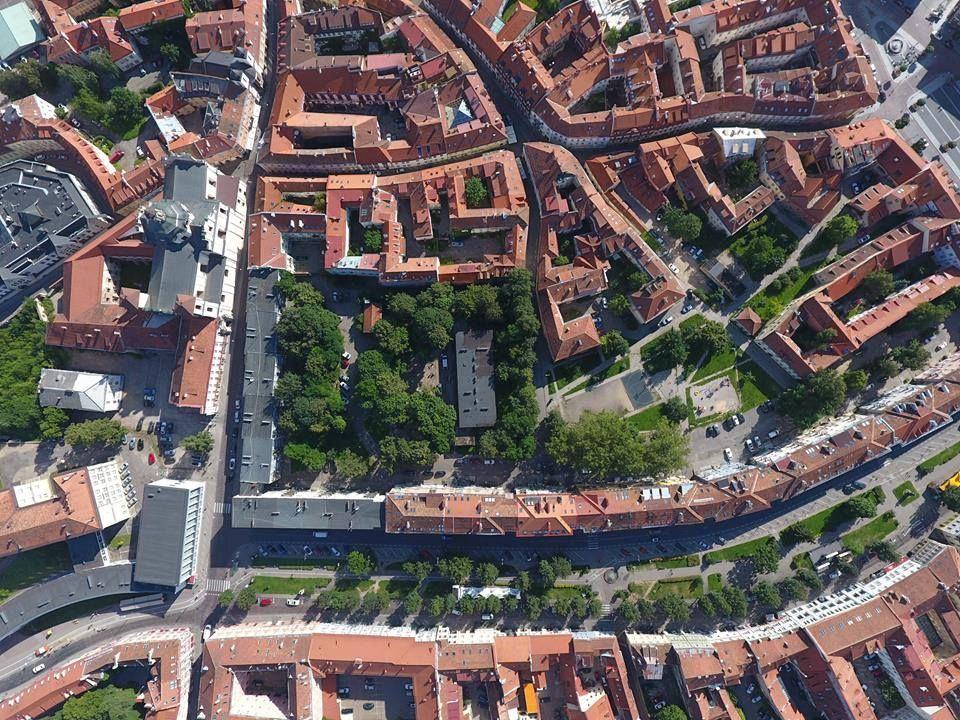
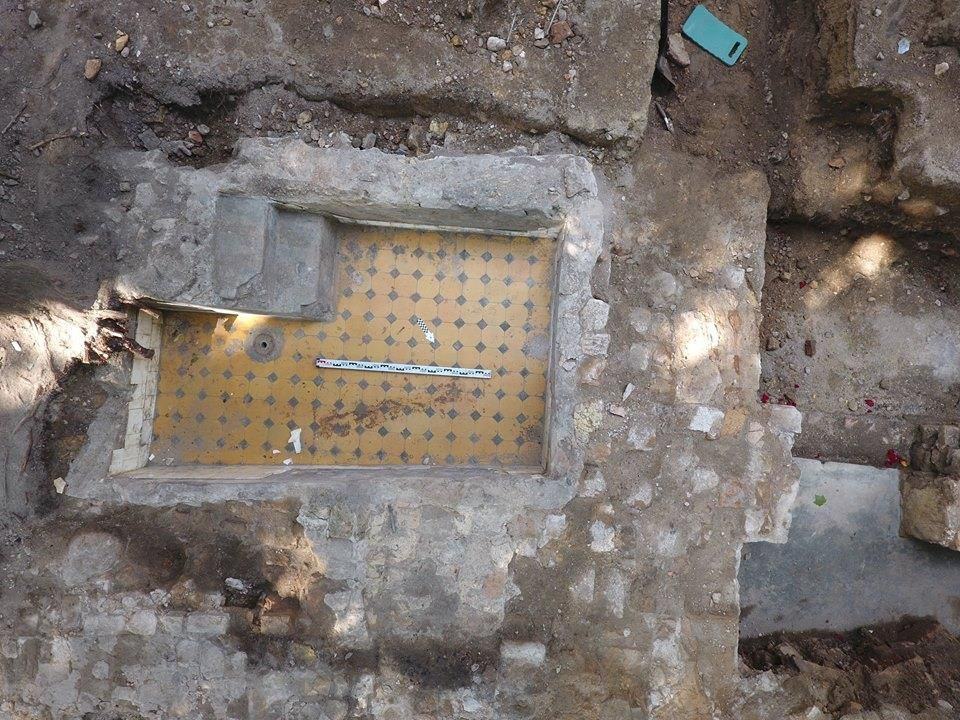
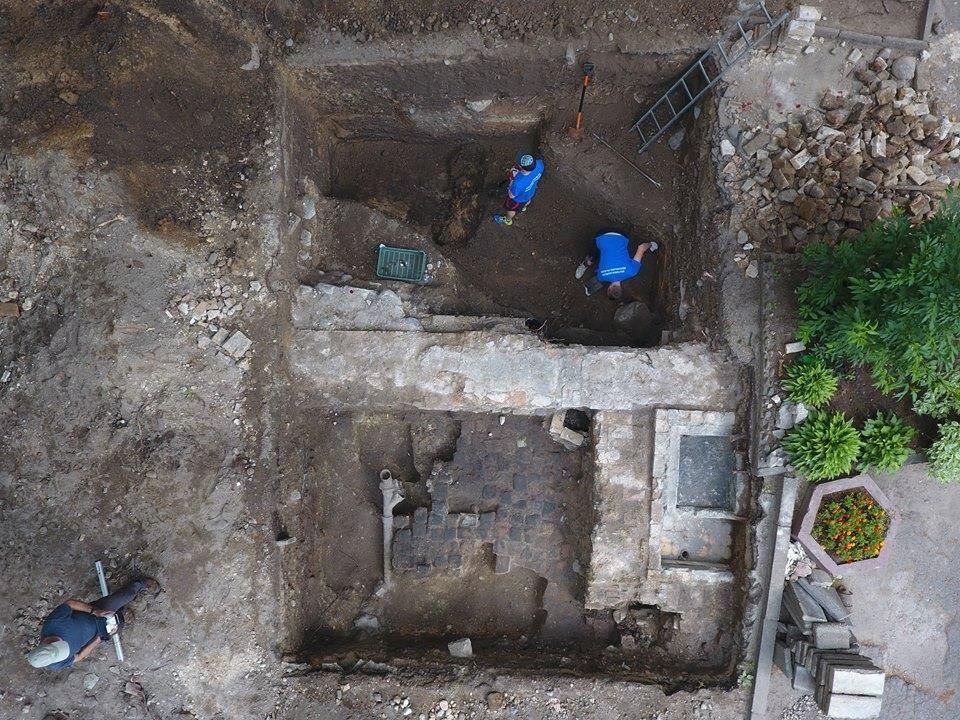
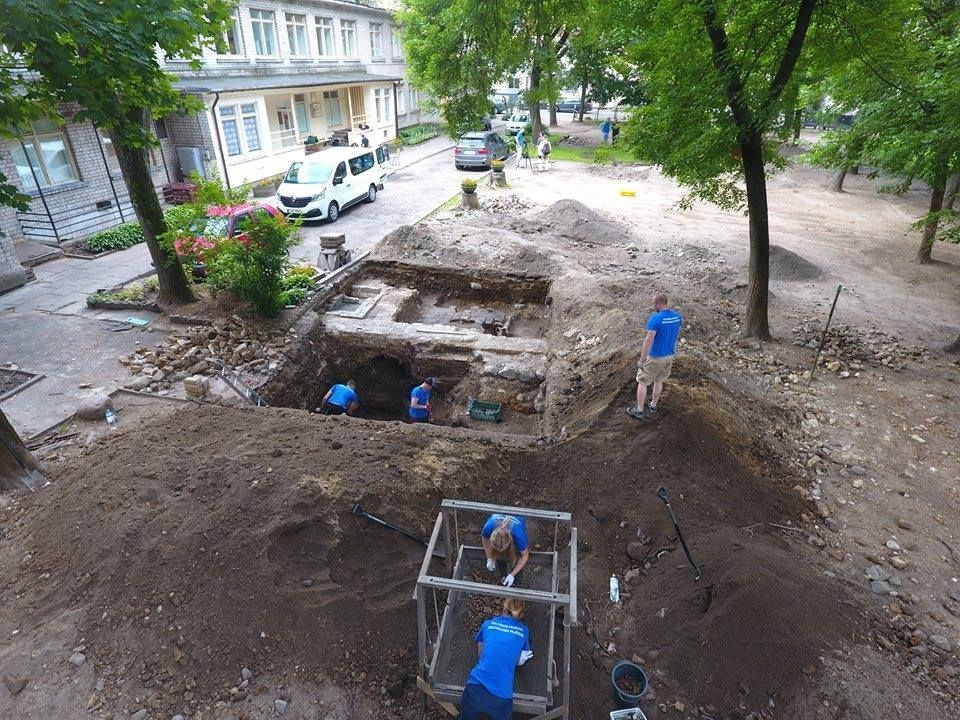
Without Them Nothing is Possible
A big thank you to all the volunteers, students and staff for a fantastic season of excavation at the Great Synagogue and Shulhoyf of Vilna.
Beyond the research achievements this was also a great opportunity for human interaction and friendship across thousands of kilometres, national boundaries and generational gaps.
Also in the picture are Richard Freund and Alastair McClymont and missing are Sondra Litvaityte, Shuli Levenboim, Yankele Levenboim, Varda Cooper and Dorit Cooper.
Excavation the site of the bathhouse and miqva'ot of the Great Synagogue of Vilna. Thank you to our volunteers, staff, workers and friends from Lithuania, Israel, America, Canada and elsewhere.
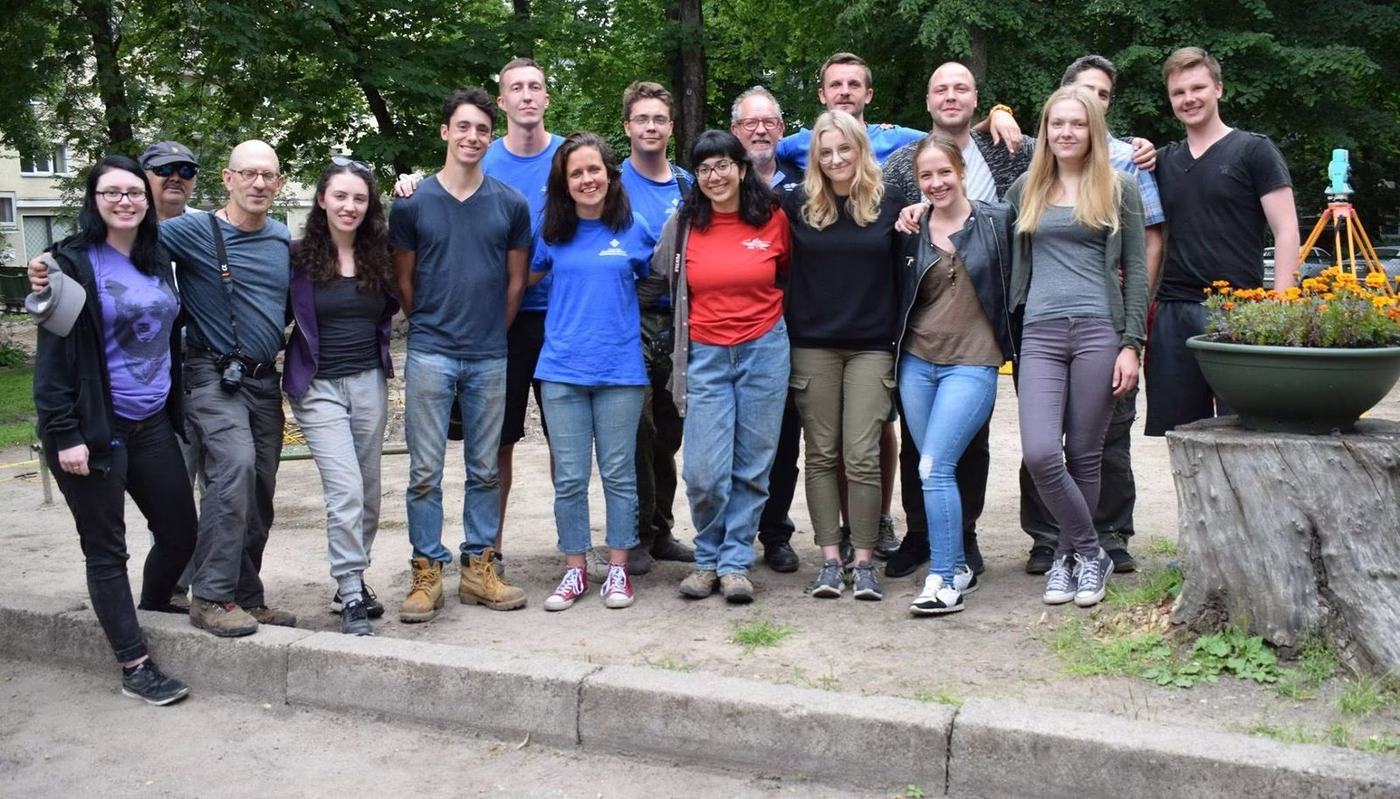
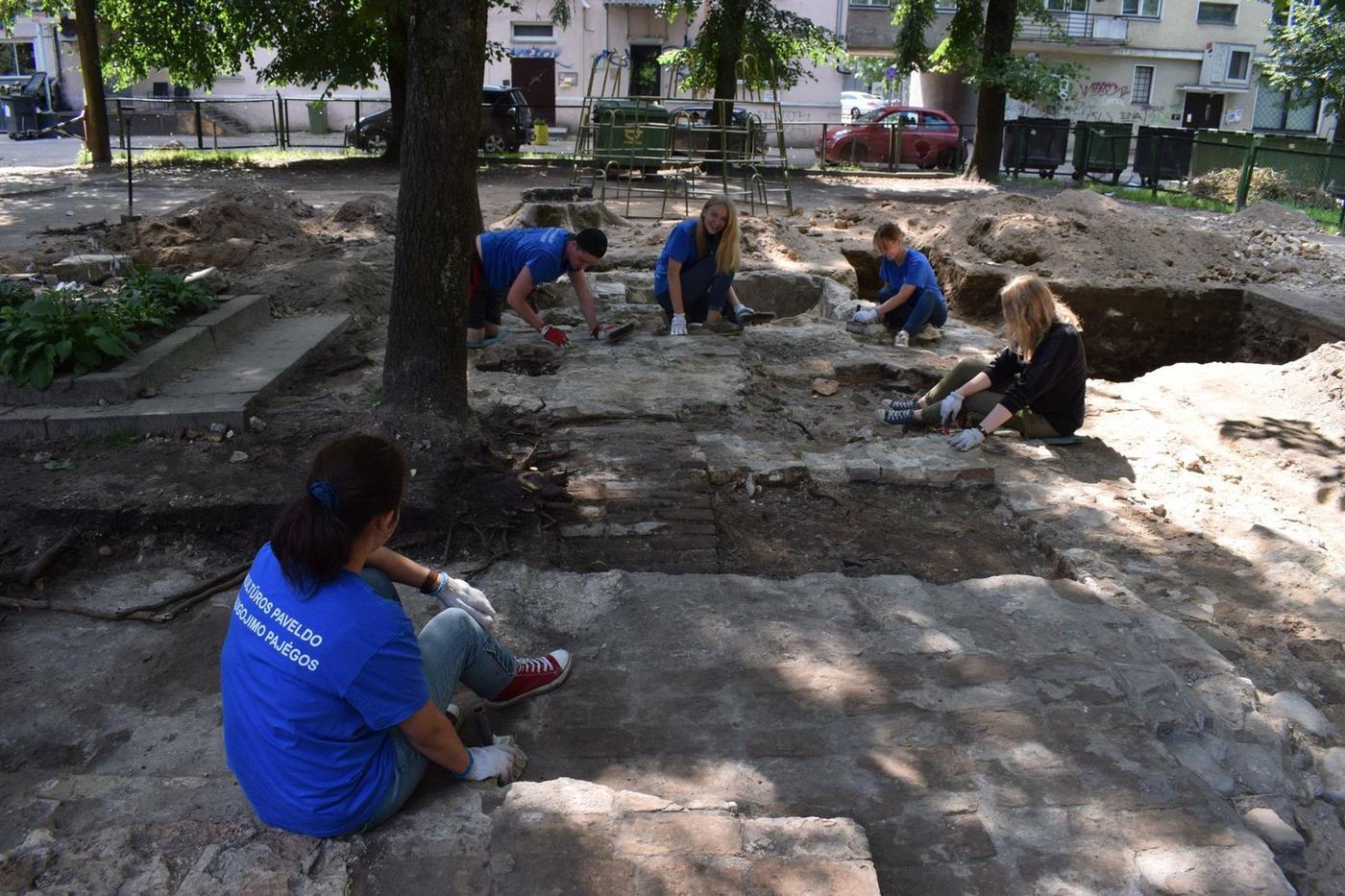
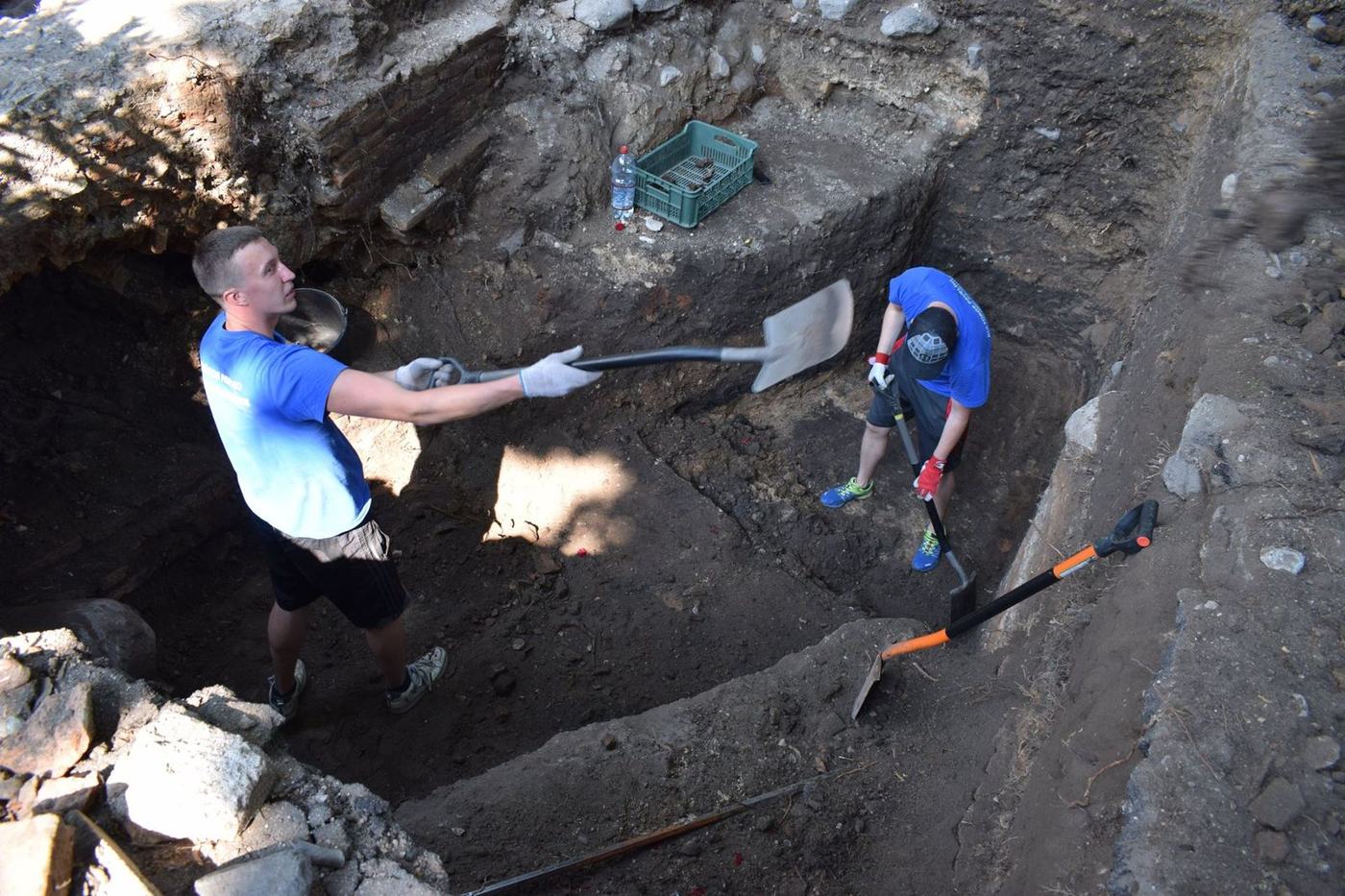
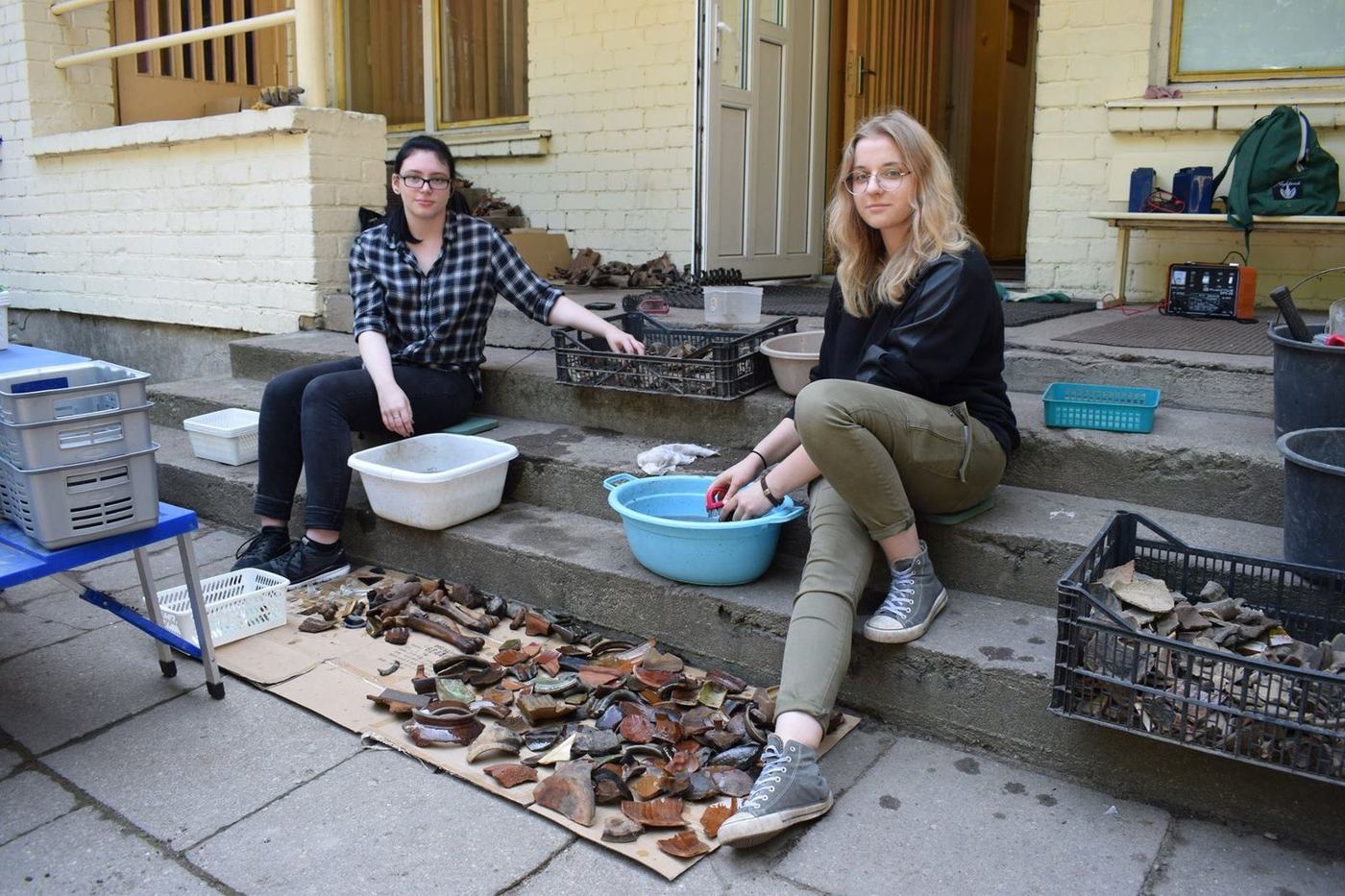
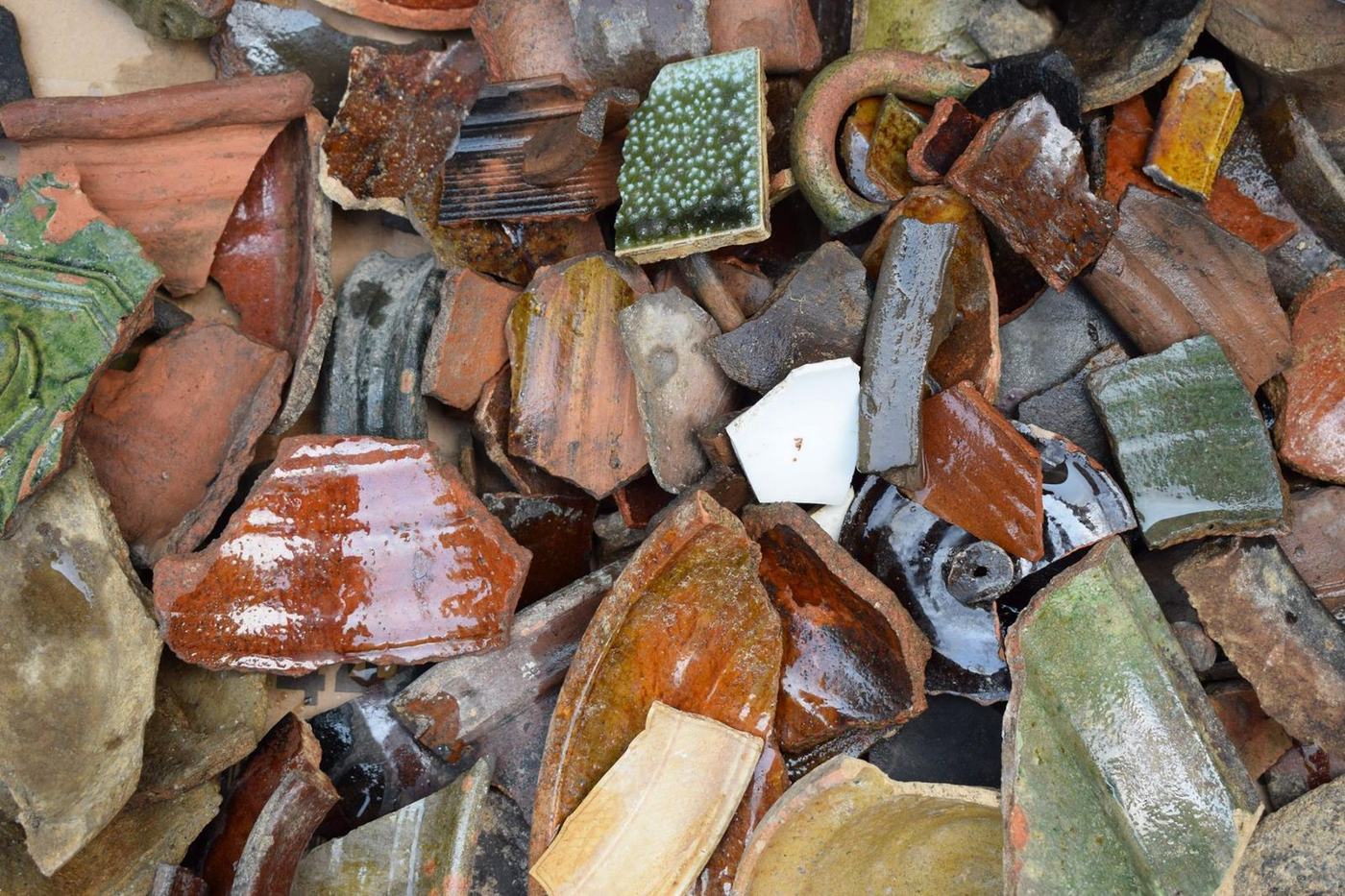
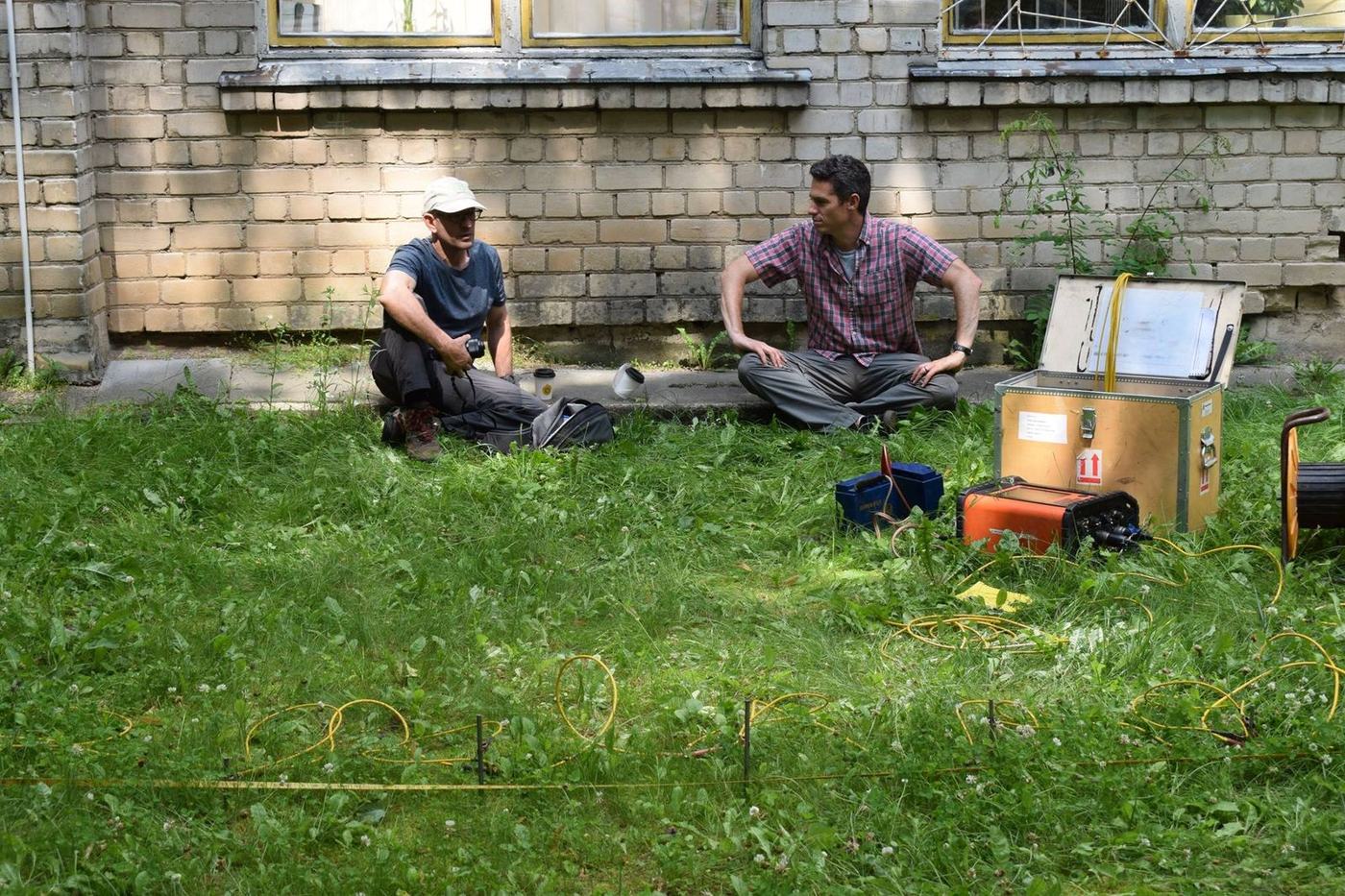
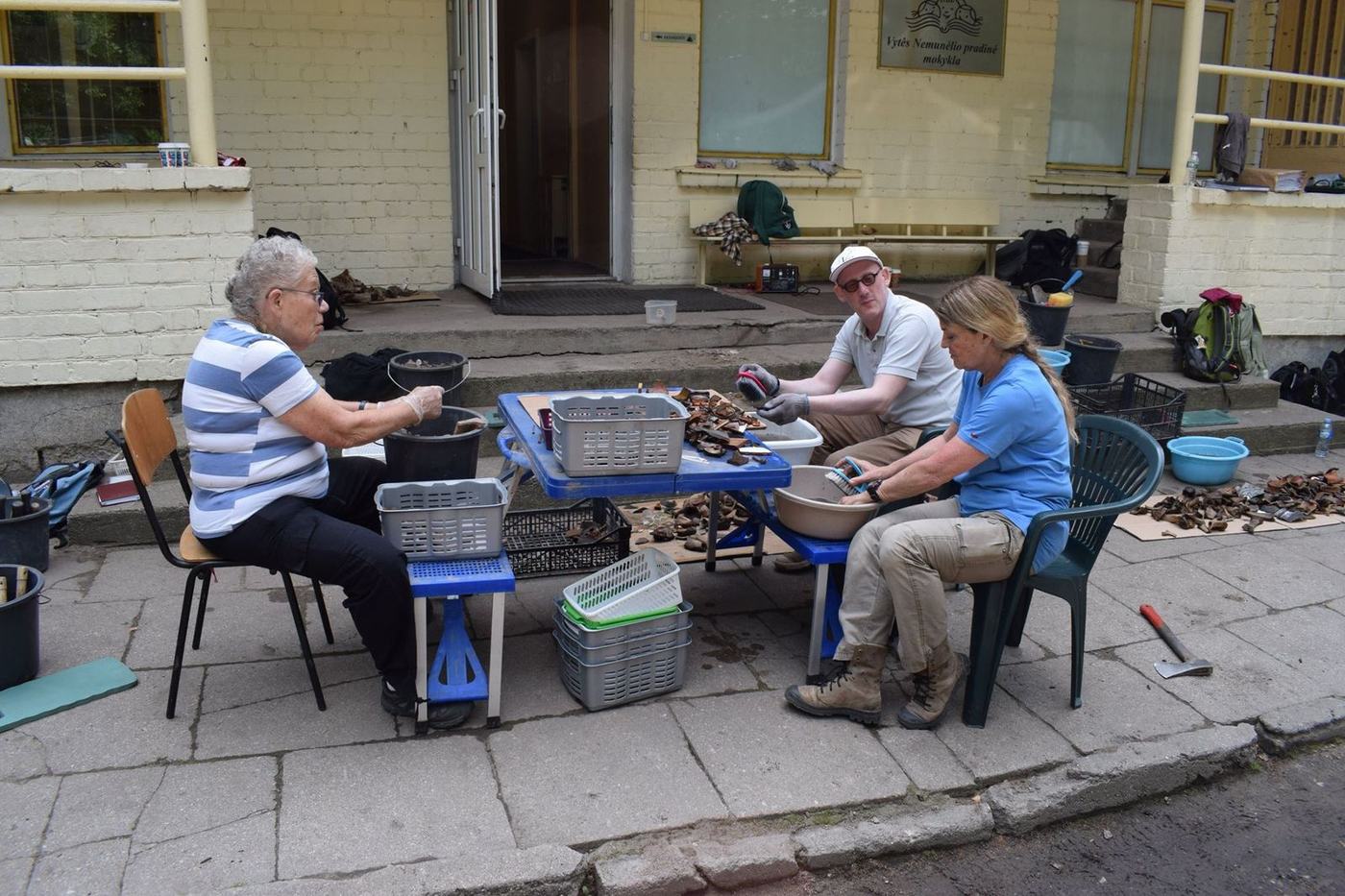
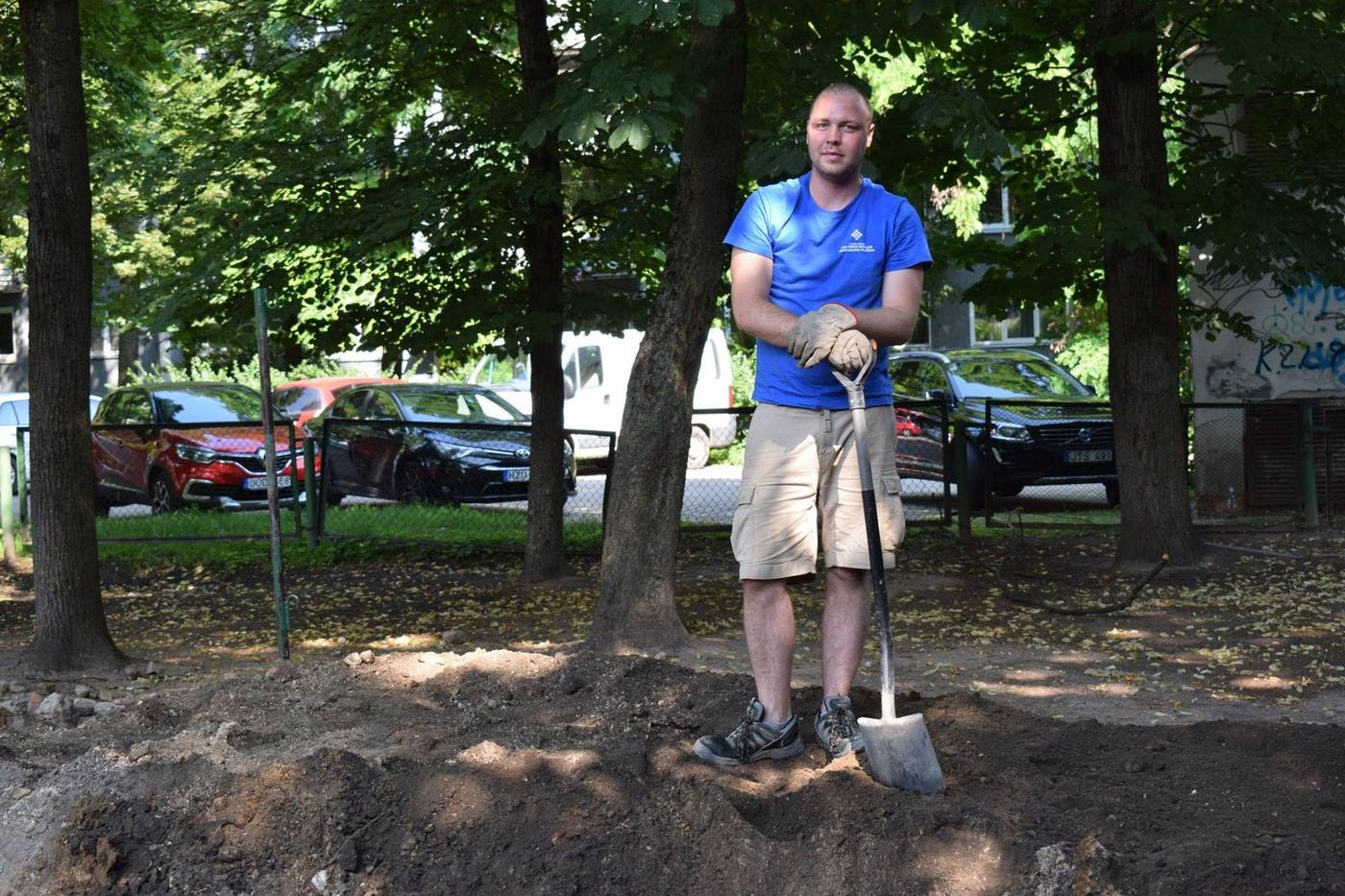
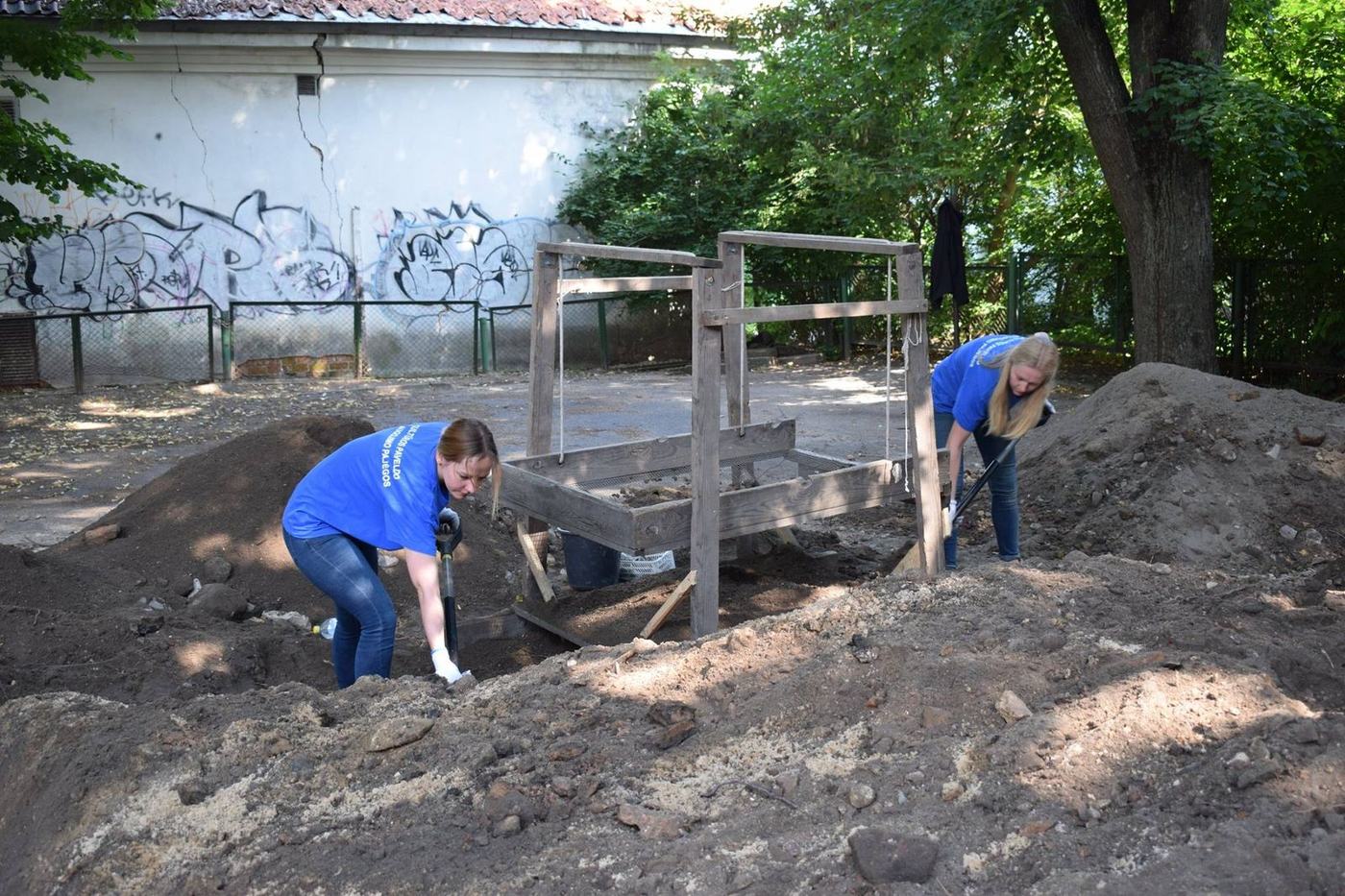
Premiere of the Film ‘Holocaust Escape Tunnel’ at the Vilna Gaon State Jewish Museum
The premiere of the film 'Holocaust Escape Tunnel' at the Vilna Gaon State Jewish Museum in Vilnius this evening. With a full hall, the film was introduced by Museum director, Markas Zingeris, Israel Ambassador Amir Maimon and American Deputy Chief of Mission, Howard Solomon.
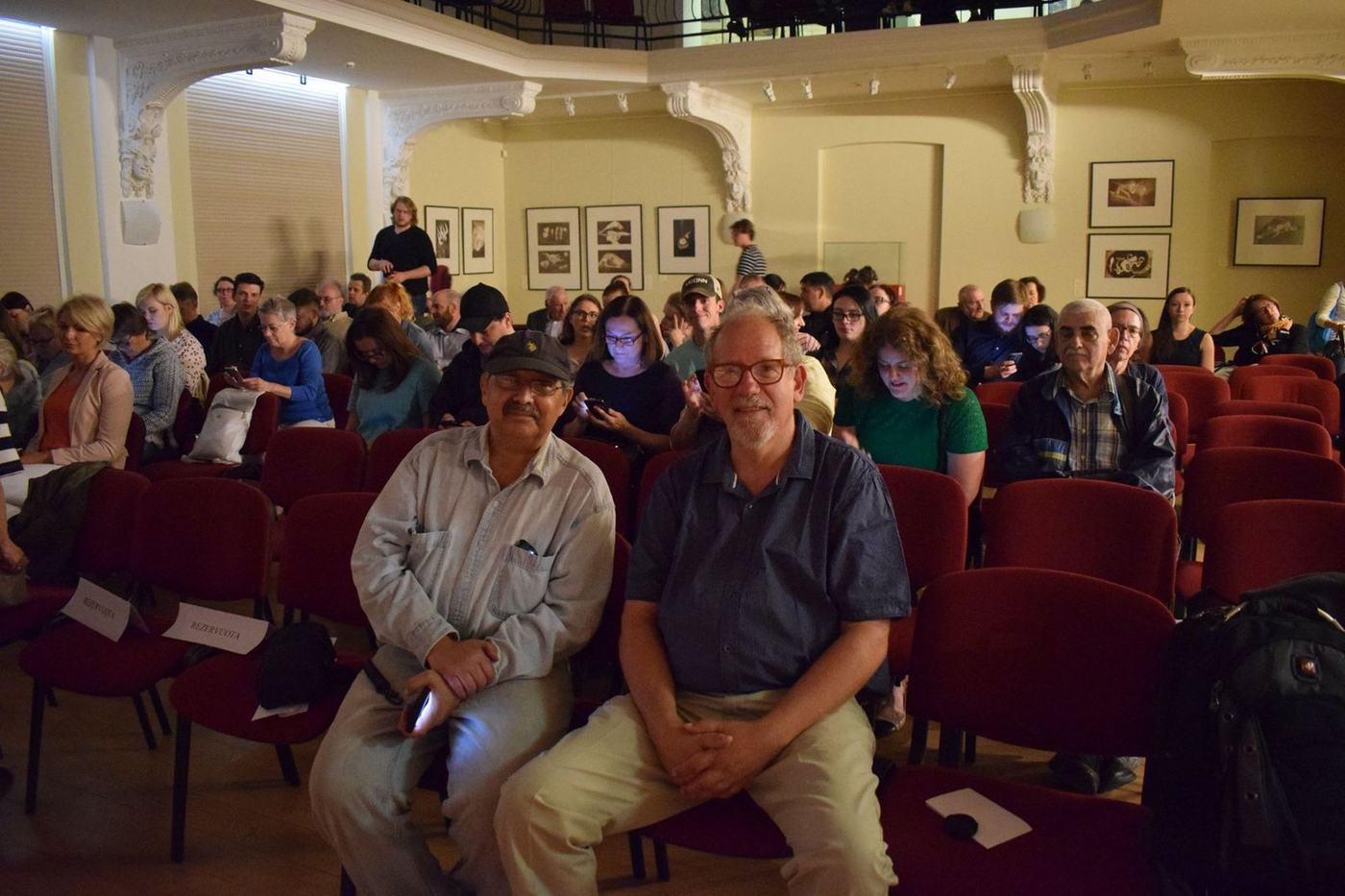
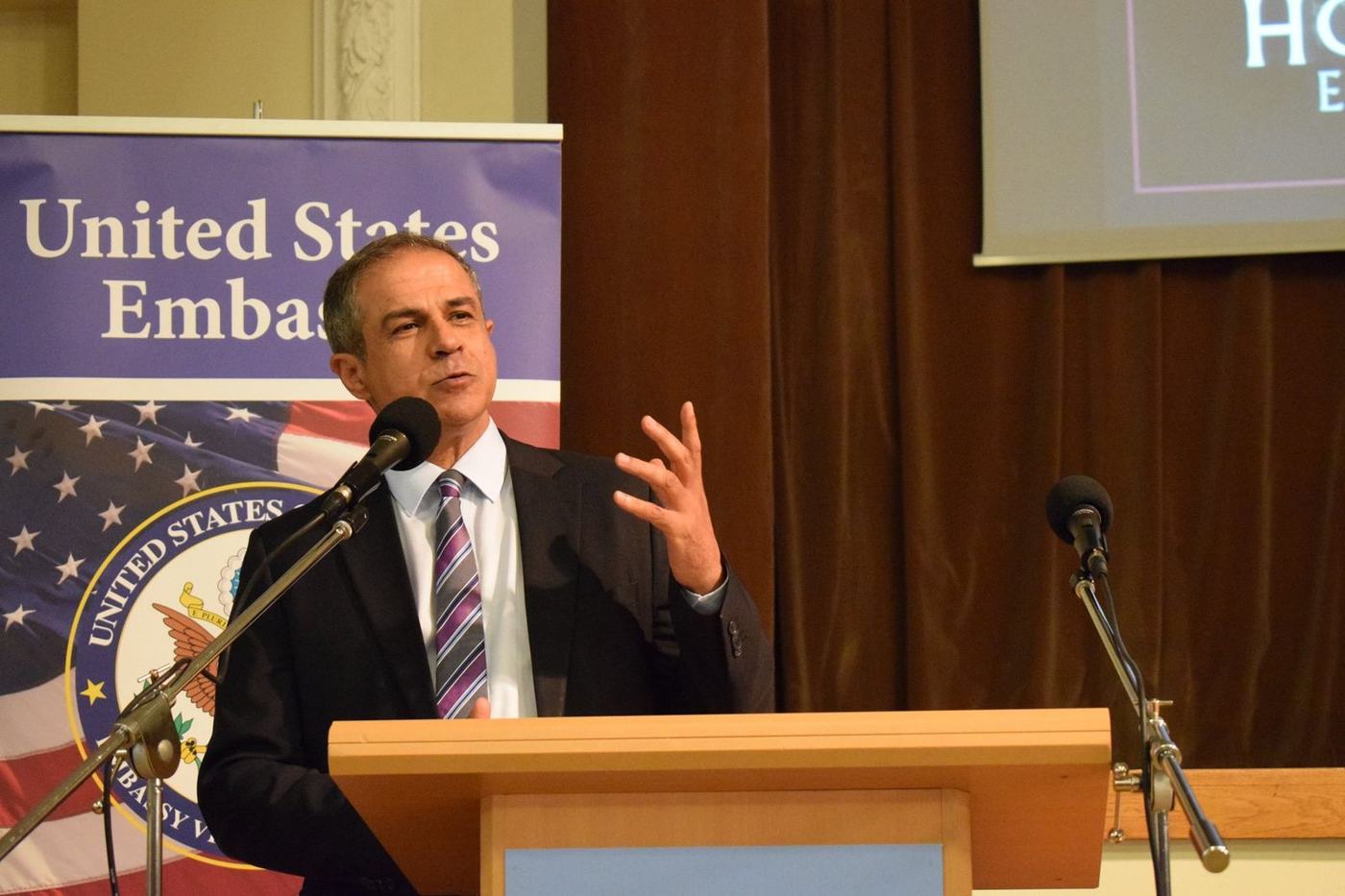
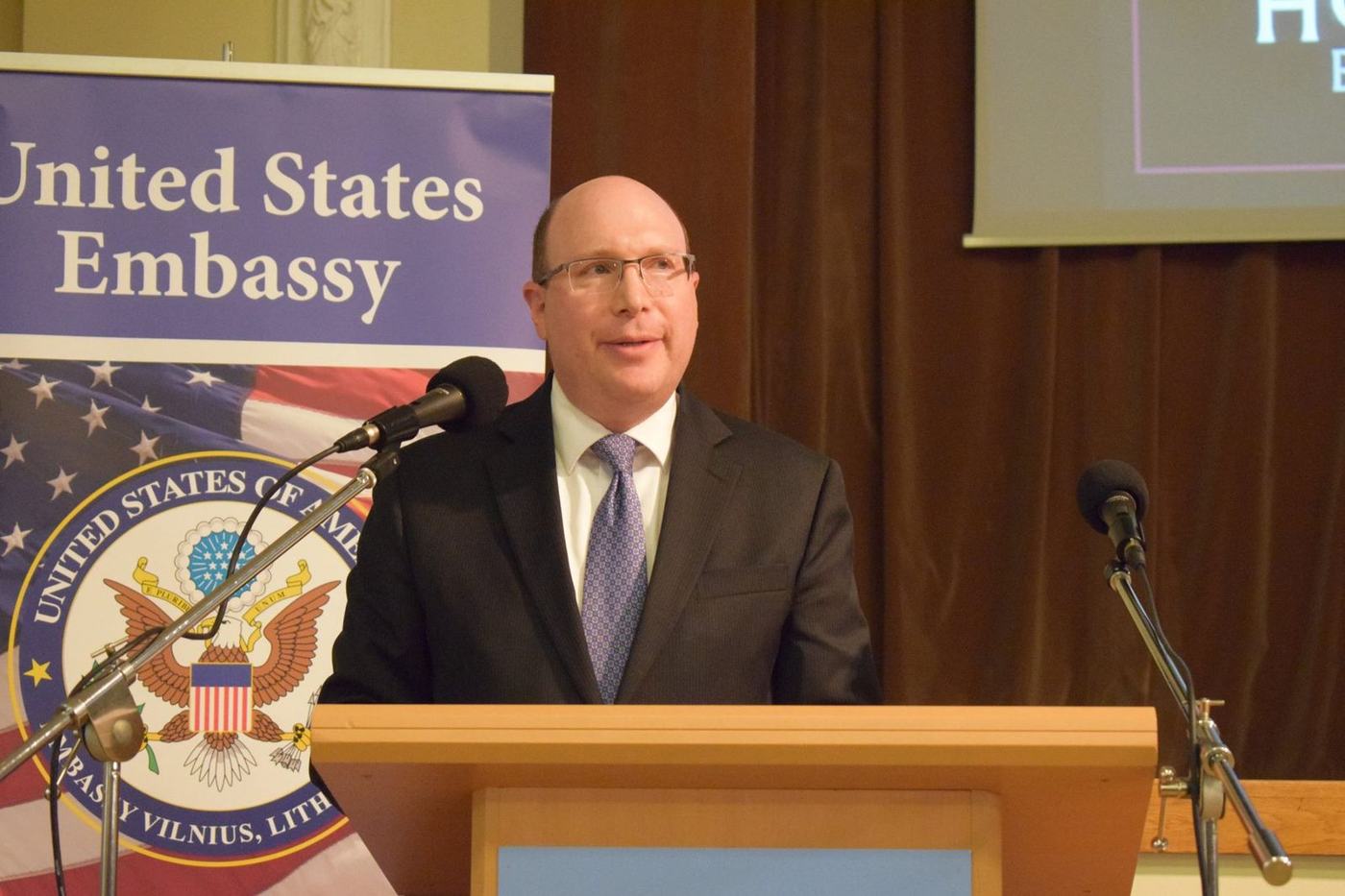
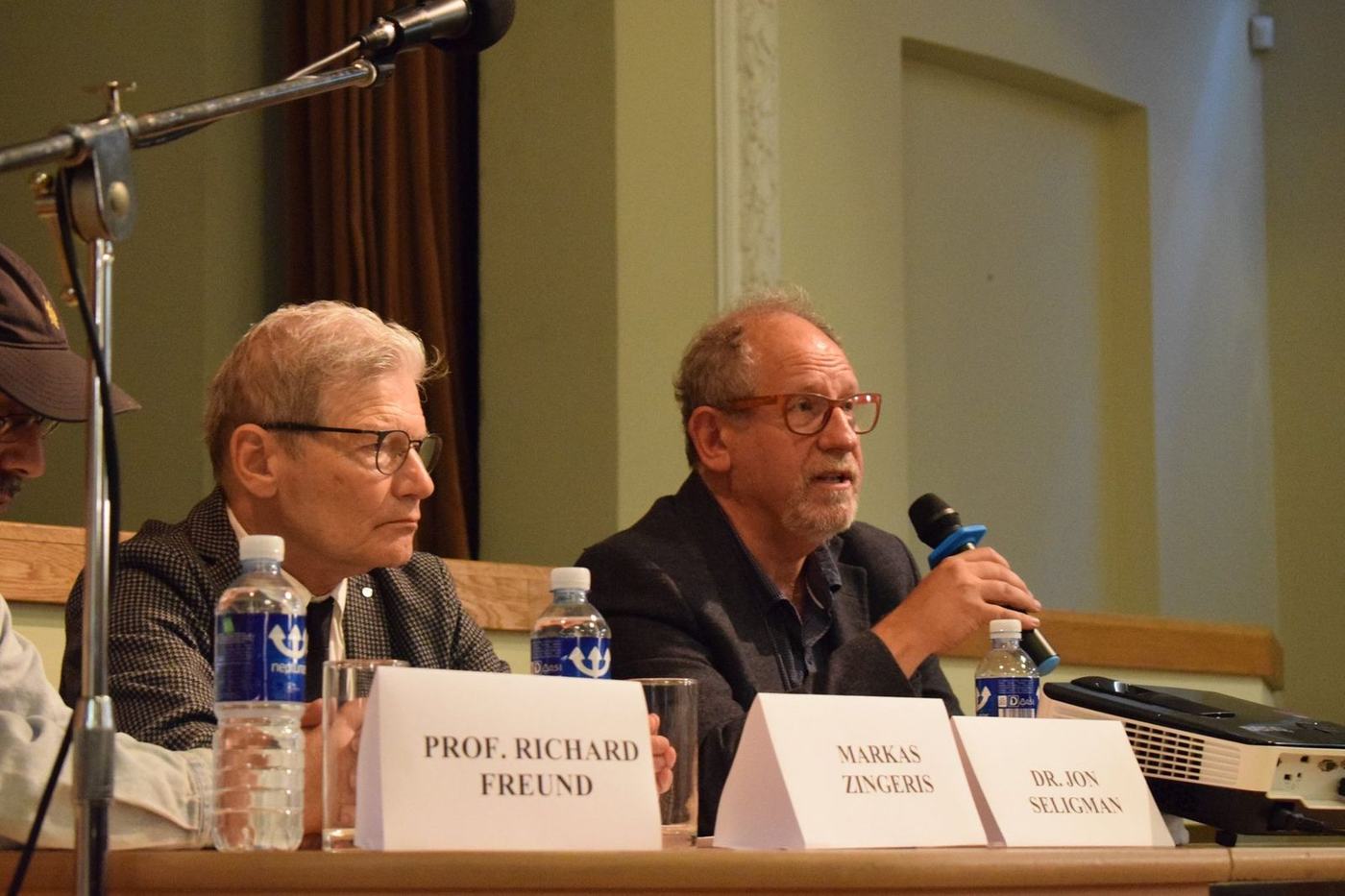
A Miqve is Re-Revealed
On a very rainy day in Vilnius we finished the exposure of one of the Miqva'ot of the Great Synagogue of Vilna. This very exciting find shows the potential for discovering remnants of the Great Synagogue and the surrounding Shulhoyf.
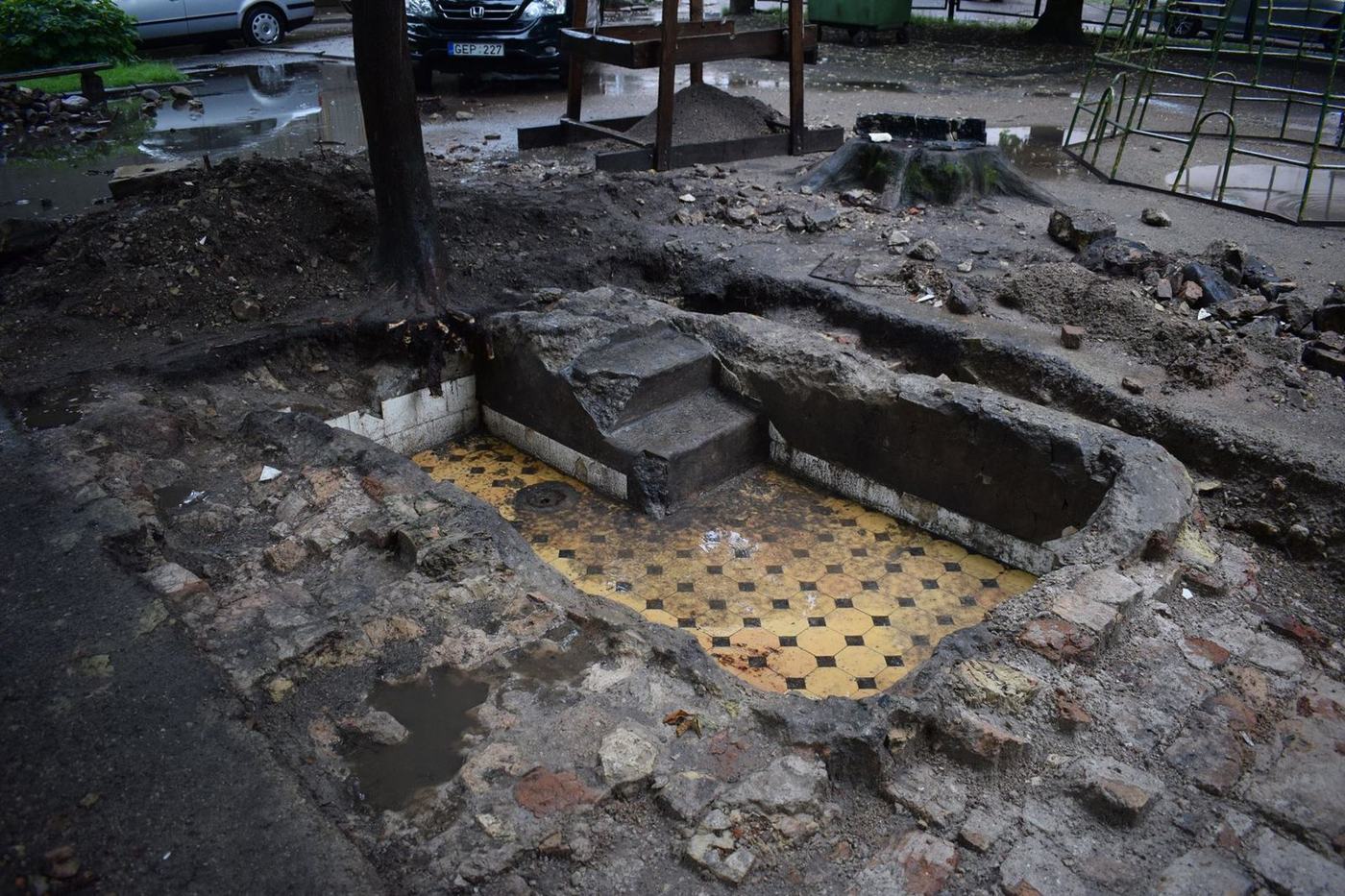
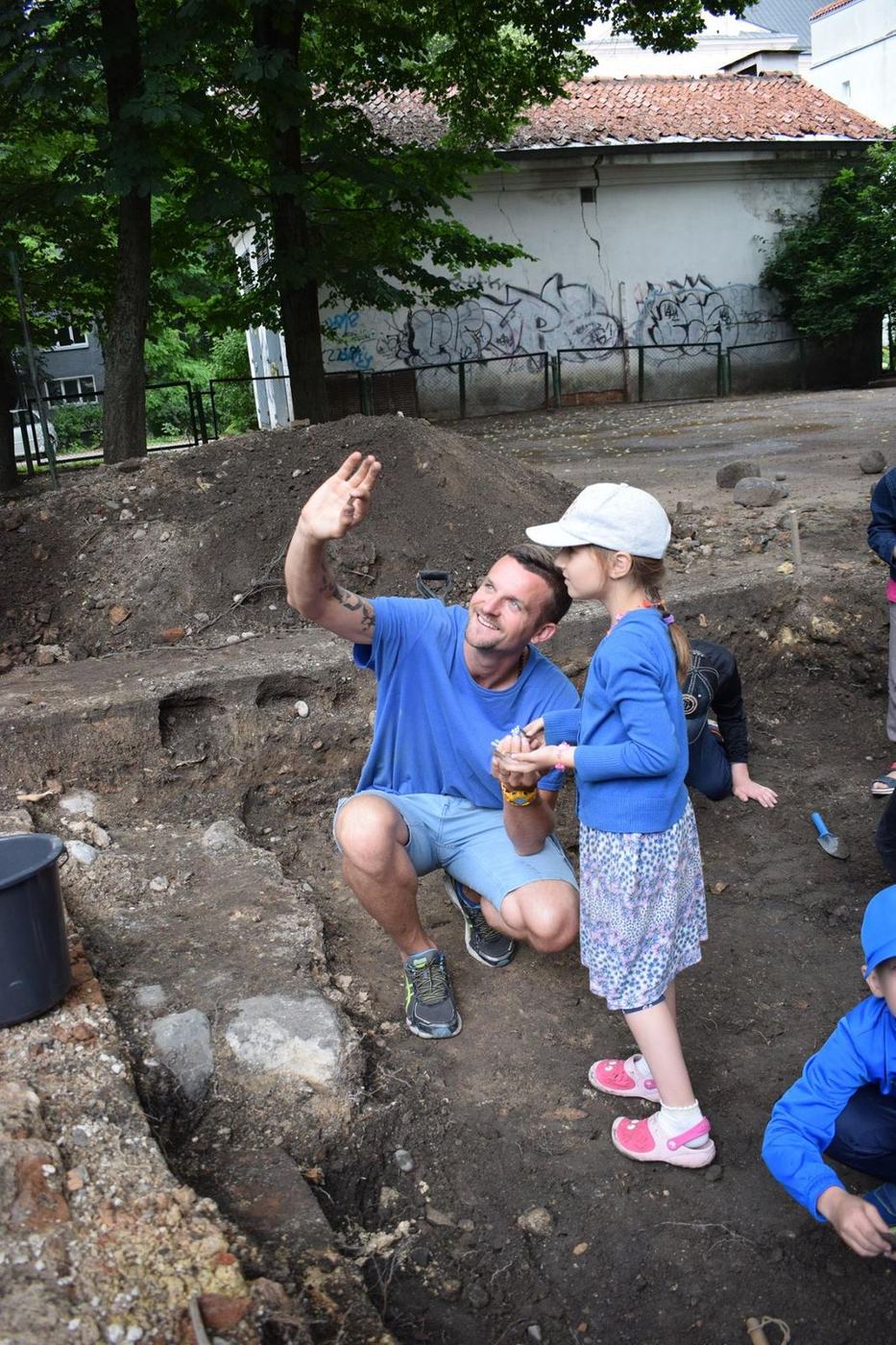
Is This the Miqve?
Day two and we may have found one of the Miqva'ot. Is this tiled structure with a coloured floor one of the baths? Hope to confirm over the coming days.
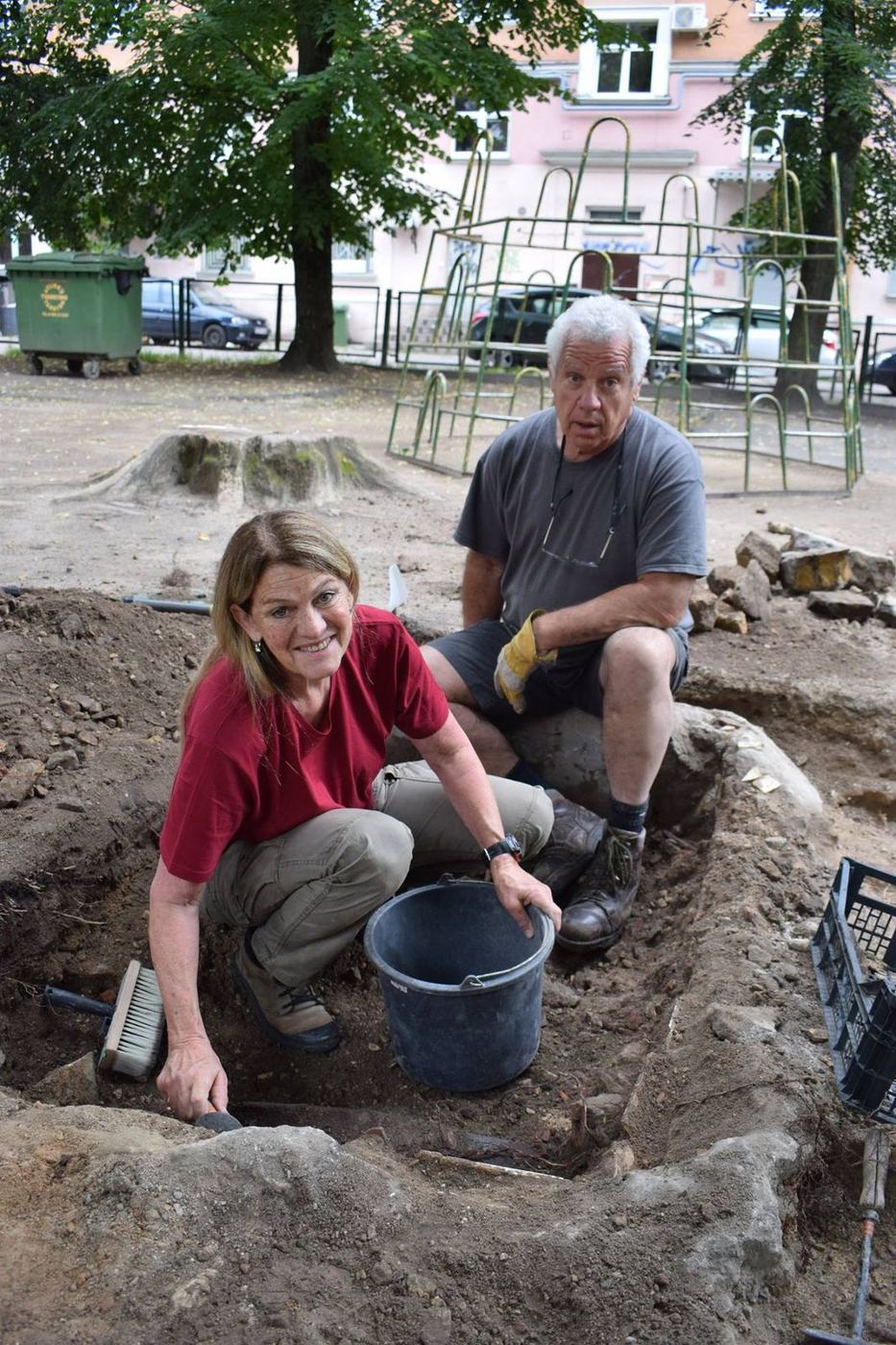
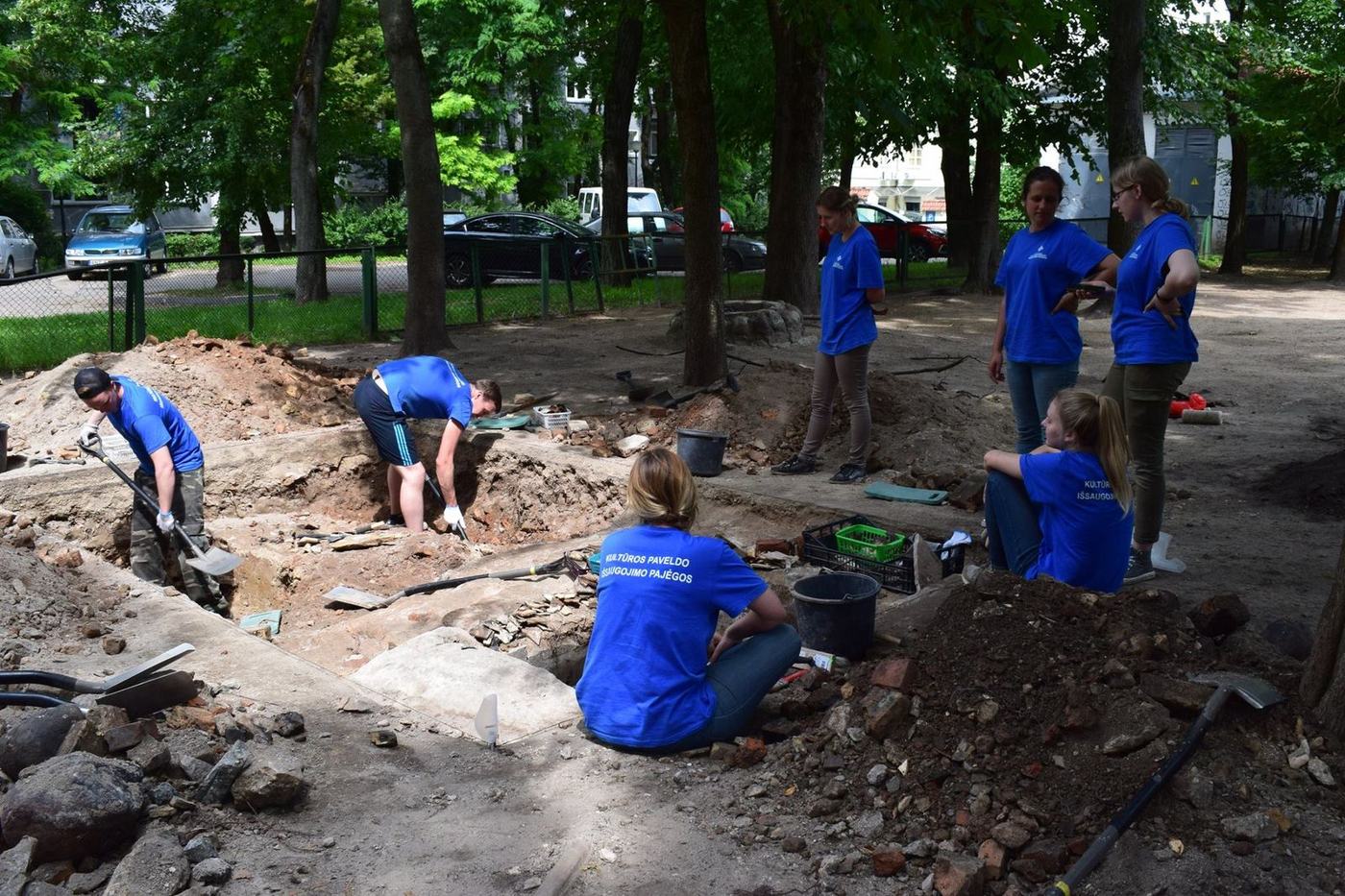
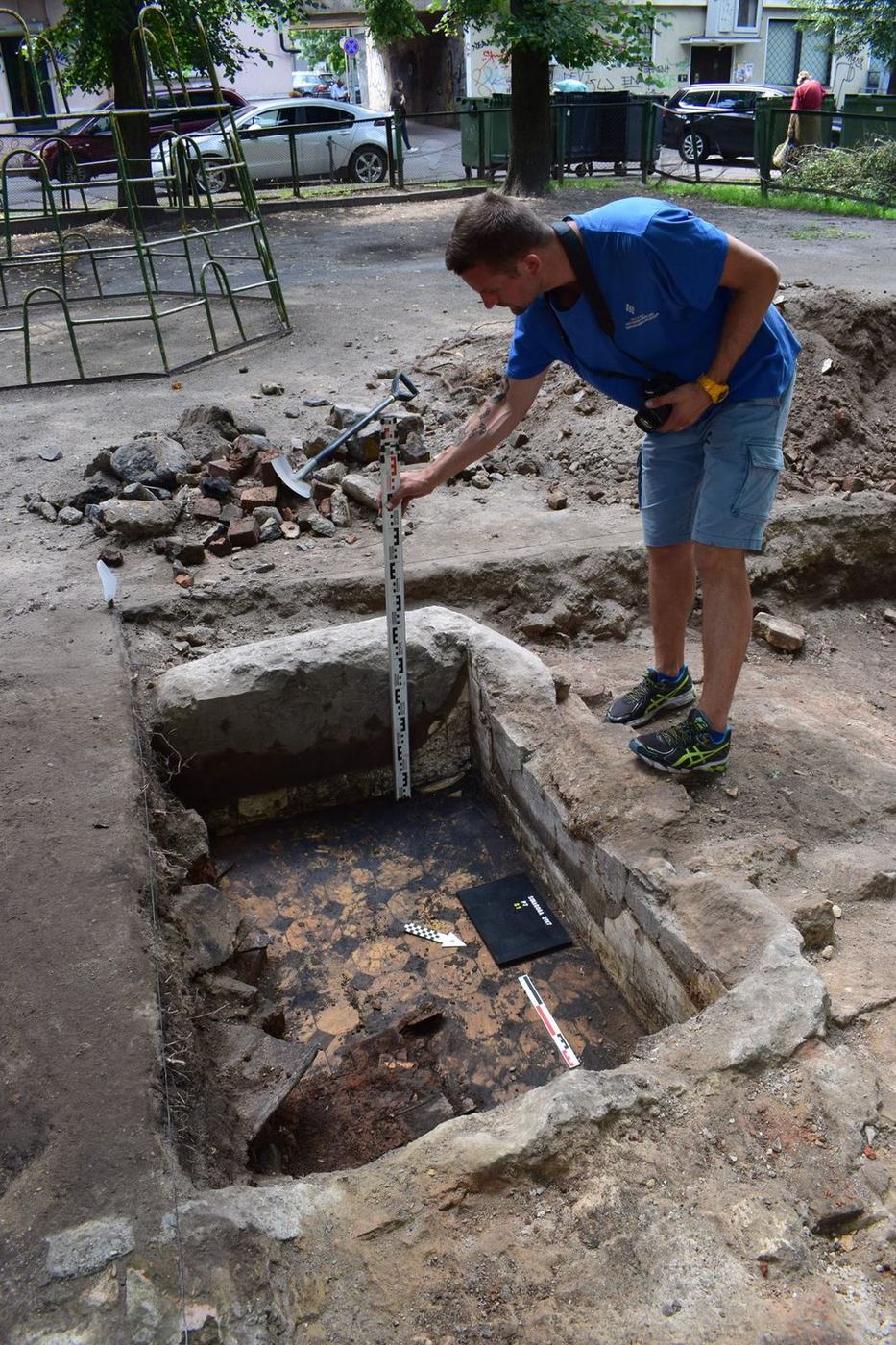
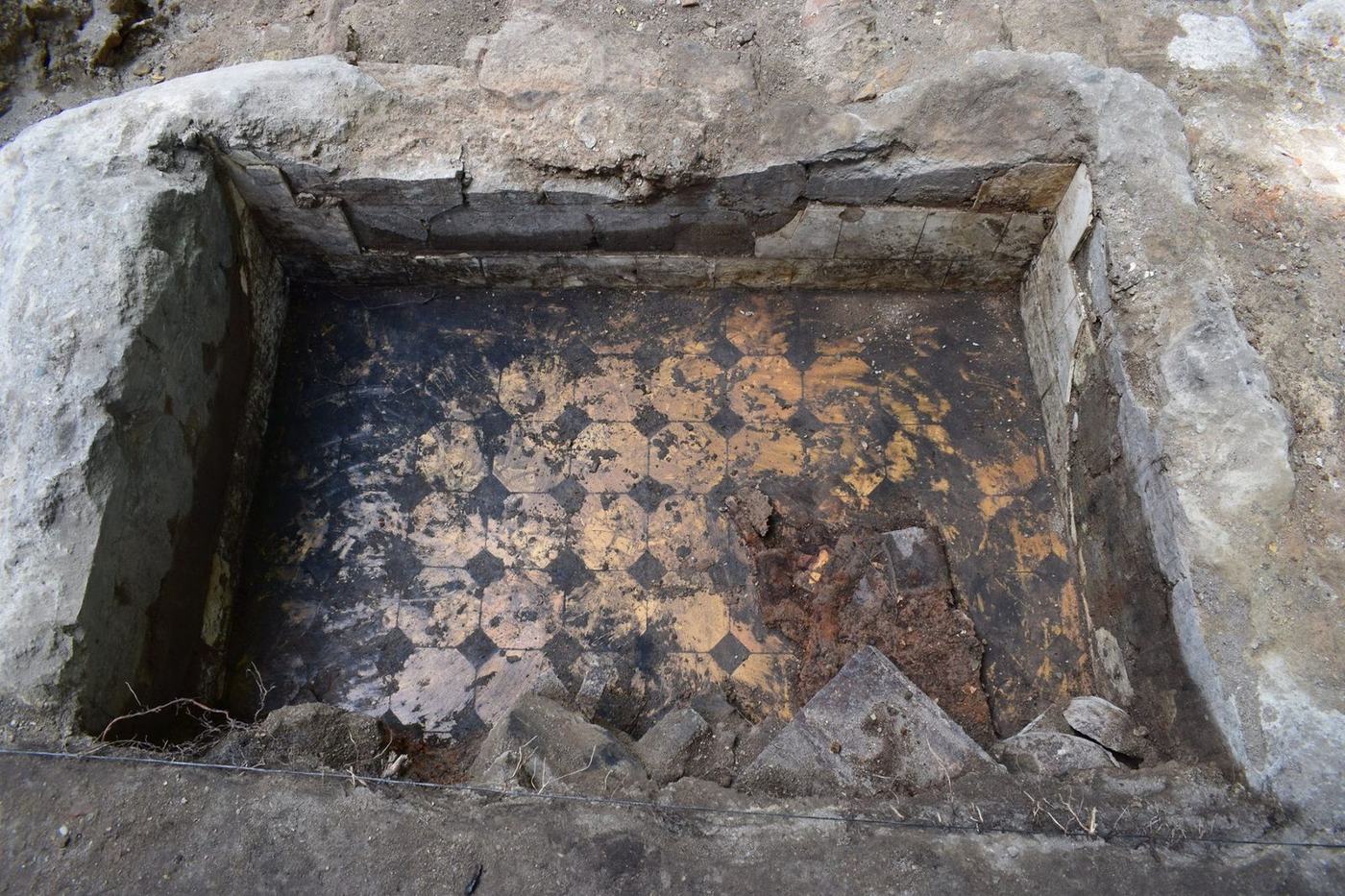
Off we go again!
Today our team of Israelis, Lithuanians and tomorrow also Americans commenced the 2017 season of excavation at the Great Synagogue site. We opened two areas with the aim of uncovering the miqva'ot of the Shulhoyf.
Full data on the objectives of this seasons work are listed on our website at - http://www.seligman.org.il/vilna_synagogue_2017.html.
Anybody who is in Vilnius over the next two weeks is welcome to visit the site and receive an explanation.
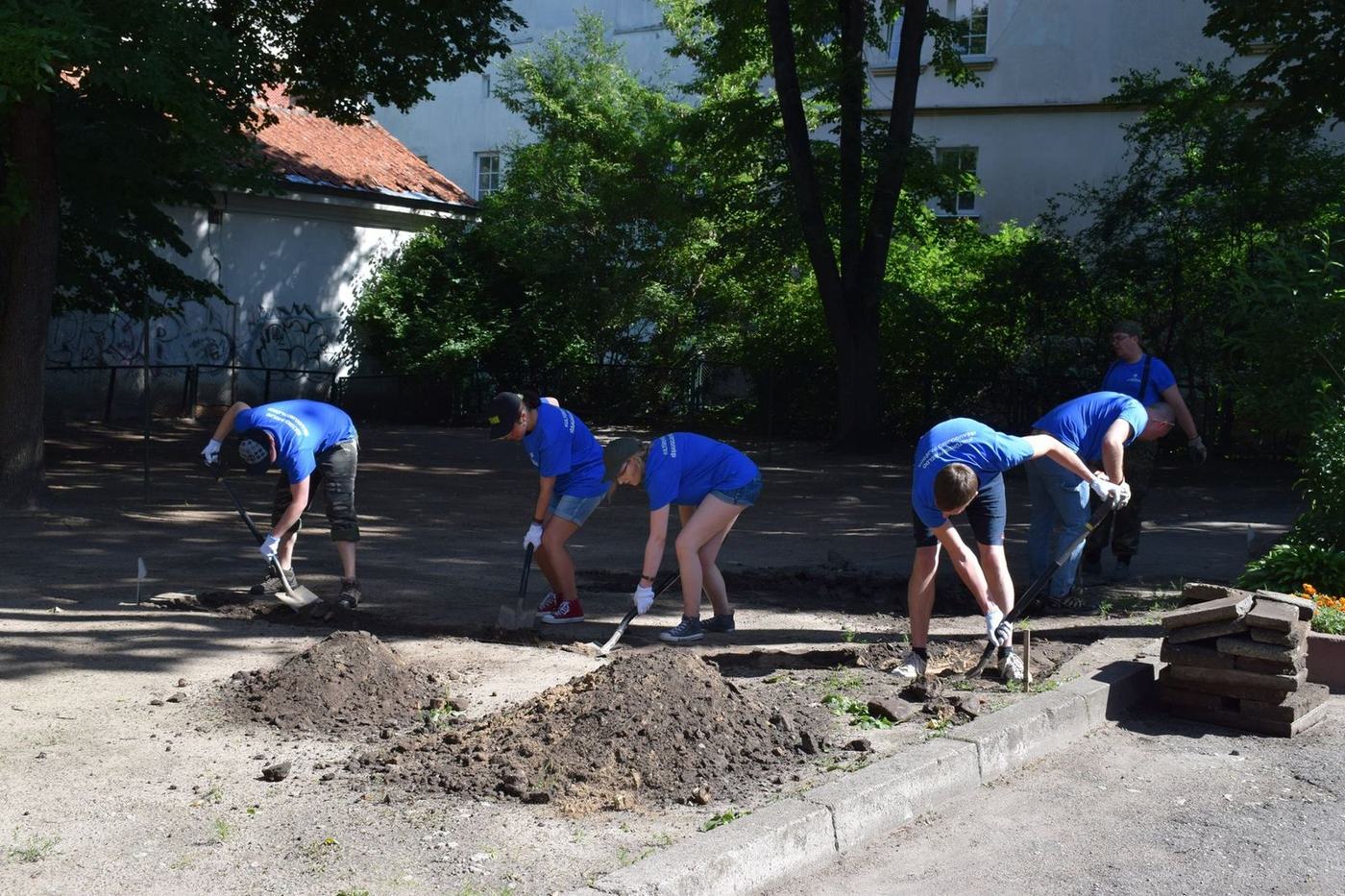
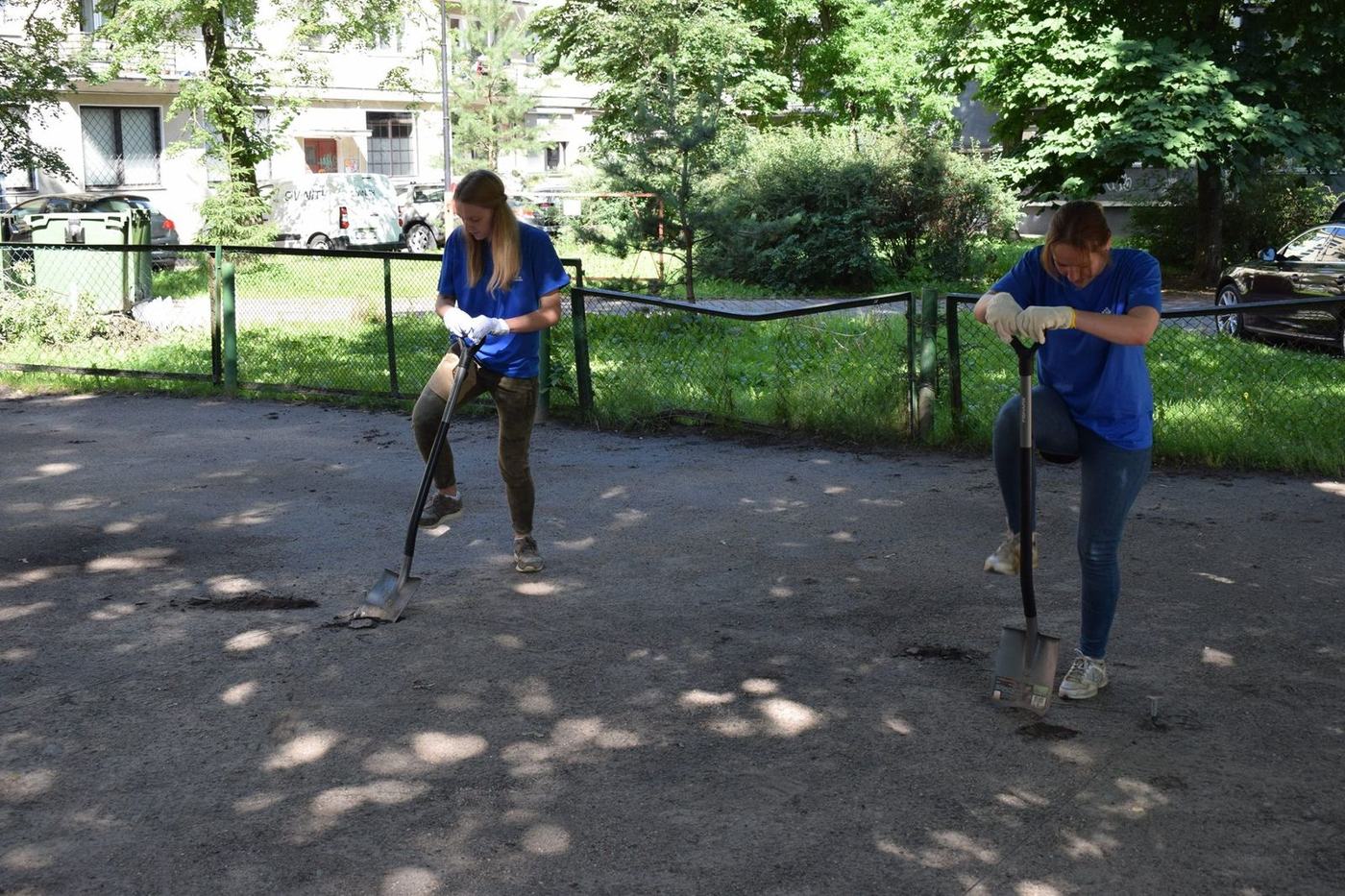
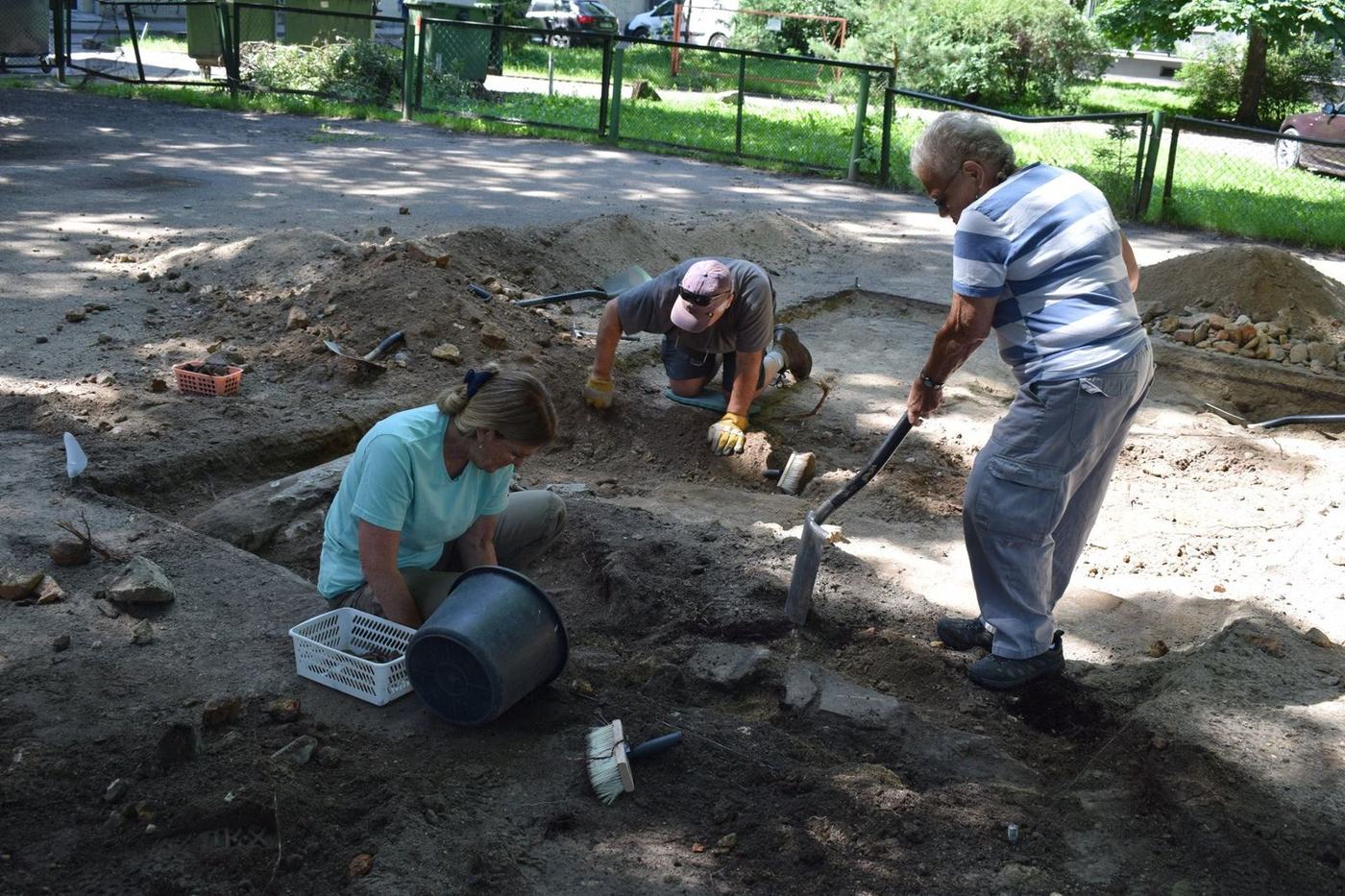
The Israel Premiere of the NOVA Film, Holocaust Escape Tunnel
Thank you to all those who participated in the Israel premiere of the NOVA film, Holocaust Escape Tunnel, last night at Bet Vilna in Tel Aviv.
The film, which was warmly received by some 200 attendees. Before the film Israel Hasson, the Director of the Israel Antiquities Authority; Ambassador Edminas Bogdanas, the Lithuanian ambassador to Israel; and Paula Apsell, the executive producer of NOVA films addressed the crowd. After the screening the children of the 11 escapees from the tunnel at Ponar gave moving accounts about their fathers and their impressions about the film.
We are now making every effort the show the film on public TV in Israel.
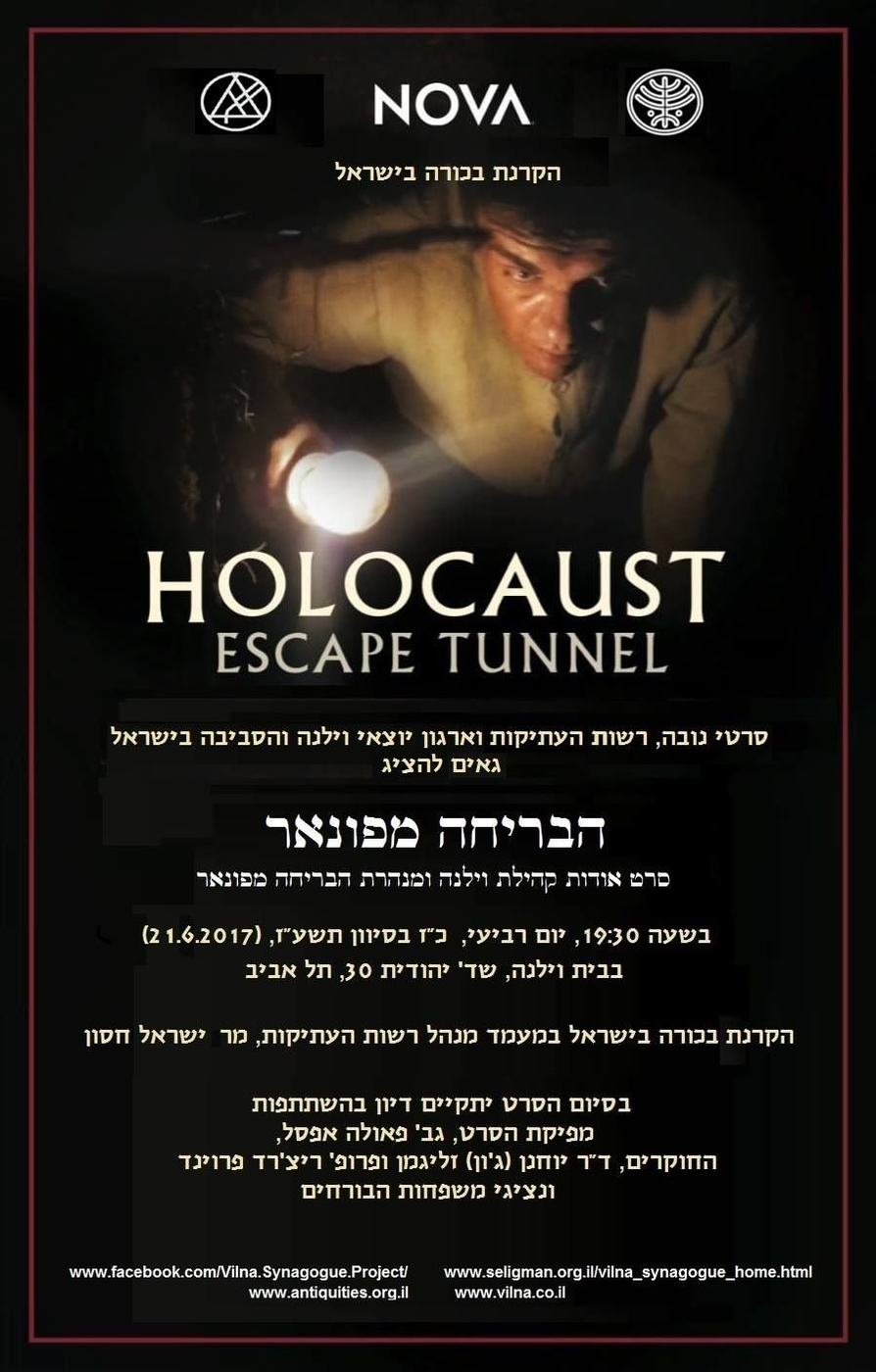
On PBS in the US – Holocaust Escape Tunnel Premieres
The NOVA film about our project, "Holocaust Escape Tunnel", was aired on PBS in the United States in April. We have now been informed that the film was viewed by four million viewers.
Furthermore, the film has been was streamed over 46,000 times across four weeks and has now been shown also in Brazil and Argentina.
We will be premiering the film in Israel on the 21st June. Watch this space for details.
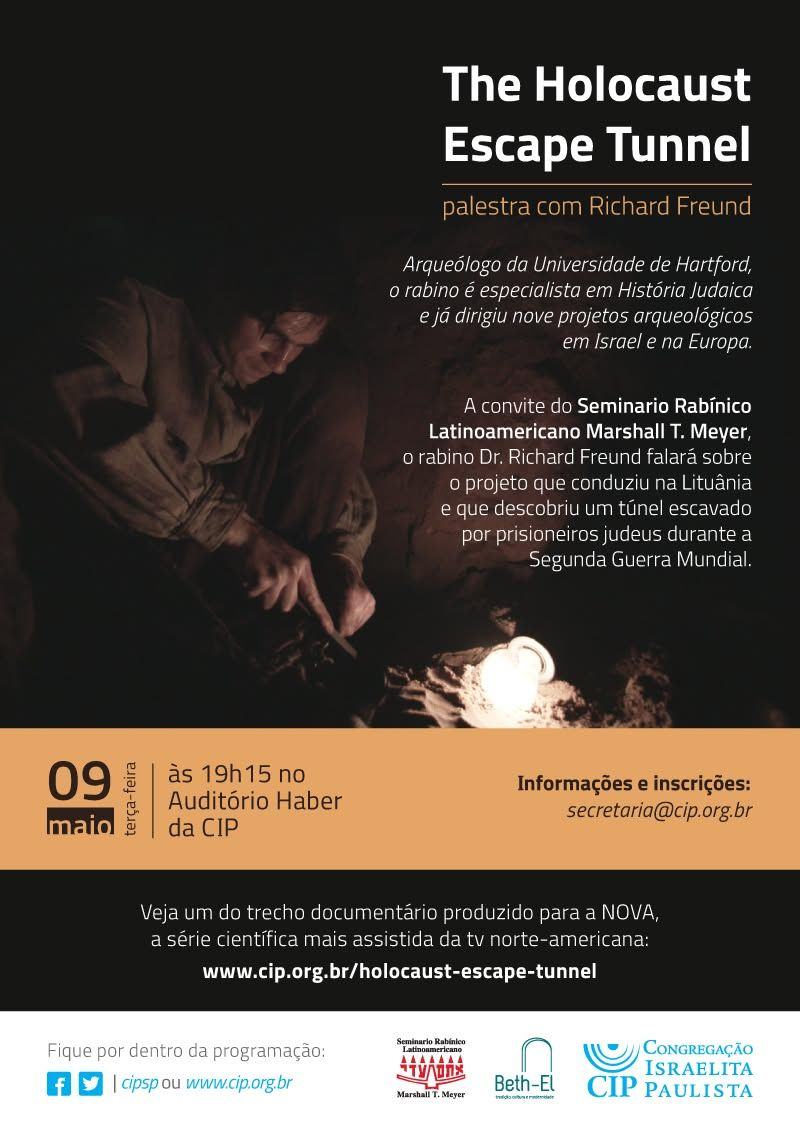
The trailer for the NOVA film on our project in Vilna and Ponar.

הרצאה על חפירות בית הכנסת הגדול של וילנה 2016
תודה לכל מי שהגיע להרצאה בבית וילנה ביום חמישי. תודה גם לחנה עמיר, בתו של מוטקה זיידל ורותי קנטרוביץ-אלוני, בתי של דוד קנטרוביץ, ששיתפו אותנו מזכרונות מאביהן, שניהם בורחים דרך המנהרה בפונר.
Thank you to all those who came to the lecture at Bet Vilna on Thursday. Thank you also to Hana Amir, the daughter of Motke Zeidel and Ruti Kanterovitz-Aloni, the daughter of David Kanterovitz, who engaged us with memories of their fathers, both escapees through the tunnel at Ponar.
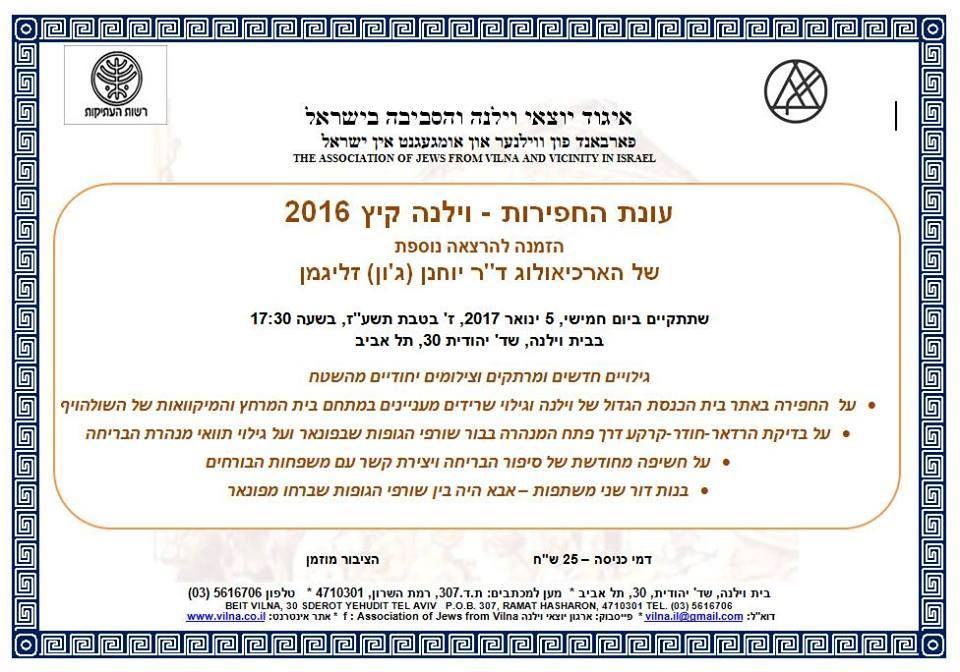
2016 (19 stories)
Tsila Zak Talks about Her Memorial Proposal for the Site of the Great Synagogue
Return to Vilna: Tsila Zak talks about the memorial project at the site of the Great Synagogue in Vilna (Hebrew).
The film was broadcast on the Royim Olam newscast of the Israel Broadcast Authority.

An Amazing Reunion in Israel with the Descendants of the Escapees through the Tunnel at Ponar
An amazing reunion in Israel with the descendants of the escapees through the tunnel at Ponar.
From left to right:
Prof. Haim Matzkin, son of Zalman Matzkin; Mickey Kantor, Director of Vilna House in Tel Aviv; Hani & Dr. Sabina Dombe, granddaughter and daughter of Yizhak Dugim; Rachel Sharon, daughter of Shlomo Gul; Drorit Zohar & Ruti Aloni, daughters of David Kanterovich; Hana Amir, daughter of Motke Zeidel. At the back, Dr. Richard Freund and Dr. Jon Seligman.
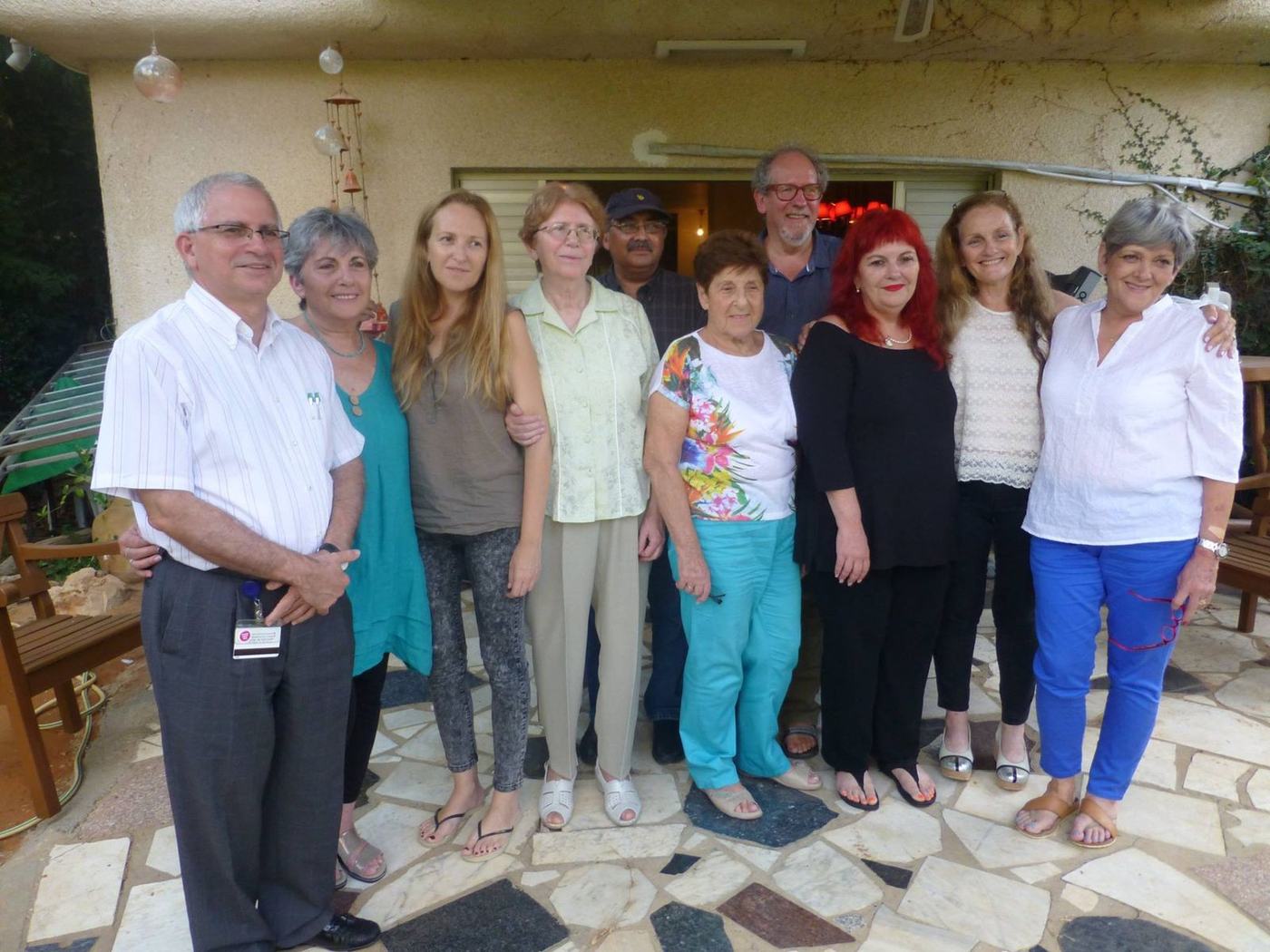
'Jerusalem - The Vilna of Israel'
A poster that went up in Jerusalem this week is titled 'Anguish in Vilna'. The poster, found only in Jerusalem's ultra-Orthodox neighbourhoods, addresses concern over the possible destruction of graves in the old cemetery in Vilna.
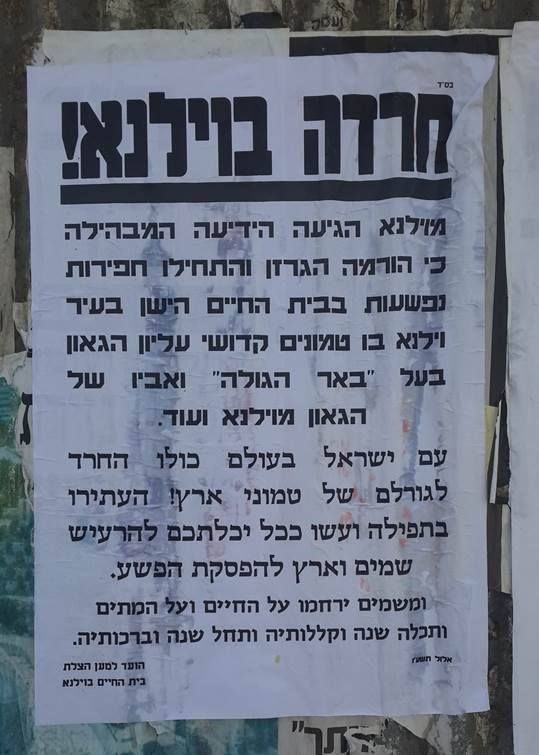
Thanks to All for a Season of Good Work
After a week back in Israel, after an exciting season excavating at the site of the Vilna Great Synagogue and Shulhoyf, this is an opportunity to thank all of those who helped and participated in the excavation. I would also like to thank all of the many people who visited the excavation and expressed their genuine interest. This season is, we hope, a forerunner to a much larger season of work in 2017.
I will be uploading a summary of this year's work at the site over the coming days, but first and foremost I would like to thank:
Our staff: Jon Seligman, Zenonas Baubonis, Richard Freund, Harry Jol, Philip Reeder, Tsila Zak, Paul Bauman, Alastair McClymont and especially Mantas Daubaras.
Our students and volunteers: Mika Schuster, Shuli Levinboim, Yankele Levinboim, Varda Cooper, Mordechai (Motti) Cooper, Nicole Awad, Rachel Polinsky, James Erickson, Alex Kleinschmidt, Jackie Seamans and Thomas Wavrin.
Our workers and draftsmen: Saulius Kurpe, Alius Kviklys, Arunas Rakstelis, Vytautas Jasinevicius, Rytis Meidunas, Jonas Jurgelevicius, Ricardas Racinskas.
The Nova-Wolfinger film team who are documenting the excavation - Owen Palmquist, Kirk Wolfinger.
Our PR people - Yoli Schwartz, Jenifer Welsh
and our many visitors: Romas Jerockis - Vice Minister of Culture, Remigijus Šimašius - Mayor of Vilnius; Faustas Latenas - Advisor to the Prime Minister of Lithuania; Algimantas Degutis - the Deputy Director of the Department of Cultural Heritage; Amir Maimon - Ambassador of Israel to Lithuania; Faina Kukliansky - President of the Jewish Community of Lithuania; Sergey Kanovitch - Seduva Jewish Memorial Fund; Prof.Rimvydas Petrauskas, Prof. Loreta Skurvydaite, Prof. Albinas Kuncevicius and Dr. Jurgita Verbickiene of Vilnius University; Dr. Gintautas Zabiela – Klaipedos University; and numerous others.
Thank you all and see you again next year,
Jon Seligman
Hello Mr. Mayor
Meetings with the Mayor of Vilnius, Remigijus Šimašius and by the Deputy Director of the Department of Cultural Heritage, Algimantas Degutis, to the excavation of the Great Synagogue of Vilna.
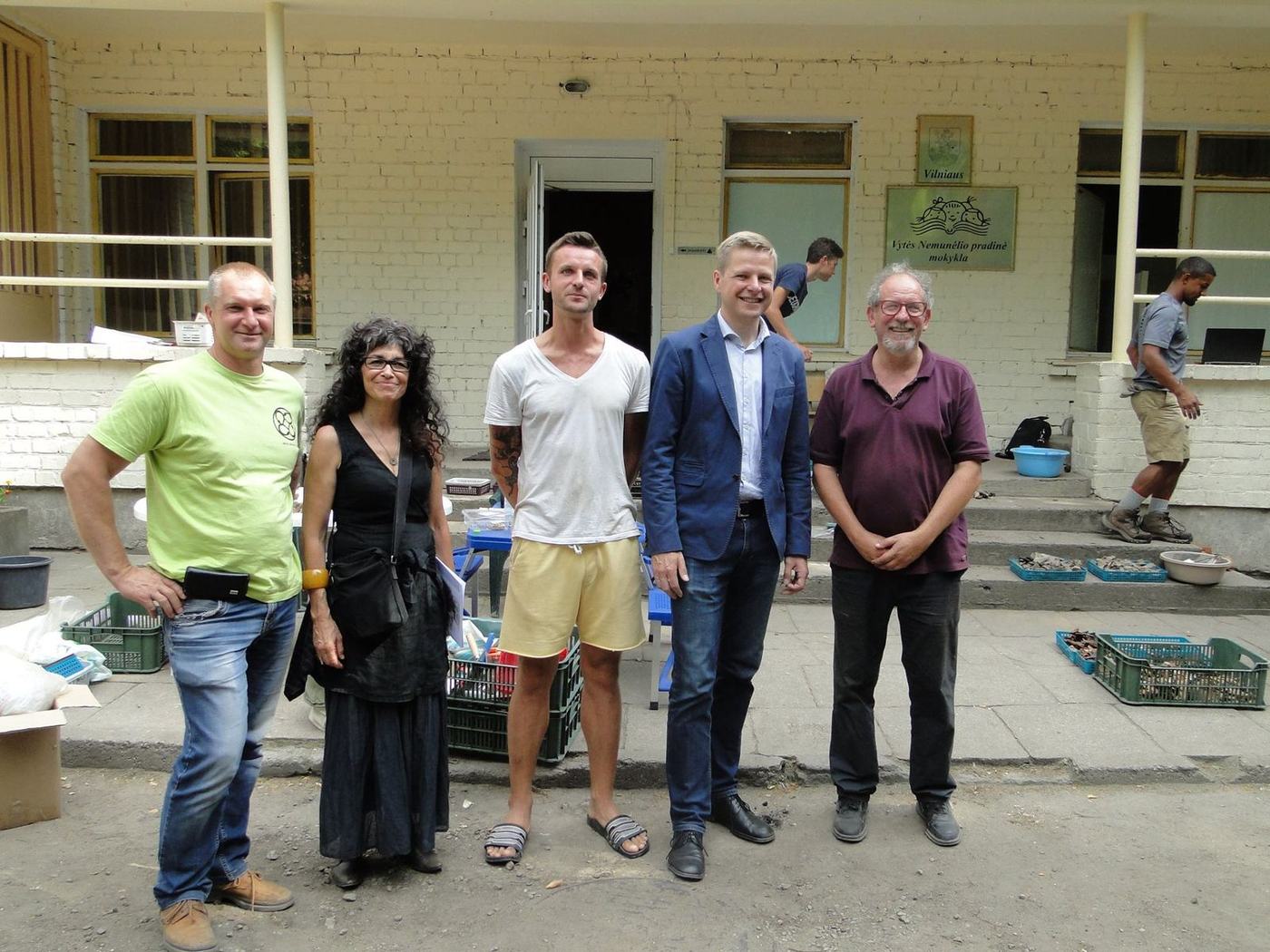
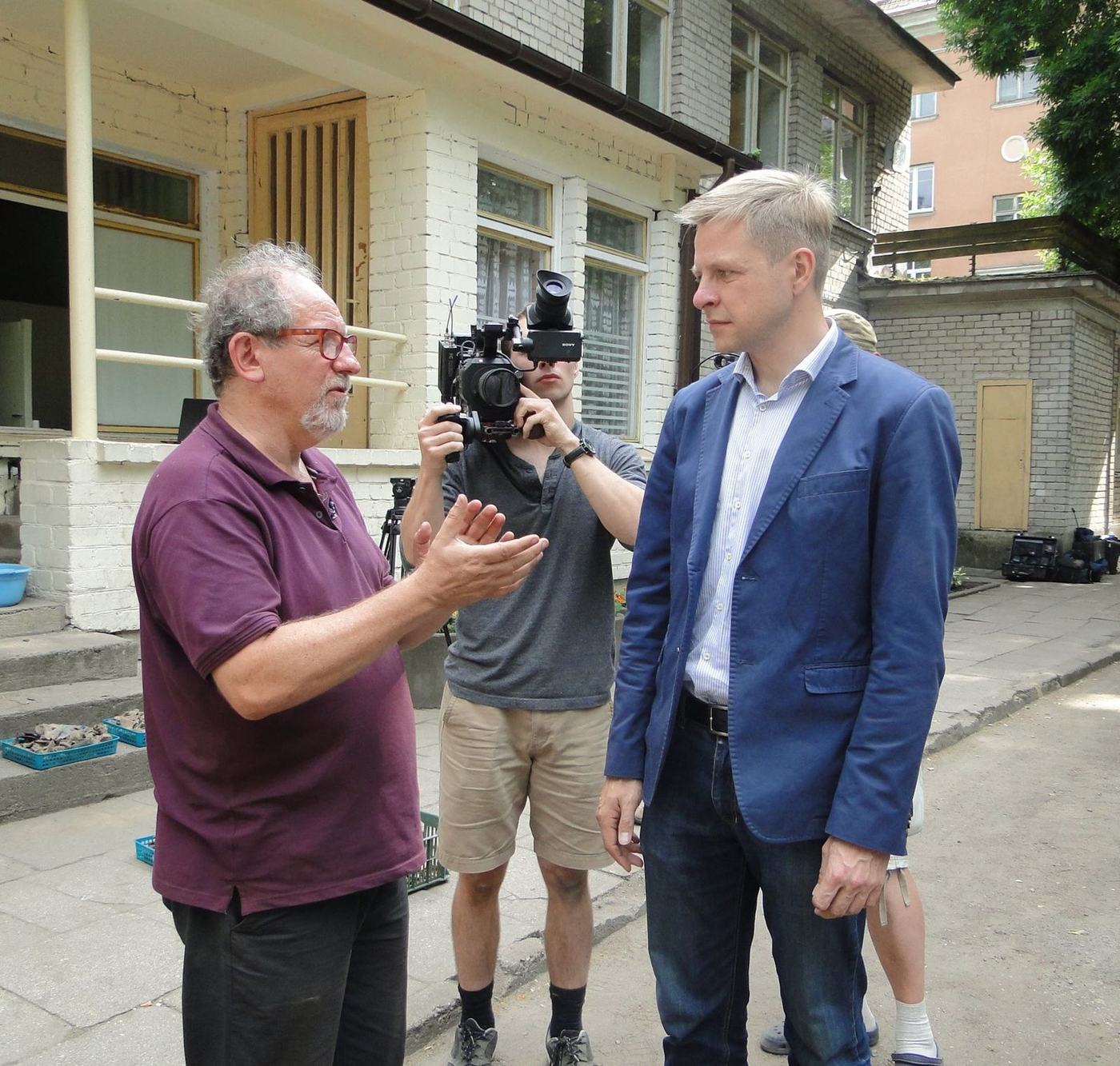
Beautiful Stove Tiles
Tiles from the stoves used to heat the water and the rooms of the bathhouse of the Shulhoyf of the Great Synagogue of Vilna.
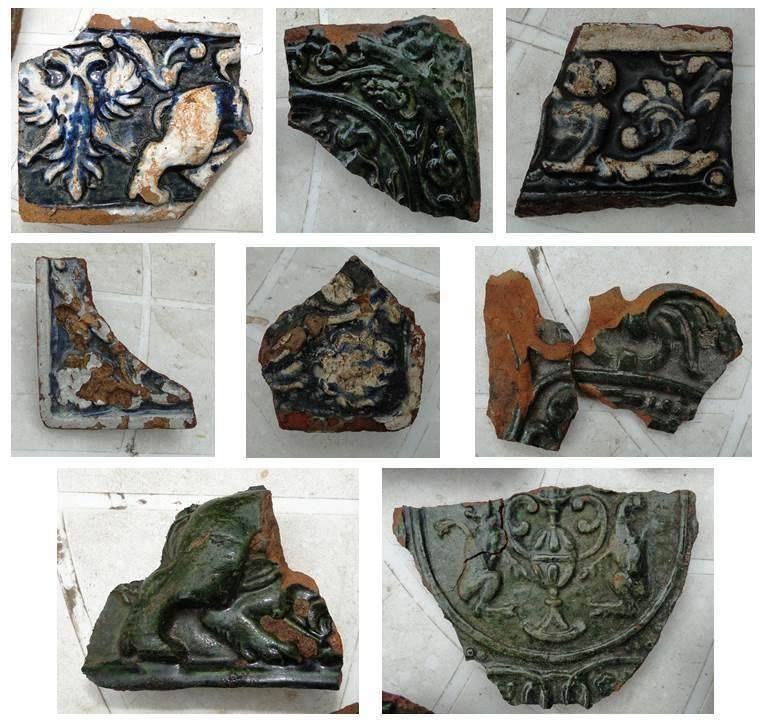
Lead Dreidals and Passover Kosher flour seals from Vilna
נס גדול היה שם
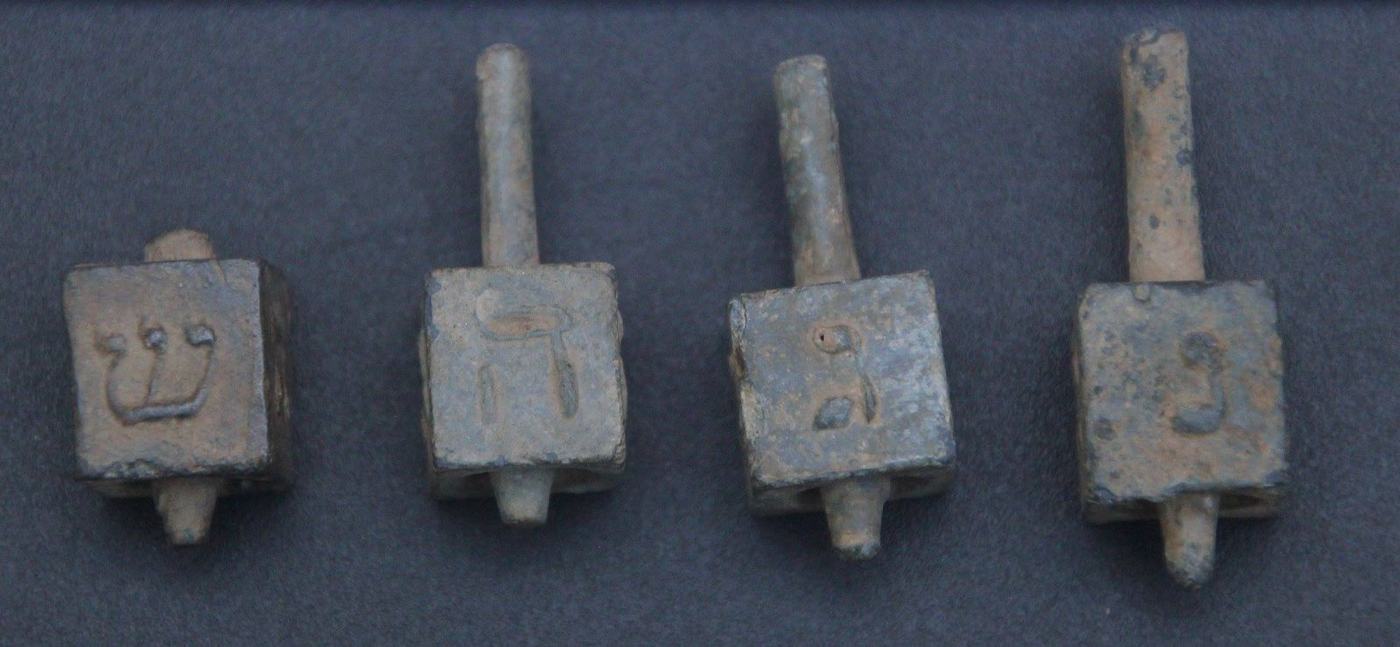
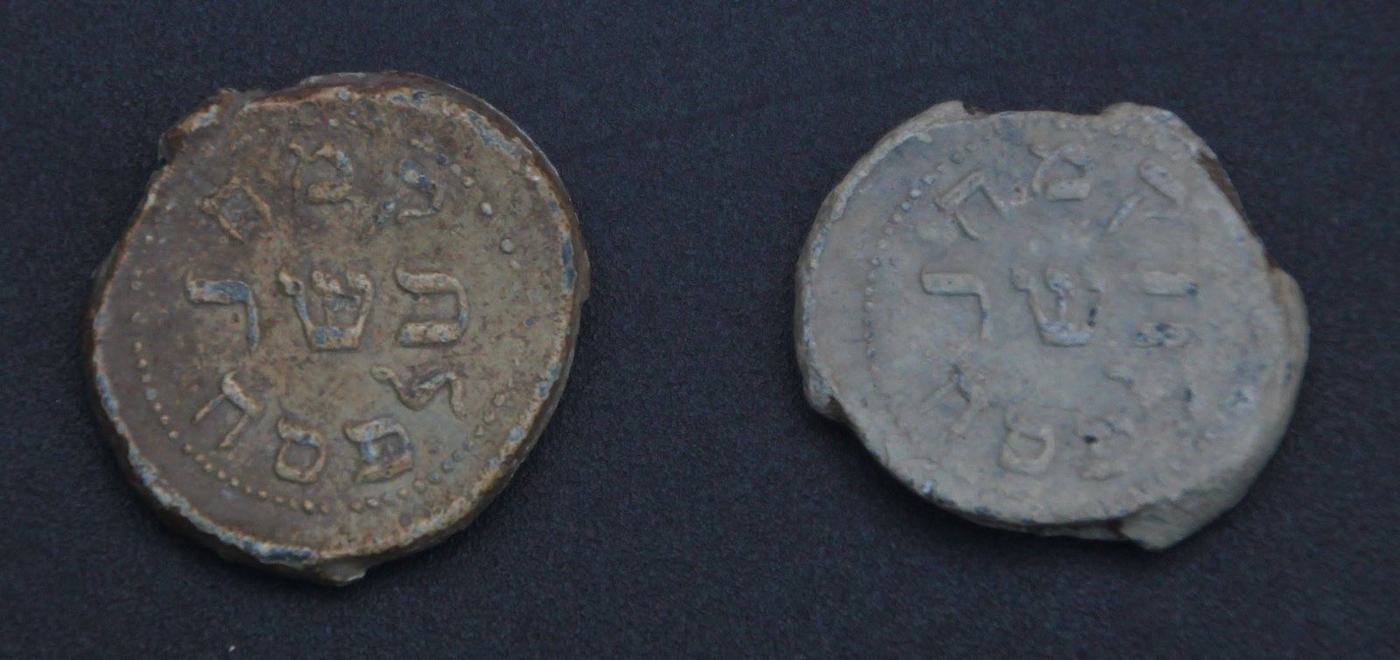
GPR and ERT Scans of the Site
Nova are filming the excavation of the Great Synagogue of Vilna for a documentary to be shown on your screens over the coming year.
In the meantime, our geophysical expert, Prof. Harry Jol, is shooting a new GPR line over a floor we have discovered in the building of the bathhouse we have been excavating over the past few days.
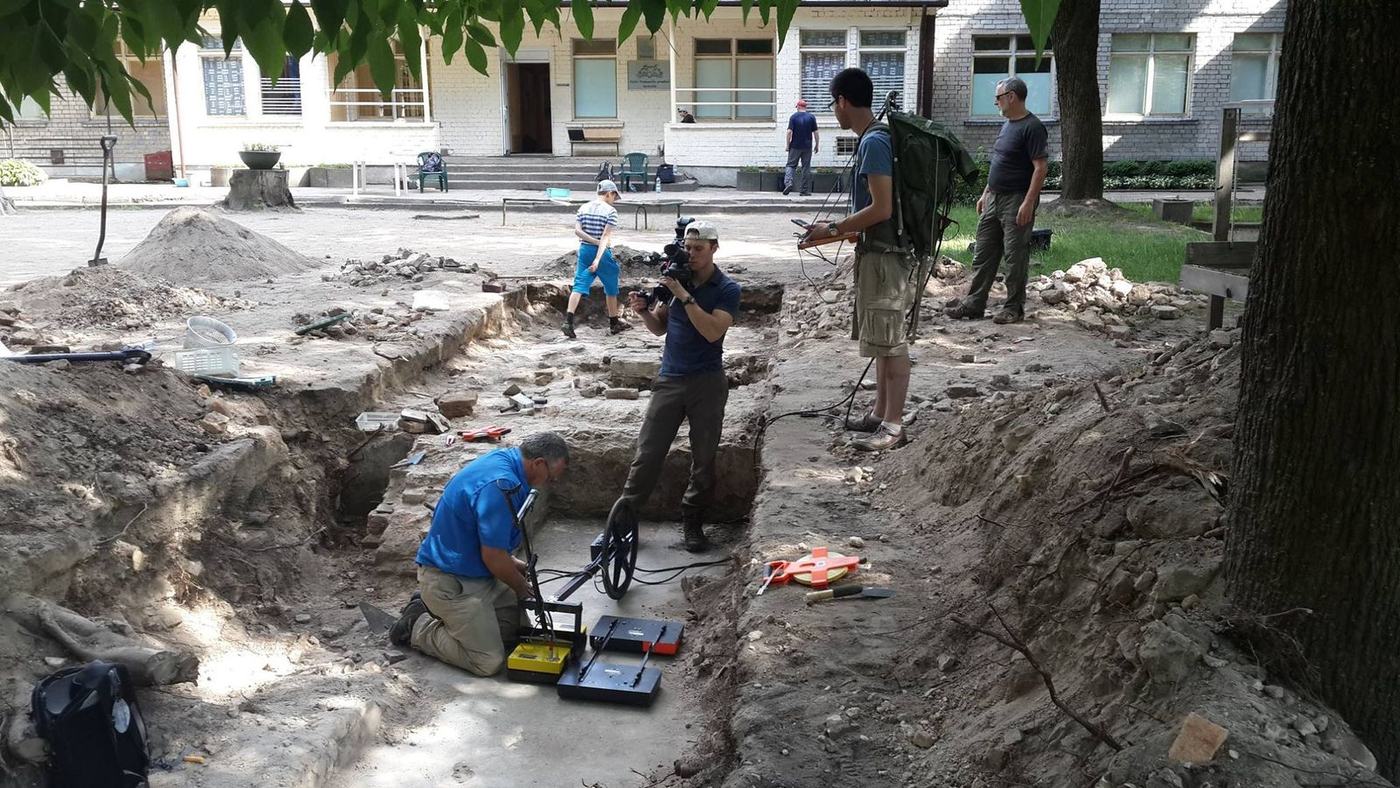
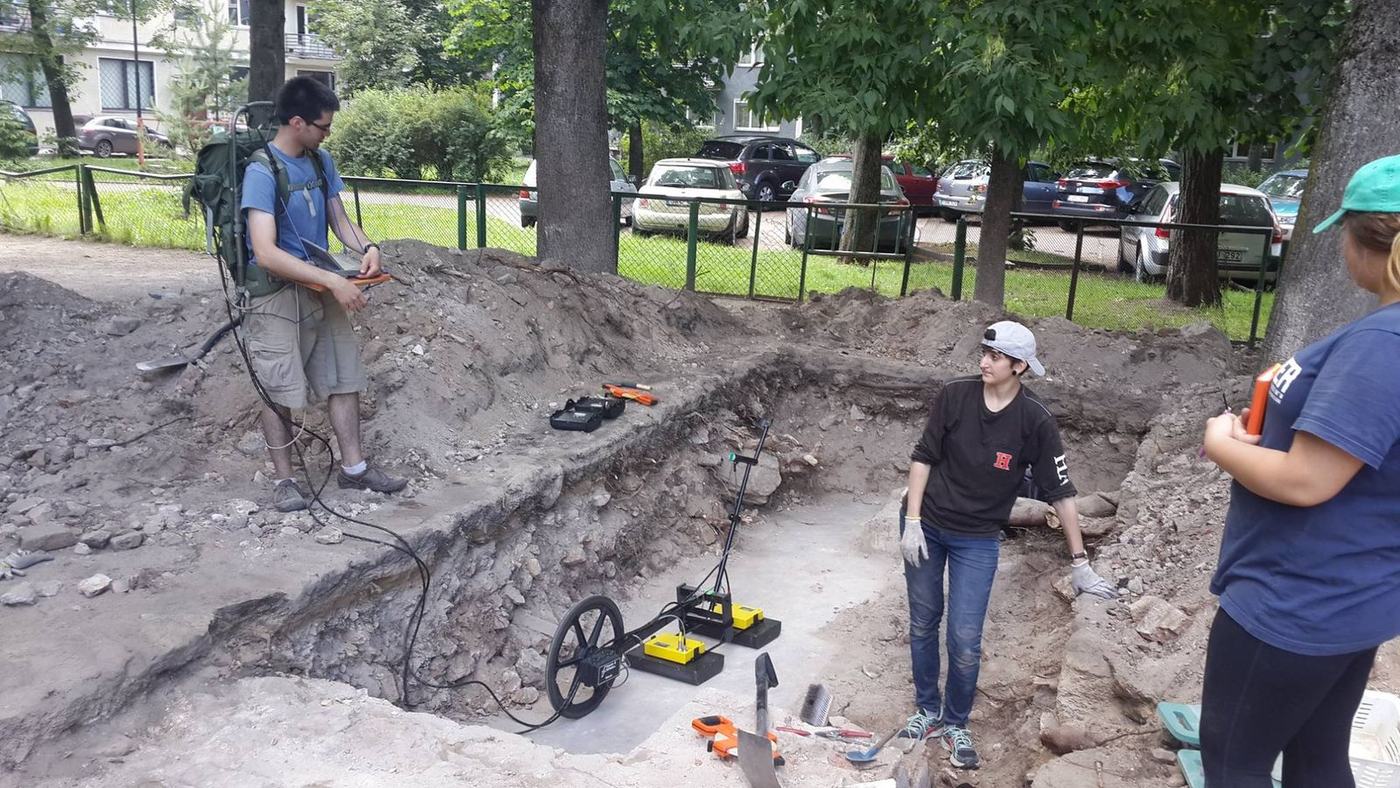
Outreach – Presenting the Project to the Public
After a great day at the excavation, with interesting finds (see tomorrows episode), we presented the project to the Lithuanian public at the Vilna Gaon State Jewish Museum.
The house was packed and the reactions excellent.
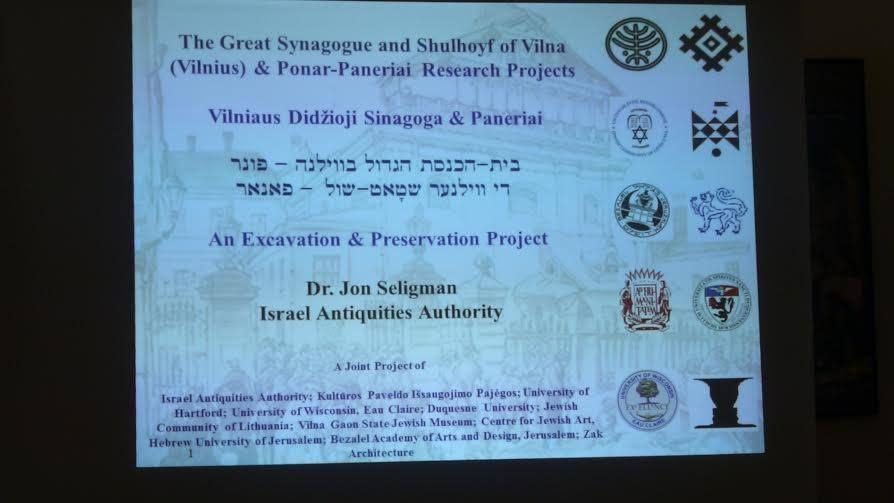
Sifting for Finds
Day two of the excavation. Varda and Shuli, volunteers with family origins in the street parallel to the Great Synagogue site, sift and excavate the material coming from a bathhouse their family have may used only 85 years ago.
Walls from the bathhouse continued to be exposed, while the finds included decorated pieces of glazed tiles from a heating stove and 19th century Czarist coins.
Tomorrow we will be joined by students from the University of Wisconsin.
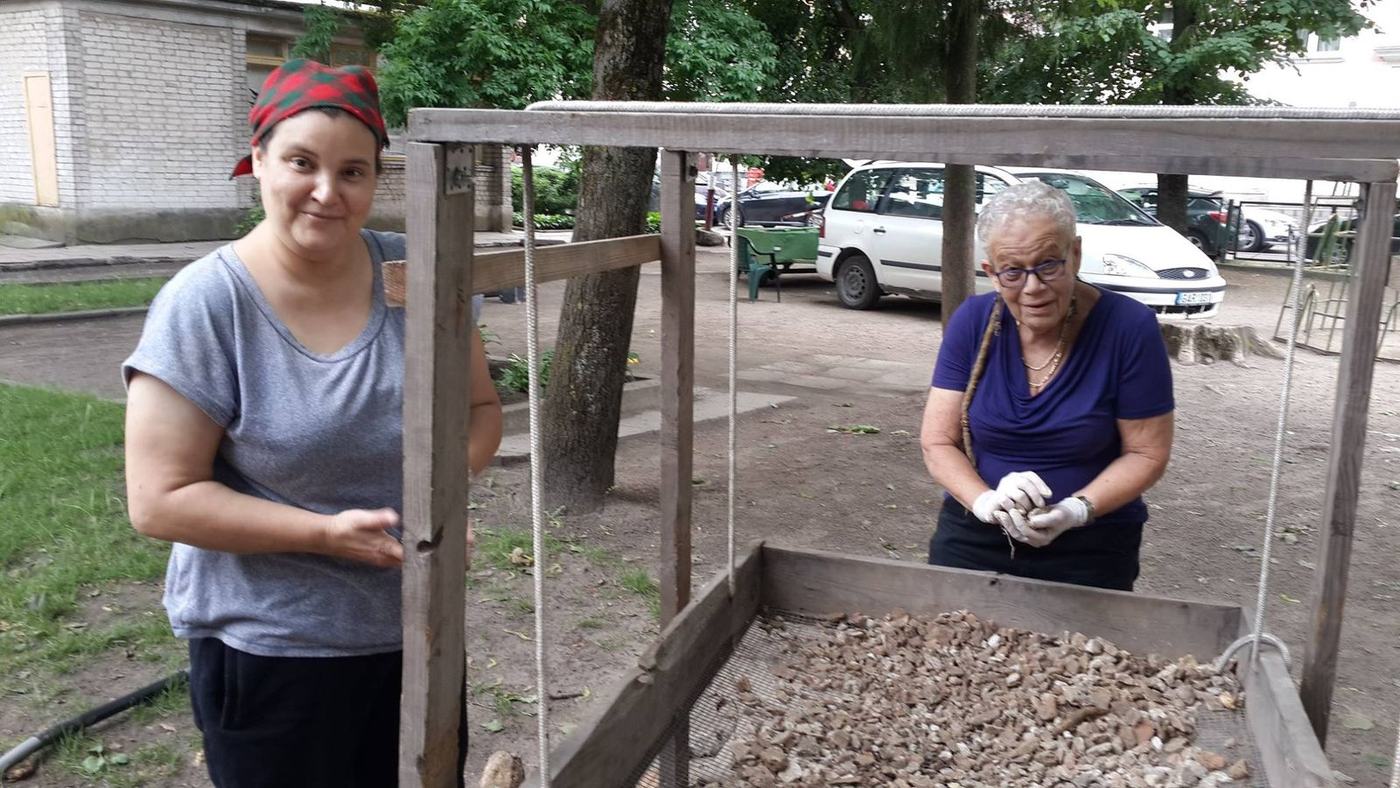
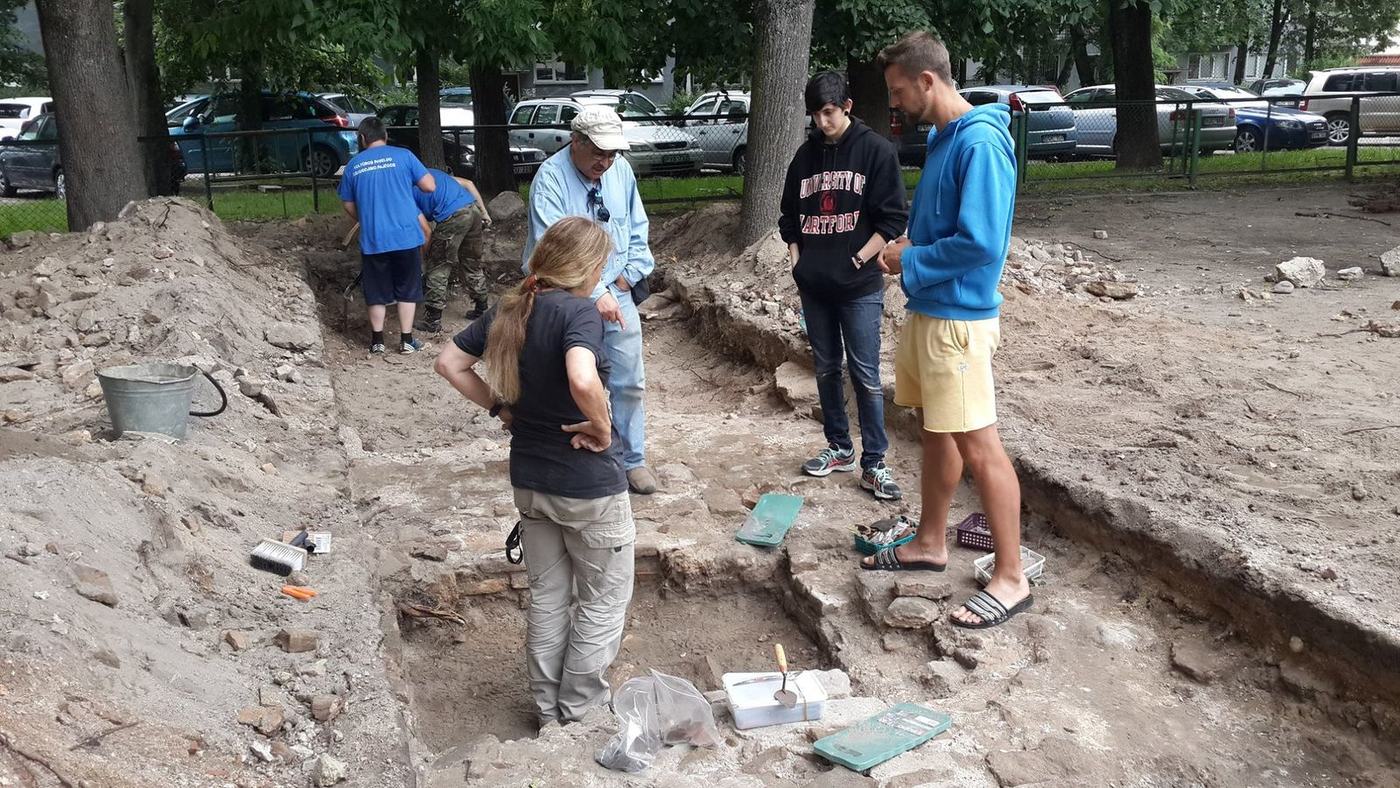
Finally we have broken ground!!!
First day of excavation of the Great Synagogue and Shulhoyf of Vilna. We are concentrating on exposing remains of the Miqve and bathhouse. Walls are coming up so the initial impressions are favourable.
Lithuanians, Americans and Israelis working happily side-by-side to expose part of our joint heritage in Vilnius.
We were happy to have a visit by the Vice Minister of Culture - Dr. Romas Jarockis, who expressed real interest in the work.
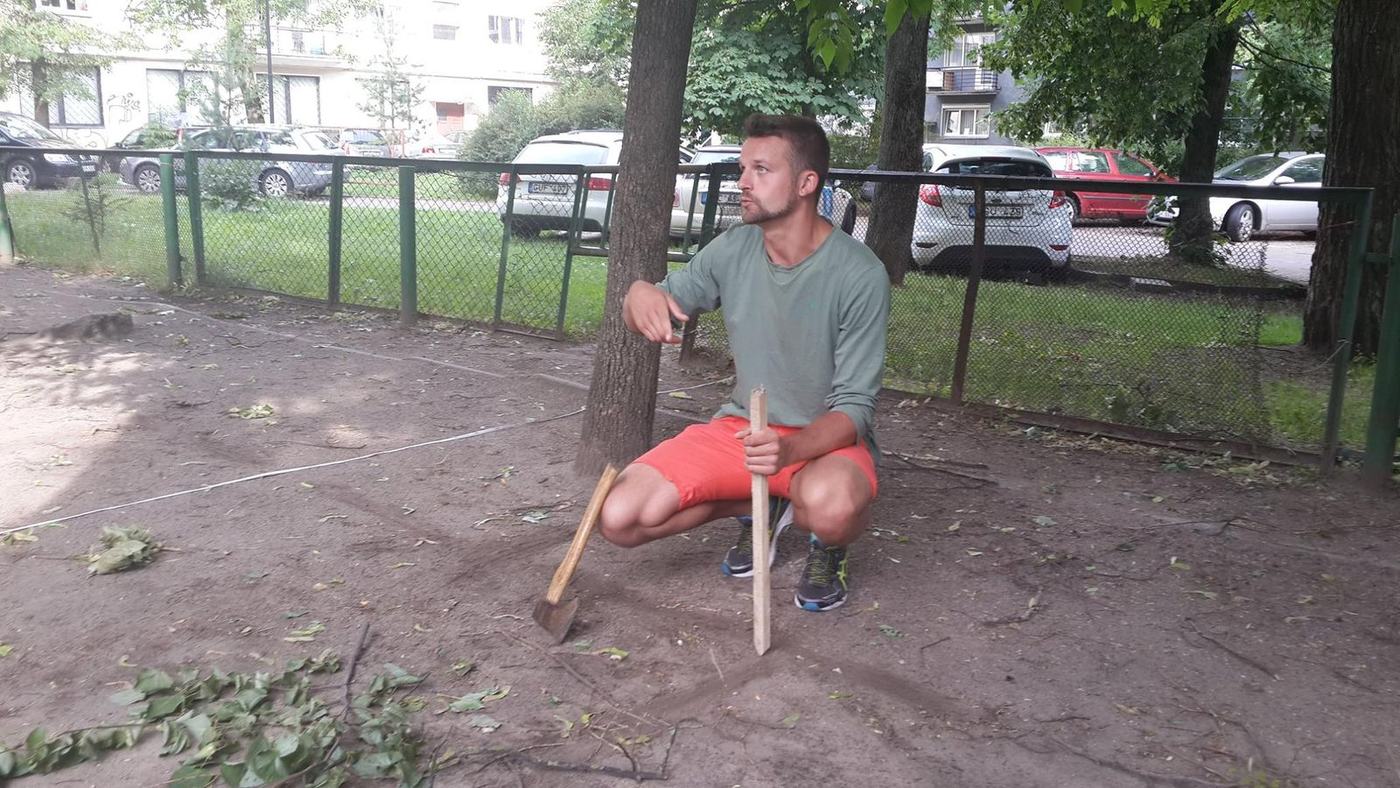
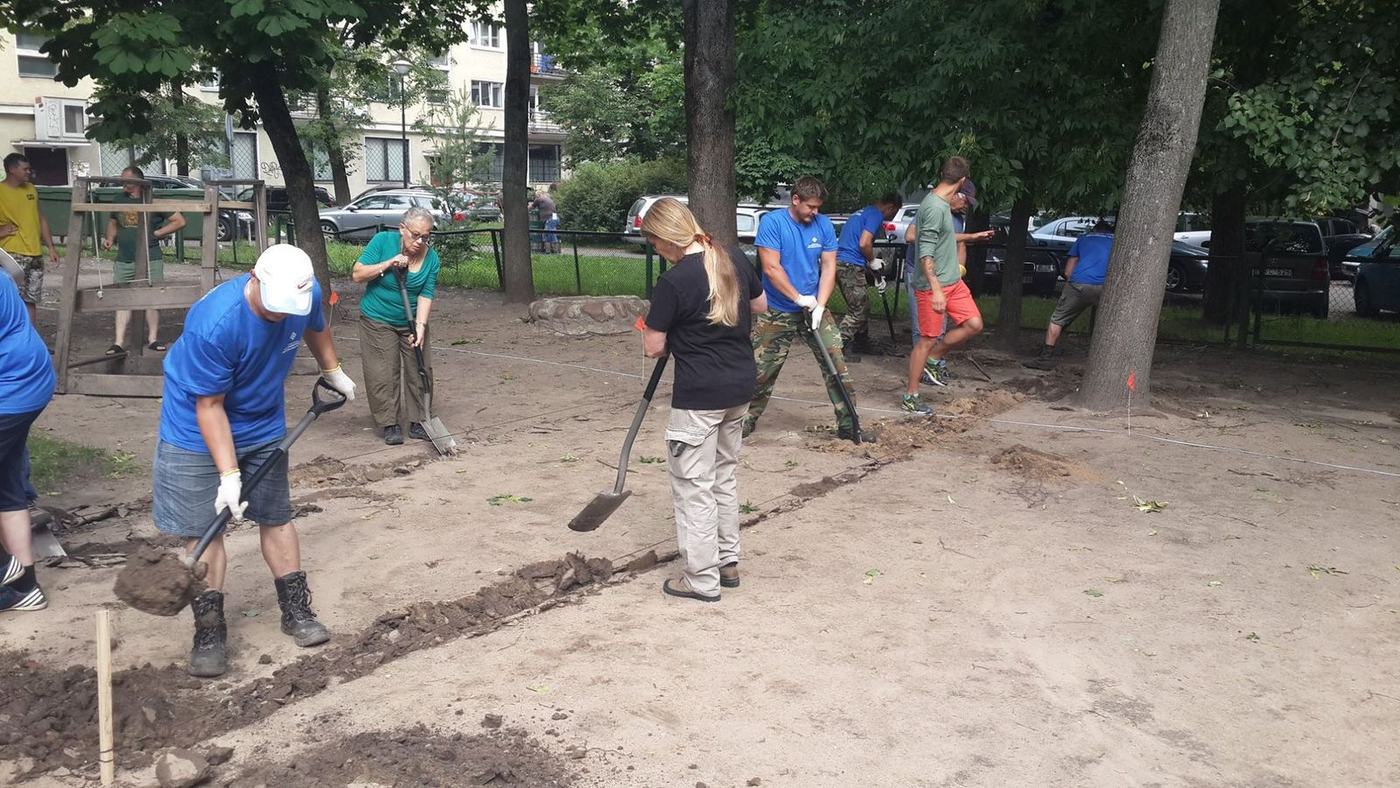
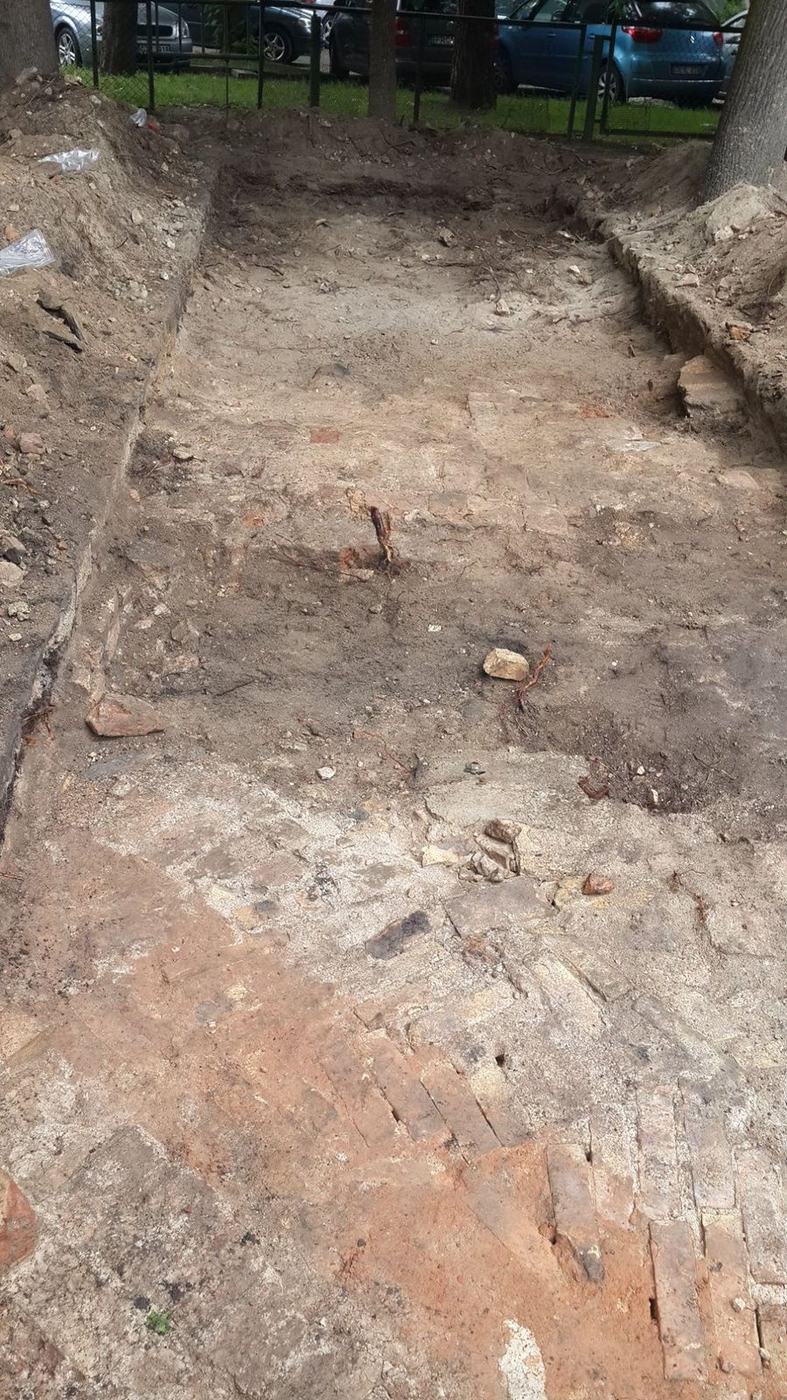
Flying a Drone over the Road to Ponar
The road to Ponar (Panariai) and working on the Electrical Resistivity Tomography survey.
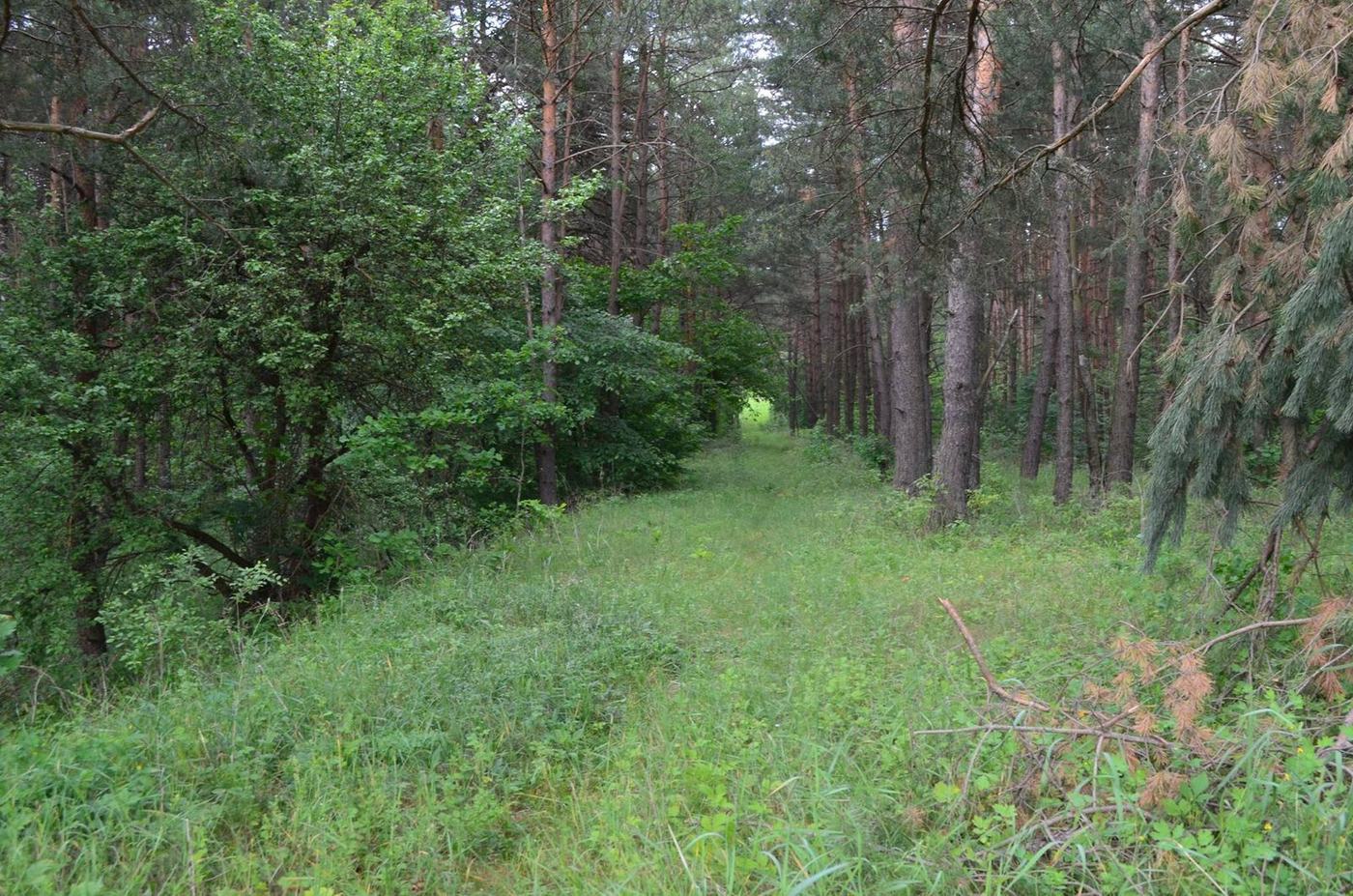
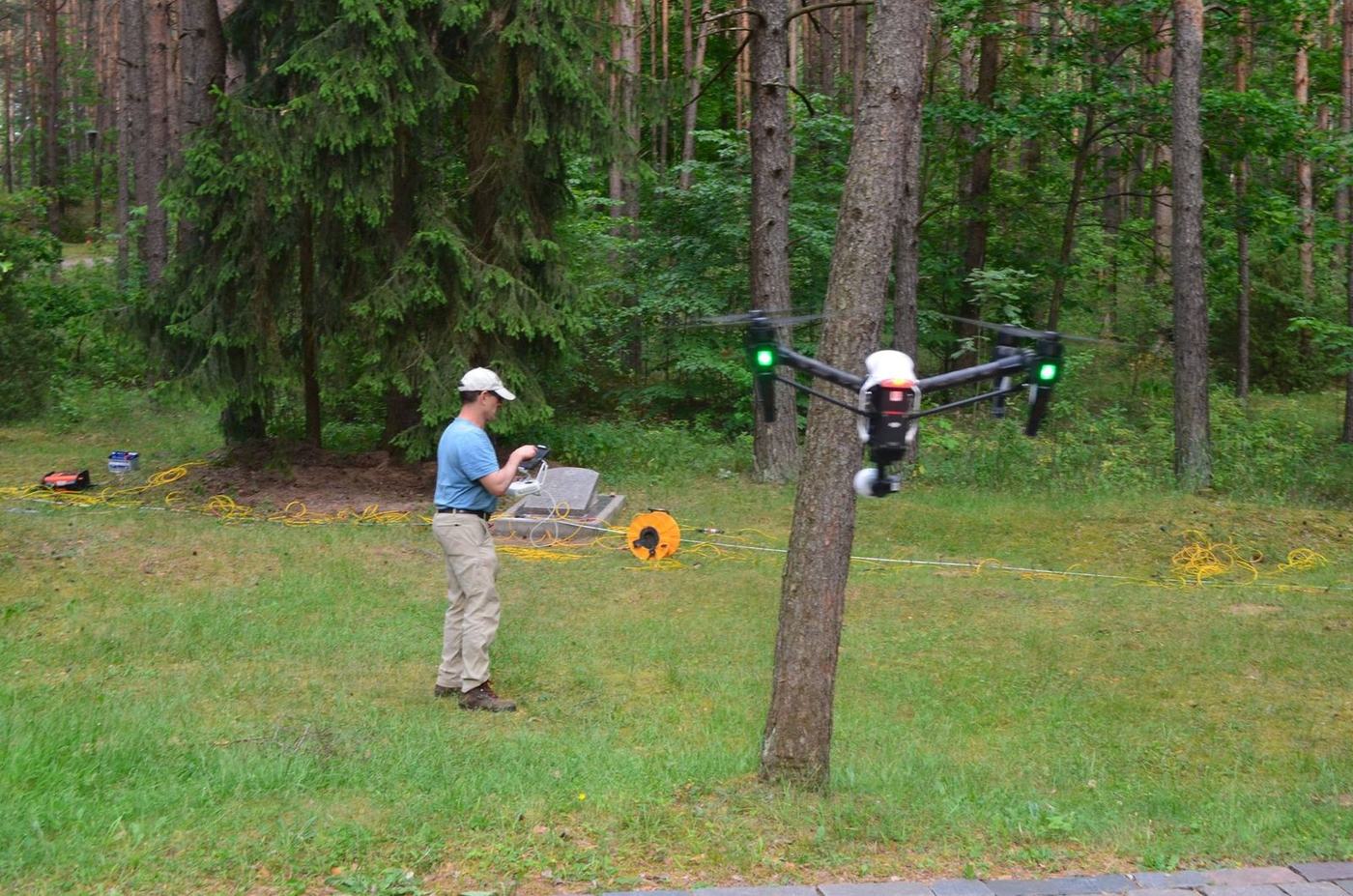
Meeting with the Director of the Gaon of Vilna Jewish Museum
Meeting at the Gaon of Vilna Jewish Museum with the Director - Markas Zingeris about the excavation at the Great Synagogue and at Ponar (Panariai).
From right to left - Alastair McClymont, Kurt Wolfinger, Paul Bauman, Jon Seligman, Markas Zingeris, Owen Palmquist, Richard Freund, Zigmas Vitkus
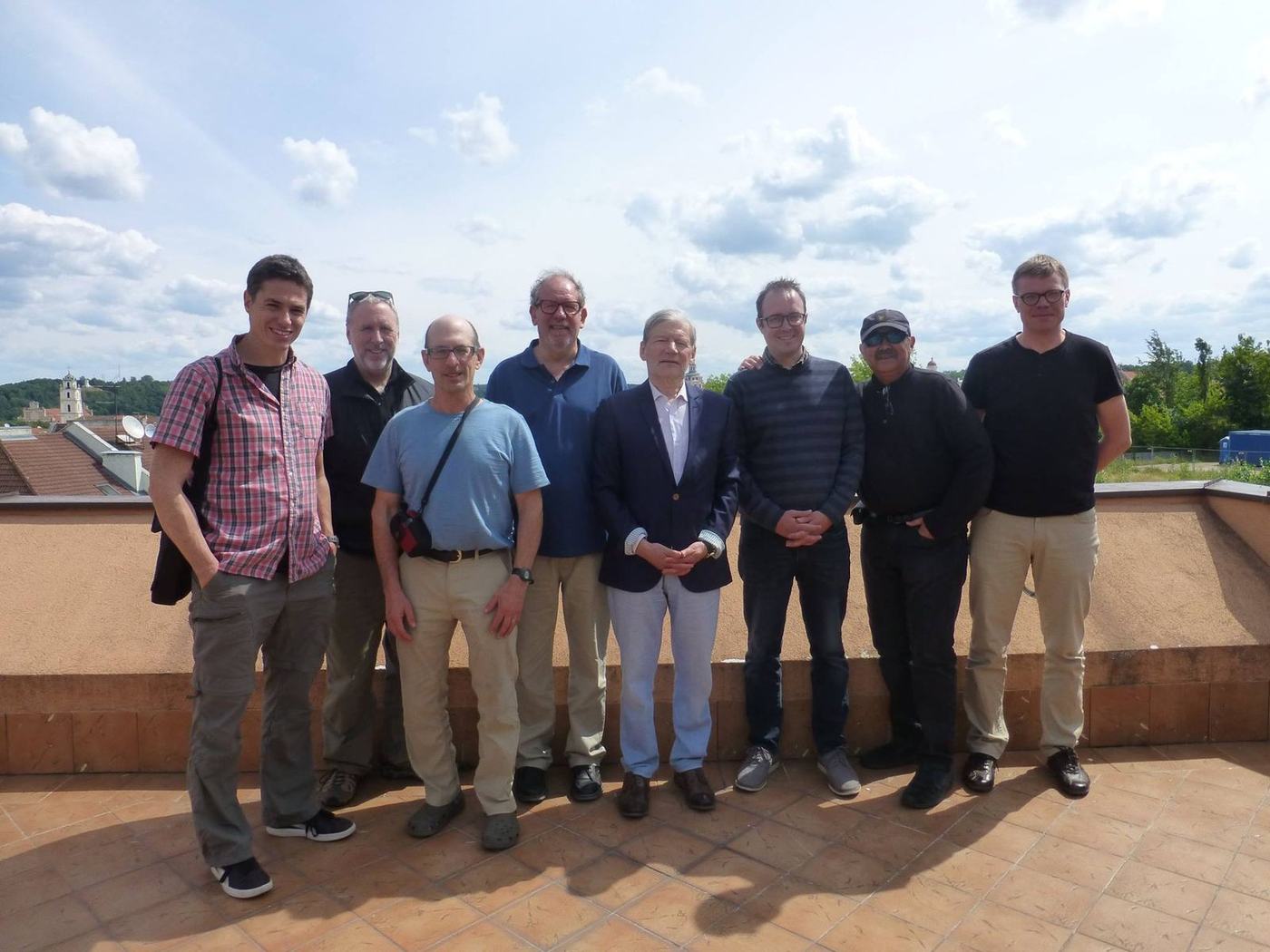
Getting Organised
First organisational day of the excavation of the Great Synagogue today. Meetings with our partners to appraise the results of the geophysical survey, including new data using Electrical Resistivity Tomography to give us more detailed knowledge of the underground features.
The excavation will start in a week when all the students and volunteers arrive in Vilnius.
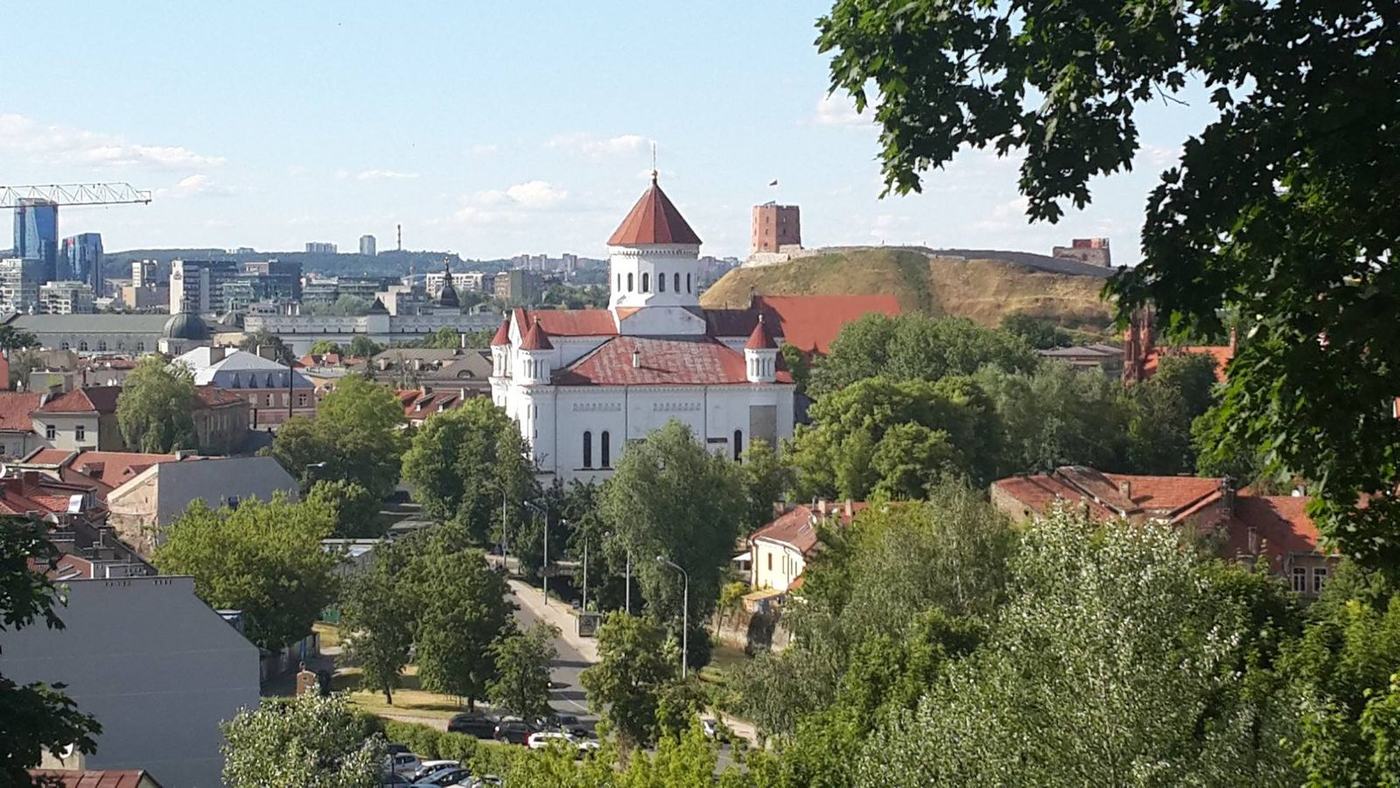

The Great Synagogue Burns During the Battle of Vilnius in 1944
While working on the material for our next season of work at the Vilna Great Synagogue and Shulhoyf, we researched an aerial intelligence photograph of the Luftwaffe, dated 10th July 1944. This was taken during the battle for the liberation of Vilna, during which intense fighting took place in the abandoned streets of the Ghetto. In a detail from the photograph you can see plumes of smoke rising from the buildings of the Ghetto. In the centre of the red circle are the ruined buildings of the Great Synagogue.
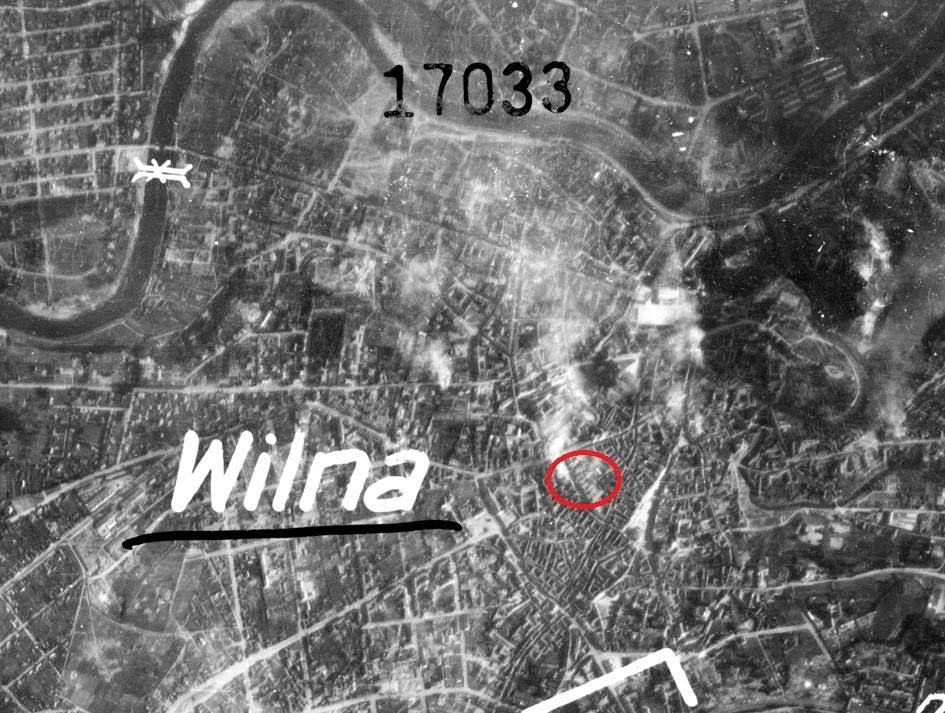
Our First Lecture in Israel
הרצאה על הפרויקט תתקיים ביום חמישי, ט"ז באדר תשע"ו, 25 בפברואר 2016, בשעה 18:00 בבית וילנה, שד' יהודית 30, תל אביב
כולם מוזמנים
A lecture about the project will be given at 18:00 on 25th February at Bet Vilna in Tel Aviv. (Rehov Yehudit 30, Tel Aviv)
You are all welcome!
The lecture will be in Hebrew.
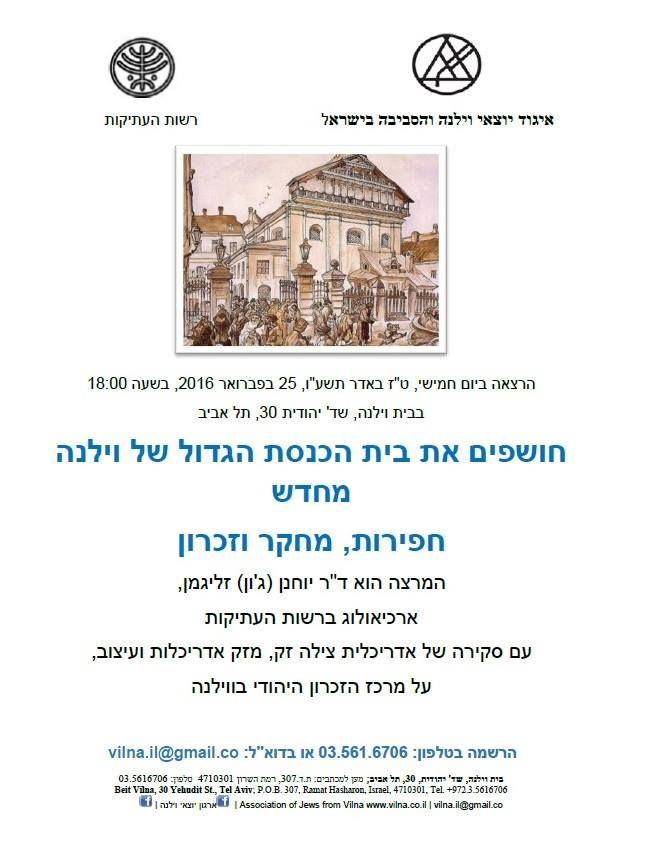
Saved from Destruction – The Ten Commandments and Doors of the Aron Kodesh
The doors and shield of the Aron Kodesh (Torah Ark), saved from destruction and now displayed in the Vilna Gaon State Jewish Museum in Vilnius.
http://www.jmuseum.lt/
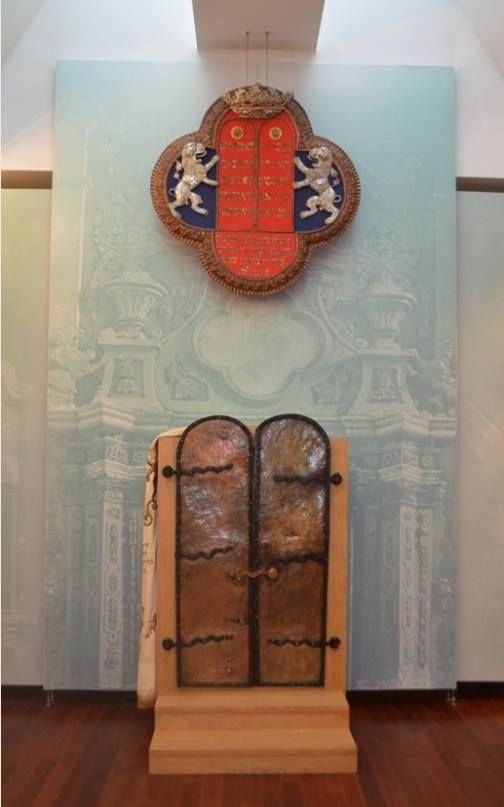
2015 (2 stories)
Let’s Get this Started!
Jon Seligman, Richard Freund & Zenonas Baubonis at the Department of Cultural Heritage with Director Diana Varnaitė & Faina Kukliansky, President of the Jewish Community of Lithuania for discussions to promote the Great Synagogue & Shulhoyf of Vilna (Vilnius) Research Project
Saving the Great Synagogue of Vilna for Humanity
"The Great Synagogue and the excavations are important not only for Lithuania, but for the global Jewish community. It is a powerful symbol of both a great Jewish heritage, a great tragedy when the entire Jewish community was destroyed, and it is a very powerful symbol for the Jewish future. … The Great Synagogue is not only about Jewish history, it is a particularly important element in Lithuania’s history of the colourful and multiethnic Vilnius."
Lithuanian Prime Minister Andrius Kubilius during his visit to the site of the Great Synagogue of Vilnius in 2011.